
Nobody wants to slide into their own car and get hit with a smell they can’t place. Learning how to freshen car interior spaces properly comes down to one simple truth most guides skip: you have to remove the source of the odor before any spray or scent bomb will actually help. Mask it first and the smell just comes back in a day or two.
That’s the mistake most drivers make. They grab an air freshener, clip it to the vent, and wonder why the funk returns by the weekend. Real freshness starts with figuring out where the smell is actually coming from, then working through a short, repeatable process.
Here’s the breakdown, built from what detailers, mechanics, and consumer testing groups actually recommend — not the generic “vacuum and spray” advice you’ll find everywhere else.
Why Car Interiors Trap Smells So Easily
A car cabin is a small, sealed box that bakes in the sun and cools down every single night. That temperature swing pulls moisture into fabric, carpet fibers, and foam padding, and moisture is exactly what odor-causing bacteria need to thrive.
Government researchers studying indoor air have long noted that enclosed spaces concentrate airborne chemical compounds far more than open environments do. Studies have found that levels of several organics average 2 to 5 times higher indoors than outdoors, and a car cabin behaves the same way, just on a smaller scale. This is exactly why figuring out how to freshen car interior air matters more in an enclosed cabin than it would in an open room.
Add kids, pets, fast food wrappers, or a smoking habit into the mix and the buildup speeds up fast. Anyone who’s owned a car for more than a year or two knows how quickly a clean cabin can start smelling like whatever got left in it last week.
Step One: Clear Out the Clutter First
Before touching any cleaner, pull everything out. Old receipts, half-empty water bottles, gym clothes, fast food bags — all of it traps odor and needs to go.
A small bin clipped to the center console or a back seat organizer stops this pile-up from happening again. Anyone who has managed a family car with kids knows the console and door pockets fill up with crumbs and wrappers within days, and those forgotten pockets are usually where the worst smells hide.
Check under the seats too. Loose change, old snacks, and dropped food wedge themselves into spots that never get a second look until the smell gives them away.
How to Freshen Car Interior Odors From the Ground Up
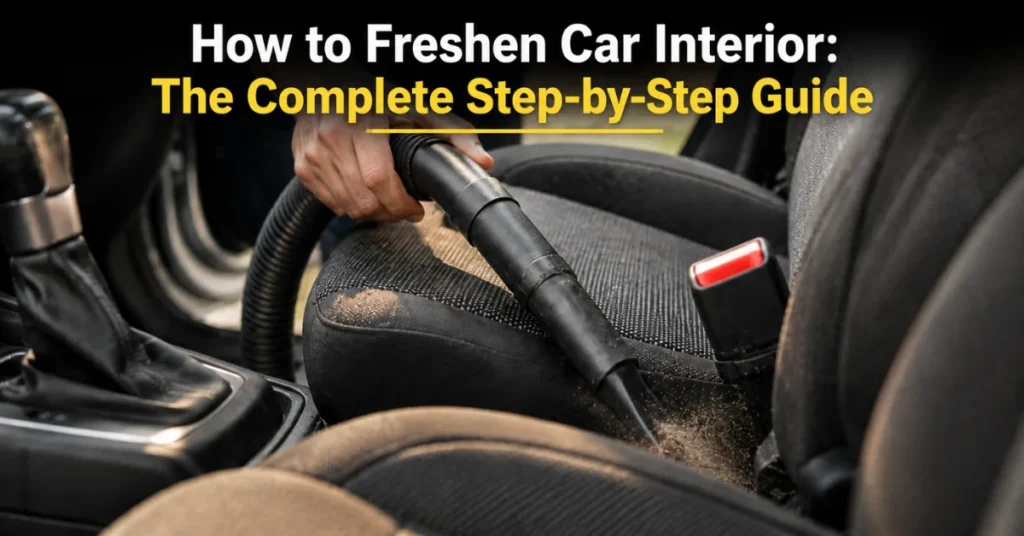
This is where most people stop short. A quick pass over the floor mats isn’t enough — carpets, seat seams, door pockets, cup holders, and the gap between the seat and console all need attention too.
Crumbs and dust settle into fabric weave and stay there, feeding bacteria long after the visible mess is gone. A shop vac or a car wash’s coin-operated vacuum works better than most household models because of the stronger suction and narrower nozzle attachments.
Don’t skip the headliner either. Fabric ceiling panels absorb smoke and food odors just as readily as carpet does, and a light pass with an upholstery attachment makes a real difference that most drivers never think to try.
Step Three: Neutralize, Then Scent — Never the Other Way Around
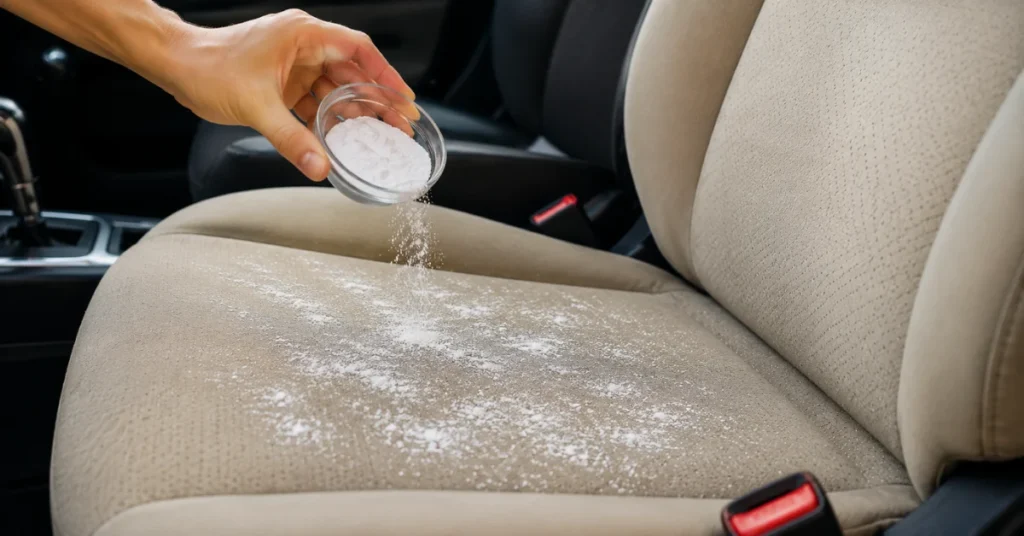
Baking soda is still the cheapest, most reliable neutralizer around. Sprinkle a light layer over carpets and seat fabric, let it sit for a few hours, then vacuum it back up. It absorbs odor molecules rather than covering them, which is the whole point of learning how to freshen car interior surfaces the right way instead of just spraying perfume over a problem.
Activated charcoal bags work similarly and last longer, sometimes for weeks tucked under seats or in door pockets. Dry coffee grounds left in an open container overnight do something similar and leave behind a mild coffee smell that most people don’t mind.
Once the neutralizing step is done, a few drops of essential oil on a cotton ball or a fabric-specific spray adds a light scent without the chemical sting of a synthetic air freshener. That order matters. Scent on top of an unresolved odor just creates a worse, layered smell.
How to Freshen Car Interior Air Through the A/C System
A musty A/C smell almost never comes from the seats. It comes from moisture sitting on the evaporator coil, which creates the perfect breeding ground for mold and bacteria every time the system runs.
The fix is straightforward. Run the fan on a low setting with the windows cracked, spray an automotive A/C disinfectant into the fresh air intake near the base of the windshield, then let the ventilation system pull it through the ductwork.
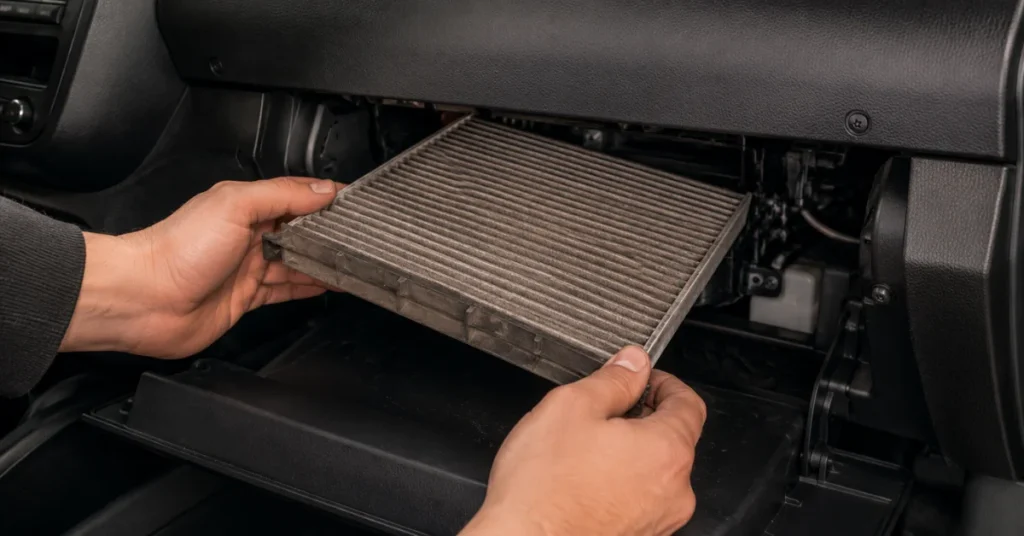
A dirty cabin air filter makes this worse and is one of the most overlooked culprits. Factory-recommended intervals for replacing cabin air filters range from 15,000 to 30,000 miles, and a clogged filter restricts airflow while trapping the exact contaminants that create that gym-locker smell. Swapping it takes about fifteen minutes on most vehicles and rarely needs tools.
One habit that helps long-term: switch off the A/C a couple of minutes before you park, but leave the fan running. That dries out the coils instead of trapping wet air inside overnight.
Step Five: Handle Pet, Smoke, and Food Odors Individually
General cleaning handles everyday grime, but stubborn smells need targeted work. Pet odor sits deep in seat foam, not just the surface fabric, so an enzyme-based cleaner made for pet stains breaks down the organic compounds that regular soap leaves behind.
Smoke odor clings to fabric, plastic trim, and the headliner in equal measure. A combination of baking soda treatment, ozone generator rental, and a full detail is usually the only combination that removes it completely rather than just dulling it for a week.
Food smells, especially from spilled drinks or dropped fries, tend to settle into carpet padding underneath the visible carpet layer. A wet-vac extraction pulls moisture out from that lower layer, which a regular vacuum simply can’t reach.
Everyday Habits That Keep the Cabin Smelling Fresh
A few small routines stop the problem from building back up:
- Shake out floor mats weekly to clear dust and debris before it works into the fibers
- Keep a small trash bin in reach so wrappers and cups never pile up
- Wipe hard surfaces — dash, console, door panels — with a microfiber cloth and a mild automotive cleaner
- Crack the windows for a few minutes after parking in hot weather to release trapped heat and humidity
- Avoid eating in the car when possible, since spills are the single biggest driver of lingering odors
None of these take more than a minute or two, but done consistently, they cut down on the deep-clean sessions needed each year.
Different Drivers, Different Starting Points
A commuter with a clean daily routine needs a much lighter touch than a parent hauling kids and snacks five days a week, or a rideshare driver dealing with a steady stream of passengers and their belongings. Rideshare and delivery drivers should treat the neutralize-then-scent routine as a weekly task, not a once-a-season fix, since turnover in the cabin is constant. Anyone driving for hire quickly learns car tips to freshen car interior spaces between shifts without pulling the car out of service for a full afternoon.
Owners of leather-seated vehicles need a slightly different approach too. Skip harsh degreasers and stick to a pH-balanced leather cleaner, since leather reacts differently to moisture and heat than cloth upholstery does.
What the Research Shows
Detailing professionals and consumer testing groups consistently point to the same root causes behind stubborn car odors: trapped moisture in the ventilation system, neglected cabin filters, and fabric that’s absorbed spills or smoke over time. That pattern holds true whether the vehicle is a compact hatchback or a full-size SUV.
The pattern that keeps showing up in expert breakdowns of this topic is that odor removal fails most often not because people use the wrong product, but because they skip the neutralizing step and go straight to scent. Getting the order right matters more than the specific brand of cleaner used.
Conclusion
Getting a stale-smelling cabin back to normal isn’t complicated, but it does take doing things in the right order. Clear the clutter, vacuum thoroughly, neutralize before you scent, and don’t ignore the A/C system or the cabin filter behind it. Once you understand how to freshen car interior spaces properly, keeping that fresh feeling going is mostly a matter of small, consistent habits rather than repeated deep cleans.
FAQs
How often should I clean my car interior to keep it smelling fresh?
A light clean — vacuuming and wiping surfaces — every two to four weeks keeps most odors from building up, with a deeper clean every few months depending on how the car gets used.
Does baking soda actually work for car odors, or is that just a myth?
It genuinely works. Baking soda absorbs odor molecules rather than masking them, which is why it’s recommended ahead of any scented product, not instead of one.
Why does my car smell musty specifically when the A/C turns on?
That smell almost always traces back to moisture sitting on the evaporator coil, which creates a breeding ground for mold and bacteria that gets blown through the vents every time the system runs.
Can I use household cleaners on my car’s interior surfaces?
Some work fine, but avoid bleach, hydrogen peroxide, and ammonia-based products, since they can damage upholstery, leather, and the anti-glare coating on touchscreens.
How long does it take to notice a difference after deep cleaning?
Most drivers notice a real difference immediately after vacuuming and neutralizing, though a fully fresh-smelling cabin usually takes a couple of days to settle once trapped moisture has had time to dry out.