

Your Seiko stops ticking, or the second hand starts jumping two seconds at a time instead of one. That’s your cue. Knowing how to change Seiko watch battery yourself can save a trip to the jeweler and a bit of cash, but it’s also a job where one shaky move can turn a $10 fix into a $200 repair.
This guide covers the real process, the tools that actually matter, a way to confirm the battery is even the problem, and when to stop and hand the watch to someone who does this daily.
Why Seiko Watches Need Battery Changes at All
Most Seiko watches run on quartz movements. A small battery sends a pulse through a quartz crystal, which vibrates at a fixed rate and drives the hands forward. Simple setup, but the battery is a wear item. It drains, usually every one to three years depending on the model and how much wrist time it gets.
Solar-powered Seikos and kinetic models work differently. They don’t take a standard disposable cell the same way, and opening them wrong can hurt the movement more than a normal quartz watch would suffer.
Confirm It’s Actually the Battery First
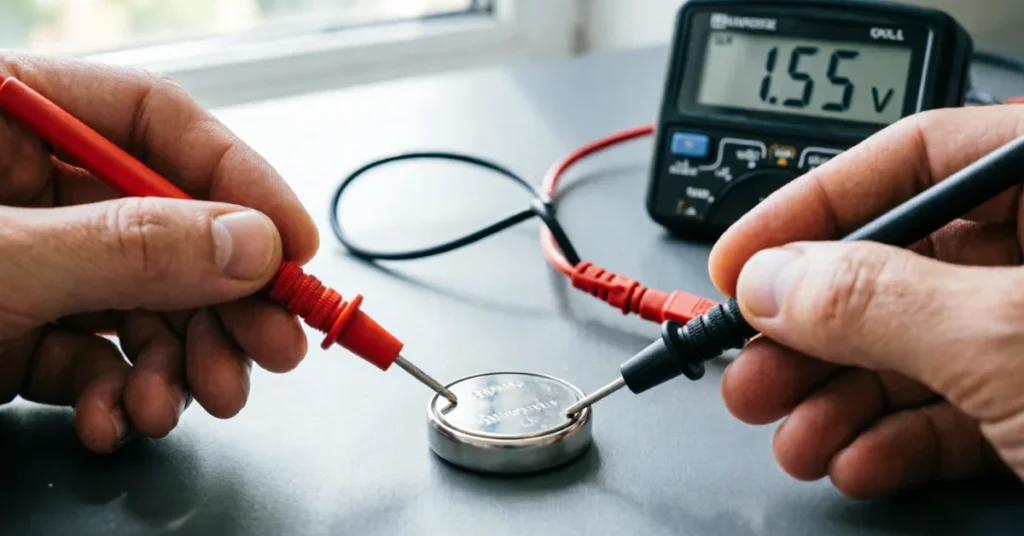
Here’s a step most guides skip entirely. Before you open the case, it’s worth checking that the battery is really the problem and not the movement itself.
A cheap multimeter can settle this in seconds. Set it to DC volts, touch the probes to the battery terminals once the case back is off, and read the number. A healthy silver oxide cell sits around 1.55V. Anything under roughly 1.4V confirms the cell is done. If the reading looks fine but the watch still won’t run, the issue likely sits in the movement, not the power source, and no new battery will fix that.
This one check can spare you the cost of a battery you didn’t need.
Signs Your Seiko Actually Needs a Battery, Not a Repair
A few signals point specifically at a dying battery rather than a broken movement:
- The second hand jumps two seconds at a time, a built-in low-battery warning on most Seiko quartz calibers
- The watch stops completely and won’t restart after a shake
- Backlight function, on models that have one, is dim or won’t fire
- The date or day wheel refuses to move forward correctly
If the watch is losing or gaining time steadily rather than stopping outright, that points to a movement issue, not a dead cell.
What You’ll Need Before You Start
Before you change Seiko watch battery yourself, it’s worth laying out every tool first — a kitchen table and a butter knife won’t get you through this cleanly. A kitchen table and a butter knife won’t get you through this cleanly. Most Seiko watches take a small button-type silver oxide battery, picked for long-lasting power and a stable voltage output. Here’s the real kit:
- A case back opener (screw-type or snap-off, depending on your model)
- A fine jeweler’s screwdriver sized for the tiny case screws
- Plastic or non-conductive tweezers — metal tweezers can short the new battery and cut its life short before it’s even fitted
- The correct replacement battery, matched by code
- A multimeter, if you want to confirm the diagnosis first
- A soft cloth or mat to work on
Anyone who has handled a small repair job knows skipping the right screwdriver size is the fastest way to strip a screw head barely a millimeter wide.
Seiko Battery Code Reference
The same battery gets sold under a handful of different names, and picking the wrong one is a common mistake. The most common watch battery sizes are the 377 (SR626SW), 371 (SR920SW), 364 (SR621SW), and 379 (SR521SW). Here’s a quick reference:
| IEC Code | Common Alt. Codes | Size (mm) | Voltage | Typical Use |
|---|---|---|---|---|
| SR621SW | 364, V364, SB-AG | 6.8 x 2.15 | 1.55V | Slim analog Seikos |
| SR626SW | 377, V377, SB-AW | 6.8 x 2.6 | 1.55V | Most standard quartz Seikos |
| SR920SW | 371 | 9.5 x 2.05 | 1.55V | Chronograph models |
| SR927W | 395/399 | 9.5 x 2.7 | 1.55V | Higher-drain chronographs |
SR621SW and SR626SW look alike but aren’t always drop-in swaps, since the SR626SW sits slightly taller and won’t seat right in a case built for the SR621SW. The code stamped on your old battery, or the first characters of the movement number on the case back, tells you exactly which one to buy.
How to Change Seiko Watch Battery Step by Step
Once the tools are laid out, the job itself doesn’t take long. It’s careful work, not complicated work.
1. Find your movement code. The first few characters of the model number on the case back tell you exactly which battery fits. Guessing here means buying the wrong cell twice.
2. Open the case back. Most Seiko watches have a screw-down back that needs a proper case opening tool to remove without scratching it. Snap-back models need a flatter tool that pries at the seam instead.
3. Test the old battery, if you want confirmation. Touch the multimeter probes to the terminals before pulling it out. A low reading confirms the swap is worth doing.
4. Take out the old battery. Some models have a small metal clip holding the cell in place. If there’s a clip, loosen it with care, then ease the old battery out with your tool of choice.
5. Put in the new battery. Positive side up, always. Handle it by the edges with plastic tweezers — skin oils and static can cut a fresh battery’s working life short.
6. Check the watch runs before closing anything. Watch the second hand for a few seconds. Nothing moving means the battery may be seated wrong, or there’s a separate movement problem.
7. Close the case back. Screw or snap it into place, checking that any gasket sits flat and isn’t pinched.
How to Change Seiko Watch Battery Without Damaging Water Resistance
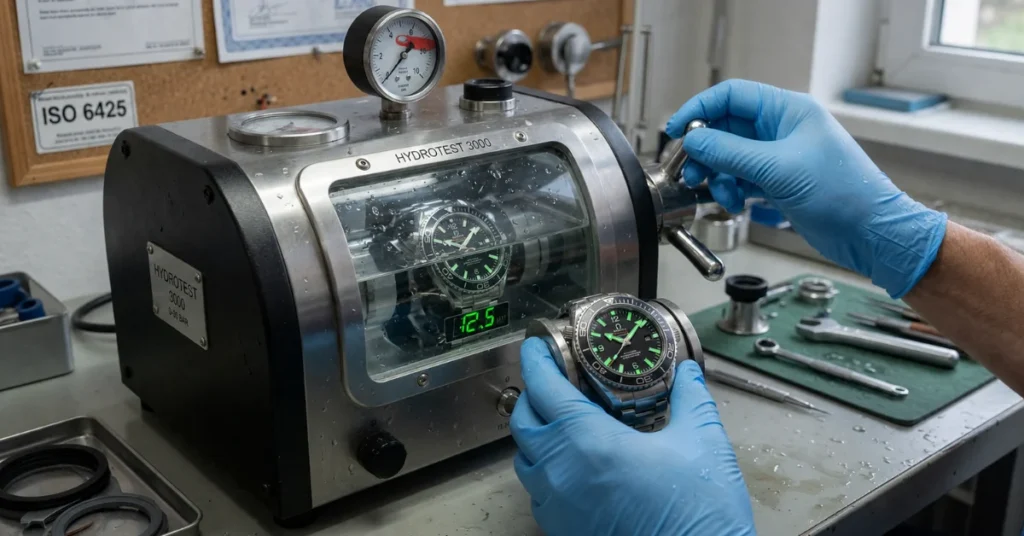
Here’s the part that gets skipped constantly. Opening a water-resistant Seiko breaks its seal, even when you close it back up perfectly. The rubber gasket around the case back compresses over years, and once disturbed, it doesn’t always sit back to the original spec on its own.
Anyone who swims, dives, or even washes hands often with the watch on should treat this as a firm rule: after a home battery swap on a water-resistant model, get the seal pressure-tested. Skipping this step is how a $10 job turns into a ruined movement after one shower.
SR vs LR: Why the Battery Chemistry Matters
Not every button cell that fits the case is a safe pick. Swapping a silver-oxide SR battery for a cheaper alkaline LR battery can leave a precision movement keeping poor time, since the alkaline cell’s voltage drops earlier in its life. Silver oxide cells hold a flat, steady voltage right up until they’re spent, which is exactly what a quartz movement needs to keep accurate time.
If a battery listing looks cheap and doesn’t specify silver oxide, check the code twice before buying. The wrong chemistry won’t damage the watch outright, but it will throw off the timekeeping the whole point of the swap was meant to fix.
DIY vs. Professional: A Quick Decision Grid
| Situation | Safe for DIY? | Best Move |
|---|---|---|
| Standard quartz, not water-rated | Yes | Home swap with the right tools |
| Water-resistant or diver’s model | Risky | Professional, with a pressure test after |
| Solar or kinetic movement | No | Professional only |
| Vintage or collectible piece | No | Professional only |
What the Research Shows
The broader watch repair sector, which Statista tracks under its own industry category, has shown steady, consistent revenue growth, reflecting rising demand as more owners choose repair over replacement. Real-world battery replacement pricing at independent shops generally falls in the $10 to $60 range, with water-resistant models sitting at the higher end due to resealing and pressure-testing.
That gap explains why so many owners try a home swap on everyday, non-diving models, while sending anything water-rated or vintage out to a professional instead. The math only favors DIY when the watch isn’t sealed against serious water contact.
When to Skip DIY Entirely
Some Seiko models simply aren’t beginner projects. Solar and kinetic movements store power in capacitors rather than a swap-in battery, and mishandling them risks the charging circuit. Divers’ watches with screw-down crowns and thick gaskets are another spot where a failed reseal has real consequences.
If your Seiko falls into either group, or it’s a piece with sentimental or collectible worth, a certified repair center is the safer bet. It costs more upfront, but it protects the watch’s water resistance and resale value.
Common Mistakes That Ruin Batteries or Watches
- Touching the new battery with bare fingers, leaving oils that wear down contacts
- Forcing a case back tool at the wrong angle, which scratches or dents the case
- Reusing an old, flattened gasket instead of swapping it in during reassembly
- Leaving the movement open to dust too long while switching tools
- Storing the loose screws badly instead of in a tray, then losing one
- Grabbing an alkaline LR cell instead of the correct silver oxide SR type
Every one of these is avoidable with a slower pace and the right setup, and they’re also the exact mistakes that push people toward a professional after one rough attempt.
Disposing of the Old Battery the Right Way
Once the swap is done, the dead cell still needs somewhere to go. Silver oxide batteries don’t belong in regular household trash in most places, since they carry trace metals that shouldn’t sit in a landfill. Most jewelers, hardware stores, and big-box retailers with a battery recycling bin will take a single watch cell free of charge.
Wrap the old battery in a bit of tape before tossing it in a collection bin, since a loose terminal touching another metal object can spark. It’s a small step, but it’s the kind of detail that separates a full, careful job from a rushed one.
Conclusion
Swapping a battery in a standard Seiko at home is doable, given the right tools and a bit of patience. The mechanics aren’t hard. What separates a clean job from a costly mistake is the part most tutorials rush past: confirming the battery’s actually the problem, picking the right chemistry, respecting the gasket, and knowing which movement types belong in a professional’s hands. That’s the real answer to how to change Seiko watch battery without turning a simple fix into an expensive one. For a basic, non-diving model, it’s a fifteen-minute job. For anything sealed against water, solar, or kinetic, hand it off instead.
FAQs
How often does a Seiko watch battery need swapping?
Most quartz Seikos run one to three years on a single battery, depending on the movement and how often features like the date wheel or chronograph get used.
Can I check if the battery is dead without opening the whole case?
Not reliably. The case back has to come off to reach the terminals, whether you’re testing with a multimeter or swapping the cell outright.
Is it normal for the second hand to jump every two seconds?
Yes, that two-second jump is a built-in low-battery signal on most Seiko quartz movements, not a sign of something broken.
Will a DIY battery swap void my warranty?
If the watch is still under manufacturer warranty, opening the case yourself typically voids it. Check the warranty terms first on a newer piece.
Do solar or kinetic Seikos need battery swaps too?
Eventually, yes. Their rechargeable cells or capacitors wear down over years, but the process and parts differ from a standard swap and usually call for a specialist.