
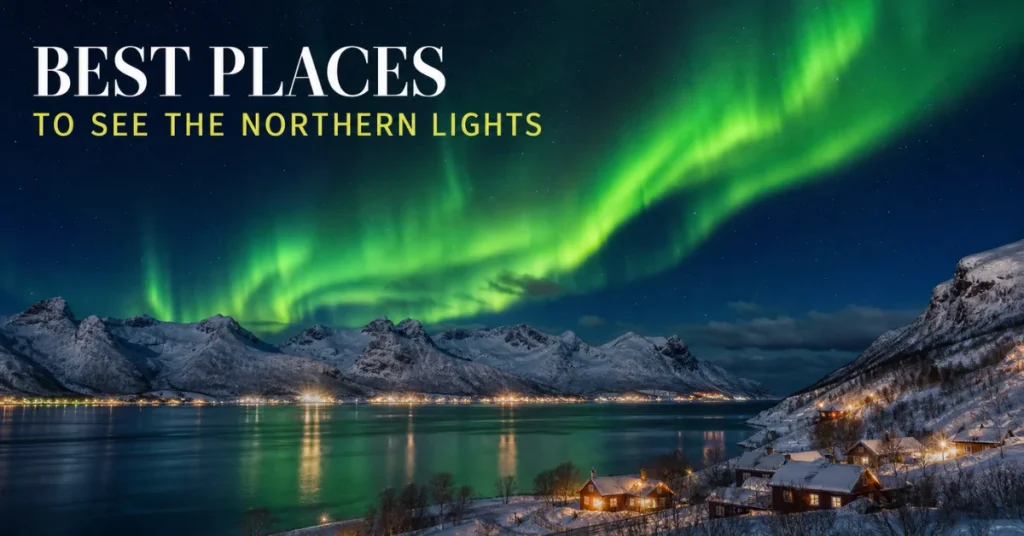
Where are the best places to see the northern lights this year, and is it already too late? Short answer: it isn’t. The sun passed its peak in late 2024, yet the sky still lights up often enough to justify a flight north. You just need the right spot and the right month. This guide gives you both, plus the practical details most travel lists skip.
The Short List: Where Aurora Hunters Actually Go
Want the quick version? Every place below sits inside or near the auroral oval, the ring of sky around the magnetic pole where northern lights appear most often. Think of it as a target zone. Land inside it and your odds jump.
- Tromsø, Norway: easy flights, a big tour scene, and a season from September to March.
- Abisko, Sweden: a national park base with a name for reliable sightings, strongest from December to March.
- Finnish Lapland: a long window from late August or September to early April, plus husky sleds.
- Iceland: road-trip freedom and iceberg reflections at Jökulsárlón, from late September to early April.
- Fairbanks, Alaska: the easiest US pick, with a September to April season.
- Yellowknife, Canada: ranks near the top of lists that sort by magnetic latitude.
Now for the detail that actually helps you choose.
Best Places to See the Northern Lights in Europe
Europe’s Arctic corner is where most first-timers land, and for good reason. Flights are short, tours are mature, and the scenery looks like a postcard even when the sky stays dark. If you visit, expect a long, cold wait followed by ten minutes that make the whole trip worth it.
Tromsø, Norway
Tromsø sits right inside the auroral zone. That’s the big draw. Tours leave every evening for darker ground, and the season runs from September to March.
Here’s the deal with city viewing: street lamps wash out faint displays. So don’t wait on a hotel rooftop. Head 20 to 30 minutes out of town and the sky opens up.
A typical night goes like this. Your guide checks cloud maps by late afternoon, then points the van toward whichever valley has gaps. That flexibility is what you pay for. Anyone who has chased the lights alone under thick cloud knows how much it matters.
Lofoten Islands, Norway
Lofoten pairs the lights with fishing villages, beaches and sharp mountains. The foreground does half the work here. A green curtain above a red fishing cabin makes a photo people frame and hang.
Weather is moodier than inland, though. Coastal cloud rolls in fast. Plan several nights, not one.
Abisko and Kiruna, Sweden
Sweden’s Arctic north has a name for reliable sightings, and Abisko National Park is often called the top pick. Kiruna, further east, makes another solid base. The season runs from late September to early April, with the best odds between December and March.
Cold is the price. Deep-winter nights get brutal, so pack like you mean it. Personally, I’d steer anyone who values quiet over nightlife toward this corner.
Finnish Lapland
Lapland covers Rovaniemi, Levi and plenty of smaller villages. Its viewing window opens earlier than most, from late August or September, and closes around early April. That early start suits travelers who’d rather skip the harshest cold.
Between aurora nights, you can try husky sledding or snowshoe walks. The catch? Popular hubs fill up around the holidays. Book early.
Iceland
Iceland is the road-trip choice. The season runs from late September to early April. Reykjavik’s glow drowns out weaker displays, so leave the capital behind.
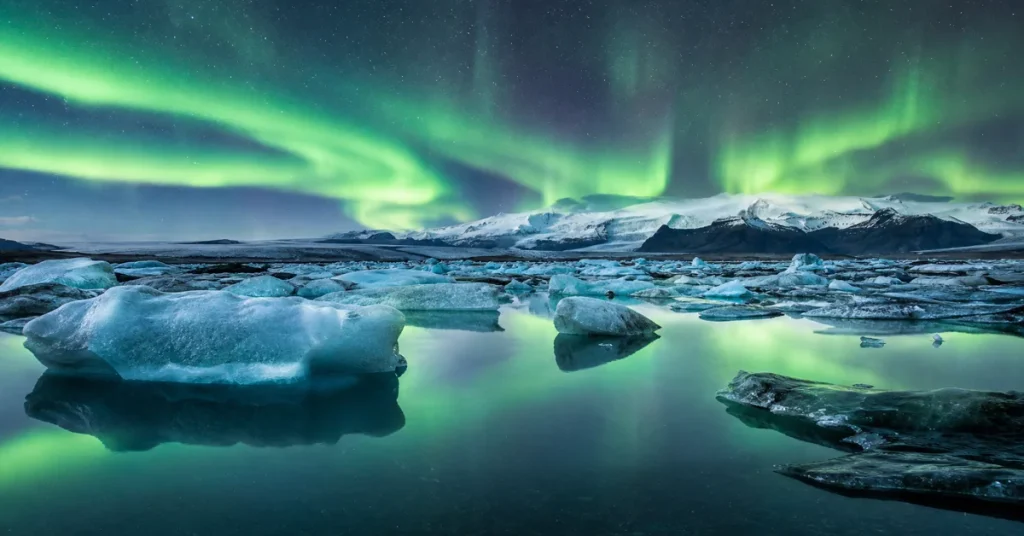
The postcard shot is Jökulsárlón, the glacier lagoon inside Vatnajökull National Park. Icebergs drift while the lights ripple overhead and mirror on the water. Spectacular.
Self-driving gives you freedom. It also means winter roads, short days and weather that flips within an hour. Check road conditions every morning before you set out.
Far north of all this, Svalbard gives you aurora in true polar night with almost no light pollution. It’s a specialist trip. Still, it’s worth a look once you’ve done the classics.
Best Places to See the Northern Lights in North America
North America holds three strong bets and one wildcard.
Fairbanks, Alaska
Fairbanks is the prime Alaskan base, and it works from September to April. It sits beneath the auroral zone, so you don’t need a huge storm to see something. Clear nights do most of the work. For US travelers, it’s the simplest route to a real Arctic sky.
Yellowknife, Canada
Yellowknife, in the Northwest Territories, draws aurora tourists for good reason. Some rankings put it first overall because they sort places by magnetic latitude rather than the map’s latitude. That detail matters. Magnetic latitude decides how often you’ll see a display and how strong a storm you need.
Churchill, Manitoba
Churchill pairs aurora with Arctic wildlife, which suits travelers who want more than one headline moment. It’s remote, so plan your transport carefully.
The Lower 48 Wildcard
Northern Montana can pay off during strong storms. In January 2026, a severe storm pushed lights as far south as the Pacific Northwest and San Francisco. Don’t book a trip around that, though. Storms arrive on their own schedule. Treat any lower-latitude sighting as a bonus.
What the Research Shows: 2026 Is Past the Peak, Not Past Hope
Research into this topic shows a clear pattern. The current solar cycle began in December 2019. Forecasters announced in October 2024 that the sun had hit its active peak. UK forecasters said in January 2026 that the declining phase had begun.
Here’s what that means for you. Declining doesn’t mean dead. Historically, some of the biggest flares arrive years after the maximum. The previous strong cycle peaked in 2001, yet it still threw major flares in 2003, 2005 and 2006.
The practical shift is this. Around the peak, big eruptions pushed the lights far from the poles. Now, fast streams of solar wind from coronal holes return roughly every 27 days as the sun rotates. They bring steadier, moderate storms instead of rare giants.
That favors high-latitude spots. Under average conditions, the oval sits near 67 degrees magnetic latitude at local midnight. Forecasters rate Kp 3 as quiet aurora, Kp 5 as moderate and Kp 9 as very active. A moderate storm won’t light up Montana. It will light up Tromsø or Fairbanks. Among the best places to see the northern lights, the ones deepest inside the oval gain the most right now.
When to Go: Season by Season
Timing matters more than most people expect.
Early season, late August to October. Finnish Lapland opens first. Norway, Sweden and Iceland follow by late September. Autumn nights are milder, so standing outside is easier on your hands and your patience.
Midwinter, December to March. This is peak darkness. For Sweden’s Arctic north, it’s also the strongest stretch for odds. It’s the coldest period too.
Late season, March into April. Daylight returns fast, so the usable window shrinks each week. Many destinations wind down by early April.
Which Place Fits Which Traveler?
| Place | Season | Best for | Watch out for |
|---|---|---|---|
| Tromsø | September to March | First-timers, easy tours | City glow |
| Lofoten | Late September to March | Photographers | Coastal cloud |
| Abisko | Late September to early April | Quiet, reliable skies | Deep cold |
| Finnish Lapland | Late August to early April | Families, daytime activities | Holiday crowds |
| Iceland | Late September to early April | Road trips, lagoon scenery | Winter roads |
| Fairbanks | September to April | US travelers | Long cold waits |
| Yellowknife | Autumn to early spring | Magnetic-latitude odds | Remote logistics |
Whichever of the best places to see the northern lights you pick, match it to your travel style. First-timers who want easy logistics should start with Tromsø or Finnish Lapland. Photographers will love Lofoten and Jökulsárlón for their foregrounds. Drivers who crave independence suit Iceland.
Limited mobility? Ask whether a tour uses heated vehicles. That cuts the time you spend standing in the cold. Budget matters too, since Nordic winter trips rarely come cheap. Compare flights and tour prices before you commit.
The Practical Playbook Beginners Skip
Picking a location is half the job. Here’s the other half:
- Choose dark ground over big cities. Going 30 to 60 minutes from town lights usually improves visibility.
- Check the moon. A full moon can wash out weaker displays, so compare moon phase with your dates.
- Watch clouds first, Kp second. Aurora happens far above the weather, but clouds still block your view. A live aurora dashboard shows a short-term forecast of where the oval sits.
- Give yourself several nights. One night is a coin flip. A longer stay tilts the odds your way.
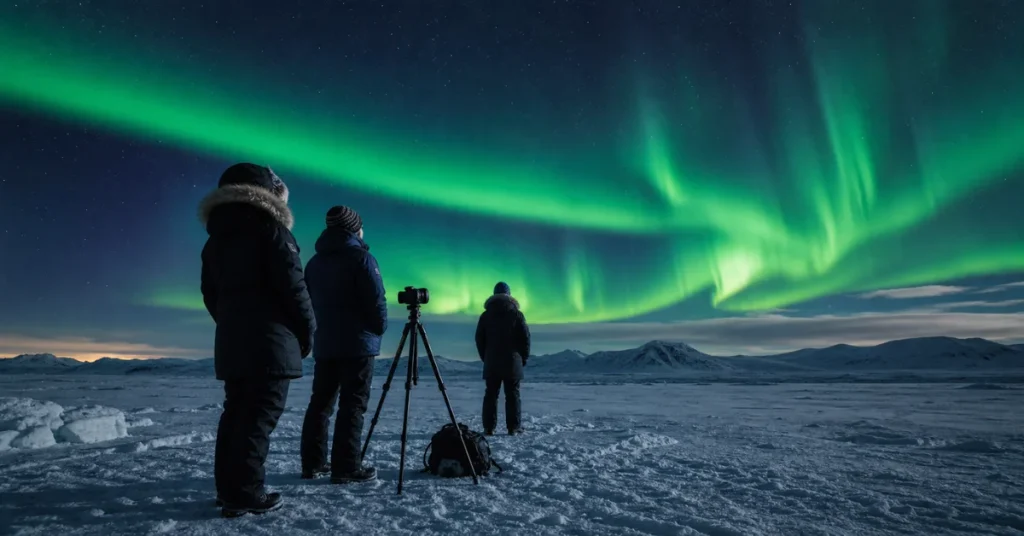
- Dress for standing still. Layers, insulated boots and hand warmers. Phone batteries drain fast in cold, so keep a spare power bank inside your coat.
- Photograph smartly. Use night mode and rest the phone on something steady. Cameras often pick up more color than your eyes do, which surprises first-timers.
And that’s the thing about aurora: it rewards patience. Green usually dominates because it forms lower, around 100 km up. Red glows higher, near 250 km, and shows up during stronger displays.
Mistakes That Waste a Good Aurora Trip
Most failed trips share the same few errors:
- Staying in the city center and hoping. Light pollution beats faint displays every time.
- Booking a single night. Cloud alone can erase one evening.
- Reading a flare headline as a promise. A big flare doesn’t guarantee lights tonight. The burst needs time to travel, and it has to point toward Earth.
- Ignoring the moon. Bright moonlight swamps soft arcs.
- Giving up at ten p.m. Displays often come in bursts. Stay out a little longer.
Final Word: Picking From the Best Places to See the Northern Lights
The best places to see the northern lights share one trait: they sit close to the auroral oval, far from city glow. Past that, your choice comes down to taste. Want easy logistics? Tromsø. Prefer quiet and open sky? Abisko. Crave a road trip? Iceland. Staying in North America? Fairbanks or Yellowknife.
The sun’s peak is behind us, but 2026 still gives plenty of reason to go. Pick a spot, book several nights, and let the sky do the rest.
FAQs
When is the best time of year to see the northern lights?
Long, dark nights between September and March suit most Arctic spots. Some places open in late August, and others stay viable into early April. Clear, moonless nights beat everything else.
Can I still see the northern lights in 2026?
Yes. The sun’s peak passed in 2024, but strong storms can still arrive in the declining phase. Places inside the oval keep producing sightings even on moderate nights.
Can I see the northern lights from the lower 48 US states?
Sometimes, during strong storms. Northern Montana is a good bet. Don’t count on it, since big storms are rare and give short notice.
Do I need a special camera?
No. Your eyes are enough, and a modern phone with night mode works fine. A steady surface matters more than the gear.
What are the best places to see the northern lights for first-timers?
Tromsø and Finnish Lapland are the easiest starting points because flights, tours and lodging are well set up. Fairbanks fills that spot for US travelers. Whichever you pick, give yourself several nights.