
A friend recently asked me a version of the question that brings most people to this page: do Omega watches hold their value, or is that steel case on your wrist just a slow-motion write-off? It’s a fair question, and the honest answer is “it depends,” but not in the vague, dodge-the-topic way that phrase usually implies.
Omega sits in an interesting spot in the watch world. It’s not Rolex, and it won’t pretend to be. But it’s also not a fashion brand that loses half its price the moment you walk out of the boutique. Somewhere in between those two extremes is where most Omega owners actually land, and the specific reference on your wrist matters more than the Omega name printed on the dial.
So, Do Omega Watches Hold Their Value?
Here’s the short version: yes, in general, Omega watches hold their value better than most mainstream luxury watch brands, but worse than Rolex, Patek Philippe, or Audemars Piguet. Across the brand’s catalog, resale trackers and secondhand dealers commonly report that Omega pieces retain somewhere in the 60 to 85 percent range of their original retail price on the pre-owned market. That’s a wide band, and the width is the point.
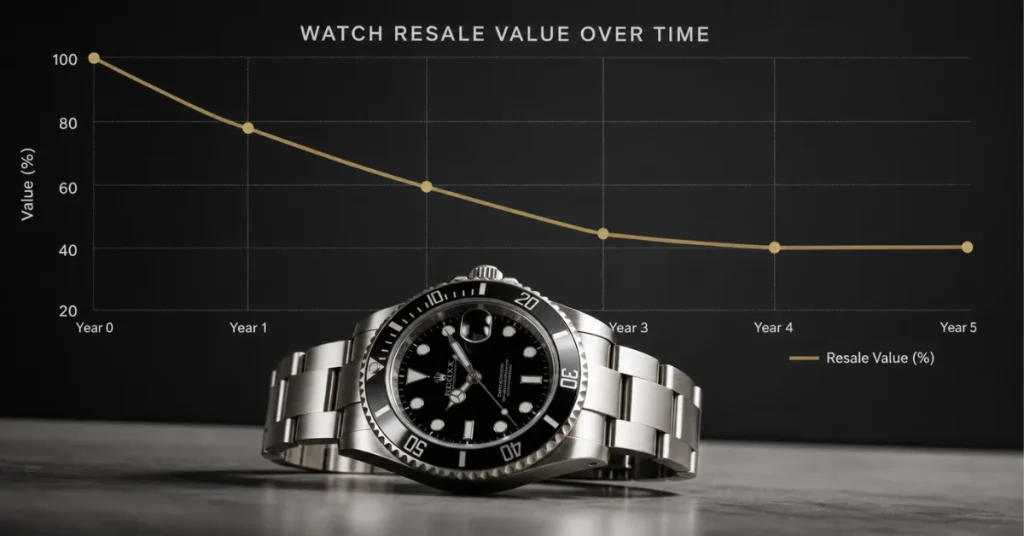
A brand-new Omega will typically lose a slice of value the moment it leaves an authorized dealer, the same way a new car does the second it’s driven off the lot. What happens after that first dip is where things split. Some references barely move again for years. Others keep drifting downward. A handful climb.
Condition, completeness (box, papers, original links), and how the specific model sits in collector demand all shape the outcome far more than the Omega logo alone.
The Models That Actually Hold Up
Not every Omega performs the same way once it hits the secondhand market, and grouping the whole catalog together hides more than it reveals. Here’s how the main collections actually stack up.
| Model | Value Retention (after a few years) | Notes |
|---|---|---|
| Speedmaster Moonwatch Professional (ref. 310.30.42.50.01.001) | 70–78% | Strongest mainstream performer |
| Limited-edition Speedmasters (Snoopy, Apollo commemoratives) | 75–88%, some appreciate | Driven by rarity, not just brand |
| Vintage Speedmaster (CK2998, 105.012) | Appreciating | Vintage collector demand rising |
| Seamaster Diver 300M | Roughly 65–75% | Bond association helps mid-range demand |
| Aqua Terra | 58–68% | Reliable but unremarkable resale |
| De Ville Prestige | 43–60% | Weakest performer in the lineup |
| Swatch x Omega MoonSwatch | Settled near or below retail | Hype has faded since 2022 launch |
A few of these deserve more context.
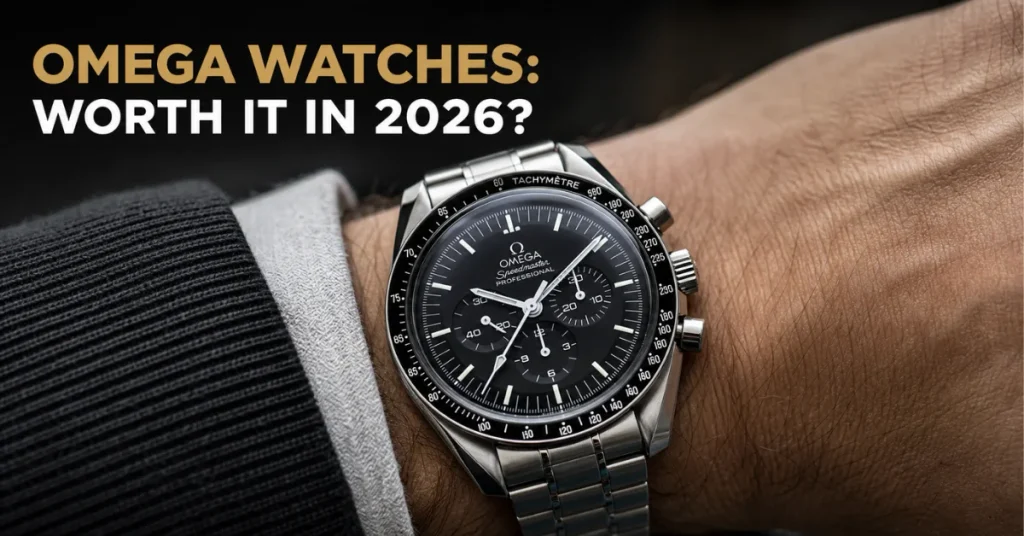
Speedmaster Moonwatch Professional. This is the reference that carries Omega’s reputation. Thanks to its NASA and Apollo 11 history, the manual-wind Moonwatch is consistently the strongest value-retainer in the lineup. Limited editions like the Snoopy Award and Apollo commemoratives have gone well beyond standard retention rates, with some vintage and discontinued references appreciating meaningfully above their original sticker price as collector demand outpaces supply.
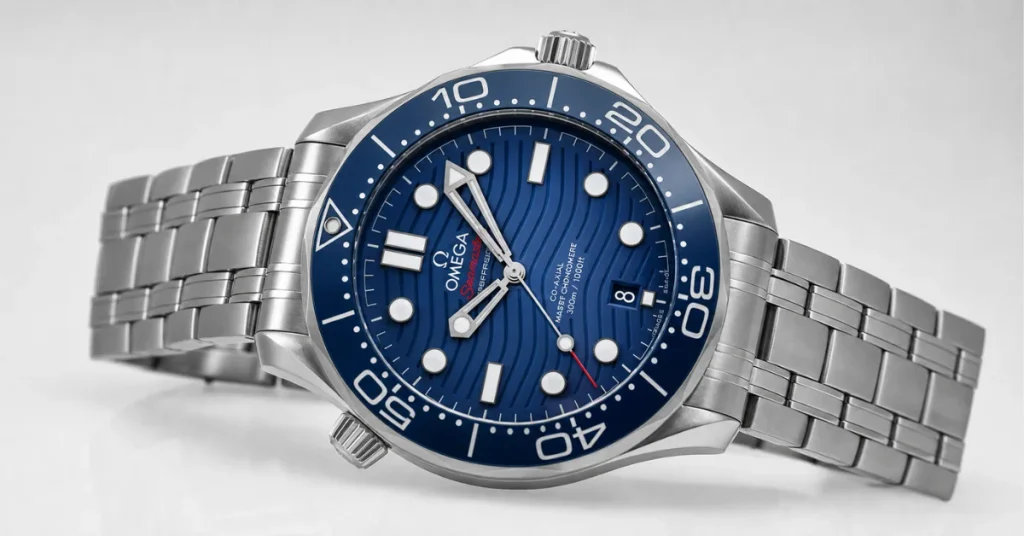
Seamaster Diver 300M. Bond’s watch since GoldenEye in 1995 carries genuine cultural weight, and it shows in resale numbers that generally sit in the middle of the pack: solid, dependable, but rarely spectacular.
Aqua Terra. A well-liked everyday piece, but the resale figures tend to land lower than the sport-focused models.
De Ville Prestige. This is the line to know about if depreciation worries you. It’s consistently cited as Omega’s weakest performer for value retention. It’s a dress watch bought for how it looks on the wrist, not for what it’ll fetch later.
What the Research Shows
Pulling together current dealer data and secondary-market listings paints a fairly consistent picture heading into 2026. Vintage Speedmaster references, particularly pre-Moon models and early 1960s pieces, have shown real price appreciation as buyers priced out of vintage Rolex look for comparable heritage at a lower entry point.
Meanwhile, the Swatch x Omega MoonSwatch, which triggered lines around the block when it launched in 2022, has cooled considerably. Secondary-market prices for most MoonSwatch colorways have settled back to around retail or below, a reminder that hype and long-term value retention are two very different things.
Analysts covering the pre-owned watch market broadly describe Omega as sitting in the “second tier” of value retention: behind Rolex, Patek Philippe, and Audemars Piguet, but comfortably ahead of most other Swiss manufacturers in its price bracket. That positioning hasn’t shifted much over the past year, though demand for top-tier Speedmaster references has stayed notably strong.
Why Some Omegas Depreciate and Others Don’t
A few consistent factors separate the winners from the depreciating pieces, and understanding them explains why the question of whether Omega watches hold their value doesn’t have one single answer.
- Scarcity beats catalog size. Omega produces watches at much higher volumes than Rolex. When supply comfortably meets demand, prices soften.
- Story sells. The Moonwatch has a genuine, verifiable place in history. A De Ville doesn’t carry that same narrative, and buyers pay for narrative as much as movement quality.
- Condition is non-negotiable. A scratched case, polished-down lugs, or a missing box-and-papers set can knock a meaningful chunk off resale price on any reference.
- Retail price sets the ceiling. A watch that launches at an inflated MSRP has further to fall than one priced sensibly from day one.
- Movement and innovation matter over decades. Omega’s Co-Axial escapement and Master Chronometer certification have genuinely improved long-term reliability, which does feed into how confidently buyers bid on used pieces.
Anyone who has bought and later sold a few watches knows this pattern repeats across the industry. It isn’t unique to Omega. What differs is how sharply the value curve bends for each brand and each reference.
The Grey Market Factor Nobody Talks About
Here’s something most articles on this topic skip entirely. Unlike Rolex, which tightly controls discounting, Omega authorized dealers routinely offer discounts off MSRP, often in the range of 10 to 20 percent depending on the model and region. Grey market retailers push that further still on select references.
This changes the whole retention conversation. If you buy a Speedmaster at 15 percent below MSRP and it later resells at 75 percent of that same MSRP, your real return on the price you actually paid looks noticeably stronger than the headline retention figure suggests. Anyone who has shopped Omega seriously knows the sticker price and the real transaction price are rarely the same number, and any honest resale conversation should account for that gap.
Resale Value vs. Insurance Replacement Value
These two numbers get confused often, and it’s worth separating them clearly. Resale value is what you’d realistically get selling the watch today on the open market. Insurance replacement value is typically higher, since it reflects the cost of buying a brand-new equivalent piece if yours were lost, stolen, or damaged. If your insurer quotes a number well above what dealers are offering to buy your watch for, that’s not a contradiction. They’re measuring two different things.
How Long Should You Hold an Omega?
Holding period changes the outcome more than most buyers expect. Modern, non-limited Omega references generally need three to five years before value stabilizes and any premium references start showing real appreciation. Vintage pieces and true limited editions play a longer game, often five to ten years, since their value is tied to slow-building collector demand rather than immediate market hype.
Omega vs. Rolex: The Comparison Everyone Asks About
It’s almost impossible to talk about watch resale without Rolex entering the conversation, so let’s address it directly. Rolex’s steel sports models, particularly discontinued or hard-to-get references, frequently sell above their original retail price due to constrained supply and enormous demand. Omega, by contrast, behaves more like a typical luxury good once it leaves the shop: it depreciates first, then stabilizes.
That doesn’t automatically make Omega the worse buy. A well-chosen Speedmaster purchased at a fair price can end up a smarter financial decision than a Rolex bought at a heavily inflated secondary-market premium. The math depends entirely on what you pay going in, not just the badge on the dial.
Where to Sell Your Omega When the Time Comes
Knowing a watch holds value doesn’t help much if you don’t know where to actually sell it. The main routes each come with trade-offs.
- Authorized dealer trade-in. Fastest and safest option, but typically the lowest offer since the dealer needs margin to resell.
- Peer-to-peer platforms (Chrono24, WatchBox). Usually better prices than a dealer trade-in, though it takes longer and carries some counterparty risk if not handled through an escrow service.
- Local watch buyers and pawn specialists. Convenient for quick cash, but offers tend to sit well below true market value.
- Auction houses. Best suited to rare, vintage, or historically significant pieces. Prices can exceed expectations, but the process is slow and comes with seller fees.
Matching the sale channel to the specific reference matters. A common Aqua Terra probably isn’t worth an auction house’s time, while a rare Snoopy Award Speedmaster very likely is.
Buying an Omega With Resale in Mind
If long-term value retention genuinely matters to your purchase decision, a few practical habits make a difference:
- Favor sport and tool watches, Speedmaster and Seamaster, over dress pieces like the De Ville line.
- Keep the original box, papers, warranty card, and any extra links or straps.
- Service the watch through authorized channels and hold onto the paperwork.
- Avoid aftermarket case or bracelet polishing, which can visibly reduce value to collectors.
- Buy limited or discontinued references when the premium over standard models is reasonable, since these tend to see the strongest long-term demand.
- Factor in the price you actually paid, not just MSRP, when judging how well a watch has performed on resale.
This isn’t investment advice. Watches should be bought first because you want to wear them. But these habits do meaningfully change the resale outcome down the line.
Conclusion
So, do Omega watches hold their value? The honest, unglamorous answer is that some do remarkably well and others quietly lose a third of their price within a few years, and the difference comes down to the specific reference, not the Omega name alone. If you’re chasing strong resale numbers, the Speedmaster Moonwatch and select Seamaster references are the safest bets in the current market. If you’re buying a De Ville because you love how it looks, that’s a perfectly good reason too. Just don’t expect the secondhand market to reward it the same way.
This article is for general informational purposes only and does not constitute financial or investment advice. Watch values fluctuate based on market conditions, and past resale performance does not guarantee future results.
FAQs
Do all Omega watches lose value after purchase?
Most new Omega watches see some price drop once they leave an authorized dealer, similar to most luxury goods. Certain limited editions and highly sought-after references can buck this trend and hold or exceed retail fairly quickly.
Which Omega watch holds its value best?
The Speedmaster Moonwatch Professional consistently performs strongest, thanks to its NASA heritage and steady collector demand, followed by select Seamaster Diver 300M references and rare limited editions.
Is Omega a better investment than Rolex?
Generally, no. Rolex sport models tend to retain and even exceed retail value more consistently. However, a smartly bought Omega can outperform an overpriced Rolex purchased at an inflated secondary-market premium.
Does buying at a grey market discount change how much value an Omega really holds?
Yes. Since many buyers pay below MSRP through authorized dealer discounts, the real return on the price actually paid is often better than the headline retention percentage suggests.
Where’s the best place to sell an Omega watch?
It depends on the reference. Common models do fine through a dealer trade-in or platforms like Chrono24, while rare or vintage pieces often perform best at auction.