

I remember standing outside a hostel in Lisbon with a backpack I’d packed badly and zero plans for the evening. Nobody was waiting for me. No group chat was buzzing with “where are we eating tonight.” Just me, a half-charged phone, and that particular flutter of nerves that hits every first-time solo traveler. Two hours later I was sharing a table of grilled sardines with four strangers from three different countries. That’s the honest answer to how to make friends while traveling solo: it happens faster than you think, usually in the most unplanned five minutes of your day.
Solo travel isn’t the lonely pursuit people assume it is. The fear of eating alone or sitting silently in a hostel bunk keeps a lot of would-be travelers home. But once you’re actually out there, the mechanics of meeting people are simpler than dating, easier than networking, and honestly more fun than either.
Why Solo Travel Doesn’t Have to Mean Alone
Here’s the thing. Solo travel and loneliness get lumped together constantly, but they’re not the same experience at all.
The global solo travel market has grown into a several-hundred-billion-dollar industry as of 2026, and that growth has pulled a whole ecosystem of social infrastructure along with it: hostels, group tours, apps, co-living spaces, all built around the idea that traveling alone doesn’t mean staying alone.
A 2025 survey of more than 3,300 solo travelers found that 71% said they actively sought connection on the road, and 68% reported forming friendships they considered meaningful, not just polite small talk. Another dataset found that 58% of solo travelers listed meeting new people as a top goal for their trip, up from 43% the year before.
Solo doesn’t mean sealed off. It means you get to choose who joins your story, one conversation at a time.
How to Make Friends While Traveling Solo at Your Accommodation
Where you sleep shapes who you meet. This is rule one, and it’s not close.
Hostels remain the gold standard for a reason. Shared kitchens, common lounges, rooftop bars: these spaces are built for spontaneous conversation. Book a dorm instead of a private room, even just for your first few nights in a new city. It costs less and does more of the social work for you than any app ever will.
Not every accommodation type offers the same social payoff, though. Here’s how the main options compare:
| Accommodation Type | Social Level | Typical Cost | Best For |
|---|---|---|---|
| Hostel dorm | Very high | $ | First-timers, budget backpackers |
| Co-living space | High | $$ | Digital nomads, longer stays |
| Guesthouse/homestay | Medium | $$ | Cultural immersion, families of hosts |
| Boutique hotel | Low-medium | $$$ | Comfort with occasional social events |
| Private Airbnb | Low | –$ | Privacy, rest, solo downtime |
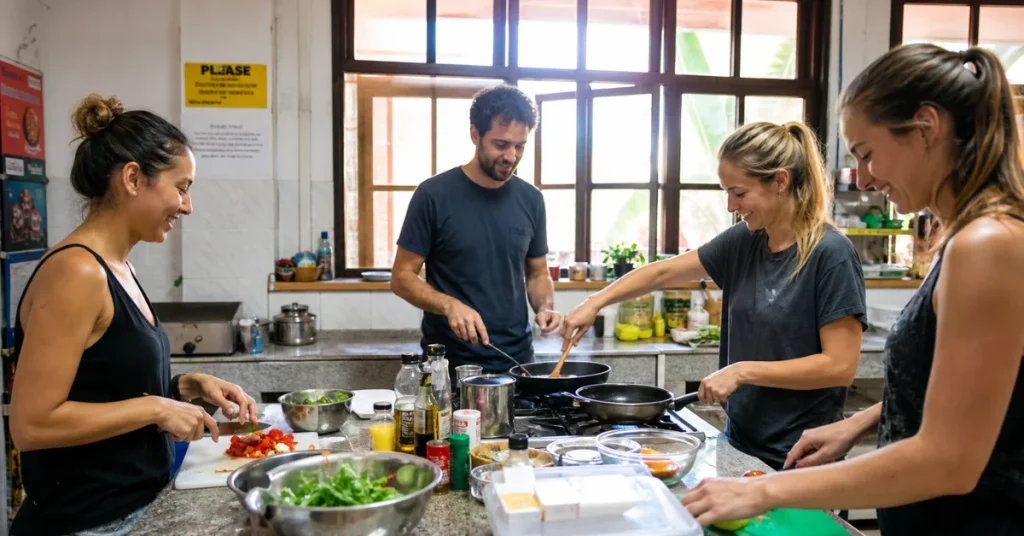
A few practical moves inside a social accommodation setting:
- Cook in the communal kitchen instead of grabbing takeout alone
- Sit in the common area with your laptop or a book, not in your bunk
- Say yes to the free walking tour the front desk keeps mentioning
- Ask one open-ended question to whoever’s nearby, like where they’re headed next
This is genuinely one of the fastest answers to how to make friends while traveling solo. Pick social accommodation, and half the work is already done before you’ve unpacked.
Meeting People Through Apps, Tours and Events
Technology has closed the gap between “I don’t know anyone here” and “I have plans tonight.”
Meetup-style apps connect travelers with local groups built around shared interests, from hiking clubs to language exchanges, and they work just as well in a new city as they do at home. Hospitality-exchange platforms such as CouchSurfing have grown well beyond their original couch-hosting model into full social networks, with city groups, public hangouts, and events that don’t require you to stay with anyone at all.
Group walking tours deserve a special mention here. They’re cheap, usually tip-based, and packed with other tourists who are, statistically, also traveling alone and also hoping to talk to someone. A two-hour tour of a city’s old quarter gives you a built-in conversation starter: the thing you’re both looking at, right now, in front of you.
Facebook groups for specific destinations or expat communities are underrated too. Search “[city name] solo travelers” before you land, and you’ll usually find a group already planning a meetup during your exact dates.
Safety-focused apps have also become part of this toolkit, especially for women traveling alone. Several dedicated women-only travel apps now let members verify each other, share live locations with trusted contacts, and organize meetups in vetted public venues. These tools don’t replace common sense, but they lower the barrier to saying yes to a meetup with someone you just met online.
How to Make Friends While Traveling Solo After 50
Most advice on this topic assumes you’re 24 with a backpack, but that’s an incomplete picture. Older solo travelers, particularly women over 50, are one of the fastest-growing groups in independent travel right now, and their social approach looks different.
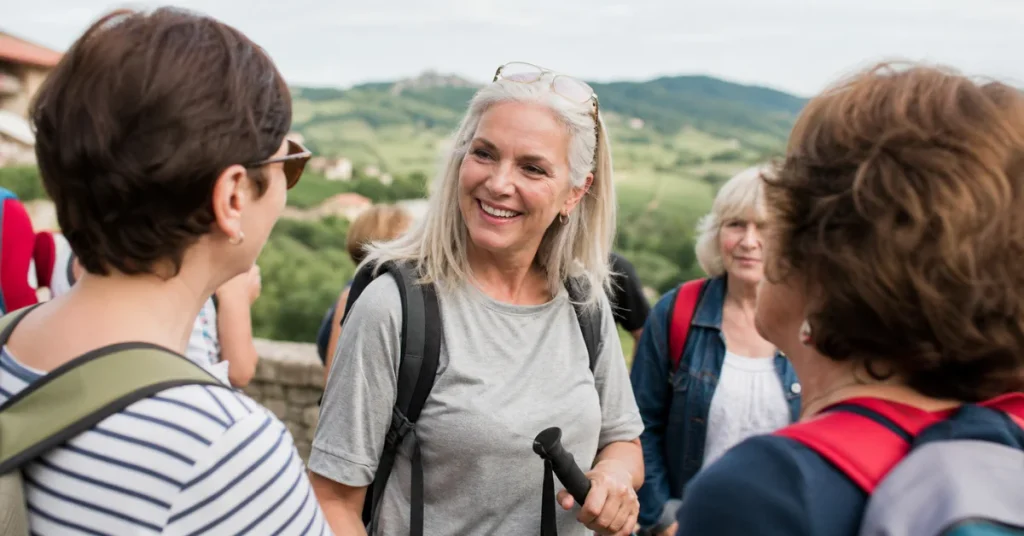
Small escorted group tours designed specifically for solo travelers tend to work better for this age bracket than dorm-style hostels. These trips build in shared meals, structured excursions, and a built-in social calendar, so connection happens without the noise of a twenty-person hostel common room. Cooking classes, wine tastings, and slow-travel walking groups also skew toward this demographic and tend to produce longer, deeper conversations than a crowded bar.
Anyone who has traveled this way will tell you the friendships formed here often last well past the trip itself, partly because the group is smaller and partly because everyone showed up wanting the same thing: company on their own terms.
The Small Habits That Actually Start Conversations
Beyond apps and accommodation, there’s a whole layer of behavior that quietly makes you approachable, or doesn’t.
Eating at the bar instead of a table is one of the oldest tricks in solo travel, and it still works. A table for one signals “leave me alone.” A seat at the bar signals “I’m open to a chat,” and it puts you next to other solo diners doing the same math you are.
Carrying something useful helps too. A universal adapter, a lighter, a portable charger: these small items turn you into the person someone asks a favor from, and favors are conversation starters with built-in warmth.
Language classes, cooking workshops and dance lessons work on the same principle as walking tours. Shared activity removes the awkwardness of a cold approach. Nobody has to think of an opening line when you’re both mangling the same verb conjugation.
One more thing worth saying plainly. Learning how to make friends while traveling solo also means learning how to read a room. Not every hostel common area is social, and that’s fine. Some nights call for a book and an early bed, and the people worth meeting will still be there tomorrow.
What the Research Shows
Detailed analysis of recent travel-industry surveys shows a consistent pattern. Connection-seeking behavior among solo travelers has climbed steadily since 2023, and it’s not slowing down. That jump from 43% to 58% on meeting-new-people goals tracks with a broader shift: more people are choosing to travel alone specifically because it’s easier to meet new people that way, not despite it.
When examining this closely, the accommodation and app data line up too. Social-style stays and group activities aren’t a workaround for solo travelers anymore. They’re the default plan for a growing share of them, and figuring out how to make friends while traveling solo has become less of a survival skill and more of a genuine trip highlight people plan around.
Staying Friends After the Trip Ends
Meeting people is only half the story. Keeping them is the part most guides skip entirely.
Set up a shared group chat before you go separate ways, not weeks later when the details have faded. A quick photo dump or voice note keeps the connection warm without demanding a full catch-up call nobody has time for. Tag each other in travel photos, since a comment thread on a shared trip photo does more for a fading friendship than a generic “hey, how are you.”
Plan the next meetup while you’re still together, even loosely. Travelers who set a tentative date, even a vague “let’s do Vietnam next spring,” are far more likely to actually reconnect than those who leave things open-ended. Some of the longest-lasting friendships in solo travel start as a two-day hostel connection and turn into a decade of coordinated trips across different continents.

Conclusion
Figuring out how to make friends while traveling solo isn’t about mastering some secret social skill. It’s about choosing accommodation that puts you near people, saying yes to the walking tour, sitting at the bar instead of the corner table, and accepting that a little initial awkwardness is the entry fee for genuinely good company. Whether you’re 24 with a backpack or 58 on an escorted small-group tour, the same principle holds: put yourself where people naturally gather, and the friendships follow. Do that consistently, and you’ll land home from your next solo trip with more new contacts in your phone, and a few real friends, than you’d have made staying in with the same old crowd for a month.
FAQs
Is it hard to make friends while traveling solo as an introvert?
Not really, it just looks different. Introverts tend to do better with small, activity-based settings like a cooking class or a hostel kitchen than loud group bars, and that’s a completely valid way to meet people.
What’s the single best place to meet people when traveling alone?
Social hostels with shared kitchens and common lounges consistently outperform every other option, simply because they’re designed for casual, low-pressure interaction.
How long does it usually take to figure out how to make friends while traveling solo in a new city?
Often less than a day. A shared meal, a walking tour, or a hostel common room can produce a genuine connection within hours, especially in destinations popular with other solo travelers.
How do you stay friends with people you meet on a solo trip?
Set up a shared group chat before you part ways, tag each other in photos afterward, and pencil in a loose plan for the next trip while the connection is still fresh.
Do older solo travelers make friends differently than younger backpackers?
Yes. Travelers over 50 tend to connect more through small escorted group tours and structured activities like cooking classes than through dorm-style hostels, and those friendships often run deeper because the groups are smaller.