
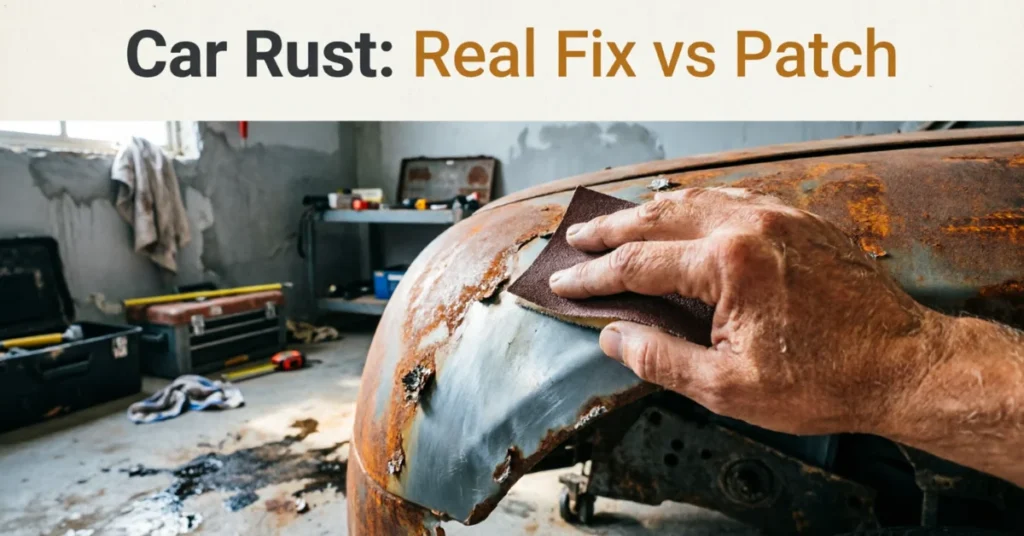
Rust doesn’t ask permission. It shows up as a dime-sized paint bubble on a fender, gets ignored through a winter or two, and turns into a hole you can put a finger through. If you’re searching for how to fix rust on a car, the honest answer is: it depends entirely on how deep that bubble has gone, and on what your panel is actually made of.
Surface rust is a Saturday afternoon job. Scale rust takes real effort. Penetrating rust, the kind that’s eaten clean through the metal, is where a lot of DIY attempts fall apart. This guide walks through all three stages, plus a few things most rust guides skip entirely.
How to Fix Rust on a Car: What You’re Actually Dealing With
Before touching a sander, figure out which stage you’re looking at. This one decision determines whether you’re spending an afternoon or a weekend.
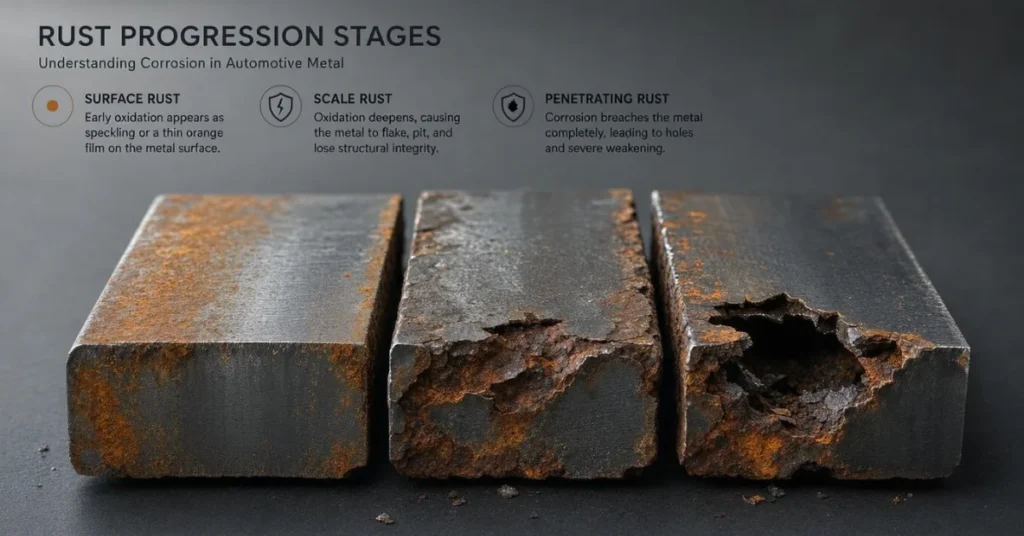
Surface rust sits in the paint and clear coat. It hasn’t reached bare metal yet, or it’s only just started to. Press a fingernail into it and the panel underneath still feels solid.
Scale rust has broken through to the metal itself. It looks flaky and rough, and it’s spreading under the paint even in spots that still look fine.
Penetrating rust has eaten a hole clean through the panel. Light might show through from the other side. This is structural, not cosmetic, and it changes everything about the repair.
Tap the bottom of your rocker panels and door skins with the back of a screwdriver handle. A dull, hollow thud instead of a solid knock usually means metal that’s thinner than it should be. Check under the wheel wells and lift the trunk mat too, since rust often starts where you can’t see it.
Rust Stage Quick Reference
| Stage | What It Looks Like | DIY Cost | Time Needed | Skill Level |
|---|---|---|---|---|
| Surface | Paint bubble or bare metal spot, no pitting | $20–$150 | 2–4 hours | Beginner |
| Scale | Flaky, pitted metal, rough texture | $100–$300 | 6–12 hours | Intermediate |
| Penetrating | Visible hole, thin/flexing metal | $1,500–$5,000+ | Multi-day, welding required | Advanced or professional |
Aluminum vs Steel: Not All “Rust” Is Rust
Here’s something most guides skip. Rust, technically, only happens to iron and steel. If your car has aluminum body panels, which is increasingly common on newer trucks and SUVs, you’re not dealing with rust at all.
Aluminum corrodes differently. Instead of orange flaking, you’ll see a white or gray powdery buildup, usually starting at bolt holes, seams, or spots where dissimilar metals touch.
The repair steps look similar on the surface, sanding, priming, painting, but the primer has to be aluminum-specific, and steel wire brushes should never touch aluminum panels. Cross-contamination between the two metals actually speeds up corrosion instead of fixing it.
If you’re not sure what your panel is made of, a magnet is a fast way to check. It sticks to steel and won’t stick to aluminum.
Tools You’ll Need Before You Start
A basic surface or scale repair doesn’t require a professional shop’s worth of gear. Here’s what actually gets used:
- 80-grit and 180 to 220-grit sandpaper (or a flap disc if you’ve got an angle grinder)
- Wire brush or rust removal wheel (steel-only, never on aluminum)
- Rust converter
- Self-etching primer
- Body filler, for scale rust only
- Color-matched touch-up paint and clear coat
- Masking tape, dish soap, and a solvent like wax-and-grease remover
- A P100 respirator mask, because grinding rust throws fine metal particles into the air you’re breathing
One step almost nobody mentions: find your paint code before you buy anything. It’s usually on a sticker inside the driver’s door jamb, sometimes under the hood or in the trunk. Matching by eye at a paint counter is how mismatched touch-ups happen.
Most of this gear sits on a shelf at any auto parts store, and a small job runs somewhere between $20 and $150 depending on panel size and paint match.
Surface Rust: The Weekend Fix
This is the version most people mean when they ask how to fix rust on a car, and it’s genuinely the easiest one to get right.
Start by washing the area with dish soap and water, then wipe it down with a solvent to strip any wax or grease. Paint won’t bond to a dirty surface, and skipping this step is the most common reason a “fixed” spot rusts again within months.
Sand with 80-grit until you hit clean metal with zero rust color left. Don’t stop early. Any rust left under the new paint keeps working, invisibly, until it bubbles right back through.
Switch to 180 or 220-grit to feather the edges and smooth the surrounding original paint. This blends the repair instead of leaving a hard ridge you can see and feel.
Apply a rust converter next. It chemically neutralizes any microscopic rust still clinging to the surface and leaves a paintable black coating behind. Let it dry fully before moving on.
Mask off the area and lay down a self-etching primer, followed by color-matched paint in thin coats and a clear coat on top. Let each layer cure before adding the next one; rushing this step is where bubbles and cracking come from.
Scale Rust: When Sanding Isn’t Enough
Scale rust needs the same basic sequence, plus body filler and more patience. Anyone who’s tackled a fender with pitted, flaky corrosion knows the sanding alone takes real time.
Grind down to bright, shiny metal with no pitting left anywhere. A flap disc on an angle grinder speeds this up considerably compared to hand sanding.
Apply two coats of epoxy primer directly to the bare metal before any filler goes on. Skipping this is the most common reason scale repairs fail within a year or two, because filler applied straight over untreated steel traps moisture underneath it.
Mix and apply body filler in thin layers, letting each one cure before sanding it down. Build up gradually rather than trying to fill a deep pit in one pass.
Sand progressively finer, prime again, then paint and clear coat exactly as you would for surface rust. A full scale repair on one panel typically runs six to twelve hours of actual working time, spread across a weekend.
Penetrating Rust: The Point Where DIY Gets Risky
Once rust has punched through the metal, you’re not patching paint anymore. You’re doing bodywork, and the bar goes up.
Cut out every bit of rusted metal, extending the cut about an inch into solid steel in every direction. It’s better to remove too much than to leave hidden corrosion under a patch.
Source a patch panel that matches your car’s contour, or fabricate one from sheet steel if a reproduction panel doesn’t exist. Popular models often have patch panels available; less common ones mean cutting and shaping your own.
Tack weld the patch in place at roughly one-inch intervals, checking the fit before committing to full welds. Then stitch weld around the perimeter in short beads, alternating sides so the heat doesn’t warp the panel.
This stage genuinely calls for a welder, either yours or a shop’s. A patch bonded with adhesive instead of welded can work on non-structural panels, but rocker panels, frame rails, and subframes are a different category entirely.
The Electrolysis Method for Small Parts
For bolts, brackets, trim clips, and other small pieces, there’s a technique most rust guides never bring up: electrolysis.
Submerge the rusted part in a plastic tub of water mixed with washing soda, suspend a sacrificial piece of scrap steel nearby, and connect both to a basic battery charger, part as negative, scrap steel as positive. Run it for several hours to overnight.
The current strips rust off the part without touching the underlying metal or removing surface texture, which makes it useful for parts you want to reuse rather than replace. It won’t work on painted panels, but for small hardware it’s cheap and genuinely effective.
How to Fix Rust on a Car Before It Gets Structural
The cheapest rust repair is the one you catch early. A quarter-sized surface spot fixed this month costs $20 to $150 in materials. The same spot ignored for two years can turn into a patch-panel job running well past $1,500.
Federal safety regulators recalled more than 880,000 SUVs and trucks in 2026 after a rear suspension component corroded to the point of failure, a reminder that rust isn’t always just cosmetic. It can reach parts that keep a wheel attached to the car. If you notice clunking, knocking, or odd handling from underneath the vehicle, that’s worth checking regardless of whether you’ve spotted visible rust yet. It’s also worth checking your VIN for open safety recalls before assuming those symptoms are just normal wear.
Wash your car regularly, especially the undercarriage, if you live somewhere that salts the roads in winter. Wax or a ceramic coating adds a barrier. Touch up paint chips the week you notice them, not the season after.
Does Insurance Cover Rust Damage?
Short answer: usually not. Comprehensive coverage typically treats rust as gradual wear and tear rather than a sudden, covered event, the same category as worn brake pads or an old timing belt.
There are exceptions. If rust develops because of a specific covered incident, flood damage that wasn’t properly dried out, for example, an insurer may treat the resulting corrosion differently. That’s worth a call to your provider rather than an assumption either way.
This is part of why catching rust early matters financially, not just cosmetically. You’re paying out of pocket either way, and the bill only grows with time.
Repair or Replace: A Decision Guide
Not every rusted panel is worth saving, especially on an older car. This comparison helps frame the call before you spend money.
| Situation | Recommended Action |
|---|---|
| Small surface rust, car worth more than repair cost | DIY repair |
| Scale rust on a car you plan to keep 5+ years | DIY or professional repair |
| Penetrating rust on a structural panel (frame, rocker, subframe) | Professional welding required |
| Repair cost approaches or exceeds the car’s market value | Consider replacing the vehicle instead |
| Rust near suspension mounts with handling symptoms | Get it inspected immediately, regardless of cost |
What the Research Shows
Anyone who’s worked on more than a handful of rusted panels notices the same pattern: nearly every failed DIY repair traces back to one of two mistakes, incomplete rust removal or skipped primer. Body shops that specialize in corrosion repair report that patch jobs applied over remaining rust, rather than fully removed rust, tend to recur within two to five years.
Detailers and hobbyist mechanics who work through this regularly also point to timing as the biggest single factor in whether a repair lasts. Rust treated within a month of first appearing behaves like a straightforward cosmetic fix. The same spot left through one more wet season behaves like a structural one.
Who This Guide Is For
If you’re comfortable with a sander and a spray can, surface and scale rust are realistic weekend projects. If your car has a hole you can see daylight through, or the rust is anywhere near a suspension mount, frame rail, or rocker panel, get a second opinion from someone who welds for a living before committing to a DIY fix.
Mobile mechanics and small local body shops can often assess penetrating rust for less than a dealership quote, and a written estimate is worth getting before any cutting starts.
Conclusion
Learning how to fix rust on a car really comes down to identifying which of the three stages you’re dealing with, confirming whether you’re working with steel or aluminum, and matching your tools and timeline to the job. Surface rust rewards fast action and basic supplies. Scale rust asks for more patience and the right primer sequence. Penetrating rust is a welding job, full stop, and pretending otherwise just delays a bigger repair bill. Catch it early, do the prep work properly, and a rust spot stops being something that spreads and starts being something you fixed.
FAQs
Can I fix car rust without removing the paint down to bare metal?
Not permanently. Any rust left under new paint keeps corroding and will bubble back through, usually within months.
How much does DIY rust repair typically cost?
Small surface jobs run roughly $20 to $150 in materials. Deeper scale or penetrating repairs, especially ones needing welded patch panels, cost significantly more.
Does my insurance cover rust repair?
Generally no. Most comprehensive policies treat rust as gradual wear and tear rather than a covered loss, though exceptions exist for rust caused by a specific covered event.
Is aluminum corrosion the same as rust?
No. Rust only affects iron and steel. Aluminum corrodes into a white or gray powder and needs aluminum-specific primer and tools, never a steel wire brush.
How do I know if rust has become structural?
A dull or hollow sound when you tap the panel, visible holes, or corrosion near suspension mounts, rocker panels, or frame rails are all signs it’s gone past cosmetic.
Will rust come back after I repair it?
It can, usually because rust wasn’t fully removed or primer was skipped. A properly sanded, converted, and primed repair holds up for years.