
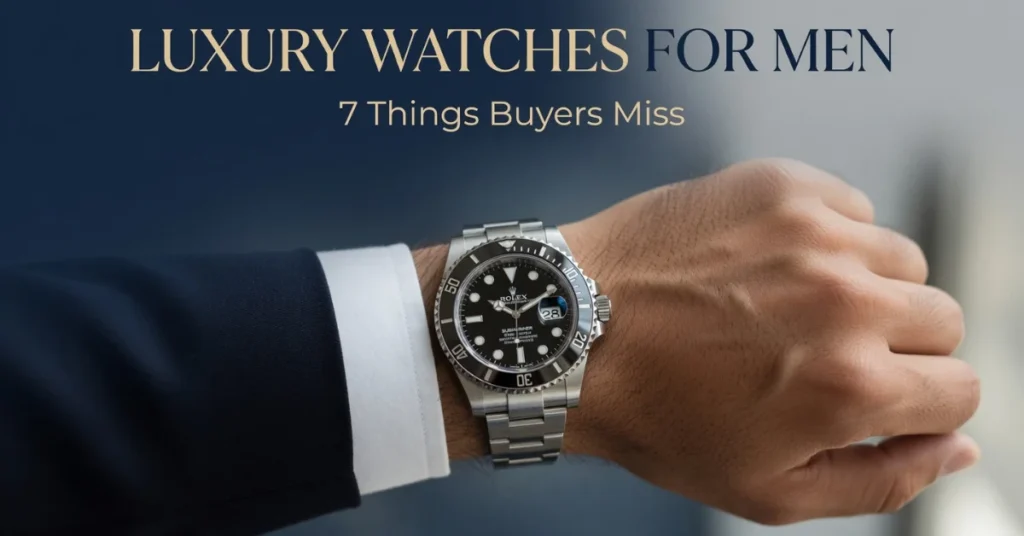
Sixty-three billion dollars. That’s roughly what the global luxury watch market is worth in 2026, and men’s timepieces make up the overwhelming share of it. Anyone shopping for luxury watches for men right now is stepping into a category that’s grown more complicated, and more interesting, than it was a decade ago.
It isn’t just about telling time anymore. It hasn’t been for a while, honestly. A watch on a man’s wrist still says something about taste, patience, and sometimes plain old stubbornness about doing things the traditional way.
The Number That Explains Why Luxury Watches for Men Won’t Go Away
Digital devices track time better than any mechanical movement ever will. Your phone is more accurate. Your smartwatch does more. And yet demand for luxury watches for men keeps climbing rather than fading.
Here’s the thing. A mechanical watch isn’t competing with a phone on accuracy. It never was. It’s competing on craftsmanship, scarcity, and the story a person tells when someone asks about it.
Consider a Rolex Submariner passed from father to son. Nobody hands down a smartphone. That emotional weight is a large part of what keeps this category alive, and it’s why boutiques in cities from Geneva to Dubai to Hong Kong still see lines out the door for certain releases.
Asia Pacific alone accounts for more than half of global luxury watch spending, driven largely by buyers who see these pieces as both a wardrobe statement and a store of value. Europe and North America remain close behind, with distinct buying habits shaped by heritage brands and boutique culture.
What the Research Shows
Detailed analysis of recent industry data reveals a pattern that surprises a lot of first-time buyers: most purchases still happen offline, not online.
Industry researchers tracking the sector put offline retail at more than two-thirds of total sales, and in some markets closer to four-fifths. People want to feel the weight of a watch, try the bracelet, hear the case click shut. A screen can’t replicate that, no matter how good the product photography is.
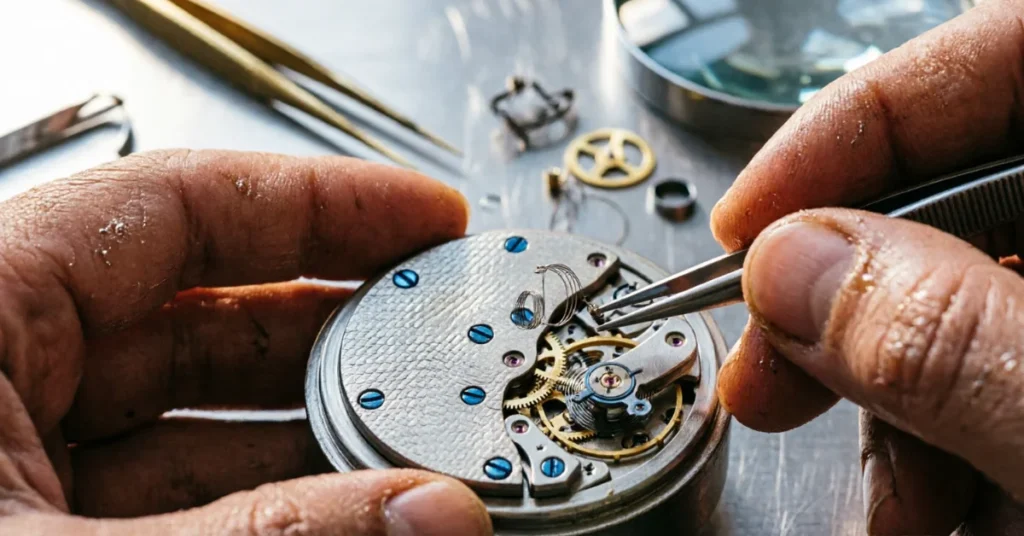
Mechanical movements also outsell quartz by a wide margin among serious buyers, even though quartz is cheaper to produce and arguably more accurate day to day. That preference isn’t about performance. It’s about the visible complexity of gears and springs doing work a battery could do instantly. Collectors pay for the difficulty, not despite it.
Men purchasing in this category also skew toward repeat buying. A first luxury watch tends to lead to a second, then a small rotation, then eventually a modest collection built over years rather than one afternoon.
The Brands That Actually Define This Category
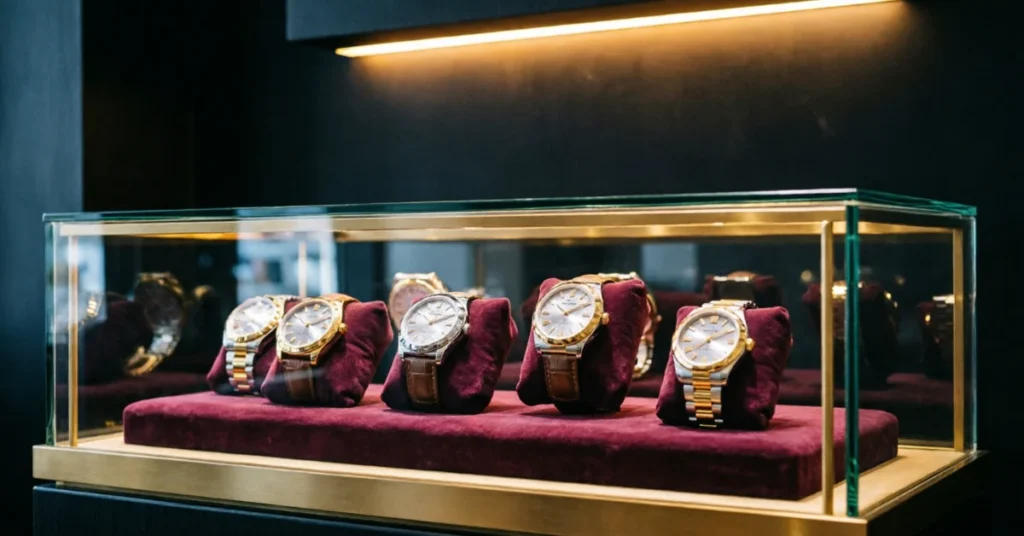
Walk into any serious watch conversation and a handful of names come up again and again.
Rolex remains the default reference point. Its Oyster case, Submariner, and Daytona lines dominate resale markets and hold value better than almost anything else with a movement inside it. Patek Philippe sits above it in prestige circles, prized for in-house complications and production numbers so tight that waiting lists stretch for years.
Omega has built a different kind of following, one rooted in space history and motorsport rather than pure scarcity. Cartier draws men who want elegance over sport, with the Tank line proving that a design from 1917 can still look completely current in 2026. Tudor, Rolex’s sister brand, has become the entry point for buyers who want serious mechanical credentials without the five-figure price tag.
Anyone shopping luxury watches for men for the first time usually starts with one of these five names, then branches out once they understand what they actually value: heritage, sport, elegance, or rarity.
| Brand | Known For | Typical Entry Price | Resale Strength |
|---|---|---|---|
| Rolex | Submariner, Daytona, GMT-Master II | $9,000+ | Very strong, often above retail |
| Patek Philippe | Calatrava, Nautilus | $30,000+ | Very strong, long waitlists |
| Audemars Piguet | Royal Oak | $25,000+ | Strong, limited production keeps demand high |
| Omega | Speedmaster, Seamaster | $5,000+ | Moderate, steady long-term demand |
| Cartier | Tank, Santos | $4,500+ | Moderate, driven by design longevity |
| Tudor | Black Bay family | $3,500+ | Growing, best value entry point |
Prices shift with currency, region, and specific reference, so treat this table as a starting point for research rather than a fixed price list.
Pros and Cons Nobody Tells You Upfront
There’s a lot to like here, and a few things worth knowing before spending real money.
What works in favor of buying:
- Strong resale value on the right models, sometimes appreciating above retail
- Serviceable for decades when properly maintained
- Genuine craftsmanship you can see and feel, not just marketing copy
- A tangible asset that doesn’t sit idle in a drawer like most jewelry
What buyers often regret:
- Retail waitlists on popular Rolex and Patek Philippe models can run into years
- Not every brand or reference holds value; most quartz fashion-luxury pieces depreciate fast
- Servicing costs at authorized dealers add up over a watch’s lifetime
- Grey market and resale platforms carry real counterfeit risk if you skip authentication
Anyone serious about buying luxury watches for men should treat the purchase like buying a small appliance with a soul. Research first, buy from authorized sources, and expect the boring maintenance costs that come with owning anything mechanical.
Who Should Actually Care About This
Not every man needs a five-figure watch, and nobody buying their first one should feel pressured into thinking otherwise.
Professionals attending client meetings or industry events often see a well-chosen watch doing quiet work that a suit alone can’t. Collectors treat the hobby the way others treat wine or classic cars, chasing specific references the way a stamp collector chases a rare print. Gift buyers, especially around milestone birthdays or graduations, gravitate toward the category because a watch outlasts almost anything else you could wrap in a box.
Anyone who has spent time around serious collectors knows the conversation rarely stays about money for long. It shifts to movement finishing, case proportions, and the small design choices most people never notice until someone points them out.
Getting the Case Size Right (The Step Most Guides Skip)
Most articles on luxury watches for men talk brands and price, then leave sizing as an afterthought. That’s backwards, since a watch that doesn’t fit the wrist properly gets worn less no matter how much it cost.
Wrap a soft tape measure around the wrist bone, note the circumference, then match it against typical case diameters:
| Wrist Circumference | Recommended Case Diameter | Best Suited Style |
|---|---|---|
| 5.5″ – 6.5″ | 34mm – 38mm | Dress watches, slim vintage styles |
| 6.5″ – 7.5″ | 38mm – 42mm | Most versatile, works for daily wear |
| 7.5″ – 8.5″+ | 42mm – 46mm | Sports and dive watches, bold statement pieces |
Lug-to-lug distance matters as much as diameter. A 42mm case with long lugs can hang off a smaller wrist even when the diameter looks correct on paper, so trying a piece on in person still beats guessing from specs alone.
What Nobody Tells You About Insuring a Luxury Watch
Once the purchase is done, most buyers assume their home insurance has them covered. It usually doesn’t, or not fully.
Standard homeowner’s and renter’s policies typically cap jewelry and watch claims at a few thousand dollars per item, well below what most luxury watches for men actually cost. Specialist watch insurance fills that gap, and pricing across providers tends to land in a similar range: roughly 1% to 2% of the watch’s appraised value per year. A $10,000 piece might run $100 to $200 annually, while a $50,000 collection could sit closer to $500 to $1,000 a year.
Getting an independent appraisal before buying a policy, and updating it every couple of years as resale values shift, keeps the coverage matched to what the watch is actually worth rather than what it cost on day one.
Common Mistakes First-Time Buyers Make
A few patterns show up again and again among newcomers to this space.
Buying based on brand name alone, without checking whether that specific reference actually holds value, is the most common one. Skipping authentication on resale platforms is a close second, and it’s the one that costs people the most money when it goes wrong. Ignoring strap and bracelet comfort in favor of dial design is another, since a watch worn daily needs to sit right on the wrist, not just look good in photos.
Buyers outside major watch hubs sometimes assume they need to fly to Geneva or New York to buy properly. In reality, authorized dealer networks and verified pre-owned platforms have made sourcing genuine pieces far easier than it was even five years ago, wherever you happen to live.
Conclusion
Luxury watches for men have held their place through smartwatches, phones, and every prediction that mechanical timepieces were on their way out. The category keeps growing because it sells something a screen never will: craftsmanship you can hold, a story you can pass down, and a small piece of engineering that outlives its first owner. Whether the goal is a first serious purchase or an addition to a growing collection, the fundamentals stay the same. Buy from trusted sources, understand what actually holds value, and choose a piece that fits how you actually live, not just how it looks in a photo.
This article is for general informational purposes and does not constitute financial or investment advice.
FAQs
What is the best luxury watch brand for a first-time buyer?
Tudor and Omega are commonly recommended starting points, offering genuine Swiss mechanical craftsmanship at a lower entry price than Rolex or Patek Philippe.
Do luxury watches actually increase in value?
Some do, particularly steel sports models from Rolex and Patek Philippe, but most luxury watches depreciate like any other consumer good. Value retention depends heavily on the specific model.
How often does a luxury watch need servicing?
Most manufacturers recommend a full service every four to seven years for mechanical movements, which can cost several hundred dollars depending on the brand and complexity.
Is it safe to buy a luxury watch online?
It can be, provided the platform offers third-party authentication and a clear return policy. Buying directly from authorized dealers remains the lowest-risk option for new buyers.
Why do mechanical watches cost more than quartz watches with the same brand name?
Mechanical movements require far more hand-assembly and precision engineering, which drives both production cost and the perceived craftsmanship value collectors pay for.