
Mexico travel destinations are pulling in more visitors than at any point in the country’s history, and once you’ve stood on a cenote’s edge in the Yucatán or watched the sun drop behind a colonial rooftop in Oaxaca, it isn’t hard to understand why. The country welcomed a record 98.2 million international visitors in 2025, a number that includes overnight tourists, cruise passengers, and day-trippers crossing the northern border. That’s not a fluke year. It’s the continuation of a trend that’s been building since the pandemic dip, and 2026 is shaping up to push it even further.
Anyone who has actually planned a Mexico trip knows the hard part isn’t finding somewhere good to go. It’s narrowing down which of the country’s 32 states deserves your limited vacation days. Beaches, jungle ruins, mountain towns, desert wine country: Mexico doesn’t really have an off-season or an off-region. It has moods, and each one rewards a different kind of traveler.
Here’s a quick side-by-side before the deeper breakdown below:
| Region | Best For | Ideal Season | Vibe |
|---|---|---|---|
| Riviera Maya (Cancún, Tulum) | First-timers, beach lovers | December to April | Easy, resort-friendly, ruins nearby |
| Mexico City | Culture, food, museums | October to April | Fast-paced, walkable, huge variety |
| Los Cabos & Pacific Coast | Luxury, fishing, whale watching | December to April | Upscale, desert-meets-ocean |
| Puerto Escondido | Surfing, laid-back beach towns | May to October (best swells) | Relaxed, unpolished, adventurous |
| Oaxaca & San Miguel de Allende | Slow travel, colonial architecture | October to April | Romantic, artsy, food-focused |
| Guadalajara & Monterrey | 2026 World Cup, tequila, mariachi | June to July (tournament window) | Energetic, culturally rich |
Mexico Travel Destinations Are Having Their Biggest Year Yet
Foreign exchange income from international visitors reached roughly $34.99 billion in 2025, a jump of over 6% compared with the year before. Overnight tourists alone (the travelers actually spending nights, meals, and excursion money in the country) climbed past 47.8 million, also up more than 6% year over year.
Locals in tourism-heavy states will tell you the growth feels visible on the ground. New flight routes, expanded airport terminals, and a modernized rail line connecting the southeast have all made once-remote corners of the country easier to reach than they were even three years ago. Investment in tourism infrastructure surpassed $36 billion across roughly 700 projects in 2025 alone, spread across 30 states.
That kind of momentum matters for anyone planning a trip. It means better flight options, fresher infrastructure, and, in some cases, noticeably bigger crowds at the sites that were already popular. Mexico travel destinations aren’t quietly waiting to be discovered anymore. They’re squarely in the spotlight, and it pays to plan accordingly.
The Mexican Caribbean: Where Most First-Timers Start
Quintana Roo remains the state most people picture when they think of a Mexico vacation, and for good reason. Cancún still delivers on the postcard promise: powder-white sand, warm turquoise water, and a nightlife scene built for spring break energy. But the region has quietly diversified far beyond that reputation.
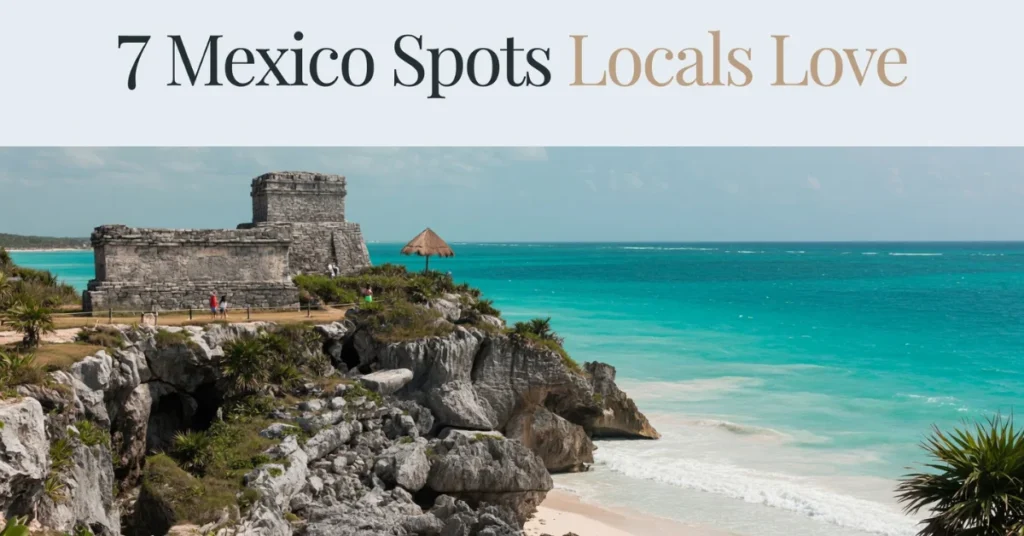
Tulum draws a different crowd entirely: clifftop Mayan ruins overlooking the Caribbean, boutique hotels tucked into jungle, and a food scene that’s earned international attention. A short ferry ride from Cancún, Isla Mujeres offers a slower pace, with snorkeling at Manchones Reef and diving trips to the Cave of Sleeping Sharks for anyone chasing a little adrenaline.
Standing at the mouth of a cenote in this region, one of the thousands of freshwater sinkholes scattered across the peninsula, it becomes clear why so many travelers build their whole itinerary around this corner of the map. The water is startlingly clear, often cool enough to make the humidity outside disappear for a while.
For history lovers, Chichén Itzá remains the single most-visited archaeological site in the country. The stepped pyramid known as El Castillo draws crowds year-round, and a newly opened rail connection has made day trips from Cancún and Mérida considerably simpler than the long bus rides travelers relied on in years past.
Mexico City and the Cultural Heartland
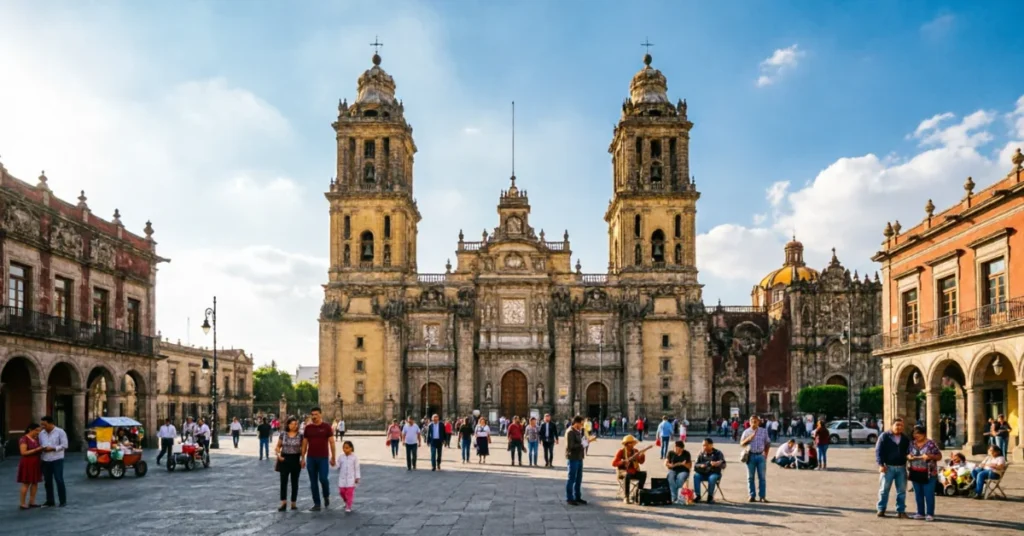
Mexico City rewards travelers who want their trip to feel like more than a beach chair with a view. Roma and La Condesa have become the neighborhoods most first-time visitors gravitate toward: walkable, full of independent coffee shops, and close enough to the historic center to reach on foot or by a short metro ride.
Anyone who’s spent a few days here knows the city moves at its own rhythm. Mornings start slow with pan dulce and café de olla; afternoons stretch into long lunches; evenings pick up with mezcalerías and rooftop bars that stay lively well past midnight.
The Frida Kahlo Museum, housed in her childhood home, still draws lines around the block. The Zócalo, the largest public square in Latin America, anchors the historic district, flanked by the Metropolitan Cathedral and the National Palace. A short trip outside the city limits leads to Teotihuacán, where the Pyramid of the Sun rises out of flat desert scrubland and offers one of the most striking sunrise views in the country.
Oaxaca, a few hours south, adds another layer entirely: indigenous markets stacked with mole pastes and hand-woven textiles, mezcal distilleries open to visitors, and a food culture that regularly ranks among the best on the continent.
Pacific Coast Escapes Beyond the Postcard
The Pacific side of the country tends to move at a slower, saltier pace than the Caribbean coast. Puerto Vallarta has built a reputation as Mexico’s most welcoming beach city for LGBTQ+ travelers, with the Romantic Zone neighborhood packed with queer-owned restaurants and bars that make solo and group travelers alike feel at home.
Los Cabos, on the southern tip of Baja California, leans luxury: championship golf courses, sport-fishing charters chasing marlin and sailfish, and desert landscapes that meet the ocean in a way that feels almost otherworldly. Whale-watching season runs roughly December through April, when gray whales migrate along the peninsula.
Surfers tend to skip the resort towns entirely and head straight for Puerto Escondido, now regarded as one of the best surf destinations on the planet and a regular host of international competitions. The waves here aren’t for beginners, but the town’s laid-back energy and beachfront seafood shacks make it worth the trip even for non-surfers tagging along.
Colonial Towns Built for Slow Travel
Not every great trip to Mexico involves sand between your toes. San Miguel de Allende, with its cobblestone streets and rose-colored cathedral, has become a favorite for travelers chasing a slower, more romantic pace: art galleries, courtyard restaurants, and golden-hour light bouncing off centuries-old facades.
Guanajuato, a short drive away, is arguably even more photogenic, with brightly painted houses stacked up steep hillsides and narrow alleyways (callejones) that locals still navigate by memory. San Cristóbal de las Casas, tucked into the highlands of Chiapas, adds an indigenous Mayan cultural layer that feels worlds away from the resort coasts.
Anyone who has wandered these towns at dusk, when the day-trip crowds thin out and the plazas fill with locals instead, understands why so many travelers extend their stay by a few extra days once they arrive.
How the 2026 World Cup Is Reshaping Mexico Travel Destinations
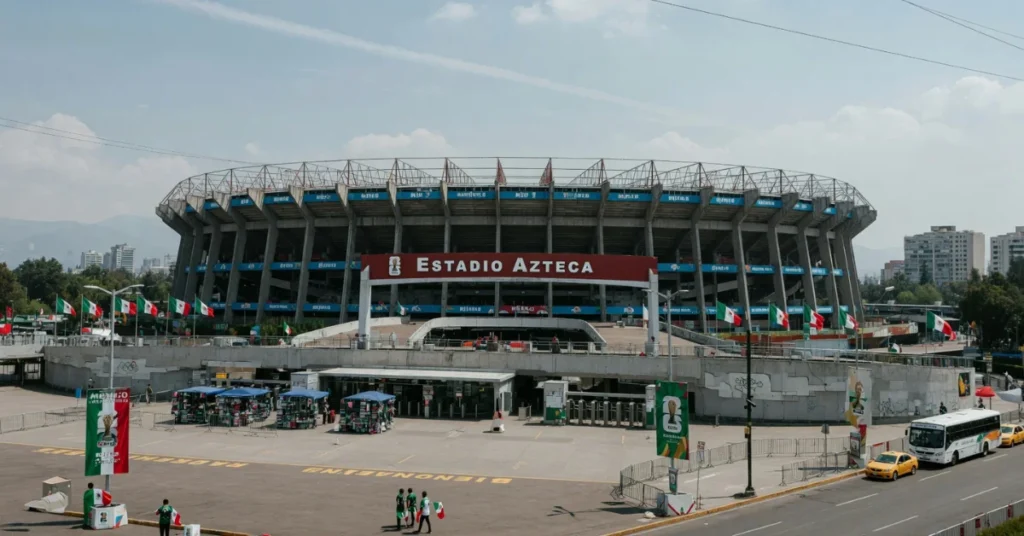
This year adds a wrinkle that hasn’t existed in previous travel cycles: Mexico is one of three co-host nations for the 2026 FIFA World Cup, alongside the United States and Canada. Mexico City, Guadalajara, and Monterrey will host matches between June and July, and Mexico City’s Estadio Azteca opens the tournament, a stadium making history as the first venue to host three separate World Cup openers.
Guadalajara, long considered the cultural soul of the country and the birthplace of mariachi and tequila, is getting an extra jolt of energy from the tournament. New hotel capacity, expanded transit options, and a wave of international visitors are expected to reshape the city’s tourism profile well beyond the final whistle.
Even travelers with zero interest in football should expect these three cities to feel different this year: busier, more energized, and better connected than usual. For anyone mapping out Mexico travel destinations around the tournament, booking accommodations several months ahead isn’t just smart. Given the scale of the event, it’s close to essential.
What the Research Shows
Detailed analysis of Mexico’s tourism data reveals a pattern that’s been consistent for several years running: growth isn’t concentrated in one or two hotspots anymore. It’s spreading. International arrivals climbed by double digits for much of 2025, with notably strong growth from Canada, Italy, South Korea, China, and Argentina, markets that historically sent far fewer visitors than the United States.
Cruise tourism has followed the same curve, with passenger numbers rising alongside overall visitor totals as more Caribbean and Pacific coast ports expand their capacity. Domestic flight traffic within Mexico also grew, an early signal that the country’s own residents are increasingly exploring regions beyond their home states too.
The pattern emerging from this data suggests Mexico’s appeal has broadened past the beach-resort stereotype that dominated marketing for decades. Culture, food, adventure sports, and colonial history are pulling in travelers who might have skipped the country entirely a decade ago, and that shift shows no signs of slowing heading further into 2026.
Choosing Mexico Travel Destinations That Fit Your Trip
Picking a single region can feel a bit like choosing one dish at a table full of family recipes. Everything looks good, and you’ll probably regret not ordering two. A few practical groupings help narrow things down:
- First-timers wanting an easy beach trip: Cancún or Riviera Maya, with day trips to Tulum and cenotes.
- Culture-first travelers: Mexico City paired with Oaxaca for museums, markets, and food.
- Romantic getaways: San Miguel de Allende or Tulum, both built for slower mornings and long dinners.
- Adventure seekers: Puerto Escondido for surf, or the whitewater rapids of Jalcomulco in Veracruz.
- Football fans: Mexico City, Guadalajara, or Monterrey during the World Cup window.
The best time to visit most of the country runs from December through April, when humidity drops and rainfall is lightest. Coastal wildlife enthusiasts should aim for that same window, since whale migration off Baja peaks during those months.
Entry Requirements Most Guides Skip
This is the part a lot of destination roundups leave out entirely, and it’s changed enough in 2026 to actually matter. Every foreign visitor, regardless of nationality, needs a Forma Migratoria Múltiple (FMM) tourist permit to enter Mexico. It isn’t a visa. It’s a visitor record, and airlines usually fold the small fee into the ticket price for anyone flying in.
Travelers from the United States, Canada, the United Kingdom, the European Union, Japan, and several dozen other countries don’t need a separate visa for tourism and can stay visa-free for up to 180 days. Travelers from countries that normally require a Mexican visa can often skip that step too, as long as they hold a valid US, Canadian, UK, Japanese, or Schengen visa.
What’s new this year: immigration officers no longer hand out the full 180-day stamp automatically. Instead, the number of days granted now depends on the traveler’s stated trip length and supporting documentation, such as a return flight or hotel booking. Anyone planning a longer trip should carry proof of onward travel and accommodation, since a vague answer at the border can mean fewer days than expected.
Practical Tips Before You Book
A few things trip up first-time visitors more than anything else. Cell coverage and WiFi remain inconsistent on smaller islands and in rural mountain towns, so a local SIM or eSIM is worth setting up before departure rather than after. Cash still moves faster than cards in markets, small restaurants, and taxis outside major hotel zones.
Domestic flights connect most major regions quickly, but overland travel (buses, rental cars, or the newer rail line through the southeast) often shows off more of the country between stops. Whichever region tops your list, building in one flexible, unplanned day tends to produce the best stories once the trip is over.
Conclusion
Between record visitor numbers, an expanding rail network, and a World Cup pulling international attention toward three of its biggest cities, Mexico travel destinations are entering 2026 with more momentum than almost any other country in the Americas. Whether the goal is a quiet cenote at sunrise, a plate of mole negro in Oaxaca, or a seat inside Estadio Azteca this summer, the range of experiences on offer makes it one of the few countries where a repeat trip rarely looks anything like the last one.
FAQs
What is the best time of year to visit Mexico?
December through April tends to bring the most comfortable weather across most of the country, with lower humidity and less rainfall than the summer months.
Are Mexico travel destinations safe for solo travelers?
Millions of solo travelers visit popular regions like the Riviera Maya, Mexico City, and Oaxaca every year without incident. As with any destination, sticking to well-traveled areas, using registered transportation, and staying alert at night goes a long way.
How many days do I need to see Mexico City and the surrounding area?
Three to four days covers the historic center, major museums, and a day trip to Teotihuacán, though food-focused travelers often stretch that to a full week.
Is it worth visiting Mexico during the 2026 World Cup?
For football fans, yes: Mexico City, Guadalajara, and Monterrey will all host matches with major energy surrounding them. Travelers uninterested in the tournament may prefer visiting before or after to avoid inflated hotel prices.
Which Mexico travel destinations are best for first-time visitors?
Cancún and the Riviera Maya remain the easiest entry point thanks to direct flights and established tourist infrastructure, while Mexico City offers a stronger cultural introduction for travelers who want more than a beach.