
It’s 2 a.m., your car alarm is screaming for the third night this week, and there’s clearly no one anywhere near it. If that sounds familiar, you’re not dealing with a broken car so much as a system that’s overreacting to something small. In the vast majority of cases, a car alarm that keeps going off is reacting to a minor electrical glitch or a sensor issue rather than an actual break-in attempt.
The tricky part is that “car alarm keeps going off” can mean nine different things depending on when it happens, what triggers it, and what kind of alarm system your car has. Below is a full breakdown of every real cause, what to do about it right now, and a few fixes — RF interference, water intrusion in the door actuator, an OBD-II check — that most articles on this topic skip over entirely.
Quick-Reference Table: Match Your Symptom to the Cause
| Alarm pattern | Likely cause | Quick fix | DIY or Professional? |
|---|---|---|---|
| Random, no clear trigger | Weak key fob battery | Replace the fob battery | DIY |
| Goes off every cold morning | Cold-weather voltage drop | Run a battery load test | DIY (test), Pro (if replacement needed) |
| Starts after rain or a car wash | Humidity affecting sensors/contacts | Let sensors dry, clean contacts | DIY |
| Triggers when the hood is touched or with no clear cause | Dirty hood latch sensor | Clean the latch with degreaser | DIY |
| Goes off when trucks or loud vehicles pass | Oversensitive shock sensor | Have sensitivity adjusted | Professional |
| Faint movement near the engine bay | Small animal nesting inside | Clean engine bay, seal gaps | DIY |
| Happens near other cars or wireless devices | RF/keyless entry interference | Move location, re-sync fob | DIY (try first), Pro (if persistent) |
| No fixed pattern, comes and goes | Wiring fault or bad aftermarket install | Auto electrician inspection | Professional |
| Alarm won’t disarm after unlocking normally | Door lock actuator water intrusion | Dry and inspect actuator | Professional |
Use this table to narrow things down fast, then read the matching section below for the full explanation.
1. A Weak or Dying Key Fob Battery
This is the single most common culprit. A key fob running on a low or dead battery can stop sending a clean signal to the car, and that miscommunication is often enough to set the alarm off. Warning signs usually show up before total failure — reduced range, needing to press the button more than once, or a dim indicator light. Most fob batteries last one to two years under normal use.
Fix: Swap in a fresh coin-cell battery. It’s inexpensive and takes a couple of minutes.
2. Car Battery Problems
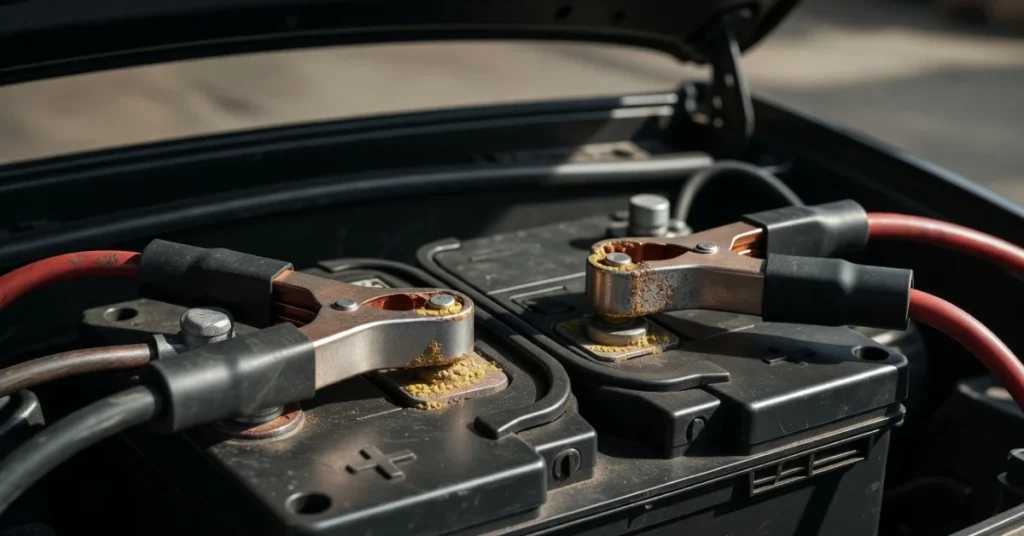
Your main battery powers the whole alarm system, so if it’s weak, the system starts behaving unpredictably. When the battery can’t deliver stable voltage, the alarm system may read that dip as an emergency and trigger the siren. The classic example is the voltage drop that happens the moment a dome light switches on — enough of a fluctuation, on a weak battery, to set things off.
Fix: Run a simple load test. Park with the engine off, headlights on for 10-15 minutes, then start the car while someone watches the headlights. Flickering, dimming, or a struggling start point to a battery that likely needs replacing.
3. Dirty or Misaligned Sensors
Modern alarms rely on a whole network of sensors — door, glass-break, proximity, tilt, shock, and sometimes sound. A dirty or slightly misaligned sensor can trigger the alarm for no obvious reason. The hood latch sensor is a particularly common offender: grease or dirt buildup can stop the latch from closing all the way, which the system reads as tampering.
Fix: Clean the latch and sensor contacts with a degreaser and a soft brush.
4. An Oversensitive Shock or Vibration Sensor
Some systems are simply tuned too aggressively out of the box. A passing truck, a slammed door two spaces over, or even a low-flying plane can be enough. One documented case involved an alarm that went off at the same time every morning — turned out a garbage truck driving past was shaking the ground enough to trip the shock sensor. Lowering the sensitivity setting solved it.
Fix: Ask a mechanic or installer to dial back the shock-sensor sensitivity, if your system supports adjustment.
5. Weather and Environmental Triggers
Wind, rain, and even nearby traffic can set an alarm off. High humidity after rain or a car wash is a frequent cause too — moisture makes metal contacts expand slightly and can cause switches to misread signals, setting the siren off as if someone were breaking in. Sudden temperature swings can have a similar effect on the metal components inside the alarm system.
6. Small Animals
It sounds unlikely, but it happens more than people expect. Cats and small wildlife sometimes use a parked car as shelter, and some animals climb into the engine bay to nest, especially in colder months. Movement or body heat near a sensor is often all it takes to set the alarm off.
Fix: Keep the engine bay clean and free of debris, and seal any gaps with steel wool or fine metal mesh to keep animals from getting in.
7. RF Interference and Keyless Entry Conflicts
This is a cause most guides on this topic leave out entirely. Car fobs and keyless entry systems communicate over radio frequency, and that signal can be disrupted by other nearby wireless devices — another car’s fob transmitting close by, certain wireless chargers, or high-power radio equipment. When the signal gets scrambled, the car can misread it as an unauthorized access attempt and trigger the alarm. Parking far away from other fobs or wireless-heavy equipment, or re-syncing your fob per the owner’s manual, often resolves it.
8. Water Intrusion in the Door Lock Actuator
Another gap most articles miss: after heavy rain, water can work its way into the door lock actuator itself, not just the surface sensors. A wet actuator can send an intermittent or false “unlocked/locked” signal to the alarm module, which sometimes causes it to trigger or to refuse to disarm even after you’ve unlocked the door normally. This usually needs a technician to open the door panel, dry the actuator, and check the wiring harness for corrosion.
9. Wiring Faults or a Bad Aftermarket Install
A wiring problem is one of the more stubborn causes, and it typically needs an auto electrician rather than a DIY fix. This is especially common with aftermarket alarm systems that weren’t installed to factory spec — loose grounds, pinched wires, or an incorrectly wired shock sensor can all cause repeated false triggers.
Factory vs. aftermarket — why the diagnosis differs: A factory-installed alarm is tied directly into the car’s onboard computer (ECU), so a scan tool can often pull a fault code pointing to the exact circuit involved. An aftermarket system usually runs as a standalone unit wired into the car separately, meaning fault codes from the vehicle’s own computer may show nothing even when the alarm itself is clearly malfunctioning. If you have an aftermarket system, tell the technician upfront — it changes where they’ll look first.
Should You Just Disconnect the Battery?
It’ll kill the noise immediately, but it’s a temporary fix, not a repair. Disconnecting the battery effectively reboots the car’s onboard computer, which can clear a one-off glitch. But if the actual problem is physical — a corroded sensor, a frayed wire, a failing latch — the alarm will start acting up again as soon as the battery’s reconnected. It’s also worth knowing that repeated false triggering can drain your main battery faster than normal use would, so this isn’t something to just live with long-term.
A Diagnostic Step Most Owners Skip: The OBD-II Scanner
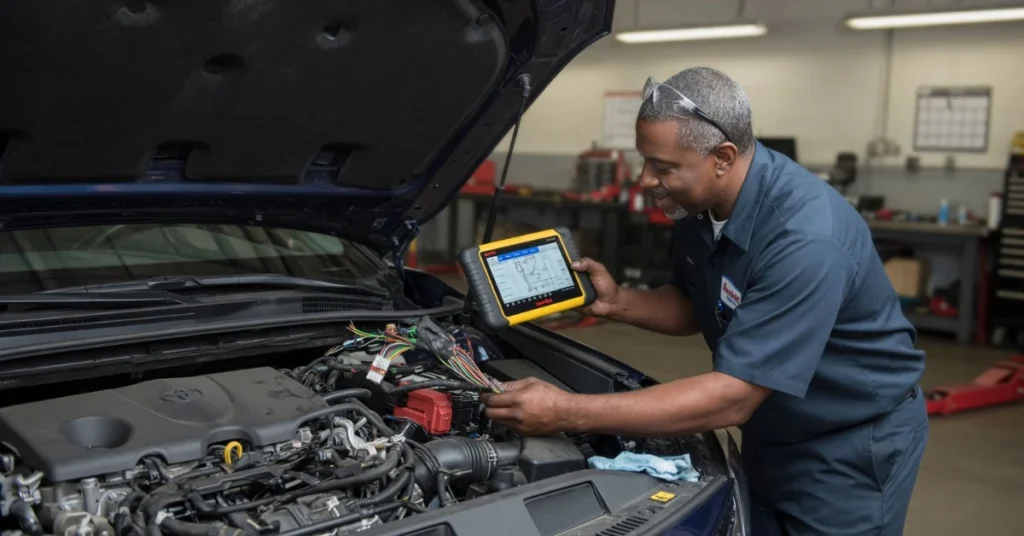
If your alarm is tied into the car’s central computer (true of most factory systems), a basic OBD-II scanner — the same tool used for check-engine lights — can often pull a fault code related to the security or body control module. This step is rarely mentioned in general troubleshooting guides, but it can save you a diagnostic labor charge at the shop by narrowing down the circuit before you even go in. Many auto parts stores will read the code for free.
Right-Now Steps If the Alarm Is Blaring Right This Second
- Press the fob’s lock button, then unlock — do this twice if the first attempt doesn’t work.
- If that fails, try the physical key in the door lock (many systems disarm through this on a failed fob signal).
- Hold the fob’s panic/lock button for a few seconds — some systems need a longer press to reset.
- If none of that works, disconnecting the battery is the last resort to stop the noise, understanding it’s temporary.
A Word of Caution Worth Taking Seriously
Beyond the noise, there’s a real safety angle. Frequent false alarms lead to what’s sometimes called “alarm fatigue” — the point where you, and everyone around you, starts tuning the sound out entirely. That’s exactly the moment an actual break-in attempt is most likely to go unnoticed. It’s also worth checking your insurance policy, since a known, unaddressed faulty alarm can complicate things if you ever need to make a theft-related claim.
If you’re in the UK and the problem drags on, it’s worth knowing a persistently sounding alarm can also become a legal issue with your neighbours, not just an annoyance. A car alarm that keeps sounding repeatedly or for a long stretch can be treated as a statutory nuisance, and your local council’s Environmental Health department can eventually step in if the registered owner doesn’t resolve it. If your alarm keeps going off and you’re unsure what’s causing it, Confused.com’s own car alarm guide recommends checking the key fob, car battery, and sensors in that order before calling a mechanic.
FAQs
Will a false alarm drain my car battery?
A single, isolated false alarm won’t do much damage since most alarms shut off automatically after a few minutes. Repeated or prolonged triggering, though, can drain the battery noticeably faster than normal use.
How much does it cost to fix a faulty alarm?
It depends entirely on the cause. A fob battery costs next to nothing, sensor cleaning is usually a low-cost job, a full car battery replacement runs into the hundreds, and wiring repairs vary based on labor and how accessible the wiring is.
Can weather really set off a car alarm?
Yes. Temperature swings, humidity, and even wind can affect sensors and battery voltage enough to trigger a false alarm.
Is it safe to just disconnect the battery when the alarm won’t stop?
It’ll stop the noise, but it only resets the system temporarily. If there’s an underlying fault, the alarm is likely to go off again once the battery’s reconnected.
How is troubleshooting different for a factory alarm versus an aftermarket one?
A factory alarm is linked to the car’s central computer, so a scan tool can often point to the exact fault. An aftermarket alarm runs as its own separate system, so the vehicle’s computer may show no fault even when the alarm itself is clearly malfunctioning — the installer or an auto electrician needs to trace the aftermarket wiring directly.
When should I stop troubleshooting myself and call a professional?
If you’ve already replaced the fob battery, tested the car battery, and cleaned the accessible sensors and it’s still happening, the remaining causes — wiring faults, water intrusion in the actuator, or aftermarket installation issues — genuinely need a trained auto electrician.