
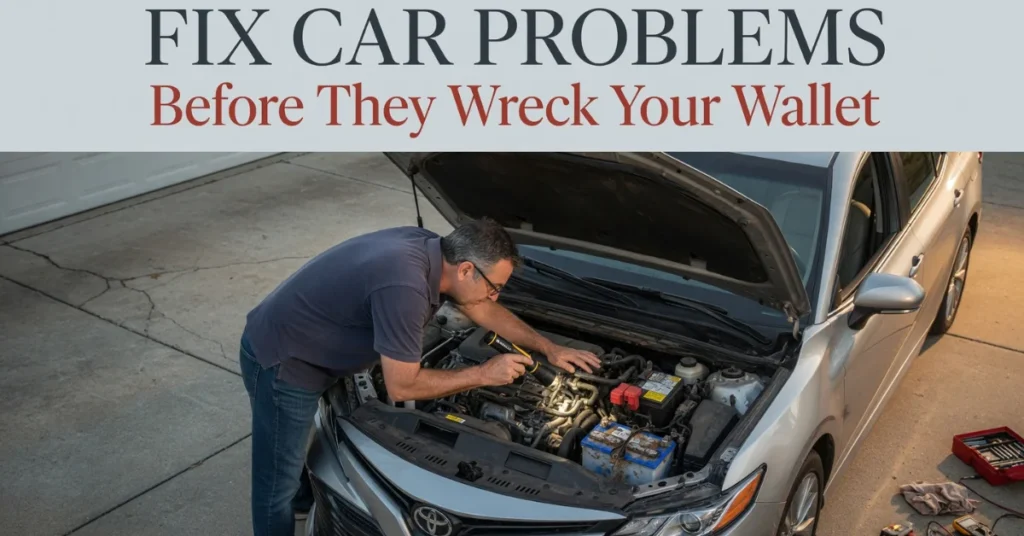
Your car makes a weird noise on a Tuesday morning, and suddenly you’re standing in the driveway wondering if this is a five-minute fix or a five-hundred-dollar one. That moment is exactly why learning how to fix car issues yourself, at least the small ones, matters more in 2026 than it did a decade ago. Repair costs have climbed, parts take longer to source, and shops are booked out for weeks in some regions. Knowing which problems you can handle and which ones need a professional isn’t just useful. It’s become a basic form of financial self-defense for anyone who owns a vehicle.
This isn’t about turning every driver into a mechanic overnight. It’s about recognizing patterns, understanding what your car is trying to tell you, and building the confidence to open the hood without panicking.
Why Learning How to Fix Car Problems Saves You Money
A dead battery, a flat tire, a blown fuse. These are the everyday headaches that stall a morning commute, and most of them cost nothing to diagnose if you know what to look for.
Roadside assistance data from 2024 shows towing and battery trouble made up roughly three-quarters of all emergency calls that year, easily outpacing flat tires and lockouts combined. That single statistic says a lot. The majority of breakdowns aren’t mysterious engine failures. They’re basic mechanical issues that respond to basic mechanical attention.
Anyone who has owned a car long enough knows the pattern. Ignore a small rattle, and it becomes a bigger repair bill. Catch it early, and it’s a ten-minute job in the garage. Learning how to fix car troubles at the early stage is where the real savings live, not in tackling a transmission rebuild.
What Your Dashboard Warning Lights Actually Mean
Before touching a single tool, it helps to know what the dashboard is saying. Warning lights follow a color system that’s the same across almost every make and model, yet it’s the part most drivers never learn.
| Light Color | What It Means | What To Do |
|---|---|---|
| Red | Serious issue, stop driving safely | Pull over, check manual, call for help if needed |
| Yellow / Orange | Needs attention soon, not urgent | Schedule a check within the next few days |
| Green / Blue | Informational only | No action needed, just confirms a system is active |
| Flashing (any color) | Immediate danger, often engine misfire | Stop the car as soon as it’s safe to do so |
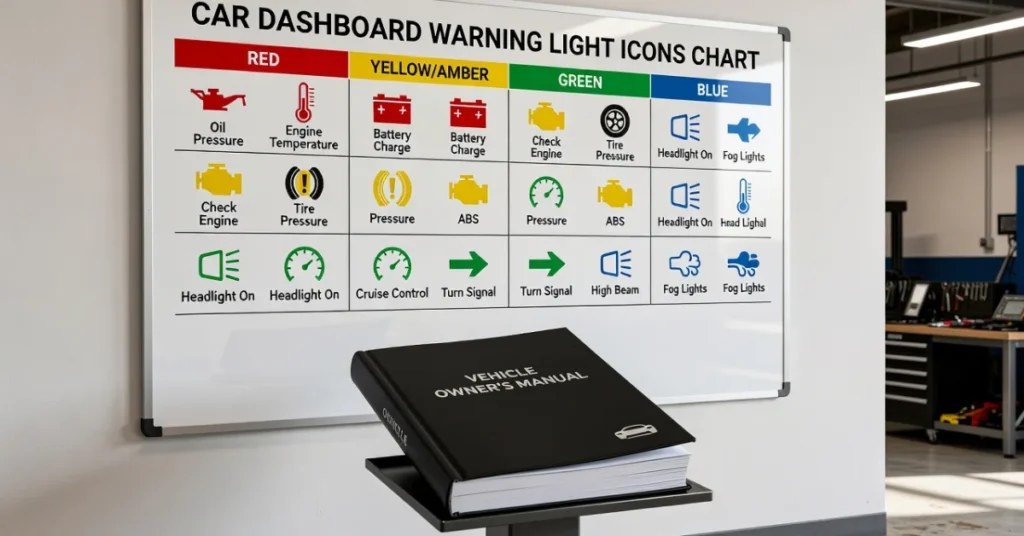
A steady yellow check engine light and a flashing one aren’t the same emergency. Steady usually means a sensor or emissions issue worth scheduling a look at. Flashing means the engine itself is misfiring, and continuing to drive can cause real damage.
The Most Common Car Problems You Can Actually Fix Yourself
Not every issue under the hood needs a professional. Several of the most frequent problems are well within reach for a beginner with a basic toolkit and some patience.
Dead or weak battery. If the engine cranks slowly or the dashboard lights flicker, the battery is usually the culprit. A jump start gets you moving, but a battery older than three to five years often needs replacing outright.
Flat or low tires. Checking tire pressure monthly prevents a surprising number of roadside emergencies. Learning to change a spare takes about fifteen minutes of practice and can save an hour of waiting for help.
Blown fuses. A dead radio, malfunctioning power window, or flickering headlight often traces back to a single blown fuse. The fuse box location and diagram are printed right in the owner’s manual.
Worn wiper blades. Streaky, squeaking wipers are a two-minute swap that most auto parts stores will even do for free with a purchase.
Dirty air filter. A clogged engine air filter reduces fuel efficiency and can trigger a rough idle. Replacing it usually takes less time than a coffee run.
Each of these repairs shares a common thread. They’re mechanical, visible, and don’t require specialized diagnostic equipment. That’s the sweet spot for a driver who wants to save money without taking on real risk.
What a Basic DIY Toolkit Actually Costs
A lot of drivers skip small repairs simply because they assume it means buying an expensive toolbox. In reality, a starter kit covers most beginner fixes for well under a hundred dollars combined.
- Jump starter pack: roughly $40 to $80, and reusable for years without needing another car nearby
- Tire pressure gauge: around $8 to $15
- OBD-II code reader: $20 to $35 for a basic Bluetooth model, often available to borrow free from auto parts retailers
- Basic socket and screwdriver set: $25 to $50
- Wiper blades: $15 to $30 per pair depending on vehicle size
None of this requires a workshop. A glovebox or trunk organizer holds the whole kit, and most of these tools pay for themselves after the first avoided tow or shop visit.
What the Research Shows: Car Breakdown Data for 2026
Detailed analysis of breakdown patterns reveals a clear age effect. Vehicles older than a decade break down at roughly twice the rate of newer models and are far more likely to need a tow rather than a roadside fix. With the average car on American roads now well past the ten-year mark, that statistic touches a growing share of drivers every year.
The average tow itself runs around $110, a number that climbs fast depending on distance and time of day. Anyone who has waited on the shoulder of a highway at night knows towing is rarely the cheap option, which is exactly why prevention and small DIY interventions carry so much weight.
Examining seasonal patterns closely also shows breakdown calls spike in summer and again in winter, driven by battery strain in extreme heat and cold. Professionals in the automotive repair field consistently point to temperature swings as one of the biggest hidden stressors on aging batteries and fluids.
Battery Care in Extreme Weather
Heat and cold attack a battery in different ways, and knowing the difference helps prevent the single most common roadside call.
In hot weather, high temperatures accelerate the internal chemical breakdown of a battery, which is why summer sees a spike in dead-battery calls even though logic suggests winter should be worse. Parking in shade and getting terminals checked before a heatwave both help.
In cold weather, the battery’s ability to deliver power drops sharply, while the engine itself needs more current to start. That combination is why a battery that seemed fine in October can suddenly fail on the first freezing morning. Testing battery health before winter, rather than after a failed start, avoids the problem entirely.
Do EVs Follow the Same Rules?
Electric vehicles are becoming a bigger part of the conversation, and the same 2024 roadside data showed EV-related calls made up less than one percent of total breakdowns that year. That’s a small number, but it’s growing, and the fixes look different.
Tire pressure checks, wiper blades, and cabin fuses work exactly the same way on an EV as on a gas car. Where things diverge is the 12-volt auxiliary battery, a smaller battery separate from the main drive battery that still handles things like lights, locks, and the infotainment system. It can die just like a conventional car battery and is jump-startable the same way.
What EV owners should never attempt themselves is anything involving the high-voltage battery pack or the charging system. Those components carry genuine electrical risk and require certified technicians with EV-specific training.
How to Fix Car Issues Step by Step
For drivers ready to try it themselves, a simple process keeps things safe and organized.
- Identify the symptom. Note when it happens: on startup, while braking, at high speed, or only when it’s cold outside.
- Check the obvious first. Fluid levels, tire pressure, battery terminals, and warning lights on the dashboard often point straight to the problem.
- Consult the owner’s manual. It contains fuse diagrams, maintenance schedules, and warning light explanations specific to your exact model.
- Use a code reader if the check engine light is on. These handheld tools plug into the onboard diagnostics port and cost under thirty dollars, often available to borrow free from auto parts retailers.
- Search the specific code or symptom before attempting a fix, since the same warning light can mean different things across makes and models.
- Know your limits. If a job involves the brake system, airbags, or anything requiring the car to be lifted off the ground without proper equipment, that’s the line where DIY should stop.
Mobile users searching this topic while stranded roadside should know most auto parts store apps now include a code-lookup feature, so a smartphone alone can diagnose many check-engine triggers on the spot. Non-technical drivers who feel overwhelmed by any of these steps shouldn’t feel pressured to push through; a quick call to a trusted shop for a diagnostic check, often free or low-cost, is a perfectly reasonable next move.
DIY Car Repair vs Professional Help: A Quick Comparison
| Situation | DIY Friendly | Needs a Mechanic |
|---|---|---|
| Dead battery | Yes | Only if it keeps dying |
| Flat tire | Yes | Only for repeated flats |
| Check engine light | Sometimes | If code points to major system |
| Brake noise | No | Always |
| Transmission slipping | No | Always |
| Overheating engine | No | Always |
| EV 12-volt battery | Yes | Only if it keeps dying |
| EV high-voltage system | No | Always |
The pattern here is consistent. Anything involving stopping power, structural safety, or a vehicle’s high-voltage or internal engine components belongs with a certified technician. Everything else is fair game for a confident beginner.
When to Stop and Call a Mechanic Instead
There’s a point where continuing to tinker stops being resourceful and starts being risky. Burning smells, smoke, brake pedals that feel soft or sink to the floor, and any loss of steering control are immediate stop-and-call situations. So is a car that overheats repeatedly even after coolant has been topped off.
Those who have worked in auto repair shops often describe the same frustrating scene: a driver who kept driving on a warning sign until a $200 repair became an $1,800 one. Recognizing that line is just as valuable a skill as knowing how to fix car problems in the first place.
Who Should Care About This
New drivers benefit most from mastering the basics early, since it builds habits that prevent expensive surprises down the road. Owners of aging vehicles, those past the ten-year mark, should pay especially close attention given the higher breakdown rates in that group. EV owners fall into their own category, needing to know exactly where the DIY line sits given the high-voltage risk. And anyone budgeting tightly in 2026 has a direct financial incentive to catch small issues before they escalate into shop visits costing hundreds more.
Conclusion
Cars will always throw the occasional curveball, but most of what goes wrong is more routine than dramatic. Knowing how to fix car issues at the basic level, jump-starting a battery, swapping a fuse, catching a warning light early, puts real money back in your pocket and real confidence behind the wheel. The goal isn’t to skip the mechanic altogether. It’s to know exactly when you need one and when you don’t.
FAQs
Q: What’s the most common car problem drivers face?
Battery trouble and towing situations together account for the vast majority of roadside breakdowns, according to recent roadside assistance data.
Q: Can I fix a check engine light myself?
Sometimes. A code reader identifies the trigger, and simple issues like a loose gas cap are DIY-friendly, while engine or emissions codes usually need a professional look.
Q: What does a red dashboard light mean versus a yellow one?
Red means stop driving as soon as it’s safe. Yellow or orange means the issue needs attention soon but isn’t an emergency.
Q: Do electric vehicles need different roadside skills than gas cars?
Mostly no. Tires, wipers, and the 12-volt battery work the same way. The one hard line is the high-voltage system, which always needs a certified EV technician.
Q: When should I stop trying to fix something myself?
Any brake, steering, high-voltage, or overheating issue should go straight to a certified mechanic rather than a DIY attempt.