
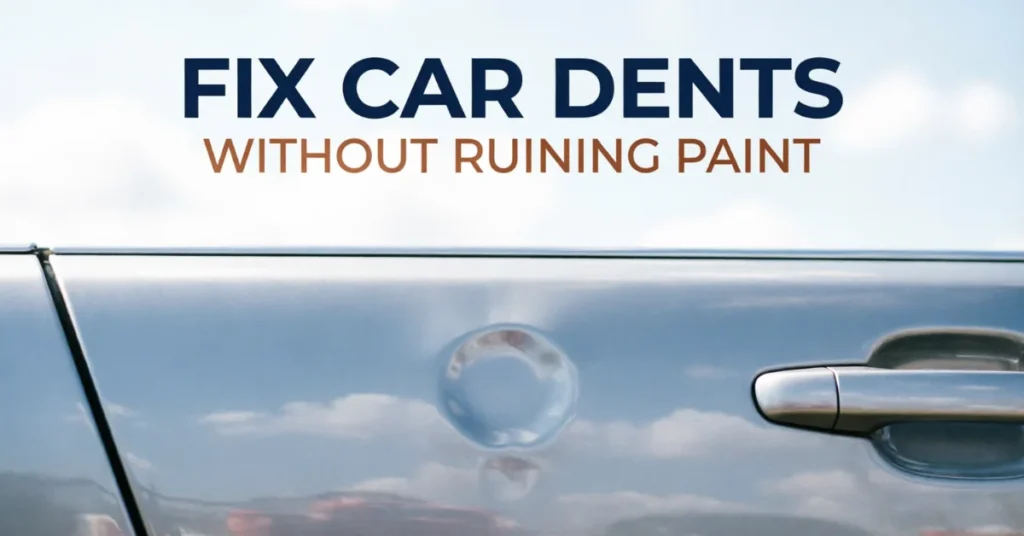
You just found a dent on your car door, and your stomach dropped a little. Before you book an expensive body shop appointment, it helps to know that how to fix a dent in a car depends almost entirely on one thing: whether the paint is still intact. Get that answer right, and you can often save yourself a few hundred dollars this weekend.
Dents happen in parking lots, hailstorms, and the occasional runaway shopping cart. Most of them look worse than they actually are. This guide walks through the real DIY methods that work, what a professional will charge in 2026, how to tell a good repair job from a botched one, and the exact point where a home fix stops being a good idea.
How to Fix a Dent in a Car: Start With the Fingernail Test
Before picking a method, run a fingernail across the edge of the dent. If it catches on a crack or you spot bare metal, skip DIY entirely. That damage needs sanding, filler, and paint, and pushing on it yourself usually stretches the metal further.
If the paint is smooth and unbroken, you are a solid candidate for a home fix. Round, shallow dents respond best. Sharp creases, dents that run along a body line, or damage with more than one peak are far less forgiving and often need a specialist’s tools.
Anyone who has patched a few dings knows the shape matters more than the size. A wide, soft dent the size of a dinner plate can pop out in minutes. A small, sharp crease near a door edge might resist every trick in the book.
Five DIY Methods That Actually Pop a Dent Out
Here’s the deal: not every hack floating around the internet works, but several genuinely do when matched to the right kind of damage.
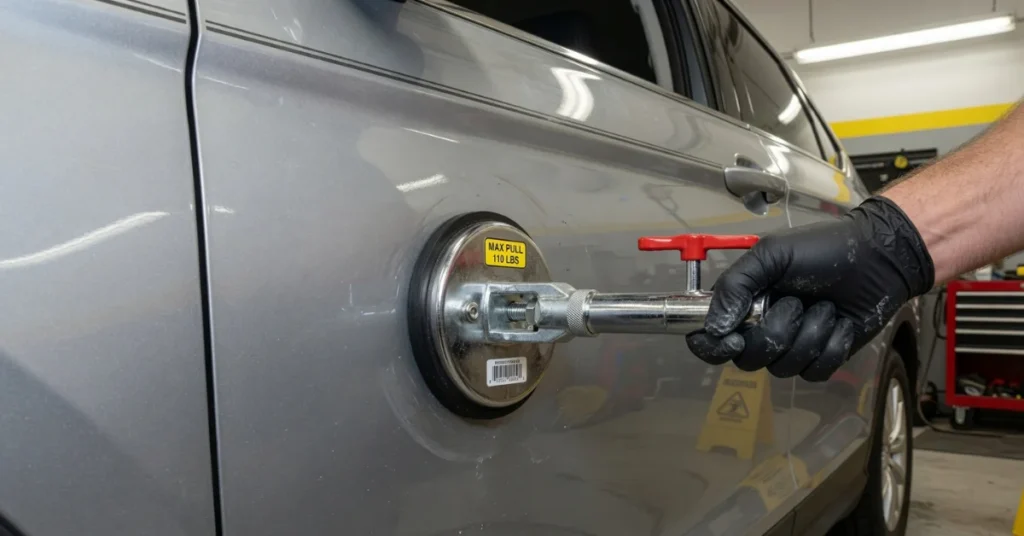
1. The suction cup or plunger method. Splash water on both the dent and a standard toilet plunger or a dedicated dent puller. Press it flat against the panel and pull firmly, using a gentle push-pull rhythm. This works best on shallow dents in doors, fenders, and hoods where the metal has some flex left in it.
2. Boiling water for plastic bumpers. Plastic panels respond to heat differently than steel. Pour boiling water directly over the dented area, then reach behind the bumper and push the dent out by hand. Once it pops, pour cold water over the same spot to firm the plastic back up quickly.
3. Hot glue and pull tabs. A glue-pull kit uses a bridge or rail tool with a glued stud attached to the dent’s center. Tightening the screw mechanism slowly draws the metal back toward its original shape. This method suits medium dents you cannot reach from behind, and most kits run under fifty dollars.
4. Heat plus compressed air. Warm the dent with a hair dryer for thirty to sixty seconds, then flip a can of compressed air upside down and spray it directly on the same spot. The rapid temperature shift can cause the metal to contract and snap back. It doesn’t work every time, but it costs nothing to try.
5. Hammer, dolly, and body filler. For deeper dents with paint still intact but where suction won’t reach, some owners strip the paint with sandpaper, tap the metal back into shape from behind with a dolly, then smooth it with filler and repaint. This is the most involved DIY route and takes an afternoon, not an hour.
Try methods in that order, roughly from least invasive to most. If a technique doesn’t budge the dent after five or six attempts, move to the next one rather than forcing it.
Quick Reference: Which Method Fits Your Dent
| Dent Type | Best Method | Typical DIY Cost | Difficulty |
|---|---|---|---|
| Shallow, round dent on door or fender | Suction cup / plunger | $0–$15 | Easy |
| Soft dent on plastic bumper | Boiling water | $0 | Easy |
| Medium dent, no access from behind | Glue-pull kit | $30–$50 | Moderate |
| Small dent on steel panel, tight spot | Heat + compressed air | $5–$10 | Easy |
| Deeper dent, paint intact, no crease | Hammer, dolly, filler | $40–$80 in materials | Advanced |
| Cracked paint or sharp crease | Skip DIY, call a pro | N/A | Not DIY-suitable |
How to Fix a Dent in a Car When DIY Won’t Cut It
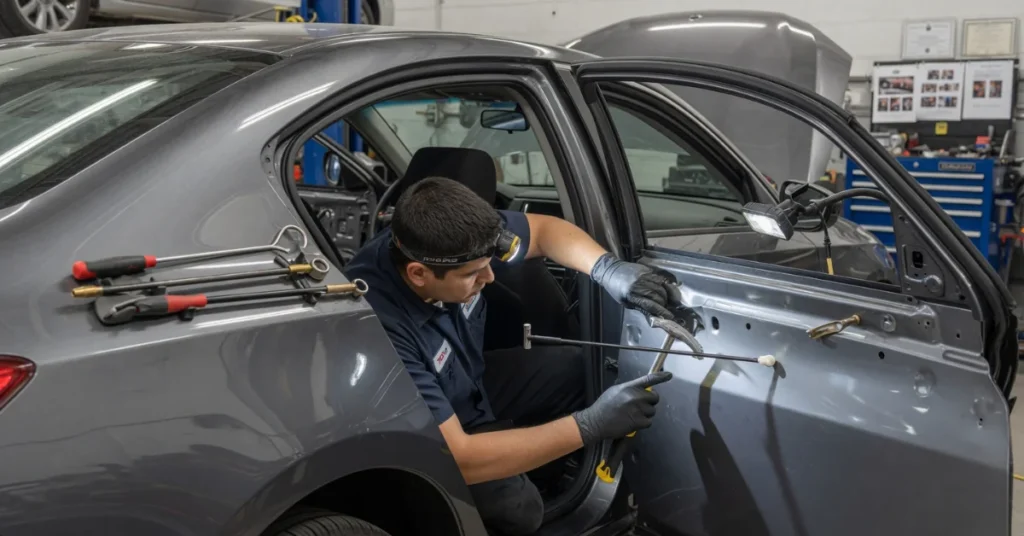
Some dents just won’t come out at home, and that’s fine. Professionals working in this space rely on paintless dent repair, known in the trade as PDR, where a technician massages the metal back into shape from behind the panel using specialty rods and glue-pull tabs. No sanding, no filler, no repaint.
PDR only works when the factory paint is fully intact, which is exactly why the fingernail test matters so much before you start. Aluminum panels and edge-of-panel dents typically add a price premium because the metal behaves differently and tools have less room to work.
If the paint has cracked or the metal shows a sharp crease, a traditional body shop is the better call. Technicians there strip the area, fill it, sand it, and blend fresh paint to match your factory finish, which takes longer but handles damage PDR simply cannot fix.
There’s also a category of damage PDR cannot fully undo even when a technician tries. A dent that has stretched the metal past its natural yield point, sometimes called a rebound dent, may never return to its exact factory shape. A skilled tech can get it close, but a sharp crease over a body line often needs paint and filler work regardless of how carefully it’s approached.
What Professional Dent Repair Actually Costs in 2026
Current pricing data from national repair cost guides shows a coin-size ding running roughly sixty to a hundred dollars for paintless dent repair, while a palm-size dent lands closer to seventy-five to a hundred and fifty. A larger PDR-eligible dent under four inches typically falls in the one-twenty-five to three-fifty range. Once paint damage enters the picture and a body shop gets involved, expect anywhere from five hundred to well over two thousand dollars depending on the panel and paint match.
Hail damage changes the math because you’re often paying per dent across an entire vehicle. Moderate hail with a spread of dings can total between one and three thousand dollars, while severe storms with hundreds of small dents push costs into the thousands.
2026 Cost Snapshot by Dent Size
| Dent Size | Paintless Dent Repair (PDR) | Traditional Body Shop |
|---|---|---|
| Coin-size ding | $60–$100 | Not typically needed |
| Palm-size dent | $75–$150 | $300–$600 |
| Larger dent, under 4 inches | $125–$350 | $500–$1,200 |
| Moderate hail cluster (6–20 dents) | $500–$1,500 | Not applicable |
| Single panel with cracked paint | Not eligible | $600–$2,000+ |
Aluminum panels and edge-of-panel locations generally add fifty to a hundred percent to the standard PDR price, since the metal is stiffer and technicians have less room to maneuver their tools.
How to Spot a Bad Dent Repair Before It’s Too Late
Not every technician does clean work, and a rushed job can leave your panel worse off than the original dent. Knowing the warning signs before you pay saves you a second, more expensive repair later.
Watch for raised high spots that catch the light differently than the surrounding panel, small cracks forming in the clearcoat, or ripples visible when you view the door at an angle in sunlight. These usually mean the metal was pushed too hard or too fast.
A more serious red flag is drilled access holes. Some untrained technicians drill through a panel to reach a dent that would normally require pulling from an accessible angle. On newer vehicles, this can interfere with pressure-based sensors used for door-mounted safety systems, which is a real concern beyond just cosmetics.
Before hiring anyone, ask to see photos of similar repairs they’ve completed and confirm they’ve handled your specific panel material before, especially if your car uses aluminum body panels. A technician who hesitates to show past work or rushes through the estimate is worth a second opinion.
Should You File an Insurance Claim for a Car Dent?
Part of deciding how to fix a dent in a car the smart way is knowing whether insurance should even get involved. This is where a lot of drivers get it wrong. This is where a lot of drivers get it wrong. Comprehensive and collision deductibles commonly sit between two hundred fifty and a thousand dollars, and many small dent repairs cost less than that threshold entirely. Filing a claim under those conditions gets you nothing from the insurer while still landing on your claims history.
Multiple claims within a short window, even small ones, can nudge your premium upward at renewal. If another driver caused the damage and fault is clear, filing usually makes sense since their coverage should absorb the cost. For a self-inflicted parking lot ding on an otherwise healthy paint job, paying out of pocket almost always works out cheaper over time.
Anyone who has managed a fleet or simply owned a few cars over the years knows the general pattern: small, your-fault damage gets paid for directly, while larger or not-your-fault damage goes through the claim process.
What the Research Shows
Industry cost tracking through 2026 points to national PDR pricing rising roughly 16 to 17 percent over the past five years, driven by higher labor rates and the added complexity of vehicles equipped with driver-assistance sensors that sometimes require recalibration after panel work. That trend explains why a repair that cost around a hundred dollars a few years back now often runs closer to one-twenty-five as a baseline.
Mobile PDR services have also grown steadily, with technicians now completing many single-dent jobs at a customer’s home or workplace rather than requiring a shop visit. That shift has kept prices more competitive in areas with several local providers, since mobile operators typically carry lower overhead than a full-service body shop.
Common Mistakes That Make a Dent Worse
A few habits turn a simple fix into an expensive one:
- Skipping the fingernail test and forcing a suction method on cracked paint
- Using a metal tool or screwdriver to pry from behind, which stretches the panel further
- Applying too much heat too close to the surface, which can bubble or discolor paint
- Ignoring a dent near a body seam, where trapped moisture eventually leads to rust
- Ordering a random dent-puller kit online without checking it suits the panel’s steel gauge
- Hiring the cheapest available technician without asking to see examples of past work
Skipping straight to the wrong tool is probably the single biggest reason DIY attempts fail. Matching the method to the dent type, not the other way around, saves both time and paint.
Wrapping It Up
Knowing how to fix a dent in a car starts with a simple check: is the paint broken, and is the dent shallow enough to reach or reasonably shift? From there, a plunger, boiling water, a glue-pull kit, or a hammer-and-dolly session can genuinely solve the problem without a body shop bill. When the damage runs deeper or the paint has cracked, a certified PDR technician or a traditional shop will get better results, and weighing that cost against your insurance deductible, along with checking a technician’s past work, is worth a few minutes before you make the call.
FAQs
Does the boiling water trick actually work?
Yes, for plastic bumpers with a soft dent and no cracking. It rarely works on steel body panels since metal doesn’t respond to heat the same way plastic does.
Can a deep dent be fixed without repainting?
Sometimes, if the paint remains fully intact and a PDR technician has clear access from behind the panel. Once paint has cracked, some repainting becomes necessary.
How can I tell if a dent repair was done badly?
Look for raised high spots, small clearcoat cracks, or ripples visible under angled light. Drilled access holes are also a sign the technician took a shortcut rather than working the panel properly.
Will fixing a small dent myself affect my car’s resale value?
A properly popped dent with intact paint has no impact. A rushed DIY attempt that stretches metal or cracks paint can actually lower value more than the original dent did.
Is it cheaper to use a dent repair kit or hire a mobile PDR technician?
A kit costs less upfront, generally under fifty dollars, but a mobile technician often removes the dent more cleanly and works faster on anything beyond a small ding.
What’s the fastest way to fix a dent in a car at home?
For most drivers, the suction cup or plunger method is the quickest way to fix a dent in a car without special tools, provided the paint is intact and the dent is shallow.