
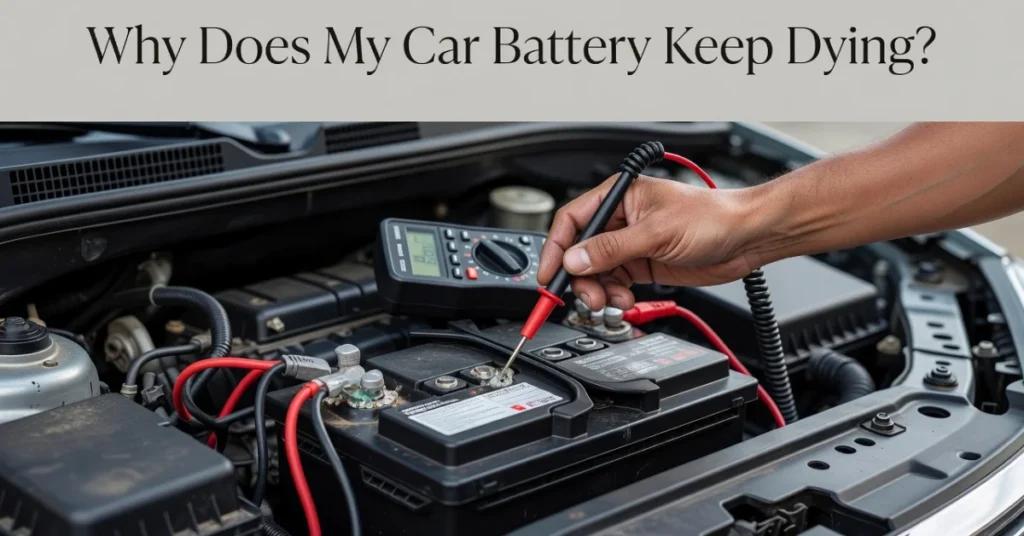
You turn the key and hear that slow, tired click instead of the engine catching. Again. If you’ve asked yourself why does my car battery keep dying more than once this year, you’re not imagining a pattern — there’s almost always a specific, fixable reason behind it.
Most of the time, a battery that dies repeatedly isn’t actually a bad battery at all. It’s a symptom of something else going on: a parasitic drain, a failing alternator, a bad connection, or a habit like short trips that never let the battery fully recharge. Figuring out which one applies to you is the difference between throwing money at a new battery every few months and fixing the actual problem once.
This guide walks through the real causes, how to test for them properly, and the diagnostic steps most guides skip entirely.
The Most Common Reasons a Car Battery Keeps Dying
A healthy car battery, under normal conditions, is built to last. Research into battery performance shows a standard lead-acid battery typically lasts 3 to 5 years, while AGM batteries used in newer vehicles with start-stop technology often reach 4 to 7 years. So if yours is dying well before that window, something’s cutting its life short.
A few things are usually to blame:
- Parasitic drain — something in the car keeps pulling power after the engine is off
- A failing alternator — the battery never gets fully recharged while you drive
- Corroded or loose terminals — a poor connection that mimics a dead battery
- Short trips only — the alternator never gets enough runtime to top the battery back up
- Extreme heat or cold — both accelerate internal battery wear
- An aging battery near the end of its natural life
Anyone who’s dealt with a dead battery on a freezing morning knows it rarely happens just once. It tends to repeat until the root cause gets addressed.
Battery Type Comparison: Lifespan, Use Case, and Cost
Not every battery is built the same way, and knowing which type you have changes how you should read its symptoms.
| Battery Type | Typical Lifespan | Best Suited For | Approximate Cost Range |
|---|---|---|---|
| Standard Lead-Acid | 3–5 years | Older vehicles, basic electrical demand | $100–$150 |
| EFB (Enhanced Flooded) | 4–6 years | Vehicles with mild start-stop systems | $130–$180 |
| AGM (Absorbent Glass Mat) | 4–7 years | Modern cars with start-stop tech, heavy electronics | $150–$250 |
| Lithium-ion (12V) | Up to 10 years | Performance and some newer EVs/hybrids (auxiliary battery) | $200–$400 |
If you’re replacing a battery and aren’t sure which type your car needs, checking the owner’s manual matters more than picking the cheapest option on the shelf, since fitting the wrong type can shorten its life dramatically.
Parasitic Drain: The Hidden Culprit
Parasitic drain is one of the sneakiest reasons a battery keeps dying, mostly because everything seems fine when you’re actually driving. The problem only shows up after the car sits for a while.
Common sources include a trunk or glovebox light that doesn’t shut off, an aftermarket stereo or alarm system wired incorrectly, a phone charger left plugged in, or a computer module that isn’t going to sleep the way it should on newer vehicles.
Here’s the part most guides leave out: your car’s onboard computers don’t shut down the instant you turn the key off. They stay briefly active to finish their own shutdown routines, and depending on the vehicle, that can take anywhere from 15 to 45 minutes. Testing for drain too early is one of the most common DIY mistakes, since it picks up normal shutdown activity and makes a perfectly healthy car look faulty.
Once everything has settled, a normal parasitic draw usually falls somewhere between 20 and 50 milliamps. Readings that stay well above that range, even after giving the car enough time to fully power down, point to a genuine drain worth chasing.
How to Actually Find the Circuit Causing It
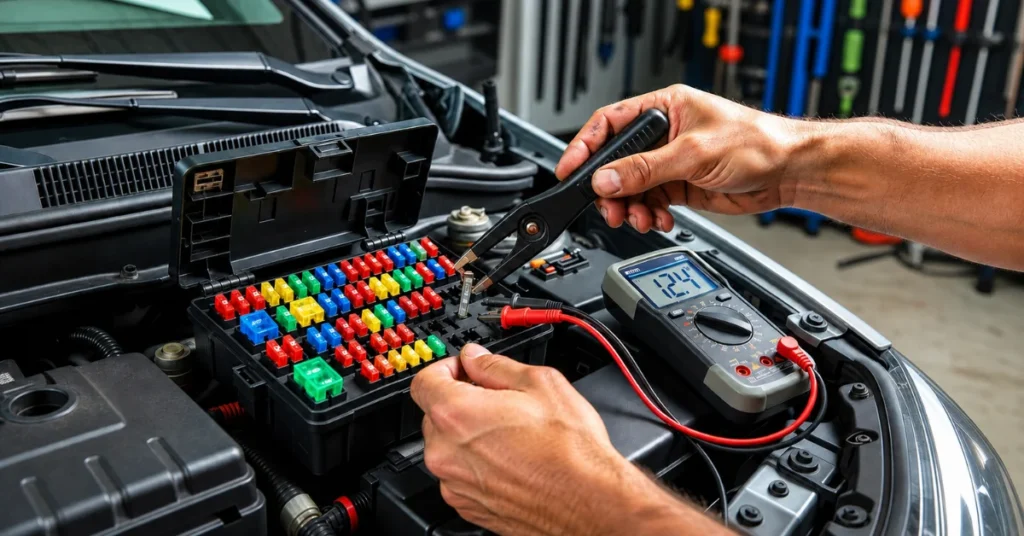
- Fully charge the battery first and confirm the charging voltage is correct.
- Set a multimeter to DC amps and connect it in series between the negative terminal and the disconnected negative cable.
- Wait 30–45 minutes without opening a door, pressing a key fob, or touching anything electrical, so the car’s modules can settle.
- Read the draw. Anything consistently above roughly 50 milliamps is worth investigating further.
- Pull fuses one at a time from the fuse box, watching the multimeter after each pull.
- When removing a fuse causes the reading to drop sharply, that circuit is your source. The fuse box label points you toward the specific component.
If the drain doesn’t show up right away, it might be intermittent — some modules only misbehave after the car has sat for a day or more, or only under specific temperature conditions. In that case, a longer “sit test,” where the meter stays connected overnight or for 24–48 hours without disturbing the car, often catches what a quick test misses.
Alternator Problems vs. Battery Problems
This is where a lot of people get stuck replacing batteries when the real issue is upstream. The alternator’s job is to recharge the battery while the engine runs. If it’s weak or failing, the battery starts every trip a little more depleted than the last one.
Dim headlights that brighten when you rev the engine, a battery warning light on the dash, or a battery that tests fine right after a jump but dies again within a day are classic signs the alternator, not the battery, is the actual problem. A shop can test alternator output in a few minutes with a load tester, and it’s worth doing before buying a replacement battery.
How to Test a Battery That Keeps Dying
Testing takes the guesswork out of the situation. Most auto parts stores will run a free battery and charging system test, which checks both the battery’s health and how well the alternator is charging it.
At home, a basic voltmeter reading tells you a lot:
| Voltage Reading | What It Means |
|---|---|
| 12.6V or higher | Fully charged, healthy |
| 12.4V – 12.6V | Moderately charged |
| Below 12.2V | Needs recharging, further testing recommended |
| Below 12V after a full charge | Likely can’t hold a charge anymore |
If the battery tests fine but keeps going flat between drives, the problem is almost certainly parasitic drain or a charging issue rather than the battery itself.
When Replacement Is the Only Fix
Sometimes the honest answer is that the battery has simply reached the end of its life. Corroded internal plates and sulfation build-up reduce a battery’s ability to hold charge, and no amount of recharging reverses that permanently.
Signs it’s time to replace rather than repair include a battery over 4 to 5 years old, visible swelling or bulging of the case, a rotten-egg smell near the battery, or repeated failed load tests even after a full recharge. In these cases, replacing the battery is genuinely the right call, and pairing it with a quick alternator and connection check prevents the new one from suffering the same fate.
How to Stop This From Happening Again
A few habits go a long way toward preventing repeat battery failure:
- Drive for at least 20 to 30 minutes occasionally to let the alternator fully recharge the battery
- Clean corrosion off terminals every few months with a wire brush and baking soda solution
- Unplug chargers and accessories when the car is parked long-term
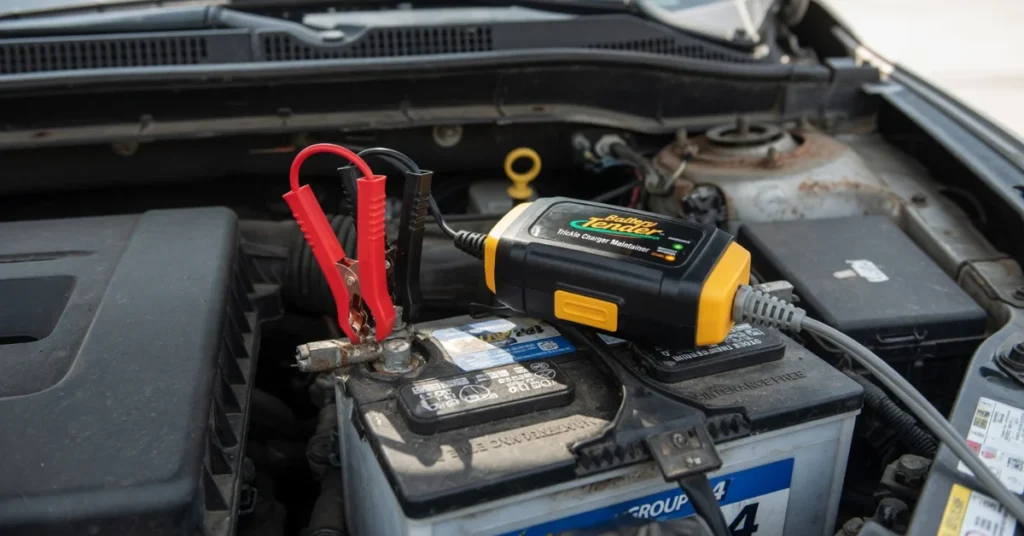
- Use a trickle charger or battery maintainer if the vehicle sits unused for weeks at a time
- Get the charging system tested during routine oil changes, not just when trouble starts
- Avoid pulling fuses repeatedly during testing without logging each step, since it can reset modules and briefly change the draw pattern
What the Research Shows
Detailed analysis of roadside breakdown data consistently points to battery failure as one of the single biggest causes of unexpected car trouble, particularly during temperature extremes in summer and winter. Industry data also shows short-trip driving is one of the most underestimated causes of premature battery death, since a car engine needs sustained runtime to fully replace the power used just to start it.
None of this means every dead battery points to a mystery. In most cases, when someone keeps asking why does my car battery keep dying, the answer is sitting in one of a handful of well-documented causes, not something unusual about their specific car.
Quick Checklist: Why Does My Car Battery Keep Dying?
- Battery older than 4 years? Get it load-tested.
- Dim lights or slow cranking? Check the alternator.
- Only short trips? Take it for a longer drive weekly.
- Dies overnight with no obvious cause? Wait for sleep mode, then test for parasitic drain.
- Corrosion visible on terminals? Clean and re-tighten.
- Drain only shows up after a day or two? Run the longer sit test instead of a quick check.
FAQs
Why does my car battery keep dying even after I replace it?
This usually means the underlying problem was never the battery — a parasitic drain or a failing alternator is likely draining the new one the same way it did the old one.
Can cold weather alone kill a car battery?
Cold weather doesn’t kill a healthy battery outright, but it reduces its output significantly, which is often enough to expose a battery that was already weakening.
How do I know if it’s the alternator or the battery?
A quick way to tell: jump-start the car, then check if the battery holds charge after driving for 20 minutes. If it dies again quickly, the alternator is the more likely culprit.
Is it normal for a car battery to die if the car sits unused for weeks?
Yes, to some extent. Most vehicles have a small constant draw for the clock, alarm, and computer modules, which can drain a battery over several weeks of inactivity.
How much does a new car battery typically cost?
Prices vary by battery type and vehicle, generally ranging from around $100 for a standard battery to $250 or more for AGM batteries used in newer cars.