
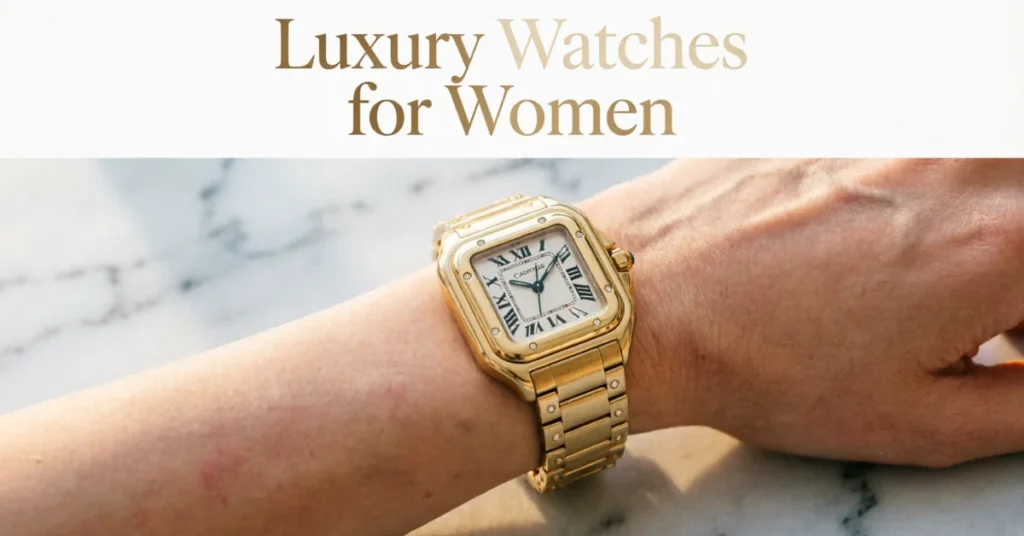
A decade ago, a woman shopping for a serious timepiece usually got pointed toward the “ladies’ collection” tucked in the back corner of a boutique, smaller versions of men’s models with a few extra diamonds bolted on. That’s changed. Luxury watches for women are now one of the fastest growing categories in the entire watch industry, and the shift isn’t just cosmetic. It’s about who’s buying, why they’re buying, and what they expect to get for the money.
Anyone who’s spent time in a watch boutique lately has probably noticed the difference. Sales staff aren’t steering women toward the smallest case in the display anymore. They’re pulling out sport watches, oversized dials, and pieces originally designed for men, because that’s what customers are asking to try on.
Luxury Watches for Women: What Changed and Why It Matters
The short version: women stopped buying watches as gifts they received and started buying them as purchases they chose. That single shift rearranged the entire category.
Industry trackers estimate the global luxury watch market generated more than sixty billion dollars in revenue in 2026, with steady annual growth projected through the next several years. Women’s demand is climbing faster than the market average, driven less by “his and hers” matching sets and more by women treating a watch the way they’d treat a piece of art or a first apartment. Something chosen on their own terms.
That reframing matters because it changes what brands actually make. A few years back, “women’s watch” mostly meant smaller case, more crystals, softer color. Now it can just as easily mean a 36mm steel sports model with a screw-down crown and a bracelet that was never marketed to a specific gender at all.
Which Brands Actually Lead the Category
Ask ten collectors which brands matter right now and most of the same names come up. Rolex, Cartier, Omega, and Patek Philippe consistently dominate both new sales and resale value, and that’s not marketing spin. It shows up in what pieces hold their price years after purchase.
Cartier’s Tank and Panthère lines remain go-to entry points for buyers who want instant recognizability without a sport-watch aesthetic. Rolex’s Lady-Datejust and Oyster Perpetual keep showing up on wish lists because they work in a boardroom and at a dinner without looking like they’re trying too hard. Omega has built a following among women who want a genuine tool watch, not a jewelry piece dressed up as one, and that Seamaster crowd has grown noticeably over the past couple of years.
Patek Philippe sits at the top for buyers thinking generations ahead rather than seasons ahead. Its Twenty~4 and Calatrava lines get described by collectors as pieces you buy once and hand down, not pieces you replace when trends shift.
Smaller names deserve a mention too. Jaeger-LeCoultre has quietly built a loyal following among women who care more about what’s happening inside the case than what’s stamped on the dial. Vacheron Constantin appeals to buyers already deep into the hobby, the kind who read movement specs before they look at the strap color.
Quick comparison, side by side:
| Brand | Entry Price (Steel) | Best Known For | Resale Strength |
|---|---|---|---|
| Rolex | $8,000–$12,000 | Lady-Datejust, Oyster Perpetual | Very strong, often above retail |
| Cartier | $3,500–$7,000 | Tank, Panthère | Strong, steady over time |
| Omega | $4,000–$9,000 | Seamaster, Constellation | Moderate to strong |
| Patek Philippe | $20,000+ | Calatrava, Twenty~4 | Very strong, heirloom-grade |
| Jaeger-LeCoultre | $9,000–$15,000 | Reverso, Rendez-Vous | Moderate |
| Vacheron Constantin | $25,000+ | Overseas | Strong among serious collectors |
What the Research Shows
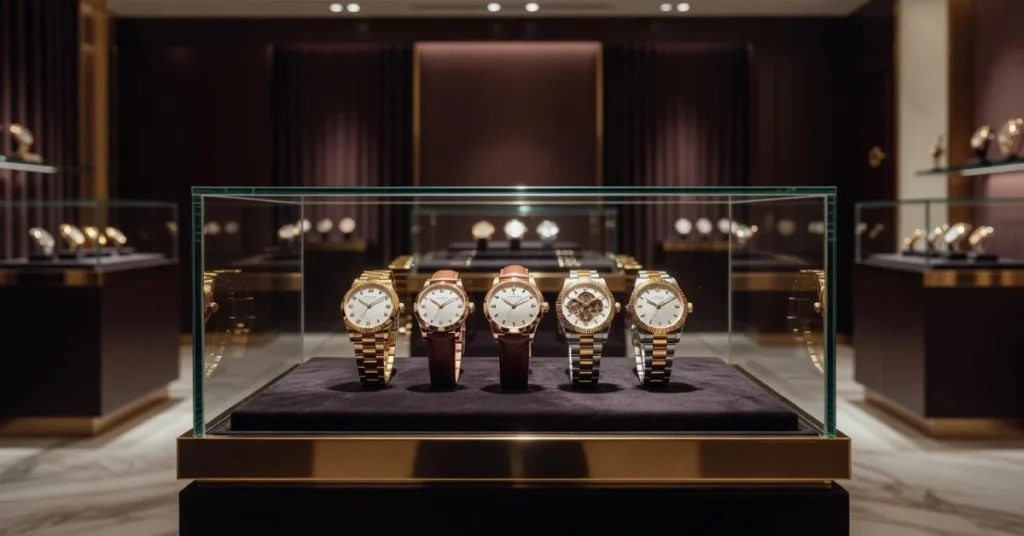
Market data backs up what boutique staff have been saying anecdotally for a while. Women’s segments of the luxury watch industry are projected to grow at a noticeably faster rate than the men’s segment over the next several years, based on multiple independent market research firms tracking the category. Analysts attribute that gap to two forces running at once: rising numbers of women with independent purchasing power, and brands finally designing pieces around what women actually want to wear, not just resizing what already existed.
There’s a second pattern worth flagging. Offline retail still accounts for the large majority of luxury watch sales worldwide, which tells you something important: this isn’t a category people buy sight unseen. Trying a piece on, feeling the weight of it, seeing how a bracelet sits against the wrist, still matters more here than in almost any other luxury category.
How to Choose Between Classic and Statement Pieces
Every buyer eventually lands on the same fork in the road. Do you go classic, or do you go bold?
Classic pieces (think Datejust, Tank, Calatrava) hold value predictably, work across decades of changing fashion, and rarely draw a second glance from anyone who isn’t already into watches. That’s the point. They’re quiet by design.
Statement pieces flip that logic. A candy-colored Oyster Perpetual, a diamond-set Seamaster, a Panthère with its chain-link bracelet catching light, these are built to be noticed. They photograph well, they start conversations, and they tend to track fashion cycles more closely than the classics do.
Neither choice is wrong. It comes down to what you actually want from the watch: something that disappears into your daily life, or something that announces it.
A rough rule collectors repeat often: your first serious watch should be the versatile one, something you can wear to a client meeting and a wedding without changing straps. Your second watch is where you get to have fun.
Case size, matched to wrist size:
| Wrist Size | Suggested Case Size |
|---|---|
| Petite (under 6″) | 26mm–32mm |
| Average (6″–6.75″) | 30mm–36mm |
| Larger (6.75″+) | 34mm–40mm |
These ranges overlap on purpose. Case size is a starting point, not a rule, and trying a piece on in person still beats any chart.
Common Mistakes First-Time Buyers Make
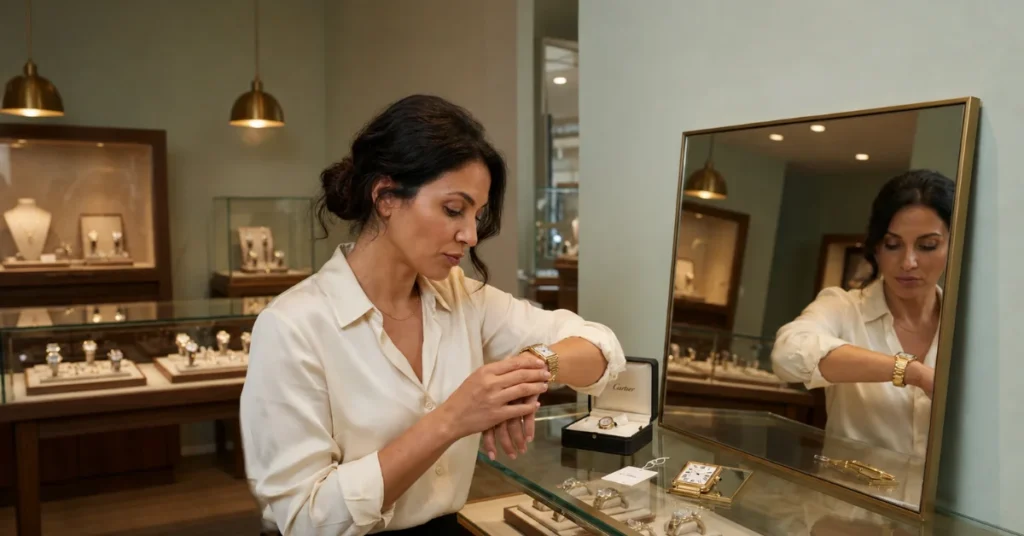
Buying blind on size tops the list. Women’s wrists vary enormously, and a 36mm case that looks perfect on one wrist can look oversized or undersized on another. Try it on before committing, always.
Chasing resale hype instead of personal taste ranks second. A watch that holds value on paper but that you never actually reach for in your own closet isn’t a good purchase, no matter what the secondary market says about it.
Skipping authentication on pre-owned pieces is the costliest mistake. Buying from an authorized dealer or a reputable, established reseller isn’t optional if you’re spending real money, especially in a market where counterfeits have gotten genuinely convincing.
Insuring and Servicing Your Luxury Watch
This is the part most buying guides skip entirely, and it’s where a lot of new owners get caught off guard.
A sales receipt isn’t real insurance. Standard homeowner’s or renter’s policies typically cap jewelry and watch coverage at somewhere between $1,000 and $2,500 per item, far below what most luxury watches for women actually cost. That gap catches a lot of first-time buyers off guard.
The fix is a scheduled personal property floater or a dedicated watch insurance policy, priced roughly at 1% to 3% of the appraised value per year. An $8,000 watch, for instance, might run somewhere around $80 to $240 annually depending on the provider and location. Getting an independent appraisal done every twelve to eighteen months keeps that coverage accurate as values shift, especially for pieces from brands with strong resale demand.
Servicing matters just as much and gets skipped in almost every buying guide. Mechanical movements typically need professional servicing every four to five years to stay accurate and keep any factory warranty intact. Skipping this is one of the quieter ways collectors lose value on a piece they otherwise took good care of.
Buying Luxury Watches for Women: What to Expect at Each Price Point
Entry-level luxury (roughly $3,000 to $8,000) gets you into steel Cartier or Omega territory, often the most practical daily-wear tier of the whole category.
Mid-range (around $8,000 to $20,000) opens up gold cases, diamond-set bezels, and early Rolex territory, where waitlists and dealer relationships start to matter.
High horology ($20,000 and up) is where Patek Philippe, Vacheron Constantin, and complicated movements live. These aren’t impulse purchases. Most buyers at this level spend months, sometimes years, researching before they commit.
Whatever the budget, one thing stays constant: buying luxury watches for women through an authorized channel protects both the warranty and the resale value, and it’s worth the extra research to find a dealer with a genuine track record.
Conclusion
The category built around luxury watches for women isn’t a passing trend dressed up in industry language. It reflects a real, measurable shift in who’s buying, why they’re buying, and what they expect a watch to say about them. Whether the goal is a daily-wear classic or a piece that turns heads at dinner, the buyers driving this market in 2026 are doing something previous generations rarely got to do: choosing exactly what they want, on their own terms, with their own money.
FAQs
What’s the difference between a women’s watch and a unisex watch?
Increasingly, not much. Many brands now design case sizes and dials meant to work across genders rather than defaulting to smaller, more decorative “women’s only” versions.
Are luxury watches for women a good investment?
Some models, particularly steel Rolex and Cartier pieces, have historically held or increased in value. That said, buy for enjoyment first. Treat resale potential as a bonus, not a guarantee.
What size case works best for a smaller wrist?
Most collectors suggest starting around 28mm to 34mm for smaller wrists, though personal preference matters more than any strict rule. Trying the piece on in person remains the best test.
Is it better to buy new or pre-owned?
Both work, provided the pre-owned piece comes from an authenticated, reputable dealer. Pre-owned can offer better value on discontinued models that new retail simply can’t match.
Which brand should a first-time buyer start with?
Cartier and Omega are common starting points because of their range of accessible entry prices combined with strong brand recognition and resale support.