
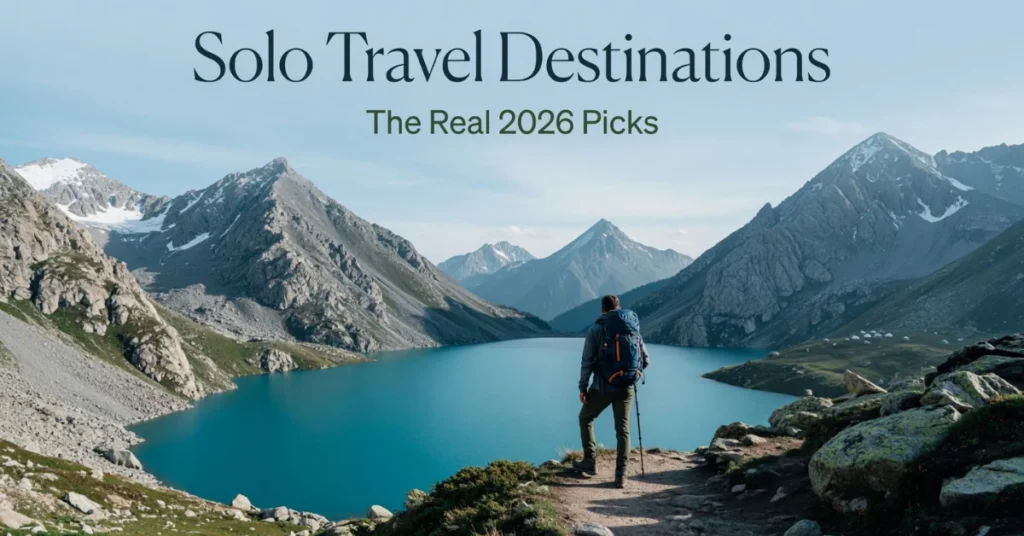
You book one seat, one room, one ticket. No group chat to argue with about where to eat. That’s the whole appeal, and it’s why solo travel destinations keep showing up at the top of travel planning searches heading into 2026.
This isn’t a small trend anymore. The global solo travel market was valued at roughly $549.8 billion in 2025 and is projected to keep expanding through the rest of the decade, according to Grandview Research. In the United States alone, Forbes reports the solo travel market sat near $95 billion in 2024 and is on track to top $190 billion by 2030. People aren’t just tolerating solo trips. They’re planning around them.
Why Solo Travel Destinations Are Having a Moment
Anyone who has booked a trip alone knows the calculation is different. Cost matters more, since there’s no one to split a room with. Safety matters more, since there’s no travel partner to lean on at 11 p.m. in an unfamiliar train station. And ease of meeting people matters more, because solitude gets old fast if a destination offers no way to connect.
That’s the filter serious solo travel destinations get run through now. Adventure operator Much Better Adventures released its Solo Travel Index for 2026, and the panel didn’t just pick pretty places. They scored countries on booking trends, meal costs, visa access, the Global Peace Index, and biodiversity data. Kyrgyzstan came out on top, overtaking Italy, with Japan close behind in third.
That’s a genuinely interesting result. Kyrgyzstan isn’t a place most casual travelers would have named five years ago. Its alpine lakes, nomadic yurt stays, and mountain trekking routes now pull in independent travelers who want raw landscape over polished resort service, and the ranking reflects that shift toward adventure-driven solo travel destinations rather than purely comfort-driven ones.
The Cities Where Solo Travelers Actually Feel At Ease
Rankings built on hard data are useful, but plenty of solo travel destinations earn their reputation the old-fashioned way: word of mouth from people who’ve actually walked the streets alone.
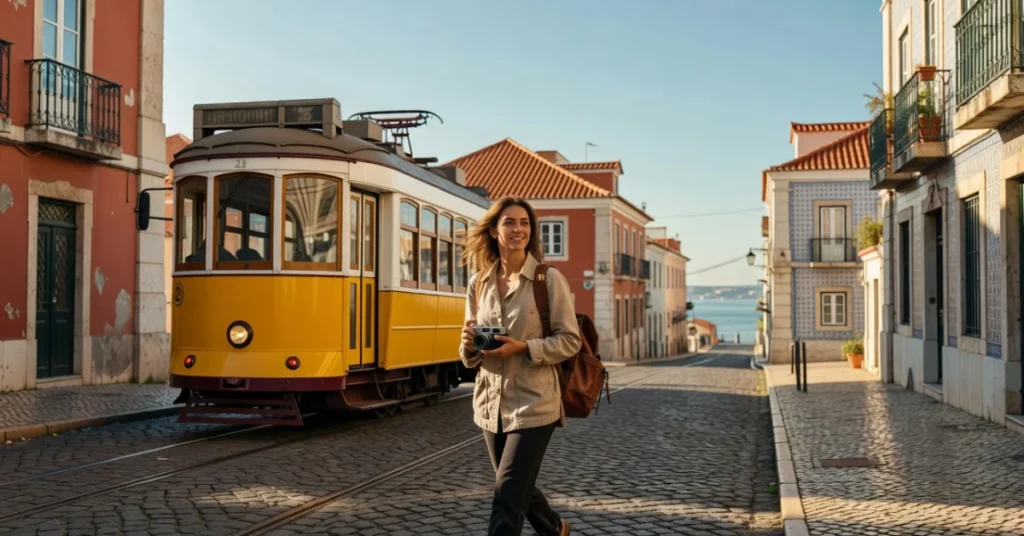
Lisbon keeps coming up for a reason. The hills are steep, the trams are cheap, and the hostel culture makes it simple to end up sharing a pastel de nata with strangers who become dinner companions by nightfall. Copenhagen works similarly, flat, bike-friendly, and safe enough that solo travelers rarely think twice about a late walk home.
Reykjavik draws a different crowd. Iceland consistently ranks among the safest countries anywhere, and Reykjavik itself is small enough to explore on foot before joining a small-group day tour out to the Golden Circle or a glacier. That mix of independent city time and optional group excursions is exactly what makes a location work as one of the more reliable solo travel destinations for first-timers.
Dublin has quietly become a standout too. Tripadvisor’s 2026 Travellers’ Choice awards named it the top city worldwide for solo travel, citing its welcoming pub culture and how easy it is to strike up a conversation without even trying.
What the Research Shows
Detailed analysis of recent booking and search data reveals a pattern that goes beyond a single viral list. Women make up a large majority of solo travelers globally, and a growing share, nearly four in ten by some counts, are now over 40. That’s a meaningful shift from the backpacker stereotype that dominated the conversation a decade ago.
Search data backs this up. Online interest in solo travel has climbed sharply over the past several years, and per-trip spending among solo travelers now outpaces spending among couples on a per-person basis. Solo travelers plan further ahead, book more deliberately, and often prioritize longer stays of a week or more rather than quick weekend trips.
Researchers tracking this space through 2026 also note a demographic widening: it’s no longer just 20-somethings on gap years. Travelers in their 40s, 50s, and beyond now make up a substantial and fast-growing slice of the solo travel market, often favoring culture and food-focused trips over backpacker-style adventure.
Regions Worth a Closer Look
Asia. Japan sits at or near the top of nearly every recent solo travel destinations list, and it’s easy to see why. A softer yen has made it more affordable than it’s been in years, the rail system removes most navigation stress, and solitude is culturally unremarkable there in a way it isn’t everywhere. Thailand remains the classic entry point for newer solo travelers, with Chiang Mai’s café scene and Bangkok’s chaos both easy to dip into without a group.
Oceania. Time Out’s 2026 solo travel report found Australia sitting just behind Japan as the most-desired destination among people actively planning solo trips, with New Zealand rounding out the top three. Consistently high safety rankings and English-language ease make both countries low-friction choices for a first big solo trip.
Europe. Beyond Lisbon and Copenhagen, Amsterdam draws praise for how walkable it is even for travelers who arrive with zero itinerary. Its canal network and flower markets make aimless wandering, usually a source of solo-trip anxiety, feel like the actual point of the visit.
Central Asia. Kyrgyzstan’s rise isn’t a fluke. It reflects a broader appetite among solo travelers for adventure that doesn’t require a huge budget, paired with visa policies that have made entry noticeably simpler than in past years.
Real Daily Costs Across Top Solo Travel Destinations
Budget is where most “best destinations” lists go vague. Here’s a clearer comparison, drawn from current 2026 cost-of-travel data across multiple ground-cost trackers, covering accommodation, food, local transport, and activities per person, per day:
| Destination | Daily Budget (USD) | Best For | Safety Level |
|---|---|---|---|
| Thailand | $30–$60 | First-timers, budget travel | High |
| Vietnam | $25–$45 | Ultra-budget backpacking | High |
| Portugal (Lisbon/Porto) | $50–$90 | Culture, café pace | High |
| Japan | $70–$130 | Safety-first, easy navigation | Very High |
| Iceland | $150–$250 | Nature, road trips | Very High |
| Kyrgyzstan | $35–$65 | Adventure, mountain trekking | Moderate |
| Australia | $90–$150 | English-speaking comfort | Very High |
These are planning ranges, not guarantees. Season, city, and personal pace can shift the real number by 15 to 20 percent in either direction.
Hidden Costs Most Solo Travel Guides Skip
Daily budgets rarely capture the full picture. A handful of add-on costs quietly shape the true price of most solo travel destinations, and few guides list them together:
- Visa fees: Typically $20 to $150 depending on the country and nationality, with some e-visas processed online in under 48 hours
- Travel insurance: Roughly $2 to $5 per day for basic coverage, more for adventure activities like glacier hiking or volcano boarding
- SIM cards and data: $10 to $30 per month in most regions, cheaper across Southeast Asia
- Single-room supplements: Hotels and some tours charge a solo traveler a premium of 20 to 50 percent over the per-person rate a couple would pay
Building a 10 to 15 percent buffer into any solo trip budget covers most of these extras without derailing the plan.
Choosing Among Solo Travel Destinations Based on What You Actually Want
Not every solo trip needs the same ingredients. A first-time solo traveler nervous about safety should weigh Iceland, Japan, or Australia well above a raw backpacking route through Central Asia. Someone chasing adventure and who doesn’t mind a rougher edge should look at Kyrgyzstan or the Central America backpacker circuit through Guatemala and Nicaragua, where hostel-run group activities like volcano hikes make solo travelers instant friends by nightfall.
Budget matters too. Thailand and the Philippines remain some of the most affordable solo travel destinations anywhere, while a solo Icelandic road trip or a Japanese city-hopping itinerary will run considerably higher per day.
A quick way to sort priorities:
- Safety-first, minimal planning needed: Japan, Iceland, Australia
- Budget-friendly with social ease: Thailand, Philippines, Guatemala
- Culture-and-café pace: Lisbon, Amsterdam, Copenhagen
- Raw adventure, higher effort: Kyrgyzstan, Nicaragua
Challenges Solo Travelers Still Face
None of this means solo travel destinations are risk-free by default. Language gaps still trip people up outside major tourist corridors. Solo dining can feel awkward in cultures where communal meals are the norm, and last-minute itinerary changes carry more logistical weight when there’s no travel partner to help troubleshoot.
Cost is a real drawback too. Solo travelers absorb the full price of a hotel room or private tour that a couple would split, which is part of why so many operators now build dedicated solo group tours, matching independent travelers into small cohorts for the social parts of a trip while leaving daytime plans flexible.
Where This Is Headed Through 2026 and Beyond
The trajectory looks steady rather than explosive. Analysts tracking the space expect continued double-digit annual growth through the next several years, driven by remote work flexibility, a widening age range of solo travelers, and better safety infrastructure, like solo-traveler-specific hotel programs and city safety apps, in destinations that previously catered mainly to groups.
Expect more mid-size cities to court solo travelers directly in the next year or two, following Dublin’s playbook of leaning into walkability and low-pressure social scenes rather than competing purely on landmarks.
Conclusion
Choosing among solo travel destinations in 2026 comes down to matching a place to what a traveler actually needs from the trip, whether that’s the raw scenery of Kyrgyzstan, the low-stress familiarity of Japan, or the social ease of a Dublin pub. The data backs up what solo travelers have said for years: going alone doesn’t mean going without company, it just means choosing when that company shows up.
FAQs
What are the safest solo travel destinations for beginners?
Japan, Iceland, and Australia consistently rank among the safest options, thanks to low crime rates, reliable public transport, and widespread English signage or fluency.
Are solo travel destinations more expensive than group trips?
Often yes, since solo travelers cover the full cost of a room or private tour. Budget-friendly spots like Thailand and the Philippines help offset that gap.
Is solo travel safe for women specifically?
Data shows women make up the large majority of solo travelers worldwide, and destinations like Iceland, Copenhagen, and Lisbon are frequently cited as especially comfortable for solo female travelers.
What’s the best time of year to visit top solo travel destinations?
It depends on the destination, but January is reportedly the most popular month for solo trip bookings, likely tied to post-holiday resets and shoulder-season pricing.
Do solo travel destinations require more planning than group trips?]
Generally yes. Solo travelers tend to research further in advance and often arrive with a firmer itinerary than group travelers, since there’s no one else to fall back on if plans fall through.