

You’re doing 60 on the highway and the steering wheel starts buzzing in your hands. Or maybe it’s the floor, or the whole seat. Why does my car shake when I drive is one of those questions that sends people straight to a search bar mid-drive, and for good reason. A shaking car isn’t just annoying. It’s usually the clearest early warning your vehicle gives you before something more expensive breaks.
The good news? In 2026, most shops can pinpoint the cause in under an hour, and the fix is often cheaper than drivers expect. The bad news is that shaking has more than one source, so guessing wrong wastes time and money.
The Steering Wheel Test: Where the Shake Is Telling You Something
Before diagnosing anything, notice where you feel it. This one detail narrows the list fast.
- Steering wheel shakes — usually front tires, wheel balance, or alignment
- Seat or floor shakes — often rear tires, driveshaft, or U-joints
- Whole car shakes — could be engine mounts, transmission, or a bigger tire issue
- Brake pedal pulses — almost always the brake rotors
Anyone who’s driven for more than a few years knows the difference between a “something’s a little off” wobble and a “pull over now” shake. Trust that instinct.
Why Does My Car Shake When I Drive at Highway Speeds?
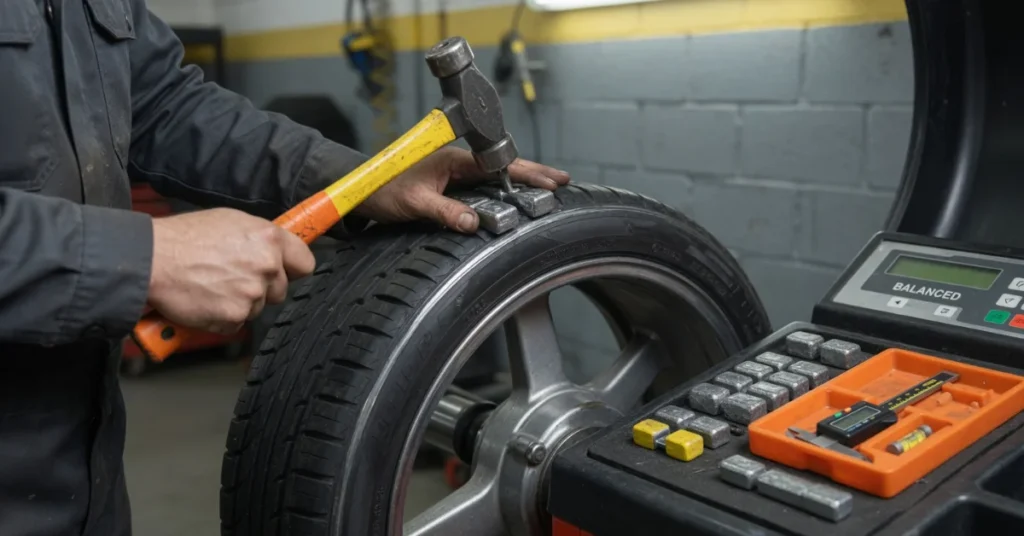
This is the most common version of the complaint, and tires are the first suspect. Unbalanced tires create a wobble that typically shows up somewhere between 50 and 60 mph, and it tends to get worse the faster you go.
A tire that’s out of balance means the weight isn’t distributed evenly around the wheel. That imbalance forces the tire to bounce slightly with every rotation instead of rolling smooth, and at speed, that bounce turns into a vibration you can feel through the wheel.
Misalignment is the close cousin here. It doesn’t just cause shaking, it also chews through tread unevenly and can make the car drift to one side on a flat road. Mechanics who deal with this daily will tell you, if the shake showed up right after new tires or a pothole hit, alignment or balance is the first thing to check.
A bent rim from a hard pothole strike is another possibility, and it’s sneaky because the damage isn’t always visible just looking at the wheel.
What the Research Shows
Federal tire safety guidance recommends checking tire inflation, tread wear, and balance on a monthly basis, since these three factors together account for a large share of highway vibration complaints. Automotive engineers who study wheel dynamics have also documented that vibration frequency and intensity typically increase in direct relation to vehicle speed, which lines up with what drivers experience firsthand: a shake that’s barely noticeable at 40 mph but impossible to ignore at 65.
Why Does My Car Shake When Braking?
If the shake only shows up when you hit the brakes, tires usually aren’t the problem. Warped or uneven brake rotors are the leading cause, and you’ll typically feel it as a pulsing sensation in the pedal itself, not just the wheel.
Rotors warp from heat cycling over time, especially in stop-and-go traffic or after aggressive braking on a downhill stretch. Worn brake pads and sticking calipers can produce a similar feeling, though usually paired with a grinding or squealing noise.
Here’s the practical difference: brake-related shaking disappears the moment you take your foot off the pedal. Tire-related shaking doesn’t care whether you’re braking or not, it’s there the whole time you’re moving.
Shaking During Acceleration: The Engine and Drivetrain Angle
Shaking that gets worse the harder you press the gas points somewhere else entirely. Loose or failing engine mounts are common suspects, since their whole job is absorbing engine vibration before it reaches the cabin.
A damaged driveshaft or worn CV joints can also cause this, and it’s more noticeable on front-wheel-drive cars turning at low speed, or rear-wheel-drive cars accelerating hard from a stop.
Engine performance issues matter too. A clogged air filter, worn spark plugs, or contaminated fuel can all throw off the air-fuel mixture, leading to misfires that feel like a rough, uneven shudder rather than a smooth vibration.
Idle Shaking: When the Car Isn’t Even Moving
Plenty of drivers notice the shake before they’ve even left the driveway. If the car shudders while parked and running, that almost always points back to the engine itself, not the wheels or brakes.
Worn motor mounts, dirty fuel injectors, or a failing spark plug are the usual culprits here. This is also where a check engine light often shows up alongside the shake, which is a strong signal not to ignore it.
Seasonal and Situational Causes People Miss
Not every driver asking why does my car shake when I drive is dealing with a mechanical fault — sometimes it’s just ice. Not every shake is mechanical. Anyone who drives through winter knows the drill: snow and ice pack into wheel wells or stick to the inner rim, throwing the wheel’s balance off temporarily. The telltale sign is a shake that’s worse first thing in the morning and fades once the car warms up and the ice melts away.
Road debris, packed mud, or small stones lodged in the tire tread can do the same thing on a smaller scale, and it’s easy to overlook because nothing’s actually broken.
Two Things Most Guides Miss
Most articles stop at tires, brakes, and engine mounts. Two other angles deserve attention, and drivers rarely hear about either one.
A failing wheel bearing produces a shake that’s often confused with tire imbalance, but it comes with a giveaway: a humming or growling noise that gets louder or softer as you turn the steering wheel left and right. Tire imbalance doesn’t change with steering input. Wheel bearing wear does. It’s a distinction worth knowing before paying for a balance job that won’t fix anything.
There’s also a free check almost nobody mentions. Vibration complaints sometimes trace back to a manufacturing defect covered under a safety recall, particularly involving suspension components, driveshafts, or wheel hubs. Before booking a paid diagnostic, it costs nothing to look up your vehicle’s identification number on the federal highway safety agency’s recall lookup page. If a recall applies, the repair is free at a dealership.
One more low-effort step: a simple spin test. With the car safely jacked up and supported, spin each wheel by hand and watch for visible wobble or listen for a grinding sound. It won’t catch everything, but it’s a five-minute check that costs nothing and sometimes points straight at the problem.
Finally, pay attention if a Tire Pressure Monitoring System warning light comes on at the same time as the shake. That’s a strong signal the cause is pressure or tire-related rather than something deeper in the drivetrain.
Comparison Table: Matching the Shake to the Cause
| Where You Feel It | When It Happens | Likely Cause |
|---|---|---|
| Steering wheel | Highway speeds | Unbalanced or misaligned tires |
| Brake pedal | While braking | Warped rotors, worn pads |
| Seat/floor | Accelerating | Driveshaft, CV joints, engine mounts |
| Whole car | Idling | Motor mounts, misfires, fuel issues |
| Steering wheel | Cold mornings only | Ice or snow buildup in wheels |
| Hub area, changes with steering | Any speed | Worn wheel bearing |
Rough Repair Cost Ranking
| Rank | Repair | Typical Position |
|---|---|---|
| 1 | Tire balancing | Lowest cost |
| 2 | Wheel alignment | Low-to-mid |
| 3 | Brake rotor/pad replacement | Mid-range |
| 4 | Wheel bearing replacement | Mid-to-high |
| 5 | Driveshaft/CV joint repair | High |
| 6 | Engine mount replacement | Varies widely |
Anyone Googling why does my car shake when I drive usually wants to know the fix cost before anything else. Costs vary widely by region, make, and shop, so exact figures aren’t reliable to quote here. What stays consistent across most repair estimates is this relative order, from least to most expensive. A same-week inspection before the problem worsens almost always costs less than waiting until a part fails completely.
Who Should Actually Worry About This
A slight vibration on rough pavement is normal and rarely worth a trip to the shop. But persistent shaking, especially one that’s gotten worse over a week or two, is a different story. Anyone who’s ignored a brake pulsation for too long knows it doesn’t stay a minor issue, warped rotors tend to get worse, not better, until they’re replaced.
If the shake comes with a burning smell, a check engine light, or a pull to one side, treat it as urgent. Otherwise, a same-week inspection is usually enough to catch it before repair costs climb.
What to Do Before You Drive to a Mechanic
A few checks take five minutes and can save a diagnostic fee.
- Check tire pressure against the number on your door jamb, not the tire sidewall
- Look for uneven wear patterns or visible bulges on each tire
- Check for ice, mud, or stones packed into the wheel wells
- Note the exact speed and situation when the shake happens
- Check lug nuts aren’t visibly loose
- Look up your VIN on the recall lookup page before booking a paid visit
Bringing a mechanic specific details, “it shakes at 55 mph in the steering wheel, not when braking,” gets you a faster and often cheaper diagnosis than a vague “my car shakes.”
The Bottom Line
Why does my car shake when I drive doesn’t have one universal answer, and that’s actually useful information. The location, speed, and trigger of the shake point toward a specific system almost every time. Tires and wheels cause most highway shaking, brakes cause most pedal-related shaking, and the engine or drivetrain usually explains shaking at idle or acceleration. Catching it early, as of 2026, remains one of the cheapest ways to avoid a much bigger repair bill down the road.
This article is for informational purposes only. Always consult a qualified mechanic for a diagnosis specific to your vehicle.
FAQs
If I’m wondering why does my car shake when I drive, is it safe to keep driving?
Short trips at low speed are generally fine while you arrange an inspection, but avoid highway driving if the shake is severe or paired with a pull to one side.
Can low tire pressure alone cause shaking?
By itself, it’s rarely the sole cause, but it makes an existing balance or wear issue far more noticeable, especially at highway speed.
How much does it cost to fix a shaking car?
Tire balancing or alignment is usually the cheapest fix, while rotor replacement or engine mount repair costs more. A diagnostic visit will narrow it down before any work starts.
Why does my car only shake at certain speeds?
Tire and wheel imbalance tends to resonate at specific speed ranges, often 50 to 60 mph, because that’s where the wheel’s rotation frequency matches the suspension’s natural vibration point.
Could a recall be causing my car to shake?
It’s possible, especially with suspension, driveshaft, or wheel hub components. Checking your VIN against the federal recall lookup page takes a few minutes and costs nothing.
Does buying new tires guarantee no more shaking?
Not unless they’re properly balanced after installation. An unbalanced new tire can shake just as much as a worn one.