
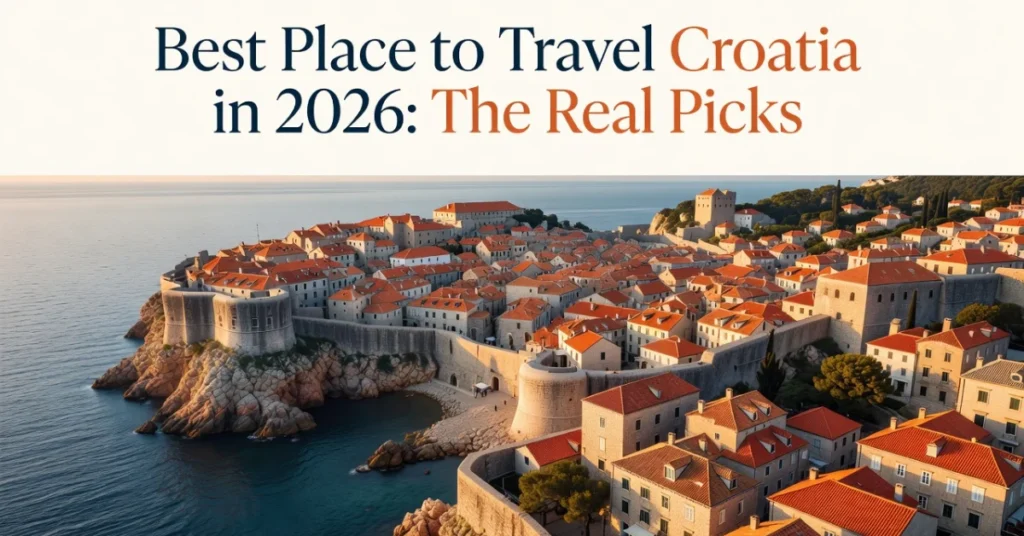
So you’ve narrowed your next holiday down to one country, and now the real question hits: what’s the best place to travel Croatia actually offers once you get past the postcard shots? It’s a fair question. This country packs walled medieval cities, glacier-blue lakes, and over a thousand islands into a coastline you could drive in a single long weekend if you really wanted to rush it (please don’t).
Croatia isn’t one destination pretending to be several. It’s genuinely several trips stitched into one border, and where you land depends entirely on what you’re chasing.
So, What’s the Best Place to Travel Croatia This Year?
Short answer: there isn’t one. Longer, more useful answer — it depends on whether you want history, nature, nightlife, or somewhere quiet enough to hear your own thoughts.
Dubrovnik pulls the crowd that wants old stone and dramatic sea views. Split works for people who want a real city with ferry access baked in. Hvar and Korčula suit island lovers. Plitvice and Krka handle the nature crowd. Zagreb and Istria are for anyone who’d rather skip the coastal rush entirely.
Anyone planning a first trip usually asks this exact question before they’ve even opened a map, and the honest answer is that the best place to travel Croatia depends on the traveler, not the destination.
Croatia at a Glance: Quick Comparison
| Destination | Best For | Ideal Season | Getting There & Cost | Days Needed |
|---|---|---|---|---|
| Dubrovnik | History, city walls, sunsets | April–June, Sept–Oct | Airport transfer or coastal bus | 2–3 |
| Split | Ferry hub, Roman ruins | May–September | Central airport and rail links | 2 |
| Hvar | Nightlife, lavender fields | May–mid July | Ferry from Split, roughly €5.84–€25 | 1–2 |
| Korčula | Quiet island charm | June–September | Ferry from Split or Dubrovnik | 1–2 |
| Plitvice Lakes | Waterfalls, hiking trails | April–June, September | Bus or car, entry €10–€40 | 1 (day trip or overnight) |
| Zagreb | Culture, café life, winter markets | Nov–March or spring | Direct flights, train from coast | 1–2 |
| Istria | Food, wine, slow travel | May–September | Car recommended | 2–3 |
A table like this won’t replace the details below, but it gives a fast starting point before you commit to an itinerary.
Dubrovnik: Walls, History, and Crowds Worth Navigating
Dubrovnik earns its reputation. The Old Town sits behind stone walls dating back to the medieval period, and walking them at sunrise, before the tour groups arrive, is one of those rare travel moments that actually lives up to the hype.
The city has spent the past several years working hard to fix its overtourism problem. Local officials have introduced cruise ship limits and stricter rental rules, and international coverage has started framing Dubrovnik as something closer to a model for sustainable tourism rather than a cautionary tale. That shift matters if you’re choosing when to visit. Shoulder season, roughly April to June or September through October, gets you the same views with a fraction of the foot traffic.
Anyone who has walked the Stradun at 7am versus 2pm in July knows the difference isn’t subtle. It’s the difference between a photograph and a memory.
Split: The Roman Palace Base With Ferry Access
Split doesn’t get quite the same fame as Dubrovnik, and that’s honestly part of its appeal. The Old Town is built inside the retirement palace of a Roman emperor, which means you can grab coffee in a courtyard that’s roughly 1,700 years old without thinking twice about it.
It’s also the practical choice for anyone island-hopping. Regular high-speed catamarans connect Split to Hvar, Brač, and Korčula, with the Split-Hvar crossing taking under an hour and standard tickets running from about €5.84 to €25 depending on season and operator. In peak summer, that same route can see close to twenty daily departures; outside summer, it drops to just a few crossings a day, so shoulder-season travelers should check timetables before locking in dates.
Travelers who’d rather skip queues altogether can also book private speedboats between Split and Hvar, priced from around €370 up to €900 or more depending on boat size. It’s not a budget option, but for a group of four or more splitting the cost, it works out close to a regular ferry ticket while saving hours at the port.
A typical breakdown at bases like this looks like two nights in the city, then a ferry out to the islands for the rest of the trip.
Island Time: Hvar, Korčula, and the Quieter Picks
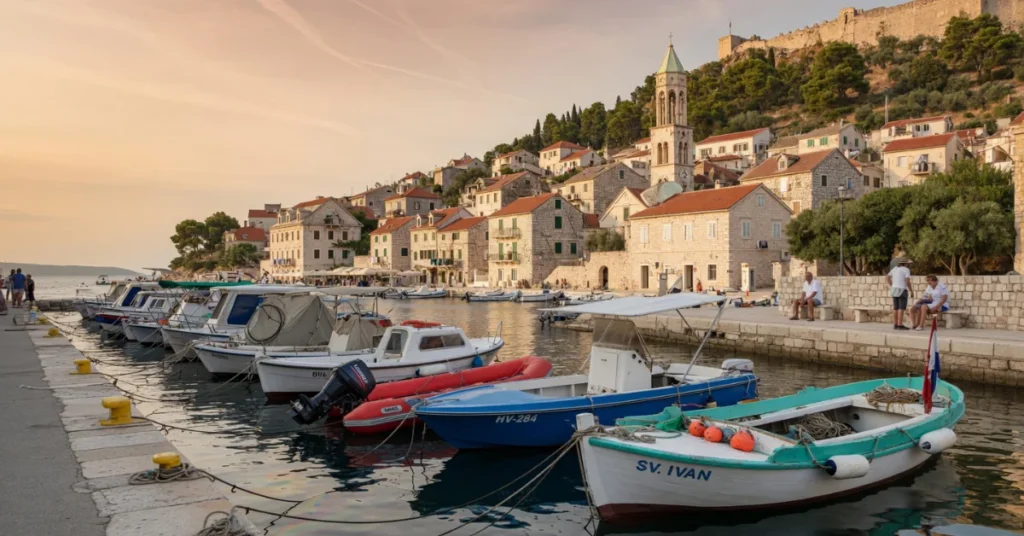
Hvar gets the nightlife reputation, and it earns it, but it’s also got quiet coves and lavender fields if you know where to walk. Korčula trades some of that energy for a slower, more residential feel, plus a legitimate claim to being Marco Polo’s birthplace.
For travelers who want island scenery without the crowd, Vis and Šolta are worth a look too. They take more effort to reach, which is exactly why they’ve stayed calmer.
Pick one island and commit to it. Trying to squeeze three islands into a single day usually means spending most of it on a boat rather than actually swimming in the coves you came for. If you’re traveling by car and want to bring it along, note that passenger catamarans to Hvar Town generally don’t take vehicles. The car ferry route runs instead to Stari Grad, a short drive from Hvar Town itself.
Plitvice Lakes and Krka: Where Nature Steals the Show
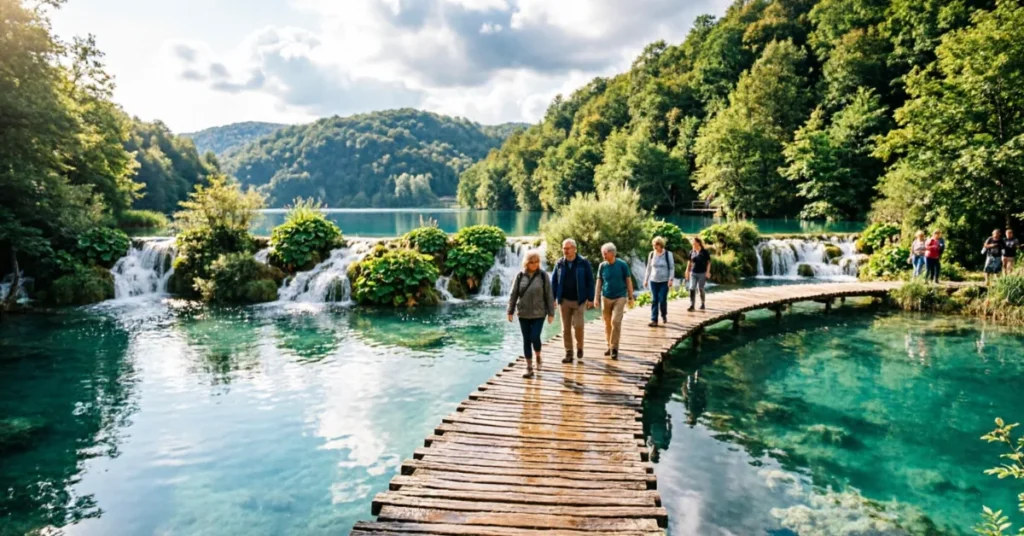
Plitvice Lakes National Park is Croatia’s oldest and largest national park, made up of sixteen interconnected lakes linked by waterfalls and wooden boardwalks that wind straight through the water. It’s been a UNESCO World Heritage Site since 1979, and the tufa formations that create those cascading lakes took thousands of years of mineral deposits to build.
It’s genuinely one of the most photographed places in the country, and for good reason. Standing on the boardwalk with waterfalls on both sides, it becomes obvious why this spot shows up on nearly every Croatia itinerary. Krka National Park offers something similar with fewer crowds and, in past seasons, the option to swim near its waterfalls.
Arrive early. Both parks fill up fast in peak summer, and admission pricing shifts depending on the month and time of day, generally landing somewhere between €10 and €40.
Zagreb and Istria: The Inland Alternative
Not every trip needs to revolve around the coast. Zagreb offers a proper European capital experience with museums, a strong café culture, and none of the ferry-timetable stress that comes with island travel. It’s also a smart pick if you’re visiting in winter, when Christmas markets take over the main squares.
Istria, up in the north, leans into a more Italian-influenced food scene with truffle dishes, olive oil tastings, and hilltop towns like Motovun. Professionals who run food and wine tours through the region often say Istria gets overlooked simply because it doesn’t have a single headline landmark the way Dubrovnik does.
That’s arguably its strength. There’s less pressure to rush between sights and more room to just slow down.
What the Research Shows
Detailed analysis of Croatia’s most recent tourism figures shows just how much momentum this country has built. National tourism data for 2025 recorded more than 21.8 million tourist arrivals and over 110 million overnight stays, both record highs and a clear jump from 2024. December alone brought in roughly 450,000 arrivals, up 7% year over year, showing that the season is stretching further into winter than it used to.
Tourism now accounts for around 20% of Croatia’s entire economy, which explains why destinations like Dubrovnik are investing so heavily in managing crowds rather than just chasing bigger numbers. Germany remains the single largest source market, followed closely by domestic Croatian travelers and visitors from Slovenia and Austria.
The pattern emerging from this data is straightforward: Croatia isn’t just holding onto its popularity, it’s expanding its season and its appeal well beyond the traditional July-August rush.
Finding the Best Place to Travel Croatia for Your Style of Trip
Different travelers need different answers here, and being honest about your own trip style makes this decision much easier.
- First-timers with 7-10 days: Dubrovnik, Split, one island, and a Plitvice day trip covers the essentials without feeling rushed.
- Families: Split and Istria offer easier logistics and calmer paces than Dubrovnik’s peak-season crowds.
- Couples and honeymooners: Hvar and Dubrovnik at sunset remain some of the most naturally romantic settings anywhere on the Adriatic.
- Budget-conscious travelers: Zagreb and Zadar deliver strong culture and food without coastal peak-season pricing.
- Groups of four or more: Private speedboat transfers between coastal hubs and islands can rival ferry pricing per person while saving significant time.
- Second-time visitors: Istria, Vis, and the Elaphiti Islands reward travelers who already ticked off the big names.
None of these options are wrong. The best place to travel Croatia genuinely shifts depending on who’s asking, and that flexibility is part of why the country keeps pulling repeat visitors.
Practical Tips Before You Book
A few things worth knowing before you finalize dates. Peak season runs July through August, when prices climb and popular sites get crowded fast. Shoulder months, especially May, June, September, and early October, offer better weather-to-crowd ratios for most travelers.
Ferry schedules shrink dramatically outside summer, so island-hopping plans need extra buffer time if you’re traveling off-season. Renting a car makes Istria and the inland regions far easier to explore, while the coastal cities and islands work fine with ferries, buses, and walking.
Croatia’s place inside both the eurozone and the Schengen area has simplified things considerably for international visitors. Payments run on the euro, and travelers arriving from other Schengen countries skip border checks entirely, which cuts real time off multi-country itineraries through neighboring Slovenia or Italy. For connectivity, a local or regional eSIM set up before arrival avoids the hunt for Wi-Fi at ferry terminals, especially useful on island-hopping days when timetables change last minute.
Conclusion
There’s no single winner when it comes to finding the best place to travel Croatia, and honestly, that’s the whole appeal. Dubrovnik gives you history and drama. Split gives you a workable base with real ferry access. The islands give you slower days. Plitvice gives you nature that genuinely earns its reputation. Pick based on what your trip actually needs, not just what shows up first in a search result, and 2026 looks set to be another strong year to go see it firsthand.
FAQs
What is the best place to travel Croatia for a first-time visitor?
Most first-timers do well combining Dubrovnik, Split, one island (commonly Hvar), and a day trip to Plitvice Lakes over 7-10 days.
When is the best time to visit Croatia to avoid crowds?
Late April through June and September through October offer warm weather with noticeably smaller crowds than peak summer.
How much does the ferry from Split to Hvar cost?
Standard tickets typically range from about €5.84 to €25 for foot passengers, with the crossing taking under an hour on fast catamarans.
Do I need a car to get around Croatia?
A car helps in Istria and inland regions, but the coast and islands are well served by ferries and buses without one.
Is Plitvice Lakes worth the day trip from the coast?
Yes for most travelers. Arriving early in the day helps avoid the biggest crowds, especially during July and August, and entry runs roughly €10 to €40 depending on season.