
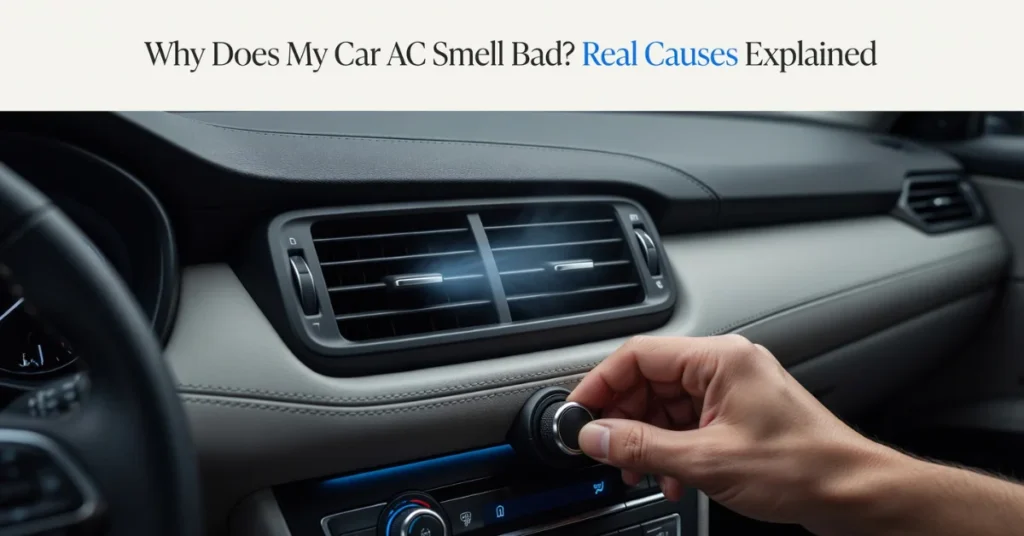
You turn the key, flip on the AC, and it hits you before the cabin even cools down. A musty, sock-drawer smell rolling out of the vents. If you’re asking why does my car ac smell bad, you’re not imagining things and you’re definitely not alone. It’s one of the most common complaints mechanics hear, and in most cases the fix costs a lot less than people expect.
The short version: that odor almost always comes down to trapped moisture somewhere in your air conditioning system. But the exact smell you’re noticing points to a different culprit, and treating them all the same way rarely works.
Why Does My Car AC Smell Bad in the First Place?
Your AC doesn’t just cool the air. It pulls moisture out of it too. Warm, humid cabin air passes over a cold evaporator coil tucked behind your dashboard, and just like a cold glass of water sweats on a summer day, that coil collects condensation.
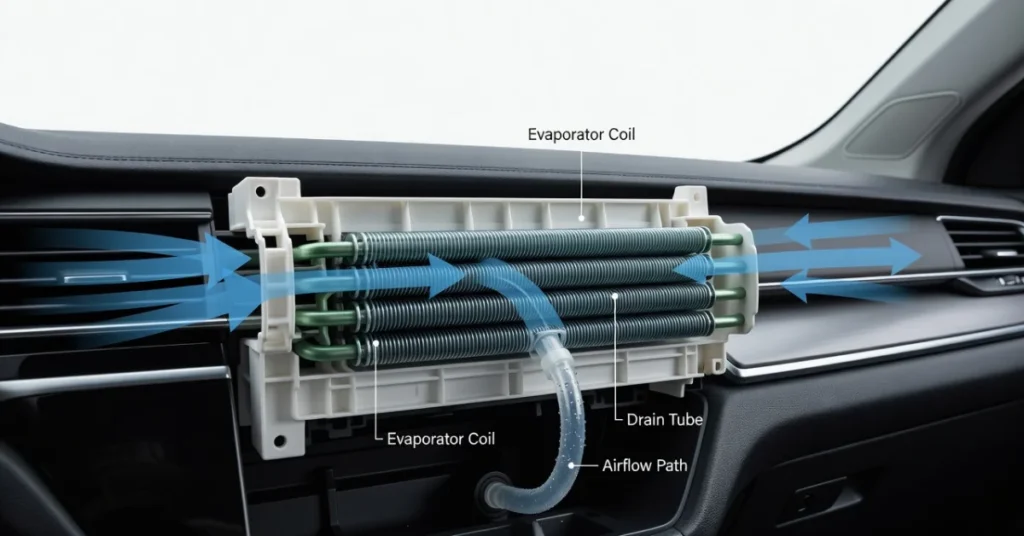
Under normal conditions, that water drips down through a small drain tube and out from under your car. That’s the puddle you’ve probably noticed on the pavemewarmnt after a long drive. When the system works the way it should, there’s nothing to smell.
The problem starts when moisture doesn’t drain properly, or when the coil never fully dries between drives. Mold and mildew love damp, dark spaces, and the evaporator housing behind your dash is basically a five-star hotel for them. Add in dust, pollen, and leaf debris pulled in through the vents, and you’ve got a steady food supply for whatever’s growing in there.
Here’s something most guides skip: newer vehicles aren’t automatically safer from this. Modern evaporator coils pack their cooling fins much tighter together for efficiency, and that tighter spacing actually traps water between the fins more easily than the looser designs used in older cars. So a two-year-old daily driver can develop this problem just as fast as a fifteen-year-old sedan, sometimes faster.
Short trips make things worse too. If you’re only driving a few minutes at a time with the AC on and shutting the engine off right after, the evaporator never gets the chance to dry out completely. Over weeks and months, that dampness turns into a full colony of odor-producing bacteria.
What’s Actually Causing That Musty Smell
Mechanics who deal with this daily will tell you the same thing: nine times out of ten, the smell traces back to one of two spots.
The evaporator core. This is the big one. Moisture condenses on it constantly, and if drainage is slow or clogged, mold builds up on the metal fins themselves. Once that happens, every time air passes over the coil, it picks up the smell and blows it straight into your face.
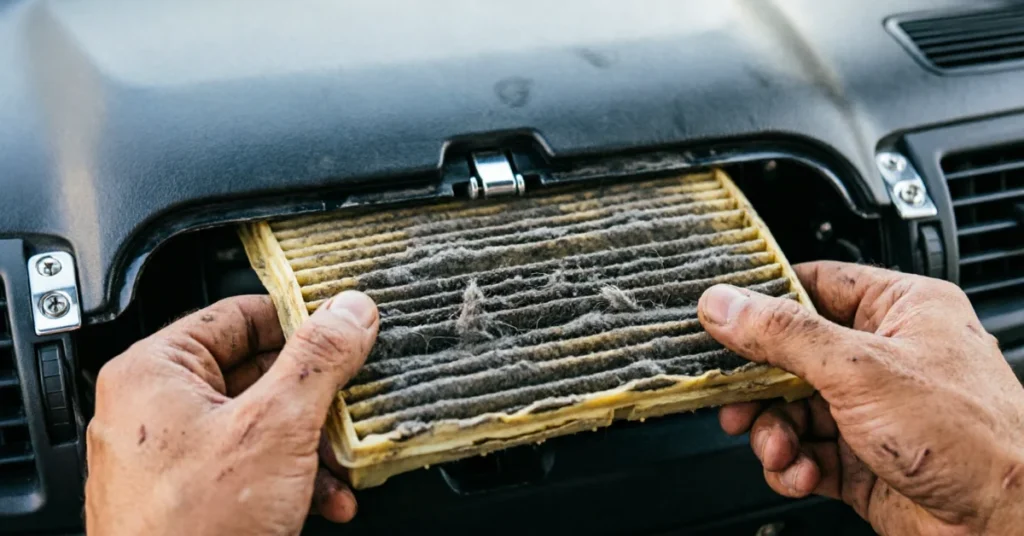
The cabin air filter. This filter is your first line of defense, trapping dust, pollen, and small debris before it reaches the evaporator. Over time it gets loaded down, holds onto moisture, and starts smelling on its own. A cheap, neglected filter can make the whole cabin smell stale even if the evaporator itself is clean.
There’s a third, less common cause worth mentioning too: actual debris in the ductwork. Leaves, acorns, fast food wrappers, even the occasional rodent nest have turned up in glove box vents and blower housings, especially in cars that sat parked for extended periods. It sounds unusual, but it happens more than people expect.
Your driving habits play a part as well. Running the AC on recirculate mode for long stretches keeps pulling the same cabin air across the coil over and over, which builds up humidity inside the system faster than fresh air mode, which constantly cycles in drier outside air. Neither setting is wrong to use, but leaning on recirculate mode for hours at a time gives moisture more chances to settle in.
Smell Type Comparison: What Each Odor Actually Means
Why Does My Car AC Smell Bad Not means the same thing. This breakdown makes it easier to figure out what you’re dealing with before you reach for a fix.
| Smell | Likely Cause | DIY Fix? | Urgency |
|---|---|---|---|
| Musty / moldy | Mold on evaporator or filter | Yes | Low |
| Sour / vinegar | Bacteria buildup, occasionally battery acid or ozone | Yes | Low to medium |
| Sweet / syrupy | Coolant leak, often tied to the heater core | No | Medium to high |
| Rotten egg / sulfur | Bacteria, or a fuel system issue | Depends | Medium |
| Gasoline | Fuel leak | No | High, stop driving |
| Burning / electrical | Blower motor or electrical fault | No | High |
A couple of these deserve more explanation than a single row can give.
Sweet, syrupy smells paired with foggy windows point somewhere different than mold does. If the inside of your windshield keeps clouding up while you’re smelling something almost like maple syrup, that’s usually coolant leaking into the heater core, not the AC evaporator. This needs a shop visit since it involves the cooling system, not just the air conditioning side.
Vinegar smells aren’t always mold either. Most of the time they are, but a similar sour odor can come from battery acid leakage nearby or from ozone given off by certain electrical components. If cleaning the evaporator doesn’t clear it up, that’s worth mentioning to your mechanic.
Gasoline smell means stop driving, not troubleshoot. This one is a genuine safety issue rather than a comfort problem. A fuel leak pulling gasoline vapor into the cabin through the vents isn’t something to drive through traffic with. Pull over safely, shut the car off, and have it towed rather than continuing the trip.
Why Does My Car AC Smell Bad Even After You Clean the Vents?
This is where a lot of people get stuck. They wipe down the dashboard vents, spray in an air freshener, maybe even run a can of foam cleaner through the intake, and the smell comes right back within a week or two.
The reason is simple: surface cleaning doesn’t reach the actual source. The vents you can see and touch are nowhere near the evaporator coil itself, which sits buried behind the dash. Spraying scented products into the vents just masks the odor temporarily instead of dealing with the mold colony sitting on the coil.
A proper fix usually means one of two things. Either a foaming evaporator cleaner applied through the blower intake or cabin filter housing, which reaches deeper into the system, or in stubborn cases, a technician pulling the dash panel to clean the coil directly. That second option costs more, but it’s rarely needed unless the smell has been ignored for a long stretch.
How to Get Rid of the Smell Yourself
Before booking a shop appointment, there’s a lot you can handle on your own.
- Replace the cabin air filter. Most filters run $25 to $80 and take fifteen minutes to swap on many vehicles. If yours hasn’t been changed in over a year, this alone might solve the problem.
- Run the blower fan without the AC for a few minutes after driving. This helps dry out the evaporator coil before you park, cutting down on the moisture mold needs to grow.
- Use a foaming evaporator cleaner. These are sold at most auto parts stores and are sprayed through the fresh air intake, usually located near the base of the windshield or behind the glovebox.
- Check the condensate drain. A clogged drain tube keeps water sitting inside the housing instead of draining outside. Clearing it, often with a length of soft wire or a gentle blast of compressed air, can stop the smell from returning.
- Switch to fresh air mode for part of your drive. Instead of running recirculate the whole trip, alternating between the two settings gives the system a chance to cycle out built-up humidity.
- Avoid parking with windows shut in direct heat right after AC use. Cracking a window for a minute or two while the fan runs helps push out trapped humidity.
Anyone who’s owned a car through a few humid summers knows the drill: skip the maintenance and the smell always finds its way back.
Fix Cost Snapshot
| Fix | Cost Range | Who Can Do It |
|---|---|---|
| Cabin filter replacement | $25–$80 | DIY |
| Foam evaporator cleaner | $10–$20 | DIY |
| Professional evaporator cleaning | $80–$180 | Shop |
| Dashboard removal and direct clean | $400–$700 | Shop only |
| Heater core repair (coolant-related) | Varies by vehicle, often $300+ | Shop only |
When It’s Time to Call a Mechanic
Some situations go beyond what a home fix can solve for why does my car ac smell bad. If you’ve replaced the filter, run a cleaner through the system, and the smell is still there after a week, the mold has likely spread further into the ductwork than a foam spray can reach.
A professional AC system cleaning typically runs somewhere between $80 and $180 depending on the vehicle, according to estimates from independent repair shops. For severe cases requiring dash removal and direct access to the evaporator, costs can climb toward $400 to $700. That’s rare, though, and usually only comes up when a smell has been ignored for years rather than weeks.
Burning smells, gasoline smells, coolant smells, or any odor paired with visibly damp carpet all deserve a shop visit rather than a home remedy. Damp carpet in particular often signals a clogged drain flooding the cabin floor instead of draining outside, which is a separate repair from a simple filter swap.
What the Research Shows
Health agencies have looked closely at what indoor mold exposure actually does to people, and the same principles apply inside a car cabin. According to the United States Environmental Protection Agency, mold exposure can trigger allergic reactions including sneezing, a runny nose, red eyes, and skin irritation, and it can also irritate the eyes, nose, throat, and lungs of both allergic and non-allergic people. For people with asthma or existing mold sensitivity, reactions can be more severe.
That’s part of why this isn’t just a comfort issue. A cabin blowing mold-tinged air at your face for a twenty-minute commute, every single day, adds up. Professionals who work on HVAC systems consistently point to the same root issue: whether it’s a house or a car, trapped moisture plus organic debris equals mold, and mold equals odor and potential irritation for sensitive passengers.
A Few Things Beginners Usually Miss
Some older vehicles never had a cabin air filter installed at all. Models built before the early 2000s often skipped one from the factory, so if you’re hunting for a filter housing and coming up empty, that’s likely why. In that case, the fix leans more heavily on evaporator cleaning and drain maintenance.
Drivers doing mostly short trips (school runs, quick errands, grocery stops) deal with this issue more than people doing longer highway stretches, since the evaporator rarely gets a full drying cycle. Building in that extra minute of fan-only run time after short drives makes a real difference over months of use.
And if your car sits unused for long stretches, particularly through cooler months when the AC isn’t running at all, moisture that didn’t fully evaporate beforehand can sit and ferment quietly until you switch the system back on in spring. That first blast of musty air after winter storage is extremely common and doesn’t necessarily mean anything is broken, just that it needs a cleaning.
The Bottom Line
If you’ve been wondering why does my car ac smell bad every time you turn the key, the answer almost always comes back to moisture that never fully drained, paired with a filter or evaporator coil that’s become a breeding ground for mold and bacteria. Sweet, gasoline, or burning smells are the exceptions that call for a mechanic rather than a home fix. For everything else, a filter swap, a can of foam cleaner, and a habit of running the blower fan for a few extra minutes after each drive solves the issue for most drivers without a single trip to the shop.
This article is for informational purposes only. For persistent odors, burning smells, fuel odors, or symptoms like headaches or breathing irritation, consult a qualified mechanic or healthcare professional.
FAQs
Why does my car AC smell bad only when I first turn it on?
That first blast of odor happens because moisture and any mold buildup sit dormant on the coil until air starts moving across it. Once airflow picks up, the smell usually fades within a minute or two as fresher air cycles through.
Can a dirty cabin air filter really cause a bad AC smell on its own?
Yes. A filter loaded with pollen, dust, and trapped moisture can smell musty even if the evaporator coil behind it is completely clean. It’s the cheapest thing to check first.
Is it safe to keep driving with a moldy AC smell?
For most healthy people, short-term exposure isn’t dangerous, though it’s unpleasant. People with asthma, mold allergies, or respiratory conditions should get it addressed sooner rather than later. A gasoline smell is a different story and means the car shouldn’t be driven until it’s checked.
How often should I replace my cabin air filter to prevent smells?
Most manufacturers recommend every 12,000 to 15,000 miles, or roughly once a year for average drivers. Humid climates or dusty roads may call for more frequent swaps.
Will an air freshener fix the smell for good?
No. Air fresheners mask the odor temporarily but don’t touch the mold or bacteria causing it. The smell typically returns within days once the freshener wears off.