
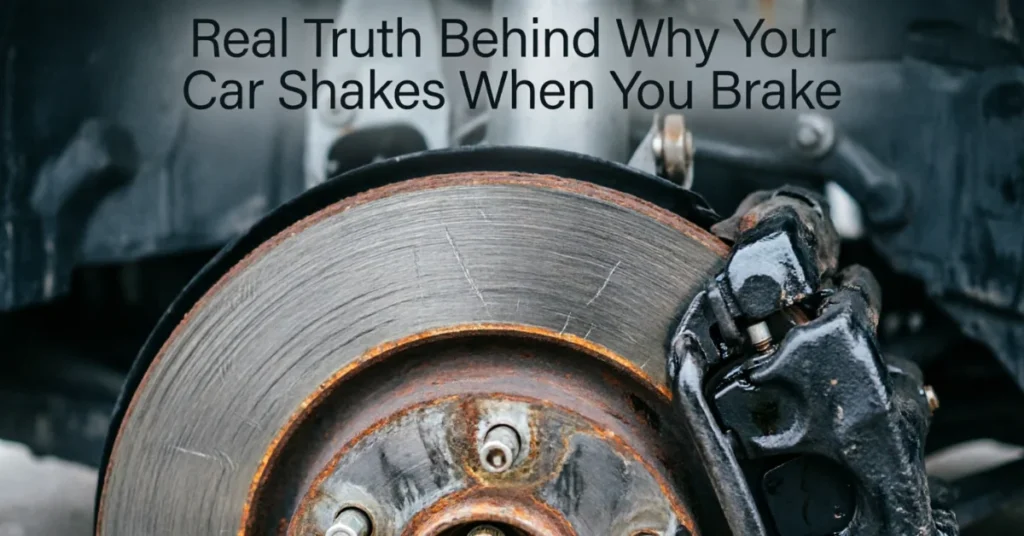
Your steering wheel starts trembling the second you tap the brake pedal, and now you can’t stop thinking about it. “Why does my car shake when I brake?” is probably the exact question you just typed into your phone, usually at a red light, usually a little nervous. Good news first: most of the time, this isn’t a five-alarm emergency. But it’s also not something to shrug off for months.
Here’s the deal. A car that shakes under braking is telling you something specific about a part of your braking, wheel, or suspension system. The trick is figuring out which part, because the fix for a warped rotor looks nothing like the fix for a loose lug nut.
Why Does My Car Shake When I Brake? The Short Answer
The most common reason your car shakes when you brake is uneven wear on the brake rotors, often called warping. Heat builds up fast every time you press the pedal, and if that heat isn’t distributed evenly across the rotor’s surface, thin spots and thick spots start to form. When the brake pads grip an uneven surface like that, you feel it as a pulse through the pedal or a shimmy in the steering wheel.
That’s the headline cause. It isn’t the only one, though, and treating every shake as a rotor problem can lead to an unnecessary repair bill.
Quick Check Before You Call a Mechanic
Before booking a repair, there’s one thing worth checking yourself: lug nut tightness. Anyone who’s had a wheel reinstalled after a tire rotation knows a shop is supposed to torque the lug nuts in a star pattern, evenly, all the way around. If that doesn’t happen, the wheel sits slightly uneven against the hub, and that alone can cause a shake that has nothing to do with your brakes at all.
Grab your car’s torque wrench or lug wrench, and gently check that each lug nut is snug (don’t over-torque past spec). If one feels noticeably looser than the others, that could be your whole answer, and it’s a five-minute fix rather than a parts replacement.
The Main Reasons Your Car Shakes When Braking
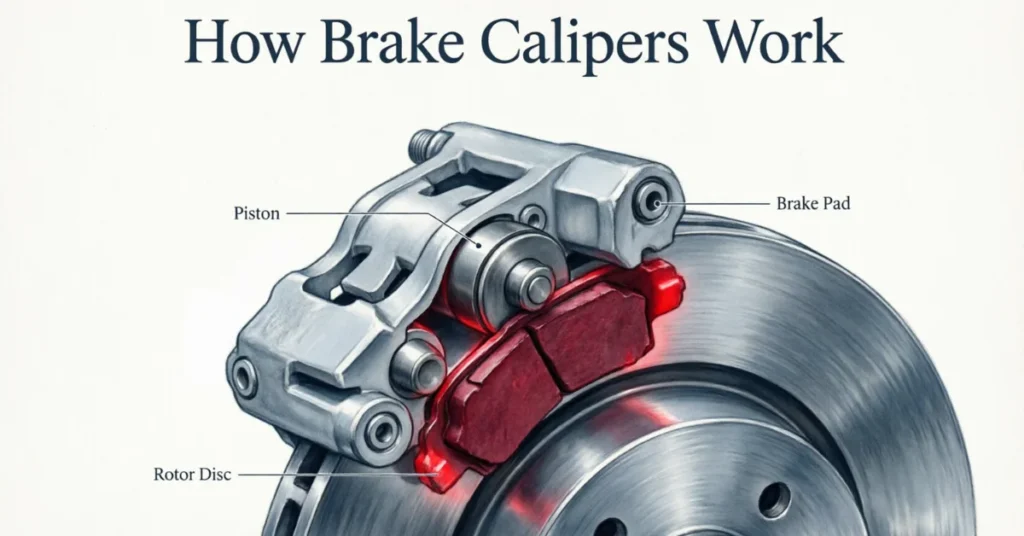
If you’re asking why does my car shake when I brake, these are the components most likely responsible.
Warped or Uneven Brake Rotors
Rotors take a beating. Every stop generates friction, and friction generates heat — sometimes hundreds of degrees in a hard stop. Over thousands of cycles, that heat can cause thickness variation across the rotor face. Aggressive braking on long downhill stretches, towing heavy loads, or riding the brakes in stop-and-go traffic all speed this process along.
Anyone who’s driven a car with a warped rotor knows the sensation well: a rhythmic pulse in the pedal that gets worse the harder you brake, usually most noticeable at highway speeds when you slow down quickly.
A detail that rarely gets mentioned: brand-new rotors can warp fast too, if they weren’t installed with the correct torque sequence. Mechanics who handle daily brake jobs know that skipping the star-pattern torque on a freshly installed rotor is one of the quickest ways to create a “new part, same old shake” complaint.
This single issue answers why does my car shake when I brake more often than any other cause on this list.
Worn or Contaminated Brake Pads
Brake pads don’t wear evenly forever. Dirt, brake dust, and road grime can build up between the pad and rotor surface, creating an uneven contact patch. Once pads get too thin or coated in debris, they can’t grip consistently, and that inconsistency shows up as vibration.
Mechanics working on daily brake jobs will tell you pad contamination is often mistaken for a “warped rotor” complaint, when a simple pad replacement and rotor resurfacing solves it.
Stuck or Sticking Brake Calipers
A caliper’s job is to clamp the pads against the rotor evenly. When a caliper piston sticks — often due to corrosion or a torn dust boot — one side of the car brakes harder than the other. That imbalance can pull the car to one side and create a shaking sensation, sometimes paired with a faint burning smell after a drive.
Loose or Improperly Torqued Lug Nuts
This one’s easy to overlook because it feels too simple, but it’s genuinely common. If lug nuts aren’t torqued evenly, the wheel can sit at a very slight angle against the hub. Under braking, that tiny angle turns into a noticeable wobble, especially at higher speeds. It’s often the very first thing worth ruling out, since it costs nothing to check.
Worn Wheel Bearings or Hub Assemblies
A wheel bearing lets the wheel spin smoothly with minimal friction. Once it wears out, play develops in the wheel, and braking puts extra load right at the point of weakness. Drivers often notice a humming or grinding noise building for weeks before the shake shows up, which is a useful early clue this isn’t a purely braking-system issue.
Suspension and Steering Component Wear
Struts, shocks, ball joints, and tie rod ends all help keep the wheel planted and aligned. When these parts degrade, the wheel doesn’t stay perfectly steady under braking load, and that translates into a shake you feel through the whole chassis rather than just the pedal.
Wheel Alignment and Tire Balance Issues
Misaligned wheels or unevenly worn tires can cause vibration that gets more noticeable during braking, even though the root problem has nothing to do with the brakes themselves. Tire and alignment shops routinely see customers convinced they need new rotors when a wheel balance was actually the fix.
Drum Brake Specifics
Cars and trucks with rear drum brakes have a slightly different failure pattern than disc brakes. Instead of a rotor warping, the drum itself can go “out of round,” meaning it’s no longer a perfect circle. Brake shoes inside the drum also wear differently than pads on a rotor, often unevenly across the shoe’s surface rather than straight across. This shows up as a pulsing sensation that’s usually felt more in the seat or floor than in the steering wheel, since drums are almost always on the rear axle.
A Special Case: Hybrid and Electric Vehicles
Owners of hybrids and EVs sometimes notice this problem more than expected, and there’s a specific reason for it. Regenerative braking systems handle a large share of everyday slowing down, which means the traditional friction brakes get used far less often. Less friction means less heat, and less heat means the rotor surface doesn’t naturally burn off surface rust, moisture, and light corrosion the way a conventional brake system does.
Anyone who’s owned an EV through a wet winter has probably noticed a slight pulsation on the first hard brake of the morning, which often fades as light surface rust gets scraped off. If it doesn’t fade, the rotor surface has likely developed uneven pitting and needs attention.
What the Research Shows
Detailed analysis from automotive maintenance data consistently points to rotor thickness variation and pad-related contact issues as the leading causes of brake pulsation complaints, ahead of suspension and wheel bearing problems. Industry service advisors note that catching the issue at the “mild pulsation” stage, rather than waiting for a violent shake, keeps repair costs meaningfully lower, since resurfacing a rotor early is far cheaper than replacing a rotor that’s worn past its minimum thickness spec.
As of 2026, brake and suspension inspections continue to be one of the most frequently flagged items during routine vehicle service visits, which lines up with how commonly people ask why does my car shake when I brake in mechanic shops and online searches alike.
Cause, Symptom, and Fix at a Glance
| Likely Cause | Where You Feel It | Typical Fix | Rough Cost Range* |
|---|---|---|---|
| Warped/uneven rotor | Steering wheel, pedal pulse | Resurface or replace rotor | $150–$300 per axle |
| Worn/contaminated pads | Pedal pulse, squealing | Replace pads | $100–$300 per axle |
| Sticking caliper | Pulling to one side, burning smell | Replace caliper | $150–$400 per side |
| Loose lug nuts | Wheel-specific wobble | Re-torque lug nuts | Free–$20 |
| Worn wheel bearing | Humming, grinding, shake | Replace bearing/hub assembly | $250–$500 per wheel |
| Suspension wear | Whole-body shake | Replace struts/ball joints | $200–$600 per component |
| Alignment/tire balance | Highway-speed vibration | Alignment or balancing | $75–$200 |
*These are general market ranges commonly cited across repair estimate guides and vary by vehicle make, parts quality, and region. Always get a shop-specific quote.
How to Diagnose Where the Shake Is Coming From
- Shake in the steering wheel only: usually points to a front rotor or front wheel bearing issue.
- Shake in the seat or whole body, not the wheel: often rear rotors, rear drums, suspension, or tire balance.
- Shake plus pulling to one side: points toward a sticking caliper or uneven pad wear.
- Shake plus humming or grinding noise: wheel bearing wear is likely, and it’s worth checking sooner rather than later.
- Shake only at highway speed, brakes feel fine around town: check tire balance and alignment first.
- Shake right after a tire rotation or wheel service: check lug nut torque before assuming a parts failure.
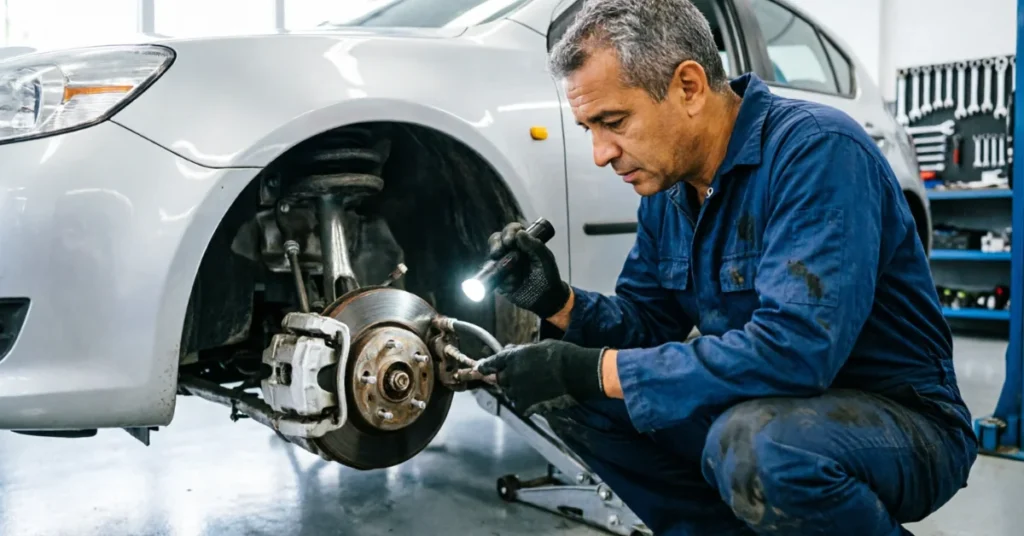
A quick visual check can help narrow things down. Anyone who’s popped a wheel off to glance at the rotor knows you’re looking for blue discoloration (heat damage), grooves, or an uneven lip at the rotor’s edge — all signs of wear beyond normal.
Is It Safe to Keep Driving With a Shaking Brake?
Short trips at low speed with a mild shake generally aren’t an emergency, but this is a safety-related symptom, and it shouldn’t be ignored for long. A shake that’s getting worse week over week, showing up at lower speeds than before, or accompanied by a longer stopping distance is a sign to get the car inspected soon rather than waiting for the next scheduled service.
This article is for informational purposes only. Always consult a qualified mechanic or automotive technician to diagnose and repair brake or suspension issues specific to your vehicle.
Preventing the Shake From Coming Back
Smooth, early braking rather than last-second hard stops reduces the heat spikes that warp rotors in the first place. Regular tire rotations and balance checks catch alignment-related vibration before it becomes a braking complaint. Double-checking lug nut torque after any wheel service takes thirty seconds and rules out one of the simplest causes on this whole list. And sticking to a normal service schedule means a mechanic catches thinning pads or a failing bearing before it turns into a full shake.
Conclusion
So, why does my car shake when I brake? In almost every case, it comes down to warped rotors, worn pads, sticking calipers, tired wheel bearings, or suspension wear, with alignment and tire balance rounding out the list. Warped rotors, worn pads, sticking calipers, loose lug nuts, tired wheel bearings, and suspension wear cover the vast majority of cases, with drum brake wear, alignment, and tire balance rounding out the list. The reason your car shakes when braking almost always traces back to one of these components losing its even, consistent contact with the road or the rotor surface. Catching it early, rather than waiting for the shake to get dramatic, keeps the repair simple and the bill smaller.
FAQs
Why does my car shake only when I brake at high speed?
High-speed braking generates more heat and puts more stress on rotors and wheel bearings, which is often when thickness variation or bearing play becomes noticeable. It can still be present at lower speeds but feel less pronounced.
Can bad tires cause my car to shake when braking?
Yes. Uneven tire wear or an out-of-balance tire can create a vibration that becomes more obvious under the added load of braking, even though the tire itself is the root cause rather than the brake system.
Is it dangerous to drive with a shaking brake pedal?
It can indicate a genuine safety issue, especially if stopping distance is affected. A mild, stable shake is less urgent than one that’s worsening, but either way it’s worth having inspected promptly.
How much does it cost to fix a car that shakes when braking?
Costs vary by cause and vehicle, ranging from an affordable lug nut re-torque to a more expensive wheel bearing or suspension repair. A diagnostic visit is the only reliable way to get an accurate estimate.
Will new brake pads fix the shaking on their own?
Sometimes, if worn or contaminated pads were the actual cause. If the rotor surface is already uneven, though, new pads alone usually won’t resolve the vibration until the rotor is resurfaced or replaced.