
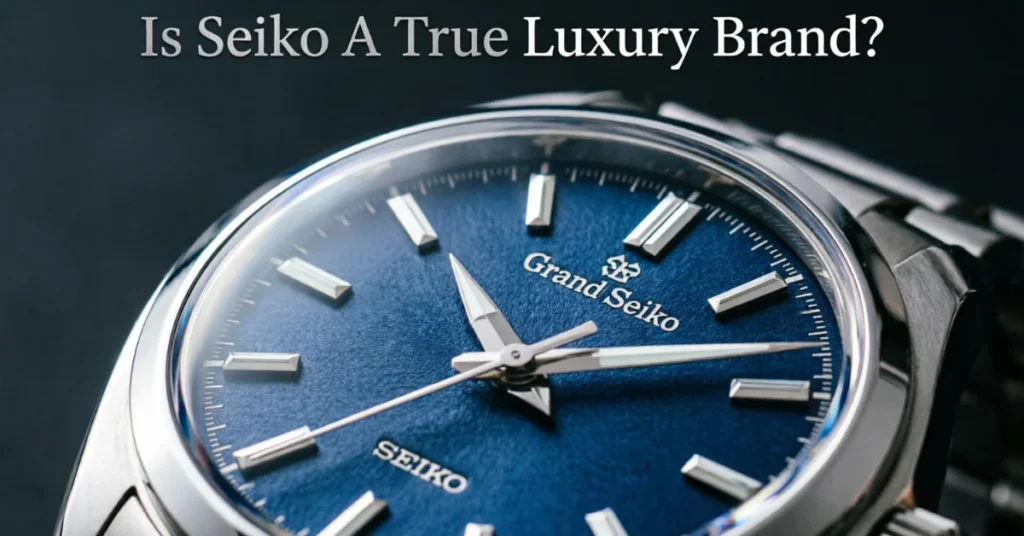
A watch collector once told me that asking “is Seiko a luxury brand” is a bit like asking if a car company that sells both a hatchback and a supercar is a luxury automaker. The honest answer isn’t yes or no. It’s “which Seiko are you talking about?”
That question matters more in 2026 than it did a decade ago. Grand Seiko is now its own standalone brand with a real seat at the luxury table, while the everyday Seiko 5 still sits comfortably under $300. Anyone who has worked in this industry knows this split isn’t an accident. It’s a strategy.
Is Seiko A Luxury Brand, Or A Mass Brand Wearing A Luxury Coat?
Seiko was founded in Tokyo by Kintaro Hattori, and the company built the world’s first quartz wristwatch, the Quartz Astron, released on December 25, 1969. <cite index=”7-1″>That watch set a global standard, and today most quartz watches still use the system Seiko developed.</cite>
That single invention explains why Seiko doesn’t fit neatly into the luxury conversation. The Astron was revolutionary technology sold to the masses, not a limited edition reserved for the wealthy. <cite index=”8-1″>Within a week of its release, the first run of gold Astron watches sold out at a retail price of $1,250, a serious sum for 1969.</cite> So even at its most groundbreaking moment, Seiko was selling both prestige and accessibility at the same time.
That dual identity never went away. Is Seiko a luxury brand in the traditional Swiss sense? Not really. Is it a company capable of luxury-grade engineering? Absolutely.
What Actually Defines A Luxury Watch Brand
Before settling the debate, it helps to know what “luxury” even means in horology. It usually comes down to three things: exclusivity, price positioning, and prestige marketing.
- Exclusivity: limited production, controlled distribution, waiting lists
- Price positioning: entry points that start high and rarely dip
- Prestige marketing: advertising built around status rather than specifications
Rolex, Patek Philippe, and Audemars Piguet check every one of those boxes. Seiko checks maybe one, depending on which collection you’re looking at. That’s not a knock. It’s a completely different business model, and it’s worked for Seiko for well over a century.
Seiko’s Watch Tiers At A Glance
Nothing settles this debate faster than seeing the actual price spread side by side. Here’s how the main Seiko lines stack up against each other:
| Line | Typical Price Range (USD) | Positioning |
|---|---|---|
| Seiko 5 | $150 – $350 | Entry-level automatic, built for everyday wear |
| Prospex / Presage | $400 – $1,500 | Diving and dress watches, engineering value |
| Grand Seiko | $3,000 – $10,000+ | Standalone luxury brand, Spring Drive craftsmanship |
| Credor | $7,000 – $40,000+ | Japan-exclusive top-tier luxury, hand-finished, some models with tourbillons |
Laid out this way, the picture gets a lot clearer. Seiko isn’t one brand with one identity. It’s four distinct price tiers wearing the same family name.
Where Grand Seiko Changes The Conversation
If there’s one part of the lineup that genuinely earns the luxury label, it’s Grand Seiko. Prices for Grand Seiko pieces typically start around $3,000 and climb well past $10,000 for limited and special editions, which puts the line squarely inside luxury watch territory on price alone.
Grand Seiko’s Spring Drive movement, which blends a mechanical gear train with quartz-level regulation, is the kind of engineering that Swiss houses genuinely study. Dials inspired by Japanese landscapes, hand-finished cases, and in-house movement production round out the picture. Professionals in this field generally agree Grand Seiko competes with Swiss manufacturers on craftsmanship, even without a Swiss address.
Grand Seiko formally split from the main Seiko brand as its own standalone company in 2017, largely so it could be marketed and perceived on its own terms, away from the budget-watch associations attached to the wider Seiko name.
Industry coverage has since described Grand Seiko as a genuine contender among the most sought-after watch brands in the U.S. market, with pricing that lands it in the top tier across nearly every band, including well above $30,000. That kind of recognition rarely gets attached to a brand still seen as a budget option.
Credor: Seiko’s Best-Kept Luxury Secret
Here’s the part most articles on this topic skip entirely. Above even Grand Seiko sits Credor, a line most Western shoppers have simply never heard of.
Credor launched in Japan in 1974, built specifically to compete with the finest Swiss dress watches of the era. The name itself borrows from the French phrase for “the noblest gold,” and the collection lives up to it. New Credor pieces typically run anywhere from around $7,000 into the $40,000s, depending on materials and complications, with vintage and limited pieces occasionally trading even higher on the collector market.
The Fugaku Tourbillon stands out as the clearest proof of intent. Limited to just eight pieces, it was Seiko’s first watch built with a tourbillon complication, finished in 18-karat gold and inspired by Hokusai’s famous “Great Wave” woodblock print. That’s the kind of low-volume, artisan-driven watchmaking usually associated with Geneva, not Tokyo.
For most of its history, Credor was sold almost exclusively through Seiko’s own boutiques inside Japan, which is exactly why it stayed under the radar internationally. Secondary markets have made a handful of pieces available to collectors outside Japan in recent years, but Credor still isn’t something most watch shoppers will stumble across in a mall.
This is the piece of the puzzle that changes the “is Seiko a luxury brand” debate. Grand Seiko already makes a strong case. Credor closes it.
Where Seiko Stays Firmly Mainstream
Then there’s the other end of the shelf. The Seiko 5 line, priced mostly between $150 and $350, is built around durability and value rather than exclusivity. It’s often the first automatic watch a newcomer buys, precisely because it removes the intimidation factor that comes with luxury pricing.
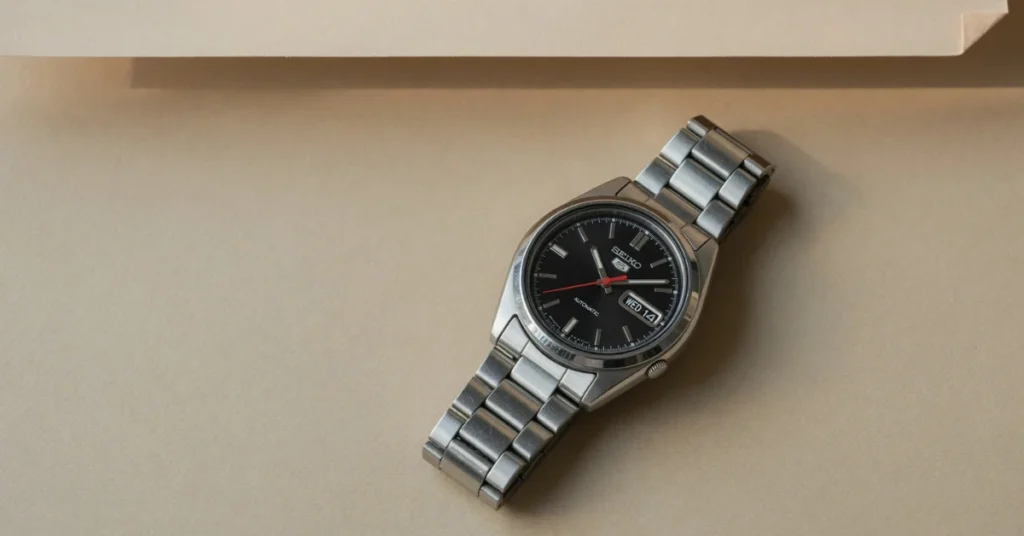
The Prospex diving line and the Presage dress collection sit in the middle, usually landing between $400 and $1,500. These aren’t cheap watches, but they’re not positioned as status symbols either. Anyone who has shopped this segment knows the appeal is engineering value, not the logo.
Seiko Versus The Watches People Actually Call Luxury
Compared directly against Rolex or Omega, Seiko’s approach looks almost contrarian. Those Swiss brands control supply tightly and lean hard on scarcity and heritage marketing. Seiko does the opposite: wide availability, transparent pricing, and a catalog that spans nearly every budget a shopper could have.
That’s arguably where Seiko separates itself from the pack. It never tried to win the exclusivity game. It won the engineering-value game instead, and it did that so consistently that watch enthusiasts routinely put Grand Seiko, and increasingly Credor, in the same sentence as brands ten times their price.
What The Research Shows
Detailed analysis of watch industry pricing data shows a consistent split: entry-level luxury watch pricing typically begins around $3,000 to $5,000, according to horology market coverage. Grand Seiko’s pricing structure lands it inside that band, while Credor pushes well past it, and the broader Seiko catalog sits far below it.
Examining Seiko’s own product tiers side by side reveals something else worth noting. It’s likely the only major watchmaker on earth that spans from sub-$100 quartz pieces to five-figure mechanical watches, and now to Credor’s tourbillons, under one corporate umbrella. That breadth is unusual, and it’s exactly why the question “is Seiko a luxury brand” doesn’t have a single clean answer.
Who Should Actually Care About This Question
If you’re shopping for a first mechanical watch, this debate barely matters. Seiko 5 and Prospex models deliver real value regardless of luxury labeling. If you’re comparing collector pieces or thinking about resale and prestige, that’s when Grand Seiko and Credor become the relevant conversation, not mainline Seiko.
Buyers chasing status symbols alone should look elsewhere. Buyers who want engineering that rivals the big Swiss names, minus the markup tied purely to the badge, are exactly who Grand Seiko and Credor were built for.
Is Seiko A Luxury Brand In 2026?
As of 2026, the fairest answer is this: mainline Seiko is a respected mass-market watchmaker, and Grand Seiko, along with the lesser-known Credor line, are legitimate luxury brands that happen to share a family tree. Treating the whole company as one single tier misses what’s actually happening on the shelf. Is Seiko a luxury brand across its entire lineup? No. Does part of that lineup belong in the luxury conversation? Yes, and it earned that spot the hard way.
That split isn’t a weakness. It’s a deliberate business decision that’s let Seiko serve a teenager buying a first watch and a serious collector chasing a Credor tourbillon, often in the very same year.
FAQs
Is Seiko considered a status symbol like Rolex?
Not typically. Mainline Seiko is respected for engineering, not status. Grand Seiko and Credor come closer to status-symbol territory among watch collectors, though both still trade on craftsmanship more than exclusivity.
Is Grand Seiko the same company as regular Seiko?
They share the same corporate roots, but Grand Seiko became a fully independent brand in 2017, with its own design language, pricing, and marketing separate from mainline Seiko.
What’s the cheapest Seiko watch, and does that hurt its luxury standing?
Entry Seiko 5 models can retail under $200. That accessibility is part of why Seiko struggles to be seen as luxury across the board, even though other parts of the catalog qualify.
What is Credor, and why haven’t I heard of it?
Credor is Seiko’s highest luxury tier, launched in Japan in 1974 and historically sold mostly through Seiko’s own boutiques there. It rarely gets international marketing, which is why most shoppers outside Japan have never encountered it.
Are Seiko watches a good investment like some Rolex models?
Most mainline Seiko watches aren’t bought for resale value. Certain limited Grand Seiko and Credor pieces have appreciated among collectors, but that’s the exception, not the rule.