
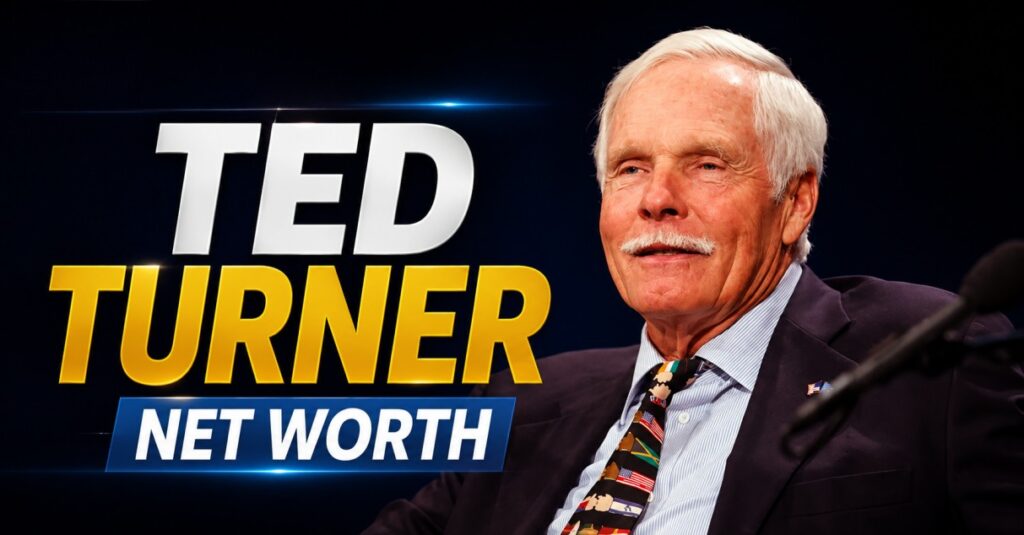
Ted Turner net worth stood at roughly $2.8 billion when he died on May 6, 2026, at age 87 and that’s the smaller number. His fortune once brushed $10 billion. So where did the other $7 billion go? Some of it he lost in one of the worst corporate deals in history. A lot of it he simply gave away on purpose.
| Attribute | Details |
|---|---|
| Full Name | Robert Edward Turner III |
| Date of Birth | November 19, 1938 |
| Died | May 6, 2026 (age 87) |
| Place of Birth | Cincinnati, Ohio, USA |
| Nationality | American |
| Profession | Media proprietor, businessman, philanthropist |
| Spouse/Partner | Married 3 times (Judy Nye, Jane Smith, Jane Fonda) |
| Children | 5 |
| Net Worth (Est.) | $2.8 billion (Forbes, at death) |
| Peak Net Worth | ~$10 billion (mid-1990s) |
| Years Active | 1963–2018 |
| Notable For | Founding CNN, TBS, TNT |
| Landholdings | ~2 million acres |
Turner died at his Avalon Plantation home near Tallahassee, Florida, after living with Lewy body dementia since his 2018 diagnosis. He left behind five children, 14 grandchildren, and one of the strangest wealth stories in American business.
Where the Money Actually Came From
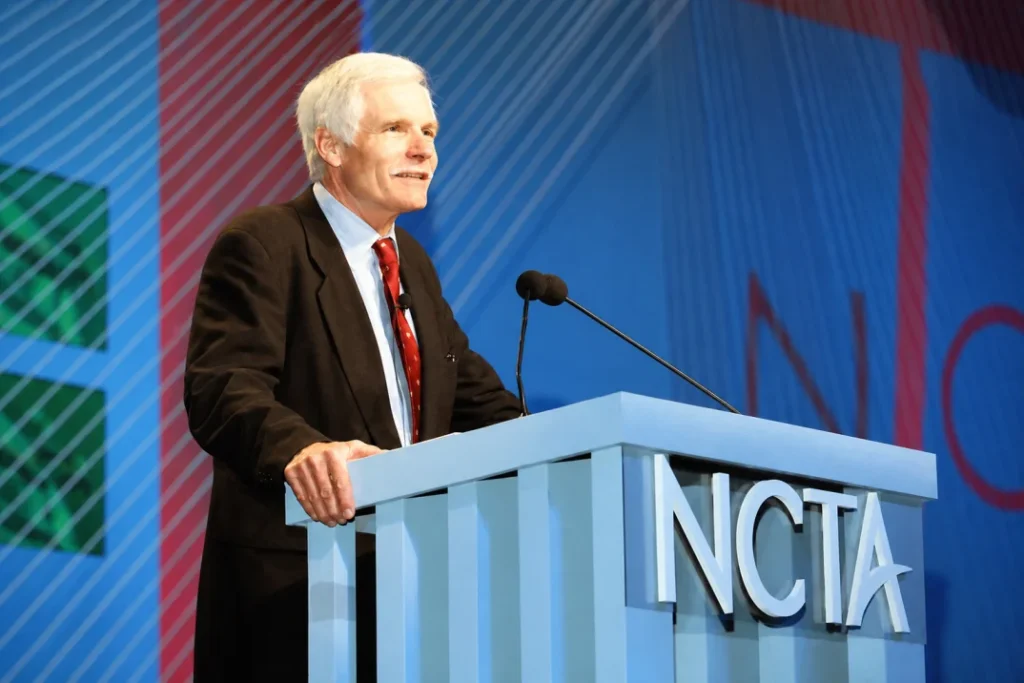
Turner didn’t start rich. He started with billboards.
When his father Ed died by suicide in March 1963, a 24-year-old Ted inherited a struggling Atlanta outdoor advertising company. His dad had already agreed to sell parts of it. Turner tore up that deal and took control instead.
That single decision set everything in motion. He renamed the firm, pushed into radio, then bought a failing UHF television station in 1970 called Channel 17. He rebranded it WTCG “Watch This Channel Grow.” Cheeky, sure. But it worked.
Here’s the deal with Turner’s genius: he saw satellite distribution before almost anyone else. He beamed his little Atlanta station across the country and created the “superstation” model. Cheap reruns, old movies, and live sports filled the airtime. And that model funded everything that came next.
He then made a move that looked reckless at the time. In 1976 he bought the struggling Atlanta Braves, followed by the Atlanta Hawks in 1977. Rivals thought he’d overpaid for losing teams. But Turner needed live content for his superstation, and the games beamed his brand into homes nationwide. The Braves later became “America’s Team.”
Ted Turner Net Worth and the CNN Gamble
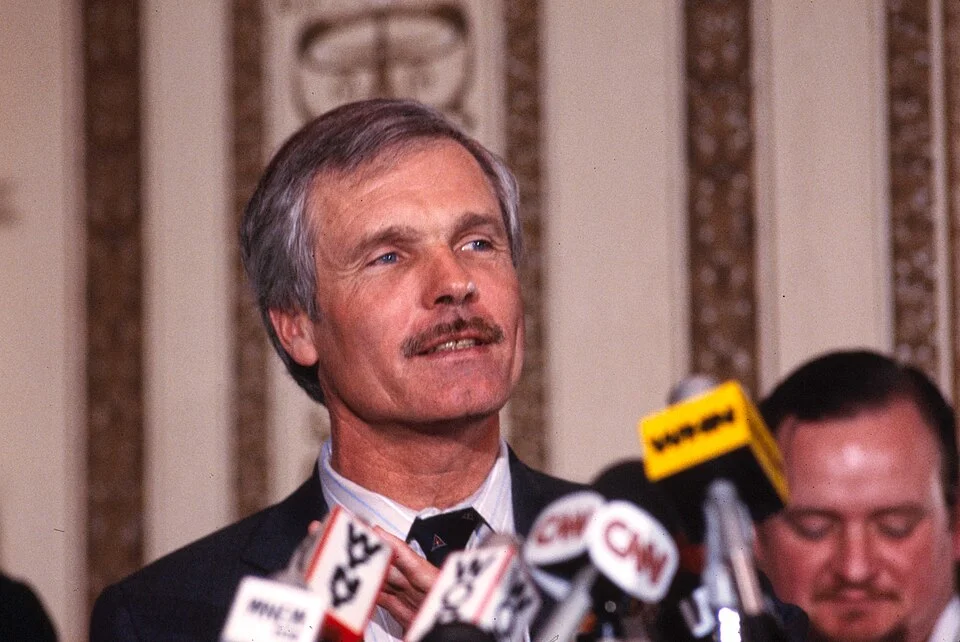
The launch of CNN in 1980 nearly bankrupted him.
Rivals mocked the idea of 24-hour news. Who watches news all day? Turner bet his growing fortune on the answer being “everyone, eventually.” He was right. CNN reshaped how the planet consumed information, and it turned Turner into a household name.
He kept swinging. In 1986 he bought MGM, then kept its film library after the deal nearly sank him. That library with titles like Gone With the Wind and The Wizard of Oz became the backbone of TNT and Turner Classic Movies.
His acquisition streak didn’t stop there. He bought Hanna-Barbera in 1991 for $320 million, grabbing the Flintstones, Scooby-Doo, and Yogi Bear. A year later, he launched Cartoon Network. He even bought and rebranded pro wrestling’s WCW, fueling the late-1990s wrestling boom.
Then came the payday. In 1996, Turner sold Turner Broadcasting to Time Warner for roughly $7.3 billion in stock. That deal made him one of Time Warner’s largest shareholders, gave him a vice chairman title, and pushed his personal fortune toward its peak.
The $7 Billion Vanishing Act
Two things gutted the Ted Turner net worth story. One was a disaster. The other was a choice.
The disaster: the AOL–Time Warner merger. When AOL merged with Time Warner in 2000 and the dot-com bubble burst, the combined stock collapsed. Turner reportedly lost around 80% of his wealth within roughly two years. He’d once called the merger “better than sex.” He publicly regretted those words later.
The numbers tell the story bluntly:
- 1990s peak: ~$10 billion
- 2002: ~$3.8 billion
- 2003: ~$2 billion
- 2010–2024: steady around $2–$2.5 billion
- At death (2026): $2.8 billion (Forbes)
The choice came earlier, in 1997. Turner pledged $1 billion to the United Nations, creating the United Nations Foundation. At the time it was among the largest single charitable gifts ever made. He didn’t have to. He did it anyway.
And that’s the thing about Turner. Most billionaires spend a lifetime protecting the number. He spent his spending it down on purpose.
What the Numbers Reveal About His Real Assets
By 2026, Turner’s wealth wasn’t sitting in media stock anymore. It was in dirt.
He was one of the largest private landowners in America, holding close to 2 million acres across states like New Mexico, Montana, Nebraska, Kansas, and South Dakota. His Vermejo Park Ranch alone stretches over 550,000 acres. On that land grazed the world’s largest private bison herd around 45,000 animals, managed through Turner Enterprises.
Turner turned the bison into a business, too. His restaurant chain, Ted’s Montana Grill, co-founded with restaurateur George McKerrow Jr., was built partly to commercialize bison meat. He also launched Ted Turner Reserves for eco-tourism on his Western properties. Ranching, hunting, conservation, lodging the money kept moving through tangible things he could stand on.
Anyone who has watched old media fortunes evaporate knows how rare that pivot is. Turner traded paper wealth for land, and land held its value when the stock didn’t.
How the Money Actually Works
Turner’s fortune wasn’t a salary. It was a shifting mix of equity, land, and operating businesses.
At his peak, most of his wealth was Time Warner stock from the 1996 merger. That made him rich on paper and vulnerable in equal measure when the stock cratered, so did he. The lesson he seemed to learn: concentrated stock is fragile.
So he rebuilt around hard assets. Here’s roughly how the later fortune broke down:
- Land ~2 million acres, the single largest pillar
- Livestock 45,000+ bison, a working commercial herd
- Hospitality Ted’s Montana Grill and Ted Turner Reserves
- Residual media equity a retained stake tied to Warner Bros. Discovery
Land doesn’t crash the way tech stock does. That’s the quiet genius of Turner’s second act he made his fortune boring, and boring survived.
Personal Life
Turner was never just a suit. Long before CNN, he was one of the best sailors alive.
He captained Brown University’s sailing team right up until the school expelled him for having a woman in his dorm. He’d majored in classics, which enraged his father, then switched to economics. He never actually graduated, though Brown gave him an honorary degree in 1989.
On the water, he was untouchable. Turner won the America’s Cup in 1977 aboard Courageous, earning the nickname “Captain Courageous.” He collected more than 500 major sailing trophies over his life.
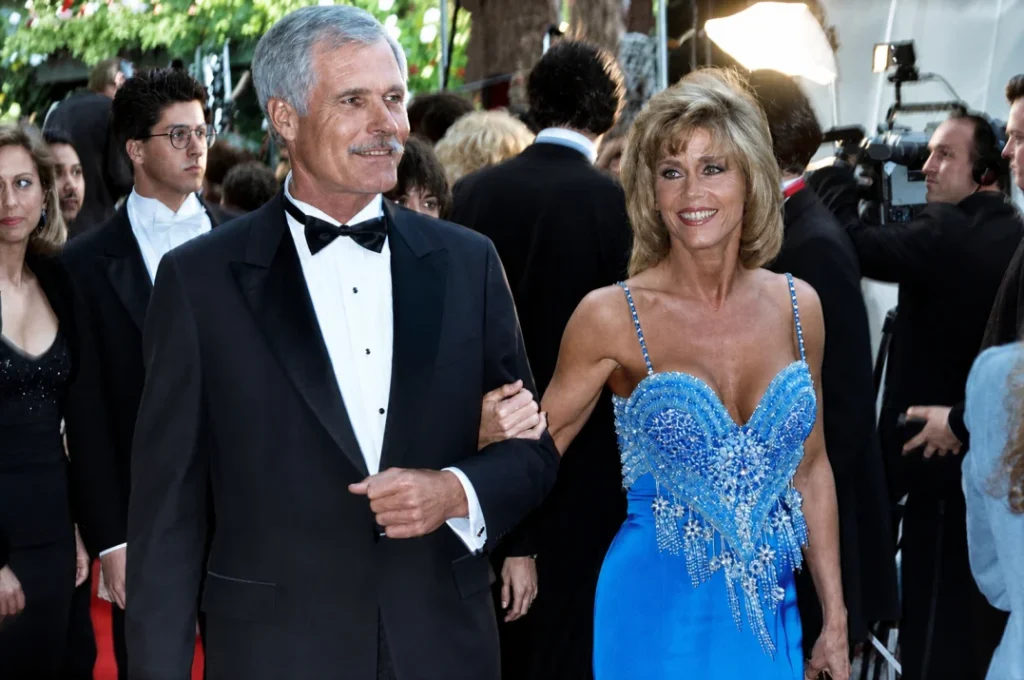
His personal life ran just as loud. Three marriages Judy Nye, Jane Smith, and most famously actress Jane Fonda from 1991 to 2001. Their divorce reportedly cost Turner over $100 million in cash and stock, plus a 2,500-acre ranch for Fonda. Massive for most people. A rounding error against his land portfolio.
Related Read: Ted Turner Wife: The Dated Timeline of Three Marriages, 1960–2026
He also kept an unlikely friendship with Fidel Castro, built over rum, cigars, and political arguments. “The Mouth of the South,” they called him. He earned it.
Family and Estate: Who Inherits the Fortune?
Turner is survived by five children: Laura Lee, Robert Edward IV (Teddy), Beau, Rhett, and Jennie.
Here’s the twist. They may not inherit as much as you’d expect. A large portion of his estate is legally structured to fund the Turner Foundation and his environmental initiatives rather than pass directly to heirs. Turner signed the Giving Pledge, committing most of his fortune to charity.
Dividing the estate is genuinely complicated. Much of his wealth isn’t cash it’s active ranches, a live bison herd, and ongoing conservation projects. His heirs inherit responsibility as much as riches.
Philanthropy: The Real Legacy
Turner’s giving wasn’t a side project. It was the point.
His $1 billion UN pledge in 1997 pressured other billionaires to give at a moment when the U.S. owed the UN back dues. He co-founded the Nuclear Threat Initiative with Senator Sam Nunn in 2001. He built the Turner Foundation, the Turner Endangered Species Fund, and the Captain Planet Foundation.
In 2020, Forbes handed Turner a perfect philanthropy score of 5 the highest possible. Only about ten Forbes 400 members ever earned it, alongside Warren Buffett and George Soros. That score, not the net worth figure, may be the number Turner cared about most.
The Uncomfortable Truth About the Figure
Here’s what most articles won’t tell you: nobody knows the exact Ted Turner net worth.
Forbes lists $2.8 billion. Other outlets say $2.2 billion. The gap around $600 million exists because most of his wealth was private. You can price a public stock to the penny. You can’t price 2 million acres of conservation land, a live bison herd, or a private restaurant chain with the same precision.
Land valuations swing with the market. Bison herds fluctuate. Estate structures hide value behind foundations. So every figure you read is an educated estimate, not a bank statement.
The Unanswered Question
One thing stays genuinely unknowable from public records: how much did Turner actually give away in total?
Reported lifetime giving exceeds $1.5 billion. But that only counts what’s documented. Quiet land transfers like donating St. Phillips Island to South Carolina in 2017 don’t always carry a clean dollar figure. His true generosity may be larger than any published number. We simply can’t confirm it.
Methodology and Sources
This article uses only verified reporting. Here’s what went in and what stayed out.
Sources used:
- Forbes (net worth estimate and philanthropy score)
- CNN and PBS (obituary and biographical facts)
- Wikipedia (career timeline, landholdings, estate structure)
- Associated Press / NPR (death confirmation, personal history)
Excluded:
- Content-farm net-worth aggregators that publish single “exact” figures without sourcing. Several of these claimed precise numbers that contradict each other. None were used as fact.
Where sources disagreed, the range is stated openly rather than picking one number and pretending it’s certain.
Peer Comparison: Media Moguls and Their Fortunes
How does the Ted Turner net worth stack up against other media titans?
| Name | Est. Net Worth | Primary Source | Notes |
|---|---|---|---|
| Ted Turner | $2.8 billion | Forbes (at death, 2026) | Founded CNN, TBS, TNT |
| John Malone | Multi-billion | Forbes reporting | Liberty Media; surpassed Turner as top U.S. landowner |
| Rupert Murdoch | Multi-billion | Forbes reporting | News Corp, Fox empire |
| Oprah Winfrey | Multi-billion | Forbes reporting | Media, Harpo, OWN |
Turner sits lower than some peers but that’s misleading. He’d have topped many of them had he kept the money instead of donating it. His ranking reflects generosity, not failure.
Legacy: The Number Was Never the Point
Turner’s fortune tells only half his story.
CNN alone reshaped global politics, war coverage, and the pace of news itself. TBS proved cable could go national. TNT, Cartoon Network, and TCM showed the raw power of owning content libraries. Whole industries grew from bets that rivals once laughed at.
Then there’s the land. Turner’s conservation work restoring native species, protecting the American West, funding nuclear disarmament may outlast every network he built. As of 2026, his foundations remain active. His footprint on the planet didn’t shrink with his stock.
Conclusion
The Ted Turner net worth of $2.8 billion is a strange kind of trophy. It represents a man who could have died far richer and chose otherwise. He built CNN from mockery into a global force, lost a fortune to a bad merger, and gave another fortune to the planet and the United Nations. Turner measured success in acres restored and ideas launched, not just dollars banked. As of 2026, that might be the most valuable thing he left behind.
For more profiles of media moguls and their fortunes, explore our full lifestyle collection collection at Mantle Magazine.
Frequently Asked Questions About Ted Turner
What was Ted Turner’s net worth when he died?
Forbes estimated his net worth at $2.8 billion at his death on May 6, 2026. Some outlets placed it lower, around $2.2 billion. The figure was down sharply from a peak near $10 billion in the late 1990s.
How did Ted Turner make his money?
He inherited a billboard company in 1963 and expanded it into Turner Broadcasting. He founded CNN, TBS, and TNT, then sold Turner Broadcasting to Time Warner for roughly $7.3 billion in 1996.
Why did Ted Turner’s fortune drop so much?
Two reasons. The AOL–Time Warner merger crashed the stock and wiped out roughly 80% of his wealth. He also donated over $1.5 billion to charity, including his famous 1997 UN pledge.
How much land did Ted Turner own?
Turner held close to 2 million acres across the U.S., making him one of the largest private landowners in the country. He also owned the world’s largest private bison herd, around 45,000 animals.
Was Ted Turner married to Jane Fonda?
Yes. Turner married actress Jane Fonda in 1991, and they divorced in 2001. Their settlement reportedly cost him over $100 million. The two remained friends afterward.
Did Ted Turner still own the Atlanta Braves?
No. Turner bought the Braves in 1976 and owned them through their 1995 World Series win. The team became part of the Time Warner deal, and Liberty Media later acquired it in 2007.
How much did Ted Turner give to charity?
Documented lifetime giving exceeds $1.5 billion, headlined by his $1 billion UN pledge. In 2020, Forbes gave him a perfect philanthropy score of 5 a rating shared by fewer than a dozen billionaires.
Who inherits Ted Turner’s fortune?
His five children are heirs, but much of the estate is structured to fund the Turner Foundation and environmental work rather than pass directly to them. A lot of the wealth is tied up in active ranches and conservation projects.
Disclaimer: Net worth figures are estimates based on publicly available data and industry benchmarks not verified financial disclosures.