
You get in, turn the key, and there it is — that unmistakable whiff of petrol. If your car smells of petrol, don’t ignore it. It’s usually a sign that fuel vapor, or actual liquid fuel, is escaping somewhere it shouldn’t, and in a few cases that’s a genuine fire risk.
Sometimes the fix is as simple as tightening a cap. Other times it points to a leak that needs a mechanic’s attention before you drive another mile. Here’s how to tell the difference.
Is It Actually Dangerous?
A brief whiff after filling up at the pump is normal — a little residual vapor on your hands or clothes fades in minutes. What’s not normal is a smell that lingers once you’re driving, idling, or sitting in the car with the engine off.
Petrol is highly flammable, and any leak near the engine or exhaust carries real risk. If the smell is strong, if you can see fuel pooling under the car, or if you notice it alongside a rough-running engine or a check-engine light, treat it as urgent. Pull over safely, switch off the engine, and don’t smoke or use anything with an open flame nearby.
Petrol, Coolant, or Oil — Which Smell Is It?
Not every odd smell from a car is petrol, and mixing them up can send you looking in the wrong place. A quick way to tell them apart:
- Petrol — sharp, sour, distinctly “fuel-like.” Strongest near the tank, engine bay, or exhaust.
- Coolant — a sweet, almost syrupy smell, usually paired with a dropping temperature gauge or steam from under the hood.
- Burning oil — a heavier, acrid, “hot metal” smell, often with a haze of light smoke visible around the engine.
If what you’re smelling is sweet rather than sharp, it’s more likely a coolant leak than a fuel issue, and that’s a different repair entirely.
The Most Common Causes
1. A Loose or Faulty Fuel Cap
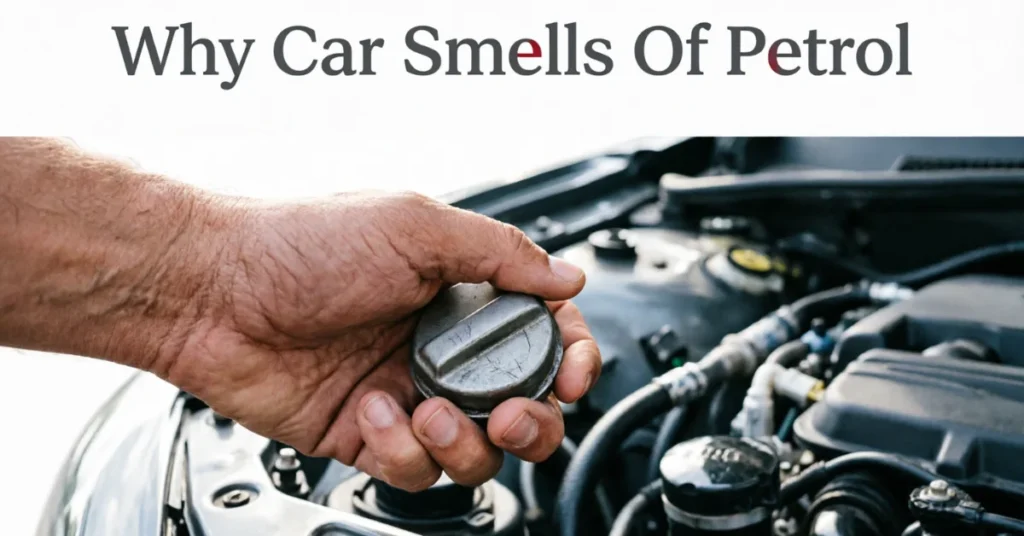
This is the cause worth checking first, and it’s often the easiest to fix. A cap that isn’t twisted on properly lets vapor escape from the tank, and on newer cars a faulty cap can even trigger the check-engine light. Give it a firm turn until it clicks, and inspect the rubber seal for cracks. A replacement cap is cheap and takes minutes to fit.
2. Fuel Injector or O-Ring Leaks
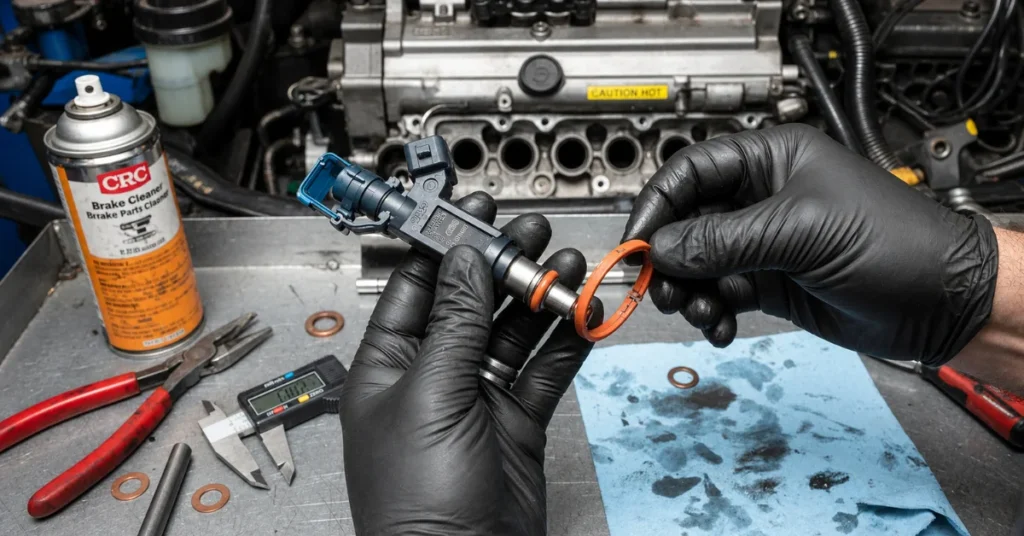
Fuel injectors deliver petrol into the engine under pressure, and the rubber O-ring seals around them wear out over time, especially in older cars. A worn seal lets small amounts of fuel seep out, usually noticeable as a smell under the hood rather than inside the cabin. This tends to come with rough idling, harder starts, or a drop in fuel economy alongside the smell.
3. A Fuel System Leak
Corroded or damaged fuel lines, cracked hoses, or a punctured tank can all leak fuel directly. This is one of the more serious causes on this list, since fuel spraying onto a hot engine or exhaust can ignite. If you spot a puddle or a wet patch under the car, don’t drive it. Get it towed or inspected before starting the engine again.
4. A Faulty Fuel Pressure Regulator
The fuel pressure regulator keeps the mixture of air and fuel balanced. When it fails, the engine can run “rich,” burning more fuel than it should. That unburned fuel ends up in the exhaust, and the smell often drifts into the cabin through the ventilation system. Reduced power and worse mileage usually come along with it.
5. Loose Spark Plugs
Spark plugs that aren’t torqued properly can let fuel vapor escape from the combustion chamber. This is a straightforward fix for a mechanic, but not something to attempt yourself, since over-tightening can damage the cylinder head.
6. EVAP System Faults
Modern cars capture fuel vapor in a charcoal canister as part of the evaporative emissions (EVAP) system, rather than letting it vent into the air. A saturated canister or a stuck purge valve can let that vapor escape into the cabin instead, often noticeable after the car’s been sitting overnight.
7. An Exhaust Leak
Before the catalytic converter cleans up exhaust gases, there’s a lot of unburned fuel in that stream. A crack or leak in the exhaust manifold or pipe lets some of that pungent, fuel-like smell escape, usually paired with a louder exhaust note or a ticking sound as the engine idles.
Where the Smell Is Strongest: Quick Reference
| Smell location | Likely cause | Urgency | What to do |
|---|---|---|---|
| Inside the cabin, especially after sitting overnight | EVAP canister fault or a leak under the floor pan | Low to medium | Get it checked in the next few days |
| Under the hood | Injector O-ring, loose spark plugs | Medium | Book a mechanic soon |
| From the rear or exhaust | Fuel pressure regulator, exhaust leak | Medium to high | Get a diagnostic check |
| Fuel visibly pooling underneath | Fuel line or tank leak | High — stop driving | Don’t restart; arrange a tow |
A simple check: hold a towel loosely over the exhaust pipe while the engine idles. Normally, exhaust pressure pushes the towel outward. If it stays still, that can indicate an exhaust leak worth having looked at.
If It Happens While You’re Driving
A sudden, strong petrol smell while you’re actually on the road needs a calmer, more deliberate response than one you notice in a parked car:
- Turn on your hazard lights and find the nearest safe spot to pull over — don’t wait for an ideal parking space if the smell is strong.
- Switch off the engine as soon as you’ve stopped.
- If the smell is very strong or you can hear hissing or see smoke, get out of the car and move a safe distance away before calling for help.
- Don’t attempt to restart the engine to “see if it’s still there” — that risks igniting any leaked fuel near hot engine parts.
- Call roadside assistance or a tow service rather than trying to nurse the car home.
Typical Repair Costs
Costs vary by vehicle, region, and garage, but as a rough guide:
- Fuel cap replacement — inexpensive, often under the cost of a tank of fuel, and something many drivers fit themselves.
- Injector O-ring or seal replacement — a moderate repair, generally cheaper than replacing the whole injector.
- Fuel line or tank repair — the more expensive end of the scale, since it can involve significant labor to access the fuel system.
- Spark plug or EVAP canister work — moderate, and often bundled with a broader service if other issues are found at the same time.
Always get a quote from your mechanic before committing, since the exact price depends on your car’s make and model.
Does a Petrol Smell Affect Your MOT or Roadworthiness Test?
In the UK, a fuel leak is treated as a safety-critical fault and can cause an MOT failure, since inspectors check the fuel system for leaks as standard. If your car is due for its test and you’ve noticed a petrol smell, it’s worth getting the leak fixed beforehand rather than risking a fail — and more importantly, driving with an active fuel leak isn’t something you want to do regardless of test dates.
What to Do Right Now
If the smell is faint and only noticeable right after refueling, it’s probably nothing. If it’s persistent, strong, or paired with any warning light, here’s a sensible order of steps:
- Check the fuel cap first — it’s the quickest thing to rule out.
- Look under the car for any sign of dripping or pooled fuel.
- Avoid starting the engine again if you’ve spotted an active leak.
- Book a mechanic promptly rather than waiting for the smell to “go away” on its own.
This article is for general informational purposes and isn’t a substitute for a hands-on inspection by a qualified mechanic — fuel system faults can look similar from the driver’s seat but need proper diagnostic tools to confirm.
FAQS
Is it safe to drive if my car smells of petrol?
A faint smell right after filling up is usually fine. A strong or ongoing smell isn’t — treat it as a reason to stop and check the car rather than push on to your destination.
Why does my car smell of petrol only when it’s cold?
Cold mornings Why does my car smell of petrol leaks more noticeable, since fuel evaporates more slowly and lingers near the source. It’s worth getting checked even if the smell fades once the engine warms up.
Can a dirty air filter cause a petrol smell?
Not directly, but a clogged filter can throw off the air-fuel mixture, which sometimes leads to excess unburned fuel in the exhaust and a similar smell.
How much does it cost to fix a fuel injector leak?
It varies by vehicle and shop, but a worn O-ring seal is generally one of the cheaper fuel-system repairs compared with a full fuel line replacement.
Should I call a mechanic or is this a DIY fix?
Checking or replacing a fuel cap is fine to do yourself. Anything involving fuel lines, injectors, spark plugs, or the exhaust should go to a qualified mechanic, given the fire risk involved.