Picking from the full list of South America travel destinations can feel overwhelming. The continent stretches from Caribbean coastline down to Antarctic glaciers, and no single trip covers all of it. So the real question isn’t “what’s here,” it’s “what’s worth your limited vacation days.”
South America had a strong 2025, posting roughly 7% growth in international arrivals according to UN Tourism data, outperforming most other parts of the Americas. Brazil, Chile, and Paraguay were among the fastest-growing markets in the entire region that year. People are showing up, and airlines and hotels are responding with new routes and openings.
This guide walks through the South America travel destinations that keep earning their spot on serious itineraries, what they actually deliver once you land, and a few practical details most guides skip entirely.
Quick Comparison: South America Travel Destinations at a Glance
| Destination | Best Time to Visit | Standout Feature | Ideal For |
|---|---|---|---|
| Rio de Janeiro, Brazil | Dec–March | Beaches + Christ the Redeemer | First-timers |
| Cusco / Machu Picchu, Peru | May–Sept (dry season) | Inca ruins, Sacred Valley | History lovers |
| Buenos Aires + Iguazu Falls | Sept–Nov, Mar–May | Tango city + waterfalls | Culture and nature combo |
| Atacama Desert, Chile | June–Aug (clearest skies) | Stargazing, geysers | Adventure and photography |
| Salar de Uyuni, Bolivia | Jan–April (mirror effect) | World’s largest salt flat | Unique landscapes |
| Cartagena, Colombia | Dec–April (dry season) | Colonial old town + coast | Beach and culture mix |
Rio de Janeiro and Brazil’s Coastline
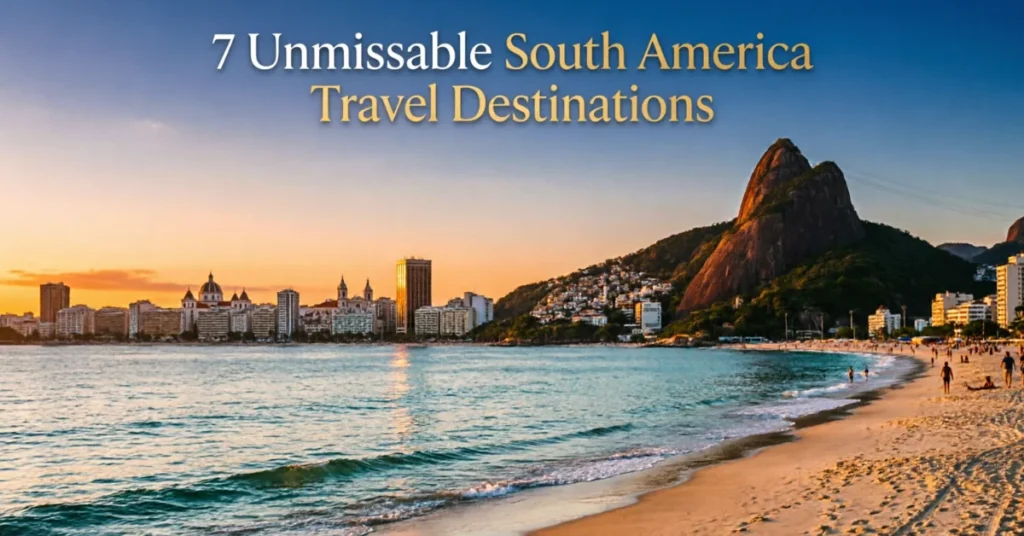
Rio remains the anchor for most Brazil-focused trips, and it earns that spot honestly. Christ the Redeemer sits above the city on Corcovado mountain, and the cable car ride up Sugarloaf gives a different angle on the same skyline. Copacabana and Ipanema aren’t just postcard beaches. Locals actually use them daily, playing volleyball, running the boardwalk, grabbing coconut water from beachside stands.
Beyond Rio, Salvador brings Afro-Brazilian culture and colonial architecture, while Ilha Grande offers a quieter, car-free island escape. Embratur, Brazil’s tourism board, has been pushing hard on its beach and culinary offerings for 2026, and new hotel openings — including a planned Four Seasons in Rio’s Leblon district — signal the city isn’t slowing down as a destination.
Anyone who’s spent even a few days in Rio understands why photographers keep coming back to Sugarloaf at sunset. The light does something there that’s hard to replicate anywhere else.
Machu Picchu and the Sacred Valley, Peru
Machu Picchu still tops most bucket lists, and for good reason. But travelers who only book the ruins and skip Cusco and the Sacred Valley miss half the trip. Cusco’s cobbled streets, Inca stonework at Sacsayhuamán, and local markets selling alpaca wool give the region depth that a single day trip to the ruins can’t provide.
Timing matters here. If your visit lines up with Inti Raymi, the sun festival held every June 24 in Cusco, you’ll catch traditional costumes, music, and processions dating back to the Incan empire. It’s one of the more striking cultural events on the continent, and several tour operators build multi-day packages specifically around it.
Buenos Aires and Iguazu Falls, Argentina
Buenos Aires works as both a standalone city trip and a launch point for Iguazu Falls. The capital’s tango halls, steak houses, and European-style architecture give it a different rhythm than most South American cities. Less jungle, more café culture.
From there, Iguazu Falls is a short flight away. The falls straddle the Argentina-Brazil border and are taller and wider than Niagara, set inside a rainforest thick with wildlife. Most visitors say the Argentine side gets you closer to the water, while the Brazilian side gives the better overview shot. Either way, plan a full day. Rushing Iguazu means missing most of it.
The Atacama Desert, Chile
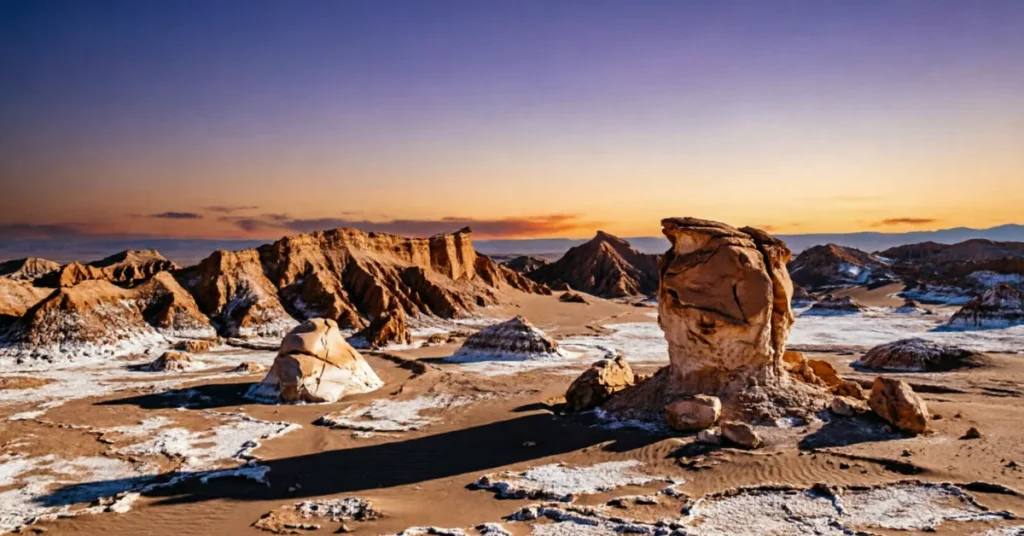
Chile’s Atacama is the driest place on Earth, and it looks like nowhere else on the continent. San Pedro de Atacama serves as the base town, and from there, travelers head out to the Valley of the Moon for lunar-looking rock formations, or to the El Tatio geysers before sunrise, when they’re most active.
The high altitude and near-zero light pollution make Atacama one of the best stargazing spots on the planet, and new observatory facilities are opening to the public through 2026 for exactly that reason. Bring more water than feels necessary. The dry air pulls moisture out of you faster than most travelers expect.
Salar de Uyuni, Bolivia
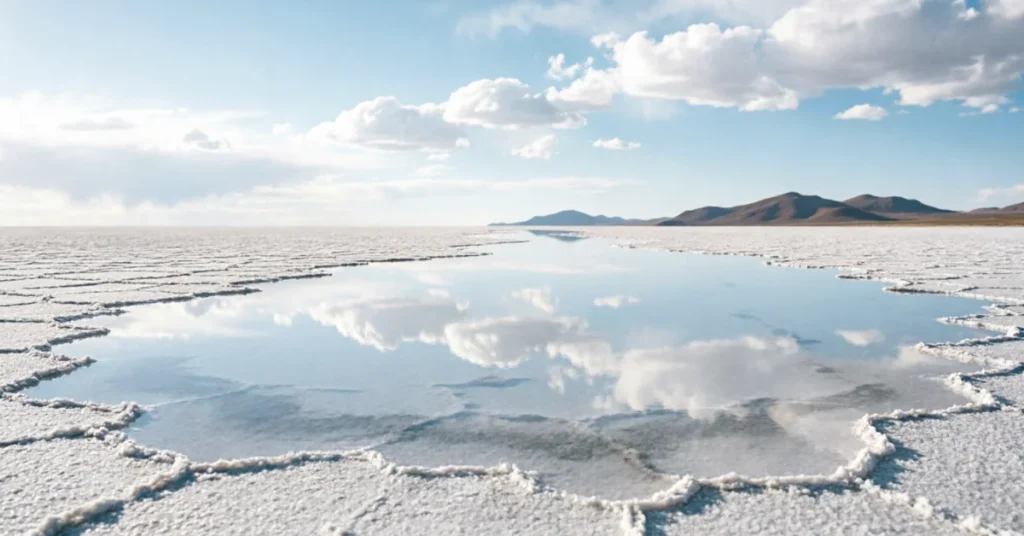
Nothing quite prepares first-time visitors for the Salar de Uyuni, the world’s largest salt flat. During the rainy season, a thin layer of water turns the entire surface into a mirror, reflecting sky and clouds in a way photographs almost can’t capture. Even in dry season, the flat white horizon stretching in every direction has a disorienting, almost lunar quality.
Cartagena and the Colombian Coast
Cartagena’s walled old town, with its colorful colonial buildings and horse-drawn carriages, gives Colombia a Caribbean-meets-colonial feel distinct from anywhere else on this list. Pair it with Guatapé near Medellín, a lakeside town covered in murals and painted zócalos, capped off by climbing the Piedra del Peñol for a sweeping view of the surrounding lakes.
If your trip lines up with mid-February, Barranquilla’s Carnival rivals Rio’s in energy, with cumbia and salsa parades running for several days along the coast.
What Most Guides Don’t Tell You
A lot of South America travel destinations content stops at “here’s what to see.” A few practical details rarely get covered, and they matter more than another paragraph about waterfalls.
Visa rules aren’t uniform, and they matter for Pakistani travelers specifically. Most South American countries require Pakistani passport holders to secure a visa before arrival, not on arrival — this includes Argentina, Brazil, and Chile. Argentina’s tourist visa, for example, runs a non-refundable fee and requires documents like employment letters and proof of funds submitted to the embassy in advance. Build this into your timeline; it’s not a same-week process.
Cash still rules in parts of the region. Bolivia and rural stretches of Peru see far less card acceptance than Rio or Buenos Aires. Carrying local currency for markets, small transport, and rural lodges avoids getting stuck.
Border crossings can be part of the trip, not just a formality. Travelers combining Peru and Bolivia often route through Copacabana on Lake Titicaca, crossing by bus rather than flying, which turns a border stop into a scenic leg of the journey.
The continent is bigger than it looks on a map. Flying between Rio and Santiago takes around four to five hours, similar to a transatlantic hop. Trying to fit Brazil, Chile, and Peru into one trip usually means cutting each destination short. Picking two neighboring regions instead of the whole continent tends to produce a better trip.
What the Research Shows
Looking at the region’s 2025 performance data gives a useful read on where interest is actually heading, not just where guidebooks point. South America posted around 7% growth in international arrivals for 2025, according to UN Tourism’s World Tourism Barometer, with Brazil, Chile, and Paraguay among the fastest-growing markets in the Americas that year. That lines up with the destinations covered above, particularly Brazil’s beach and culinary push and Chile’s continued investment in Atacama tourism infrastructure.
Analysts tracking regional tourism note that improved air connectivity and new hotel investment across Brazil and Argentina are a big part of that growth, rather than any single viral destination driving numbers.
Safety and Practical Planning
Popular South America travel destinations — Cusco, Buenos Aires, Cartagena, Atacama — are generally well set up for tourists and considered safe when travelers take normal precautions. That means avoiding flashing valuables, using registered taxis or rideshare apps, and staying aware in crowded markets or transit hubs.
Always check your government’s current travel advisories before booking, since conditions can shift by country and even by region within a country. Altitude is a real factor in Cusco, Atacama, and La Paz. Give yourself a day to acclimatize before tackling strenuous hikes.
Weather flips by hemisphere logic here too. June through August is winter in Patagonia and southern Argentina, meaning skiing and snowboarding in Tierra del Fuego National Park, while northern Brazil stays warm and humid year-round.
Who Should Prioritize Which Destinations
- First-time visitors: Rio de Janeiro, Buenos Aires, and Machu Picchu cover the highlights without over-packing the itinerary.
- Nature and landscape travelers: Atacama Desert, Iguazu Falls, and Salar de Uyuni deliver the most dramatic scenery per day spent.
- Culture and history travelers: Cusco’s Sacred Valley and Cartagena’s old town reward slower, multi-day exploration.
- Festival planners: Time trips around Inti Raymi (June) or Barranquilla Carnival (February) for a deeper cultural layer.
None of these destinations require choosing just one country. Many travelers combine two or three, like Peru and Bolivia, or Argentina and Brazil, since regional flights connect most major hubs within a few hours.
Conclusion
The best South America travel destinations aren’t a mystery. They’re the places that keep delivering on repeat visits: Rio’s coastline, Machu Picchu’s ruins, Atacama’s night skies, Iguazu’s water, Uyuni’s mirror-flat horizon, Cartagena’s color. What changes year to year is timing, festivals, and which cities are investing in new infrastructure. Building a 2026 trip around one or two regions, rather than trying to cover the whole continent, tends to produce the better trip.
FAQs
What’s the best time of year to visit South America travel destinations?
It depends on the region. December through March suits Brazil and Argentina’s summer season, while June through August works better for Patagonia’s snow activities and Peru’s dry hiking season around Machu Picchu.
Is South America safe for tourists in 2026?
Major tourist areas like Cusco, Buenos Aires, and Cartagena are generally safe with standard precautions. Checking current government travel advisories before booking is still worth doing.
Do Pakistani travelers need a visa for South America?
Yes, most South American countries, including Argentina, Brazil, and Chile, require Pakistani passport holders to apply for a visa in advance rather than on arrival. Processing can take weeks, so apply early.
How many countries should I try to visit in one trip?
Two is usually more realistic than three or four. Regional flights help, but distances and border logistics add up fast across a continent this size.
Is Machu Picchu worth the crowds?
Most travelers say yes, but booking tickets months ahead and visiting early morning helps avoid the worst of it.