

I booked my first solo trip because a group vacation had left me wrung out. Everyone else came home talking about the parties. I came home needing three days of silence just to feel like myself again. That’s when I started looking for real solo travel tips for introverts, and most of what I found online was written by extroverts pretending to understand quiet people. This guide isn’t that.
If you recharge by being alone rather than being around people, solo travel isn’t just doable. It might be the version of travel you were built for.
Why Solo Travel Tips for Introverts Are Trending in 2026
Search interest in solo travel hit record highs through 2026, and the pattern behind it says a lot. The Luxury Solo Travel Report recorded 1.6 million searches for “solo travel” in a single January alone, the largest jump the category has ever seen. That’s not a niche trend anymore.
A separate 2025 survey of more than 3,300 solo travelers found something introverts will recognize instantly. Sixty-four percent named freedom and spontaneity as the best part of traveling alone, and notably, fifty-eight percent still wanted to meet new people along the way, up from forty-three percent the year before. Solo doesn’t mean isolated. It means choosing when the socializing happens instead of having it forced on you by a group itinerary.
One industry estimate puts roughly 57% of the population somewhere on the introverted end of the personality spectrum. If that figure is even close to accurate, most people planning a trip right now are quietly Googling the same question you are: how do I do this without ending up exhausted by day three?
The Real Difference Between Introvert Travel and Everyone Else’s Trip
Extrovert travel guides love phrases like “meet locals every night” and “say yes to everything.” Follow that advice as an introvert and you’ll burn out before the halfway point.
Anyone who has actually traveled alone while introverted knows the real currency of a good trip isn’t how many people you met. It’s how much of your own energy you had left at the end of each day. Group tours run on a shared schedule that doesn’t pause for anyone’s need to sit quietly with a coffee for two hours. Solo travel removes that constraint entirely.
That single shift, control over your own pace, is why solo travel tips for introverts look so different from standard travel advice. Everything else in this guide builds from that one idea.
Solo Travel Tips for Introverts That Actually Work
These aren’t generic packing hacks. They’re habits that specifically protect your energy while you’re on the move.
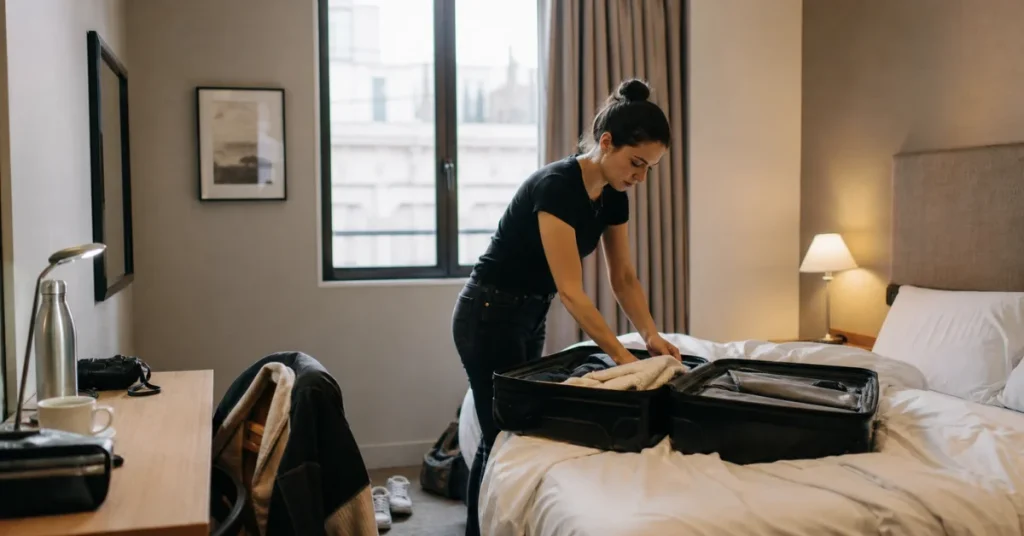
Book your own room, always. Shared rooms sound cheaper until you factor in the cost of never fully switching off. A closed door at the end of the day isn’t a luxury for an introvert. It’s the recovery period that makes the rest of the trip possible.
Build in a recharge window every single day. Block off two or three hours with nothing planned. Not “flexible sightseeing.” Actually nothing. A park bench, a quiet cafe, a nap. Treat it the same way you’d treat a scheduled flight, non-negotiable.
Choose slow itineraries over packed ones. Three cities in five days sounds efficient on paper and feels like a treadmill in practice. Staying in one place for four or five nights lets you explore without the constant low hum of decision fatigue.
Pick accommodation with a kitchen when you can. Skipping a restaurant meal removes an entire layer of social performance, no waitstaff small talk, no explaining why you’re dining alone, no pressure to look occupied on your phone.
Use apps to pre-plan the logistics. Booking trains, tickets, and reservations in advance means fewer real-time conversations and fewer moments where you have to improvise social interaction under pressure.
Travel by train or private transfer instead of shuttle buses. Group shuttles mean small talk with strangers for the entire ride. A train seat with headphones in gives you the same destination with none of the obligation.
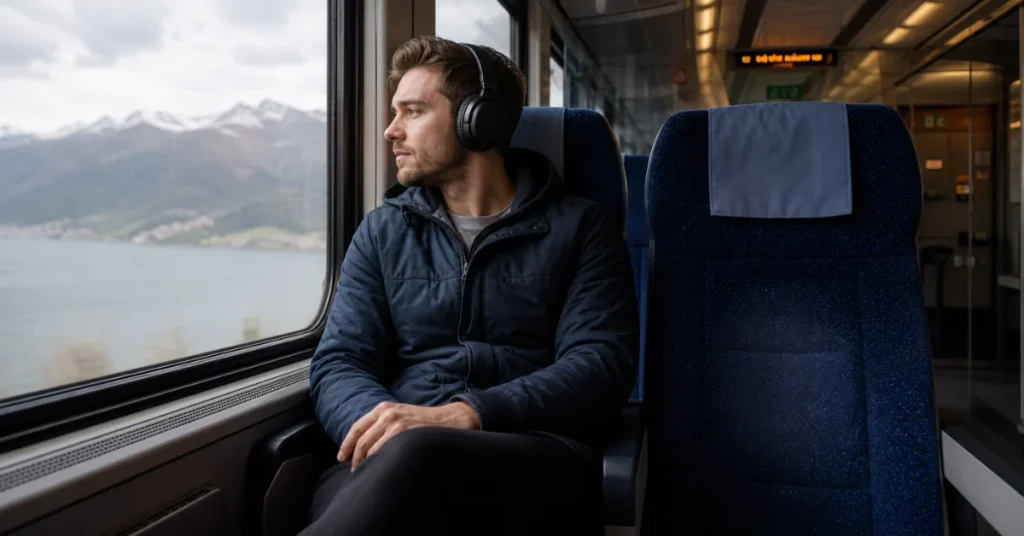
Give yourself a landing day and a departure day with zero plans. The first day in a new place is overstimulating no matter how introverted you are. The last day before flying home is often when burnout peaks. Protect both.
Where to Stay: Comparing Your Options
Accommodation type decides most of your daily energy spend before you’ve even left the room. Here’s how the common options stack up for an introvert specifically.
| Accommodation Type | Privacy Level | Typical Cost vs Shared Room | Social Energy Cost |
|---|---|---|---|
| Hostel dorm | Low | Cheapest baseline | High, constant ambient interaction |
| Private hostel pod | Medium | 20 to 40% more | Low to medium |
| Budget guesthouse (private room) | High | 40 to 70% more | Low |
| Boutique hotel, solo rate | High | 70 to 100% more | Very low |
| Kitchen-equipped apartment rental | Very high | Varies, often mid-range | Very low, skips restaurant interaction entirely |
For most introverted solo travelers, a private hostel pod or a kitchen-equipped apartment rental hits the best balance between cost and genuine downtime.
The Single Supplement Nobody Warns You About
Here’s a cost that catches first-time solo travelers off guard, and it has nothing to do with introversion specifically, though it affects the whole planning process. Hotels, cruises, and package tours price most rooms for double occupancy. Book alone and many operators apply a single supplement, an extra charge to cover the “missing” second guest.
That surcharge typically ranges from 10% to 100% of the per-person double rate, and industry sources note that backpacker tours and mid-range group trips tend to land closer to 25%, while cruises and package holidays sit at the higher end. Booking directly with a hotel instead of through a package operator, or searching specifically for solo-friendly tour companies that waive the charge, can cut this cost significantly. It’s worth budgeting for upfront rather than discovering it at checkout.
The Energy Budget Framework
This is a simple tool that doesn’t show up in most travel guides, and it’s genuinely useful for planning a day that won’t wreck you. Before each day, rate every planned activity as low, medium, or high social cost.
- Low cost: museum visits, solo walks, reading in a park, self-guided tours
- Medium cost: group cooking classes, shared taxis, checking into new accommodation
- High cost: group tours, hostel common rooms, crowded night markets, shared meals with strangers
A realistic day mixes no more than one high-cost activity with mostly low-cost ones around it. Stacking two or three high-cost activities back to back is the single most common reason introverted travelers report burning out mid-trip.
How to Decline Without Feeling Rude
Group invitations happen constantly on the road, and introverts often say yes out of guilt rather than genuine interest. A short, warm decline works better than an excuse. Something like, “I’m going to explore on my own today, but thank you for asking,” closes the conversation without requiring justification. Most fellow travelers respect a direct answer far more than a vague maybe that leaves the door open for follow-up pressure.
Staying Safe Without Constant Phone Calls
Checking in with family every evening sounds responsible, and it also adds a daily social obligation that drains an already limited battery. Live location-sharing features, available in most mapping apps, let a trusted contact see your movements in real time without requiring a phone call or a nightly recap. It’s a quieter way to stay accountable that doesn’t cost you conversation energy you’d rather spend elsewhere.
What the Research Shows
Industry data backs up something introverted travelers already feel in their bodies. Roughly sixty-one percent of people who travel solo say they do it primarily to relax and unwind, which lines up closely with what introverts report needing from any kind of travel. At the same time, nearly half of solo travelers, about forty-nine percent, say they worry about loneliness before the trip even starts, a fear that tends to fade once the trip is underway and the traveler realizes solitude and loneliness aren’t the same thing.
Spending patterns tell a related story. Solo travelers report spending about 42.8% more per person than people traveling as couples, largely because private rooms, flexible schedules, and skipping group-rate compromises all cost more individually. For an introvert, that extra cost often buys back something more valuable than money: control over your own energy for the entire trip.
Common Challenges Introverted Solo Travelers Face
No honest guide pretends this is effortless. A few friction points come up again and again.
Group tours pressure you into constant participation, and skipping activities can feel isolating even when it’s exactly what you need. The fix isn’t avoiding tours altogether. It’s picking smaller-group or self-guided options where opting out doesn’t draw attention.
Hostels can swing either way. Dorm-style social hostels drain an introvert fast, while quieter boutique hostels with private pods offer nearly the same budget benefits without the constant noise.
Meal times are a recurring stress point. Eating alone in public still carries an unfair stigma in some cultures, though that’s shifting quickly as solo dining becomes more visible and normalized worldwide.
And reentry burnout is real. Coming home from a trip built around solitude and walking straight into a packed work calendar can hit harder than people expect. Building a single buffer day after landing solves most of it.
Jet Lag and Buffer Days, the Actual Math
Timezone shifts hit introverts harder because recovery from jet lag and recovery from social overstimulation draw on the same limited reserve. A rough rule that works well: plan one full buffer day for every three to four hours of timezone difference, both on arrival and on return home. A six-hour shift means two buffer days on each end, not one. Skipping this is the quiet reason so many solo trips feel great for the first week and rough by the second.
Choosing Destinations That Fit an Introvert’s Pace
Not every destination rewards a quiet traveler equally. Cities with strong public transit and a culture of anonymity, think Tokyo, Copenhagen, or smaller European cities, tend to work well because nobody expects conversation from a stranger on a train. Nature-heavy destinations like national parks or coastal towns in the off season offer the opposite benefit: long stretches of quiet with minimal crowd navigation required.
Skip destinations built around nightlife or constant group activity unless you’re deliberately seeking that contrast. There’s nothing wrong with challenging yourself socially on a trip. Just go in knowing that’s the goal, rather than discovering it the hard way at 11pm in a hostel common room.
The Outlook for Introvert-Friendly Solo Travel
The travel industry is finally catching up to quiet travelers. Wellness-focused stays, single-occupancy pricing without steep surcharges, and slower multi-day itineraries are all becoming easier to find as of 2026, largely because the data on solo spending has made the case for the industry itself. The U.S. solo travel market alone was valued at roughly $95 billion in 2024 and is projected to climb past $190 billion by 2030, and a meaningful share of that growth is coming from people who travel specifically to get away from constant social contact, not toward it.
Anyone building a trip around solo travel tips for introverts today has more genuinely quiet options available than at any point before. That trend line only looks like it’s heading up.
Final Thought
Solo travel tips for introverts aren’t really about travel logistics at all. They’re about giving yourself permission to travel the way you actually function, quiet mornings, unplanned afternoons, and evenings that don’t require an audience. Once that permission clicks into place, the rest of the trip tends to take care of itself.
FAQs
Is solo travel actually harder for introverts than for extroverts?
Not harder, just different. Introverts tend to struggle more with forced group socializing and less with the actual solitude of traveling alone, which many find restorative rather than difficult.
How do I meet people on a solo trip without forcing constant social interaction?
Choose optional social moments over mandatory ones. A communal breakfast you can skip or join beats a scheduled group dinner you can’t opt out of.
What’s the biggest mistake introverts make when planning a first solo trip?
Overpacking the itinerary. Treating every hour as sightseeing time leaves no room to recover, and burnout usually hits by day three or four.
Do I need to stay in hostels to travel solo on a budget?
No. Budget guesthouses, private hostel pods, and off-season boutique stays often cost close to the same as a dorm bed while giving you a door that closes.
Is it normal to feel lonely even when solo travel is going well?
Yes, and it usually passes quickly. Brief loneliness is common in the first day or two of any solo trip and tends to fade once a routine sets in.