
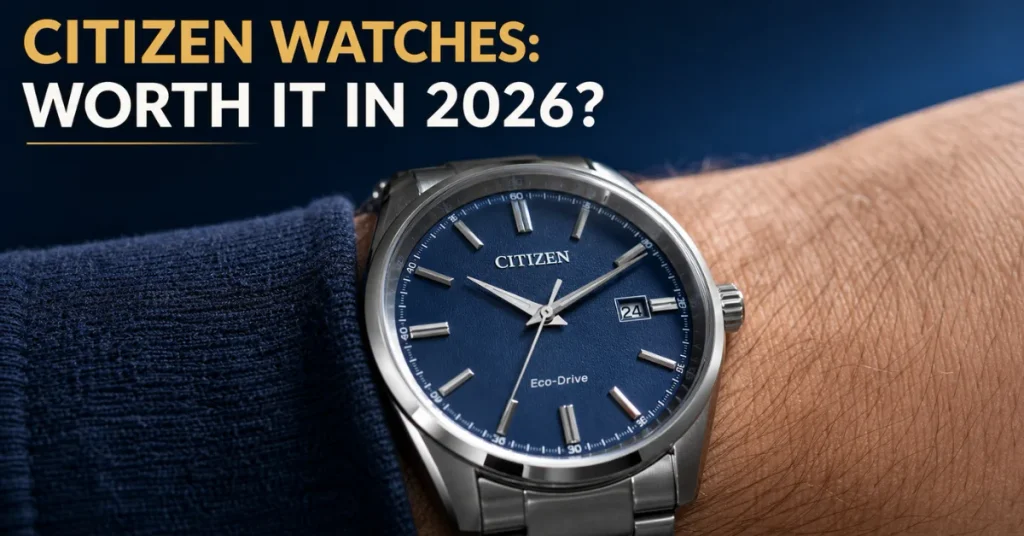
Are Citizen watches good? For most people shopping in the $150 to $500 range, yes. Citizen has spent over a century building a reputation for solar-powered movements that keep near-perfect time without a battery swap, and that reputation still holds up in 2026.
But “good” depends on what you’re weighing it against. Compared to a $30 fast-fashion quartz watch, Citizen wins easily. Compared to a hand-finished Swiss automatic costing five times as much, it’s a different category entirely. That’s the honest starting point, and there’s more underneath it worth knowing before you spend money, including a few things most reviews skip.
Why Citizen Built Its Reputation on Eco-Drive
Citizen was founded in Tokyo in 1918, and its name reflects an original mission: build accurate watches ordinary people could actually afford, not just the wealthy few. That mission hasn’t drifted much in over a hundred years.
The turning point came in 1976 with the debut of Eco-Drive, a light-powered movement that charges from any light source, sunlight or an office lamp, and stores that charge in a rechargeable cell instead of a disposable battery. Most Eco-Drive models hold a charge for six to twelve months in total darkness, and once fully charged, they need almost no attention.
Eco-Drive Accuracy by Tier
Citizen doesn’t sell one level of precision. The tier you buy changes both the accuracy and the price dramatically, and this is where a lot of buyers get confused comparing models.
| Eco-Drive Tier | Accuracy | Typical Price Range |
|---|---|---|
| Standard Eco-Drive | ±15 seconds/month | $150–$400 |
| Eco-Drive 5-Second models | ±5 seconds/year | $600–$1,500 |
| The Citizen / Caliber 0100 | ±1 second/year | $3,000+ |
Real owners tracking standard Eco-Drive models against atomic clocks often report results closer to 2 to 10 seconds a month in practice, better than the stated spec. That’s not a small technical footnote. It puts Citizen’s mid and top-tier movements ahead of nearly every mechanical watch on the market, regardless of price.
What the Research Shows: Durability, Complaints and Warranty Coverage
Looking closely at how Citizen actually performs once it leaves the store paints a fuller picture than the spec sheet alone.
The strengths, based on owner feedback and manufacturer documentation:
- Eco-Drive models rarely need service beyond an occasional water-resistance reseal every two to three years
- Many owners report daily wear for five-plus years without a single repair
- Sapphire crystal, titanium cases and 200-meter dive ratings are available well below where competing brands price the same features
The weak points, and there are real ones:
- Bracelet hardware, pins, clasps, spring bars, is the most common failure point reported by owners
- Customer service and repair turnaround draw the sharpest criticism in independent review platforms, with some users describing multi-month waits and unclear communication
- Lume quality on entry-level models is inconsistent; some owners report hands that barely glow in the dark
Owner satisfaction data from long-term reviewers is one of the clearest signals that are Citizen watches good for daily reliability, even before looking at price.
Here’s a detail that trips up a lot of buyers: warranty length isn’t the same everywhere. Buy a Citizen from an authorized U.S. retailer and you get a five-year limited warranty on materials and workmanship, stretched to six years if you register the watch. Buy the same model outside the U.S., Canada, UK, Ireland, the Caribbean or Mexico, and you’re covered by a separate three-year international guarantee instead. That gap catches people off guard when they buy while traveling or import from overseas.
Either way, the warranty explicitly excludes the crystal, case components, and strap or bracelet parts, which is exactly where most complaints originate. The movement is the strong part; the accessories and aftercare are where things get shakier.
The Rechargeable Cell: What Nobody Tells You Upfront
Citizen markets Eco-Drive as “never needing a battery,” and that’s technically accurate but slightly misleading. The solar panel itself does last the lifetime of the watch. What actually wears down is the rechargeable capacitor sitting behind it, the part that stores the light energy.
That capacitor typically holds strong for 10 to 20 years before it starts losing its ability to retain charge. When it does, replacement runs somewhere between $40 and $150 depending on parts, labor and whether the watch needs to be shipped to a service center. It isn’t a job most people can safely do themselves either; opening the sealed case risks the water resistance and can void the warranty entirely.
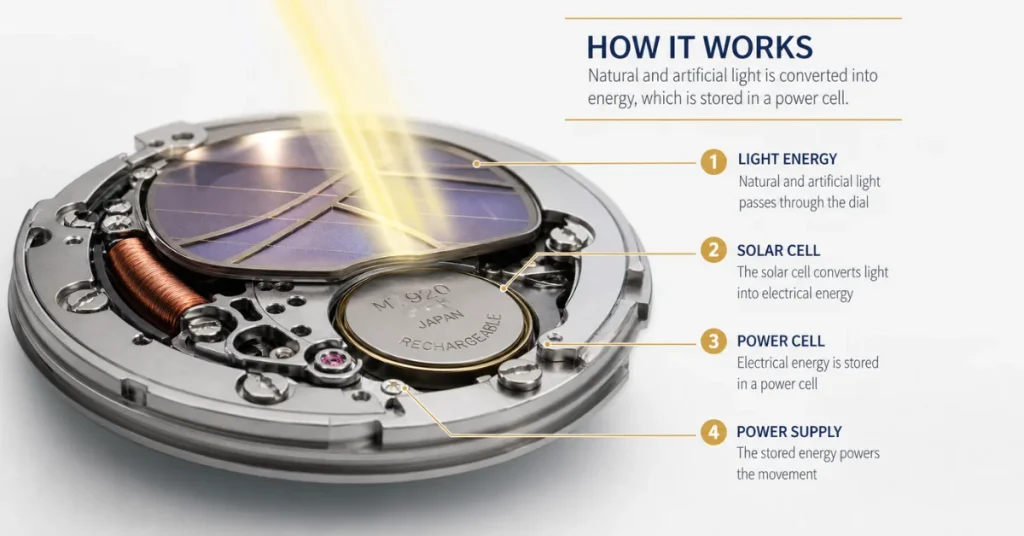
Anyone who’s owned an Eco-Drive for over a decade eventually runs into this. It’s not a defect, it’s just the honest lifespan of the technology, and it’s worth budgeting for if you plan on keeping the watch long term.
How to Spot a Fake Citizen Watch
Citizen’s affordability and global popularity make it one of the more counterfeited watch brands on the market, so a quick authenticity check is worth knowing before you buy secondhand or from an unfamiliar seller.
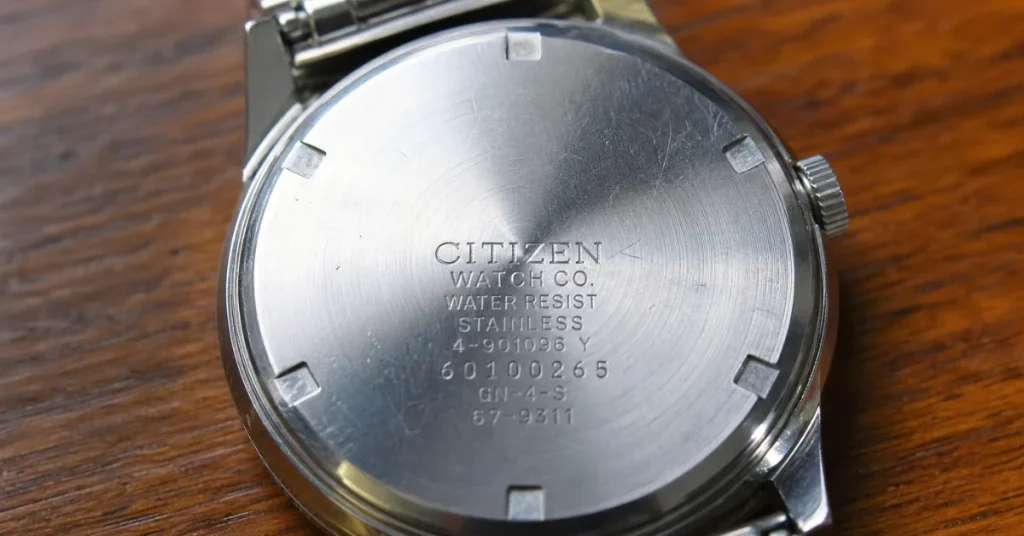
- Check the case back for an engraved serial number and model reference; numbers that look printed, glued, or raised instead of engraved are a red flag
- Match the serial and model numbers against the warranty card or instruction manual that came with the watch
- Inspect the lume application on the hands and markers; genuine Citizen lume is applied cleanly with even brightness, while fakes often look blotchy
- Feel the crown when winding or setting the time; a real Citizen crown turns with solid, precise resistance, not a loose or gritty feel
- Be wary of listings offering steep discounts, 60% off or more, outside of recognized sale periods
A few minutes of checking these details before paying protects you from a problem that’s more common than most buyers realize.
Citizen vs Seiko vs Swiss Brands: How It Really Compares
Think of it like comparing a reliable daily-driver car to a hand-built sports car. One gets you where you’re going without drama. The other rewards you for the experience of owning it.
Seiko is Citizen’s closest rival, and the two are frequently cross-shopped by the same buyer. Seiko leans harder into mechanical movements and horological heritage; Citizen leans harder into solar technology and low-maintenance ownership. Neither is objectively “better,” they solve different problems for different people.
Swiss brands at the $1,000-plus tier compete on hand-finishing, in-house movement design and brand prestige, not on raw timekeeping accuracy. A standard Citizen Eco-Drive will frequently out-perform a $2,000 Swiss automatic on pure precision. What you’re paying extra for with Swiss watches is craftsmanship and status, not better timekeeping.
Anyone who’s shopped both categories side by side notices this quickly: Citizen wins on value and convenience, Swiss brands win on prestige and mechanical romance.
What You’ll Actually Pay: Real Price Anchors
Pricing across the Citizen lineup spreads out further than most buyers expect. Entry-level dress and dive models, the kind most first-time buyers land on, typically sit between $150 and $250. Step up into sport and Promaster dive watches with sapphire crystal and higher water resistance, and prices move into the $300 to $500 band. Limited editions and collaboration pieces can push past $600.
At the top, “The Citizen” flagship collection, home to the ±5-seconds-per-year and ±1-second-per-year movements, starts around $3,000 and climbs from there. That tier competes directly with entry-level Swiss watches on price, and beats most of them on accuracy.
Who Should — and Shouldn’t — Buy a Citizen
Citizen fits a specific kind of buyer well.
Good fit:
- First-time watch buyers who want reliability without a learning curve
- Travelers and professionals who need a watch that just works
- Divers and outdoor users who want serious water resistance without a luxury price tag
- Anyone tired of replacing watch batteries
Less ideal fit:
- Collectors chasing mechanical movement complexity and finishing
- Buyers who want in-house design heritage tied to a single Swiss manufacture
- Anyone planning to hand a watch down as a family heirloom where repair speed matters most
Matching your priorities to these two lists is the fastest way to judge are Citizen watches good for your specific situation.
If your priority is a watch you can put on and forget about, Citizen is built for that exact scenario. If your priority is the craft behind the movement itself, look elsewhere.
So, Are Citizen Watches Good in 2026?
Are Citizen watches good enough to recommend right now? Yes, with eyes open. The brand’s Eco-Drive technology remains genuinely impressive engineering, not marketing fluff, and its pricing keeps that engineering within reach of buyers who’d otherwise be stuck with disposable quartz watches.
The trade-off is real, though. Bracelet quality control and repair-service response times haven’t kept pace with the movement technology, and that gap shows up consistently in owner complaints. Go in expecting a dependable, accurate watch backed by a solid warranty, and don’t expect white-glove customer service if something small breaks.
For everyday reliability at a fair price, Citizen earns its reputation. For collectors chasing mechanical prestige, it was never trying to be that brand in the first place.
FAQs
Are Citizen watches good for everyday wear?
Yes. Eco-Drive models are built specifically for daily use, holding a charge for months and requiring almost no routine maintenance beyond an occasional water-resistance check.
Is Citizen a luxury watch brand?
No, not in the traditional sense. Citizen sits in the affordable-to-mid-range tier, competing more with Seiko than with Swiss luxury houses like Omega or Rolex.
How long does a Citizen Eco-Drive watch last?
With normal care, the movement itself can run for decades. The rechargeable cell typically needs replacing after 10 to 20 years, and bracelet hardware is the most common wear point.
Does Citizen offer a good warranty?
Yes, though coverage varies by region. U.S. buyers get a five-year limited warranty, extendable to six years with registration, while international buyers outside a handful of countries get a three-year guarantee instead.
Is Citizen better than Seiko?
Neither brand beats the other outright. Citizen focuses on solar accuracy and low maintenance; Seiko leans toward mechanical movements and heritage design. The right pick depends on what you value more.