
Most first-time visitors to Chicago walk the same six blocks. They snap a photo at the Bean, ride the Ferris wheel at Navy Pier, and call it a trip. But ask anyone who has actually lived here, and they’ll tell you the real hidden gem chicago experience starts the moment you step off that path. It’s underneath the Loop. It’s tucked into a park most tourists drive past. It’s inside a century-old bridge tower nobody thinks to walk into.
This isn’t another list ripped from a tourist brochure. It’s built from the kind of spots locals mention almost reluctantly, the ones they’d rather keep for themselves. And in 2026, with downtown Chicago drawing steady foot traffic again, these quieter corners feel more valuable than ever.
What Makes a Hidden Gem Chicago Worth the Detour
Not every off-the-beaten-path spot deserves the hype. A true hidden gem chicago location has three things going for it: it’s genuinely uncrowded, it tells you something real about the city, and it’s not a five-minute stop you forget by dinner.
Chicago has no shortage of famous landmarks. What it doesn’t advertise as loudly is the layer underneath, literally and otherwise. Locals learn to read the city differently. They know which park has a Japanese garden nobody talks about. They know there’s an entire pedestrian network running beneath the skyscrapers, and a working bridge tower you can climb for a few dollars. Once you start looking at Chicago this way, you stop seeing a checklist and start seeing a place with texture.
At a Glance: Where to Find These Spots
| Spot | Neighborhood | Cost | Best Time to Visit |
|---|---|---|---|
| The Pedway | The Loop | Free | Winter or rainy days |
| Garden of the Phoenix | Jackson Park | Free | Late April cherry blossoms |
| McCormick Bridgehouse Museum | Michigan Ave Bridge | Pay-what-you-can | May through October |
| Magic Hedge | Montrose Point | Free | Spring/fall bird migration |
| Ping Tom Memorial Park | Chinatown | Free | Late afternoon |
| Zhou B Art Center | Bridgeport | Free | Weekday afternoons |
| Roeser’s Bakery | Humboldt Park | Cash for treats | Early morning |
| Yellow Door | Fulton Market | Free | Anytime, pair with dinner |
An Underground City Most Visitors Never See
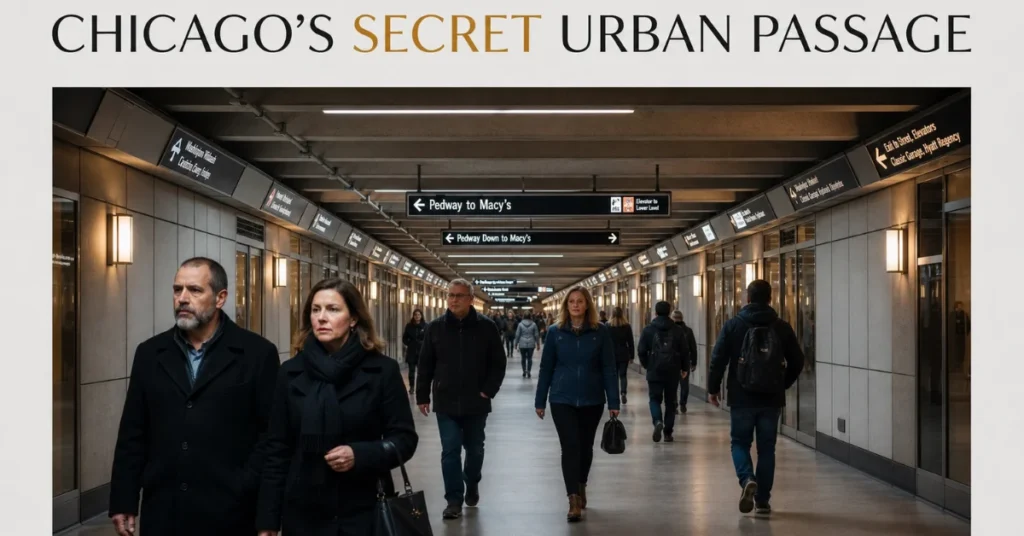
Beneath the Loop’s sidewalks runs a network of tunnels and covered walkways stretching more than 40 blocks. It connects office towers, transit stations, and even city government buildings, all without a single traffic light in your way.
Construction on this system began in the early 1950s, starting with short tunnel links between subway lines. Decades later, it’s grown into a genuine maze that locals use to dodge lake-effect wind in January and summer humidity in July. You’ll pass small bakeries, shoe repair counters, and food stalls that have clearly been there for years, not because a developer planned it that way, but because that’s just how downtown hidden gem chicago evolved.
Anyone who has commuted through the Loop for even a season knows the drill. You duck in near a Metra station, walk ten minutes in shirtsleeves during a blizzard, and pop up somewhere you’d never expect. It’s disorienting the first time. After that, it’s just how you get around.
Tip for first-timers: enter near Millennium Station or the Chicago Cultural Center, since those access points are the easiest to navigate without a map.
A Japanese Garden Hiding Inside Jackson Park
On Jackson Park’s Wooded Island sits a garden that traces back to the 1893 World’s Columbian Exposition, when Japan built a pavilion and a small garden as a gift to the city. That structure burned decades later, but the site was rebuilt and eventually renamed to honor Chicago’s sister-city relationship with Osaka.
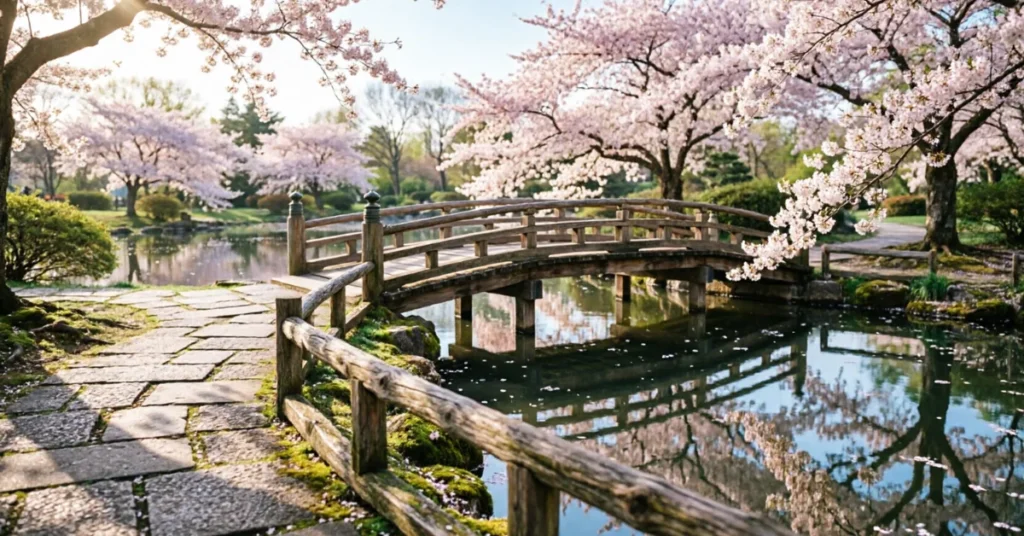
Walk in today and you’ll find stone paths, a small wooden bridge, and cherry trees that bloom in a short window each spring. A large steel sculpture by Yoko Ono, made of twelve lotus-shaped petals, now sits near the entrance. Red-winged blackbirds and geese fill the quiet with sound instead of city noise.
The garden sits close to the Museum of Science and Industry, which makes it an easy add-on rather than a separate trip. It’s free, it’s open year-round, and almost nobody outside the neighborhood seems to know it’s there. Locals here will tell you late April is the one week the garden feels like something out of a different country entirely.
Climbing Inside a Working Bridge Tower
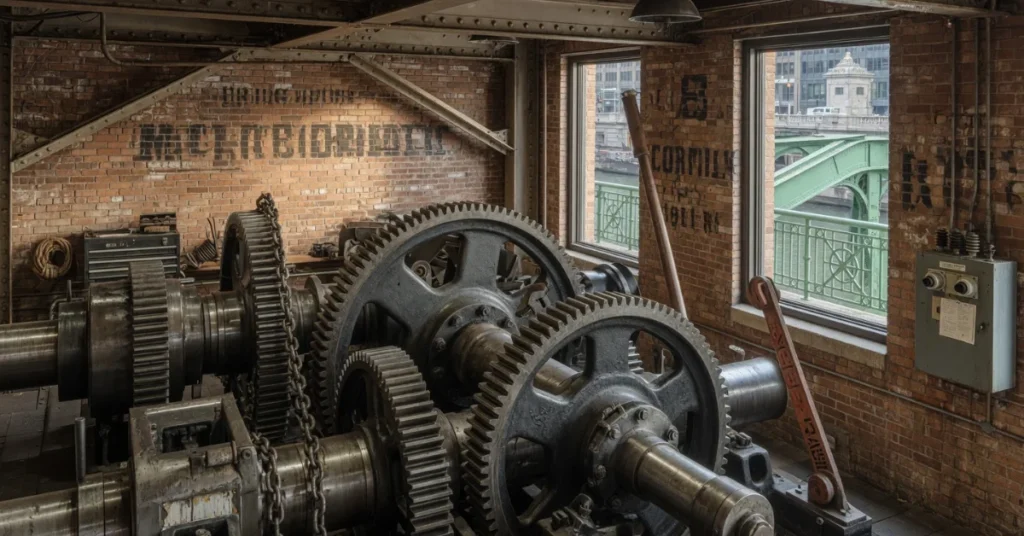
Here’s the one most guides skip entirely. On the southwest corner of the Michigan Avenue Bridge stands a five-story bridgehouse that’s actually open to the public, and it’s run by a nonprofit called Friends of the Chicago River rather than the city itself.
Walk in at river level and you’re standing next to the massive gears that physically lift the bridge, the same gears that let large boats pass through downtown. Climb the spiral stairs and each floor tells a different piece of the river’s story, including how engineers reversed its flow back in 1900. Reach the top and you get a 360-degree view over the water that most Michigan Avenue shoppers walking directly overhead never even notice exists.
For the 2026 season, the museum runs roughly May through late October, Wednesday through Sunday, from 10am to 5pm. Admission works on a pay-what-you-can basis, and guided tours run extra for anyone who wants the full history from a staff member. If you can time a visit around a bridge lift, when the road actually rises to let sailboats through each spring and fall, you’ll watch the exact machinery you just stood next to do its job in real time.
Quiet Corners Along the Lake and River
Chicago’s lakefront gets plenty of attention, but the Magic Hedge at Montrose Point rarely makes anyone’s must-see list. This stretch of dense shrubbery along Lake Michigan pulls in an enormous variety of migratory birds each spring and fall, enough that birders travel from other states just to stand here with binoculars.
On the opposite side of downtown, Ping Tom Memorial Park runs along the Chicago River in Chinatown. It’s one of the few riverside parks where you can watch water taxis glide by while sitting on a pagoda-style pavilion, all without the crowds you’d find further north along the Riverwalk. Locals who live nearby treat it like a backyard, showing up for evening walks and quiet mornings before the rest of the city wakes up.
Both spots share something in common: they reward patience. Neither one hits you immediately. Give it fifteen minutes and the city noise fades out.
Neighborhood Finds: Art, Bakeries, and a Door That Doesn’t Open
In Bridgeport, the Zhou B Art Center anchors a growing pocket of contemporary galleries most downtown visitors never hear about. It hosts rotating exhibitions from working artists, and unlike the big museums, you can usually talk to someone who actually made the piece in front of you.
Over in Humboldt Park, Roeser’s Bakery has operated out of the same building since it opened, making it the oldest family-run bakery in the city still working from its original location. Locals swear by the doughnuts. It’s the kind of place where the smell hits you before you even open the door.
And then there’s the giant yellow door in Fulton Market. It doesn’t open. It doesn’t lead anywhere. It’s just an oversized, painted yellow door standing on a street corner, and somehow it’s become one of the most photographed random objects in the neighborhood. Not every hidden gem needs a deep backstory. Sometimes it’s just a good photo and a laugh.
Planning Your Own Hidden Gem Chicago Route
A few practical notes before you map out a day around any of this.
- Pair the Pedway with a Loop walking tour, since both work best on cold or rainy days.
- Visit Garden of the Phoenix and the Museum of Science and Industry together to cut down on travel time.
- Check the bridgehouse museum’s seasonal calendar before heading over, since it closes through the winter months.
- Head to Montrose Point early morning during spring migration season for the best birding.
- Save Ping Tom Memorial Park for late afternoon, when the light over the river is at its best.
- Combine the Fulton Market door with dinner nearby, since the neighborhood has become a genuine food destination.
Public transit gets you to nearly all of these without a car. The CTA Red and Green lines reach Bridgeport and Chinatown, while the Blue Line drops you close to Fulton Market, and Michigan Avenue itself is walkable from almost anywhere downtown.
What the Research Shows
Interest in off-the-beaten-path travel has grown steadily across major U.S. cities through 2025 and into 2026, with travelers increasingly favoring neighborhood-level experiences over single-landmark itineraries. Chicago fits that shift well, given how much of its character sits outside the downtown core. Travel writers and local tour operators covering the city have noted a consistent pattern: visitors who build even one day around lesser-known spots tend to report a stronger sense of connection to the city than those who stick strictly to the skyline attractions.
Conclusion
Chicago’s postcard image, the skyline, the Bean, the lake, isn’t wrong. It’s just incomplete. The real hidden gem chicago experience lives in the underground walkways, the quiet garden on Jackson Park’s island, the working gears inside a century-old bridge tower, and the bakery that’s been serving the same neighborhood for generations. None of it requires a ticket booth or a long line. It just requires getting a little lost on purpose.
FAQs
Is the Pedway free to walk through?
Yes. It’s a public pedestrian system connecting buildings and transit stops, and there’s no fee to walk any part of it.
What’s the best time to visit Garden of the Phoenix?
Late April into early May, when the cherry trees bloom, though the garden is open and worth seeing year-round.
Can you actually go inside the McCormick Bridgehouse?
Yes. It’s open to the public seasonally, roughly May through October, and visitors can walk right up to the bridge’s gear room and climb to the top floor.
Are these spots safe for solo travelers?
Generally yes, especially during daytime hours. As with any city, standard awareness applies, particularly around dusk near the lakefront.
Do I need a car to reach these locations?
No. Chicago’s CTA system reaches nearly every spot on this list, and several are within walking distance of each other.