
Someone stops you at a coffee shop and asks if that’s a real Rolex on your wrist. You smile and say no, you built it yourself. That moment, more than anything else, explains why so many watch enthusiasts fall down the rabbit hole of a seiko mod build.
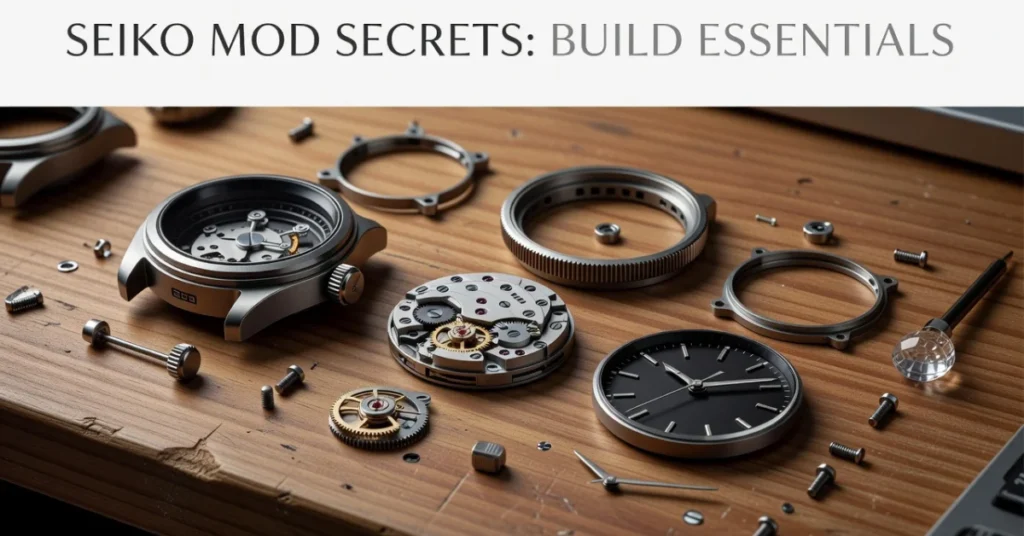
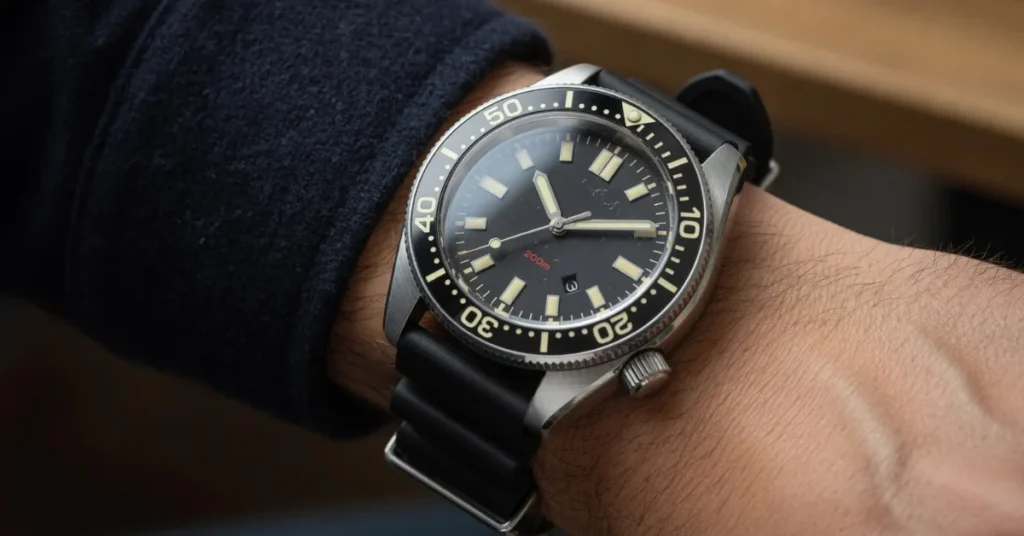
A seiko mod is a customized Seiko watch. Owners take a standard model apart, swap out original parts, and rebuild it with aftermarket dials, hands, bezels, cases, or even a fresh movement. What comes out the other side is a watch nobody else owns, built around Seiko’s reputation for tough, dependable engineering.
So What Exactly Counts As A Seiko Mod?
The word “mod” is short for modification, and that’s really all it means here. A seiko mod can be as small as a strap and crystal swap, or as involved as a full teardown where every visible part gets replaced.
Most builds start with a donor watch or a bare case, then layer in components sourced from aftermarket parts suppliers. The heart of nearly every build is a Japanese automatic caliber, usually the NH35 or NH36. These movements run at 21,600 vibrations per hour, carry 24 jewels, and hold roughly a 41-hour power reserve. They’re not fancy. They’re just reliable, and reliable is exactly what a first build needs.
Some modders stick close to Seiko’s own design language. Others chase homage builds inspired by luxury pieces from Patek Philippe or Audemars Piguet, using the shape and layout as a starting point without pretending to be the original. It’s a controversial corner of the hobby, and not every builder or buyer sees it the same way. Purists argue an homage borrows too heavily from a design that took another brand decades to build. Enthusiasts on the other side say it’s no different from a car builder taking styling cues from a classic chassis and making the mechanics their own.
Why Seiko, Specifically?
Ask around any modding forum and you’ll get the same answer. Seiko’s mainstream calibers are everywhere, aftermarket cases and dials fit them without much fuss, and the parts don’t cost a fortune. A replacement NH35 movement typically runs somewhere between $40 and $80, which puts a full build well within reach of a first-timer.
Compare that to Swiss alternatives like an ETA 2824-2, which costs several times more and isn’t nearly as easy to source outside professional watchmaking channels. Seiko built its reputation on the SKX007 diver and the wider Seiko 5 line, both known for shrugging off knocks that would rattle more delicate watches. That toughness carries over once the case gets opened for modding.
How A Seiko Mod Build Actually Comes Together
Anyone who has put together a first build knows it rarely goes in a straight line. A typical project looks something like this:
- Pick a donor case or a bare aftermarket case designed for modding
- Choose a dial and hand set that fit the case’s chapter ring and movement
- Source a movement, most often an NH35 or NH36
- Fit a bezel insert and crystal
- Assemble, align the hands, and reseal the case
- Pressure-test the finished piece before wearing it daily
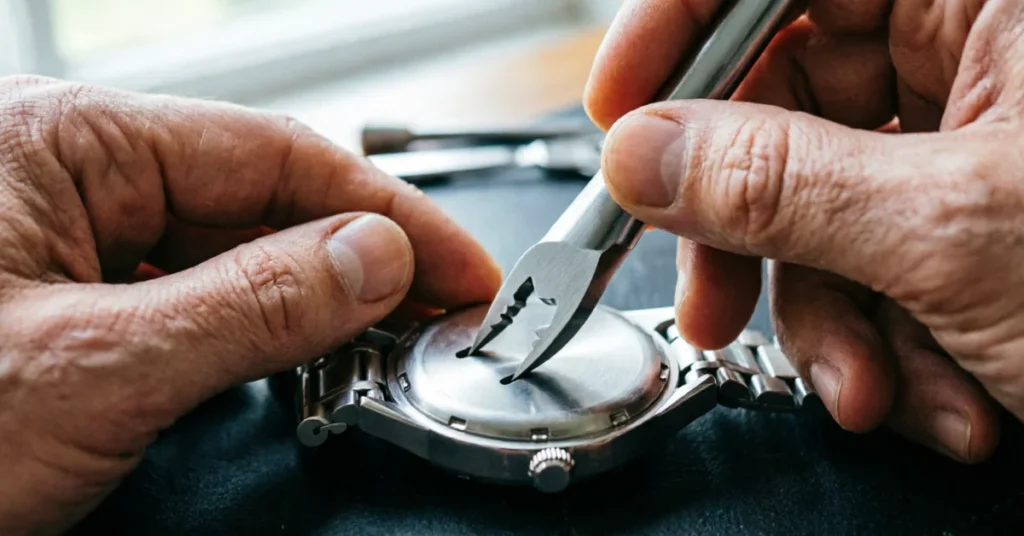
Budget builders often spend somewhere between $150 and $400 depending on parts quality, while builds using sapphire crystals, ceramic bezel inserts, and solid 316L stainless steel cases can climb higher. None of it requires a watchmaking certification. It does require patience, a steady hand, and a willingness to mess up a dial or two before getting it right.
What The Research Shows
Detailed analysis of the modding scene shows it didn’t really take off until online parts suppliers started appearing around the early 2010s, not long after the SKX007 built a cult following among divers and casual collectors alike. Forums and later community platforms gave builders a place to trade parts, troubleshoot alignment problems, and show off finished watches, which pushed the hobby from a fringe pastime into something closer to a mainstream corner of horology.
Watch retailers that track collector behavior have noted steady growth in aftermarket parts sales tied to affordable automatic movements over the past several years, a trend that lines up with the broader boom in personalization across consumer products. A seiko mod fits neatly into that pattern: an affordable base product turned into something the owner actually designed.
Is It Actually Legal?
Building and wearing a seiko mod for personal use is completely legal. Selling one is where the rules tighten up. Builders who sell their work need to call it “custom” or “modified” rather than implying it’s an authentic piece from another brand, and copying a trademarked logo or brand name onto a dial crosses into counterfeit territory fast. Reputable sellers stick to original design elements or clearly labeled homage styling, and steer well clear of anything that could pass as a genuine Rolex, Omega, or Patek Philippe at a glance.
What Beginners Get Wrong
New builders usually make the same handful of mistakes. Skipping a pressure test after reassembly is the big one. Modding disturbs the gaskets and seals that keep water out, and even a beginner-friendly automatic case can leak if it’s rushed back together. Buying mismatched parts is another common trap; a dial designed for one case diameter won’t sit right in a different chapter ring, no matter how good it looks in photos.
Tool quality matters more than most first-timers expect, too. A case-back wrench, a proper movement holder, and a dust-free workspace go a long way toward avoiding scratched crystals or bent hands. None of this is complicated once you’ve done it once. It’s just easy to underestimate the first time around.
NH35 vs NH36: Which Seiko Mod Movement Should You Pick?
This is the single most common question first-time builders ask, and it trips up more people than it should. Both movements share the same 24 jewels, the same 21,600 vibrations-per-hour beat rate, roughly the same 41-hour power reserve, and near-identical dimensions. The real decision comes down to one thing: what your dial looks like.
| Movement | Display | Dial Requirement | Typical Price | Best For |
|---|---|---|---|---|
| NH35 | Date only | Single date window at 3 o’clock | $40–$60 | Clean, minimal dials; the most forgiving first build |
| NH36 | Day + date | Two windows near 3 o’clock, correct day-wheel language | $50–$75 | Dress-style or classic diver looks with a “grown-up” feel |
| NH34 | GMT (second time zone) | Extra hand-stack clearance, 24-hour scale dial | $70–$100 | Dual-time builds for travelers or GMT enthusiasts |
| Miyota 8215 | Date only | Single date window, different rotor sound | $25–$40 | Budget builds where cost matters more than polish |
Pick the NH35 if the dial you’ve chosen has one aperture and you want the widest possible choice of dial designs. Pick the NH36 only when the dial genuinely has both a day and date window; dropping an NH36 into a date-only dial wastes money and leaves an unused cutout. One detail worth flagging for anyone working with an NH36: never force a day or date change while the watch reads between roughly 9 p.m. and 3 a.m., since the calendar gears are engaged during that window and forcing it can damage the mechanism. Setting the time to 6:30 first keeps you safely clear of that zone before making any calendar adjustment.
Buying A Finished Build Versus Making Your Own
Not everyone wants to start from a pile of loose parts. A sizable slice of the seiko mod market is people who’d rather buy a finished, pre-built watch from a small workshop that specializes in custom builds. Prices for a finished, professionally assembled piece typically run higher than a DIY project, since you’re paying for labor, testing, and often a short warranty on workmanship, but you skip the risk of a botched first attempt.
Beginners tend to land in one of two camps. Some want the mechanical side of things: learning to service a movement, align hands, and reseal a case, treating the watch itself almost as secondary to the process. Others care mostly about the finished look and are happy to buy a completed build or hire someone to assemble their chosen parts. Neither approach is wrong. A seiko mod can be a hands-on craft project or a design exercise where someone else does the wrenching, and the hobby has room for both.
Non-technical buyers who just want a distinctive watch without touching a screwdriver usually shop pre-built listings from small custom shops, while hands-on hobbyists head straight for parts suppliers and a workbench.
Who This Hobby Actually Suits
A seiko mod build appeals to a few different types of people, and they don’t always overlap. Some are chasing a specific look they can’t buy off the shelf. Others want to learn to service a mechanical watch and need something forgiving to practice on before touching anything expensive. And a growing number just want a genuinely personal object in a world of mass-produced accessories.
Professionals who work in watch repair or small-batch manufacturing often describe modding as a useful bridge. It teaches hand skills that transfer directly to servicing higher-end pieces later, without the financial risk of practicing on a watch worth thousands.
Looking Ahead
The pattern emerging through 2026 points toward more accessible entry kits, wider aftermarket parts catalogs, and a modding community that keeps growing across build logs, forums, and small custom-watch shops. As more affordable movements and case designs enter the market, the barrier to a first build keeps dropping, which likely means the hobby only gets bigger from here.
A seiko mod isn’t going anywhere. It sits at a genuinely rare intersection: mechanical enough to satisfy people who like taking things apart, affordable enough for a first-timer, and personal enough that no two builds ever really look the same.
FAQs
Is a seiko mod the same as a fake watch?
No. A counterfeit copies a brand’s name and logo to deceive buyers. A seiko mod uses genuine or aftermarket parts built around a Seiko movement and doesn’t pretend to be another brand’s product.
How much does a first seiko mod build typically cost?
Most beginner builds land somewhere between $150 and $400, depending on the case, dial, and movement chosen. Premium materials like sapphire crystal or ceramic bezels push that figure higher.
Do I need watchmaking experience to start?
Not really. Basic builds only require patience, a few specialty tools, and a willingness to practice hand alignment. Plenty of first-timers learn entirely from online guides and community forums.
Does modding void the original Seiko warranty?
Yes. Opening the case and swapping parts voids any manufacturer warranty on the donor watch, since Seiko can no longer guarantee the components inside.
Where do people usually buy parts?
Aftermarket suppliers that specialize in Seiko-compatible cases, dials, and movements are the most common source. Buying from a trusted supplier matters, since aftermarket part quality varies widely.