

Everyone lands in Times Square first. Then they check off the Empire State Building, ride the subway to Central Park, and go home thinking they’ve seen the city. They haven’t. The real list of new york hidden gems lives a few blocks off that path, behind unmarked doors, inside office lobbies, and along waterfronts most visitors never bother to reach.
Standing in one of these spots for the first time, you get it instantly. The city doesn’t feel smaller here — it feels quieter, and somehow more like itself. This guide walks through nineteen of them, organized by what kind of traveler you are, with exact transit directions and costs, so you can build a day that actually feels like yours instead of a copy of everyone else’s itinerary.
Quick Reference: New York Hidden Gems at a Glance
| Spot | Borough | Cost | Nearest Subway | Best Time to Go |
|---|---|---|---|---|
| Greenacre Park | Manhattan | Free | 6 train to 51 St | Weekday lunch hours |
| The Cloisters | Manhattan | Included with Met ticket | A train to 190 St | Weekday mornings |
| Little Island | Manhattan | Free | 1 train to 14 St | Spring, when gardens bloom |
| Grand Central Whispering Gallery | Manhattan | Free | 4/5/6/7 to Grand Central | Anytime, quick detour |
| Little Red Lighthouse | Manhattan | Free | A train to 175 St, then walk | Fall for foliage views |
| Central Park North Woods | Manhattan | Free | B/C train to 103 St | Early morning |
| Morgan Library | Manhattan | Paid ticket | 6 train to 33 St | Weekday afternoons |
| Tenement Museum | Manhattan | Guided tour ticket | F/J/M/Z to Delancey-Essex | Book ahead, any day |
| Merchant’s House Museum | Manhattan | Paid ticket | 6 train to Astor Pl | Weekday afternoons |
| Roosevelt Island Tram | Manhattan/Queens | Subway fare | Tram station at 59 St & 2nd Ave | Golden hour, before sunset |
| Green-Wood Cemetery | Brooklyn | Free | R train to 25 St | Fall foliage season |
| New York Transit Museum | Brooklyn | Paid ticket | Housed in Court St station, Downtown Brooklyn | Weekday mornings |
| Governors Island | Brooklyn/Manhattan | Ferry fare | Ferry from Wall St or Brooklyn Bridge Park | Summer weekdays |
| City Island | The Bronx | Free to visit | 6 train to Pelham Bay Park, then Bx29 bus | Warm months, midday |
| Xi’an Famous Foods (Flushing) | Queens | Meal cost only | 7 train to Flushing-Main St | Lunchtime, weekdays |
Why New York Hidden Gems Matter More Than the Big Sights
Anyone who has spent real time in this city knows the headline attractions rarely tell the full story. The Empire State Building is worth seeing once. But the new york hidden gems scattered across all five boroughs are where the city’s personality actually shows up — in a pocket garden, a Bronx fishing village, or a subway museum tucked into a decommissioned station.
Locals gravitate toward these places because they’re calm. There’s no ninety-minute line, no elbow-to-elbow crush for a photo. You get to actually look at something instead of just documenting it. That difference changes how a trip feels, and it’s the reason so many repeat visitors start skipping the landmarks entirely by their third or fourth trip.
There’s also a practical upside. Most of these spots are free or cost only a subway swipe, and several sit right next to the famous ones, meaning you don’t need extra travel time to fit them in. A short detour is usually all it takes.
Manhattan’s Quiet Corners
Fort Tryon Park, at the far northern tip of Manhattan, holds the Cloisters, a museum built from pieces of actual medieval European monasteries, overlooking the Hudson. Take the A train to 190th Street, and an elevator inside the station carries you straight up into the park. <cite index=”3-1″>Entry comes included with a same-day Metropolitan Museum ticket, and the stone arcades and unicorn tapestries feel a world away from Midtown.</cite> Give it a half-day if you can, and go in fall when the wooded paths around it turn color.
Tucked on East 51st Street sits a 6,360-square-foot pocket park most Midtown office workers walk past without a glance. <cite index=”1-1″>A 25-foot waterfall drowns out the traffic noise completely, and the park, a gift from Abby Rockefeller Mauzé that opened in 1971, was added to the National Register of Historic Places in 2018.</cite> Grab lunch nearby and eat it on one of the benches. The sound alone makes you forget you’re surrounded by skyscrapers.
Grand Central Terminal hides one of the city’s oddest free experiences right in plain sight. Stand at one arch outside the Oyster Bar, whisper into the tile, and a friend standing at the diagonal arch across the walkway hears you clearly, thanks to the curved ceiling’s acoustics. It costs nothing, takes thirty seconds, and almost nobody outside the city knows to look for it.
Under the George Washington Bridge, the Little Red Lighthouse still stands, dwarfed by the massive span above it. It’s a short walk from the 175th Street A train stop and it’s completely free to visit. Go in autumn, when the surrounding trees frame the bridge’s steel arches in orange and red.
For something smaller in scale, the city’s boutique museums do things the giants can’t. <cite index=”3-1″>The Morgan Library’s illuminated manuscripts, the Tenement Museum’s restored Lower East Side apartments, and the Merchant’s House Museum’s preserved 1830s interior each tell a focused, human-scale story.</cite> Most take under two hours and rarely see a crowd. Check ahead, though, since the Tenement Museum runs guided tours only and books up on weekends.
For something bigger than a pocket park but still under the radar, most tourists walk straight past the entrance to Central Park’s North Woods without knowing it exists. It sits at the park’s northern end, reachable from the B or C train at 103rd Street, and it looks and feels nothing like the manicured lawns further south. Early morning is the quietest window, before joggers and dog walkers fill in.
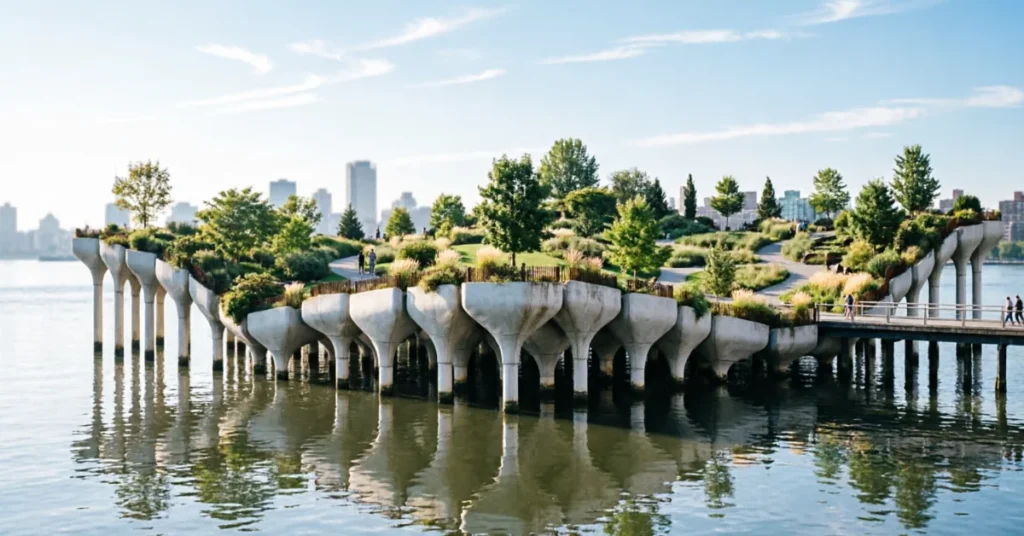
For something along the water, Little Island, the floating park built on sculpted concrete pillars just off Manhattan’s West Side, deserves its own visit. It’s free to enter, packed with gardens and river views, and busiest in spring when everything’s in bloom. Weekday mornings stay quiet even then.
Brooklyn, Queens, and the Boroughs Beyond
Cross the river and Green-Wood Cemetery in Brooklyn opens up, 478 acres of Gothic gates, panoramic hilltop views, and more than half a million people buried within its walls, including several well-known historical figures. It doesn’t sound like a destination until you’re standing at the top of Battle Hill watching the sun set over the harbor. Fall is the best season here by far, when the cemetery’s mature trees turn the whole hillside orange.
The New York Transit Museum sits inside an actual decommissioned subway station in Downtown Brooklyn, at Court Street. Vintage subway cars from every decade line the old platform, and you can walk through cabins that haven’t run on the tracks in seventy years. It’s paid admission, but the ticket price is modest, and weekday mornings mean you’ll likely have a whole subway car to yourself.
Governors Island, reachable by a short ferry from Lower Manhattan or Brooklyn Bridge Park, stays car-free and largely undeveloped in parts, which makes it feel unusually still for somewhere this close to the financial district. Summer weekdays are the sweet spot, before weekend ferry lines build. Bring a bike if you can; the loop around the island takes under an hour and passes some of the best skyline views in the city.
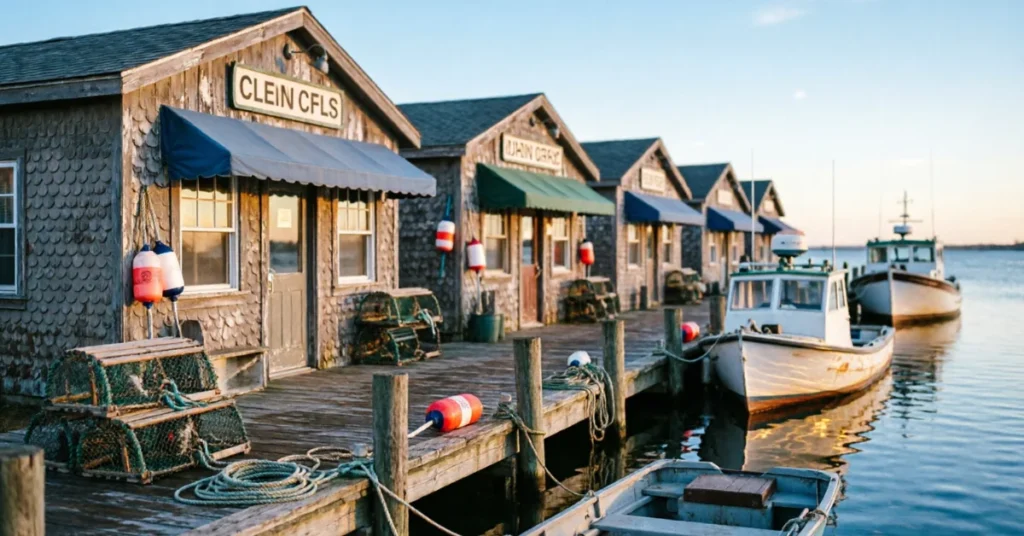
In the Bronx, City Island still runs on fishing-village time. Locals here will tell you the seafood shacks along City Island Avenue haven’t changed much in decades, and the pace matches, slow, salty air, boats bobbing in the marina. Take the 6 train to Pelham Bay Park, then transfer to the Bx29 bus, which drops you right on the island’s main strip. Warm months bring the marina to life; midday works best for lunch by the water.
Roosevelt Island’s aerial tram deserves its own mention. <cite index=”6-1″>It offers one of the best hidden views of the city, feels like a mini sightseeing ride, and costs the same as a single subway swipe.</cite> Ride it near golden hour if your schedule allows. The light across the East River at that hour is worth the timing.
Food Spots Only Neighbors Know About
New York’s food scene is so heavily documented that true secrecy barely exists anymore. What locals mean by hidden gem restaurants is something narrower: places with no publicist, no celebrity chef, and no marketing budget, just consistently good food at fair prices for a loyal neighborhood following.
Xi’an Famous Foods started as a single stall inside a Flushing food hall and grew from there. <cite index=”8-1″>The hand-ripped noodles and cumin lamb dishes remain some of the most satisfying meals in the city, and even with real lines, the turnover moves fast.</cite> Take the 7 train to Flushing-Main Street and go at lunchtime on a weekday, when the line moves fastest. It’s the kind of spot you hear about from a friend, not a magazine, which is exactly the point of chasing new york hidden gems in the first place.
What the Research Shows
Detailed analysis of tourism patterns in major global cities shows a consistent trend: travelers who venture beyond a city’s top ten landmarks report higher satisfaction and are more likely to return within two years. Industry analysts covering U.S. domestic travel have noted growing interest in local-style itineraries, trips built around neighborhood life instead of checklist sightseeing, as a defining shift in how people plan city breaks heading into 2026.
Examining New York specifically, that pattern shows up clearly. Visitors who spend even half a day in a borough outside Manhattan consistently describe a stronger sense of connection to the city than those who stick to the classic tourist corridor. It isn’t a controversial finding. It just confirms what longtime residents have said for years.
How to Plan a Day Around Hidden Spots
A typical breakdown for a first-timer chasing new york hidden gems looks like this: pick one borough, choose two or three spots within walking or short-subway distance of each other, and leave the rest of the day loose. Trying to hit locations in three different boroughs in one afternoon usually backfires. The subway transfers eat more time than the sights themselves.
- Morning: one quiet park or garden, before crowds build
- Midday: a neighborhood lunch spot with no line out the door
- Afternoon: a small museum or waterfront walk
- Evening: dinner somewhere locals actually eat
This kind of loose structure leaves room to wander, which is usually when the best moments happen anyway: a street musician in a subway station, a conversation with a shop owner, a view you weren’t expecting around a corner.
Who Should Prioritize This List
First-time visitors on a short trip should probably still see one or two headline landmarks before branching out. There’s a reason they’re famous. But repeat visitors, long weekend travelers, and anyone staying more than three days will get far more out of the city by weaving in these new york hidden gems rather than doubling up on attractions they’ve already photographed once.
Families traveling with kids should lean toward Little Island, Roosevelt Island’s tram, and City Island’s low-key waterfront rather than crowded indoor museums. Solo travelers and couples tend to get the most out of Green-Wood Cemetery, the pocket parks, and the smaller Manhattan museums, where the pace is slower and there’s more room to actually take things in. Budget travelers should note that more than half the spots on this list, including the Whispering Gallery, the Little Red Lighthouse, and Central Park’s North Woods, cost nothing at all.
Conclusion
New York rewards curiosity more than almost any city in the world, and the new york hidden gems scattered through its five boroughs prove it. Skip one landmark on your next trip and swap in a quiet garden, a floating park, or a neighborhood noodle shop instead. You’ll walk away with a better story, and a fuller subway map of the city, than another photo in front of a building everyone’s already seen.
FAQs
What are the best new york hidden gems for a first-time visitor?
Little Island, the Roosevelt Island tram, and the pocket waterfall park on East 51st Street are all easy to reach and require no advance planning, making them ideal additions to a first trip.
Are hidden gems in New York free to visit?
Many are. Green-Wood Cemetery, Governors Island, Little Island, the Whispering Gallery, and the Little Red Lighthouse all charge no entry fee. Museums like the Cloisters are included with a same-day Metropolitan Museum ticket.
Is City Island worth the trip from Manhattan?
Yes, for travelers who want a genuine change of pace. It takes roughly an hour by subway and bus, but the fishing-village atmosphere feels far removed from the rest of the city.
When is the best time to visit these spots to avoid crowds?
Weekday mornings work best across the board. Parks, gardens, and smaller museums see the lightest foot traffic before midday, especially outside summer weekends. Fall is ideal for Green-Wood Cemetery and the Little Red Lighthouse specifically, thanks to foliage.
Do I need a car to reach any of these locations?
No. Every spot listed here is reachable by subway, bus, or a short ferry ride, which keeps a hidden-gems day trip simple even for visitors unfamiliar with the city.