
Where are Seiko watches made? Most people expect one tidy answer, but Seiko’s production map is bigger than that. The brand builds its finest mechanical pieces in Japan, while assembling more affordable lines in Malaysia, China, and Singapore.
That split isn’t an accident. It’s a deliberate system that lets a 140-plus-year-old company sell a $60,000 hand-finished Grand Seiko and a $250 automatic diver under the same name, without either one feeling like an afterthought.
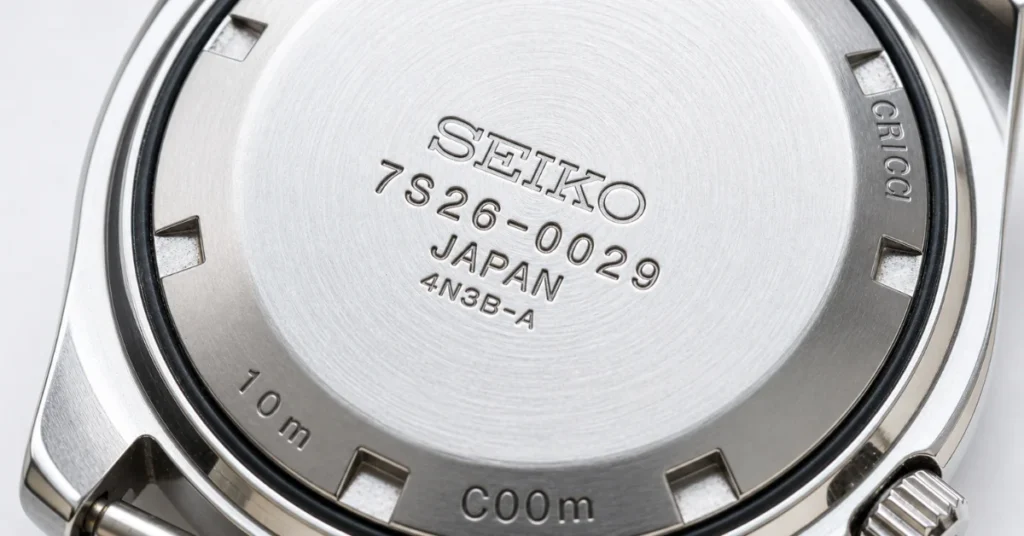
If you’ve ever flipped over a Seiko caseback and squinted at a jumble of letters and numbers, you’ve already brushed against this system. Those codes are the closest thing to a birth certificate a watch can have.
A Quick History Before the Factories
Seiko started in 1881 as a small watch and clock repair shop in Tokyo, opened by a young man named Kintaro Hattori. It wasn’t a global powerhouse yet. It was just one shop, one owner, and a lot of ambition.
By 1969, that shop’s descendant company had shipped the world’s first commercially produced quartz watch, the Astron. That single release reshaped the entire industry and forced Swiss manufacturers to rethink how watches were even made.
Seiko’s growth since then hasn’t slowed. According to recent corporate financial data, the company’s watch and clock division generates well over 270 billion Japanese yen in annual net sales, a figure that reflects both its scale and its reach across dozens of countries.
Anyone who has followed the brand for a while knows this growth didn’t happen by keeping everything in one factory. It happened by spreading production strategically, while still keeping the crown jewels close to home.
The Two Companies Behind Every Seiko
Here’s a detail most guides skip entirely, and it genuinely changes how you should think about the brand. “Seiko” isn’t one factory system. It’s actually two historically separate watchmaking lineages operating under a shared name.
Seiko Instruments Inc., formerly known as Daini Seikosha, is headquartered in Chiba and operates as a subsidiary of Seiko Group Corporation. It oversees numerous subsidiary companies across Japan and internationally.
Seiko Epson Corporation, formerly Suwa Seikosha, is headquartered in Suwa, Nagano Prefecture, and is publicly listed on its own. This is the company behind the Shiojiri facility and the Spring Drive movement.
These two groups grew up as friendly rivals inside the same company for decades, each pushing the other toward better precision. That internal competition is a big part of why Seiko movements got so refined so quickly during the twentieth century.
There’s a modern twist worth knowing too. Seiko Epson fully acquired Orient Watch Company, and the Shiojiri facility now produces movements for Orient watches as well. So the next time someone compares an entry-level Orient automatic to a Seiko 5, they’re closer to the same family tree than either brand advertises.
Where Are Seiko Watches Made? The Japan Story
Japan remains the heart of the operation, and it’s split across two main regions rather than one giant plant.
Nagano Prefecture houses Seiko Epson’s Shiojiri facility. This is where the Spring Drive movement was born, and it still handles a large share of the company’s quartz production, along with movements used in other brands the group now owns.
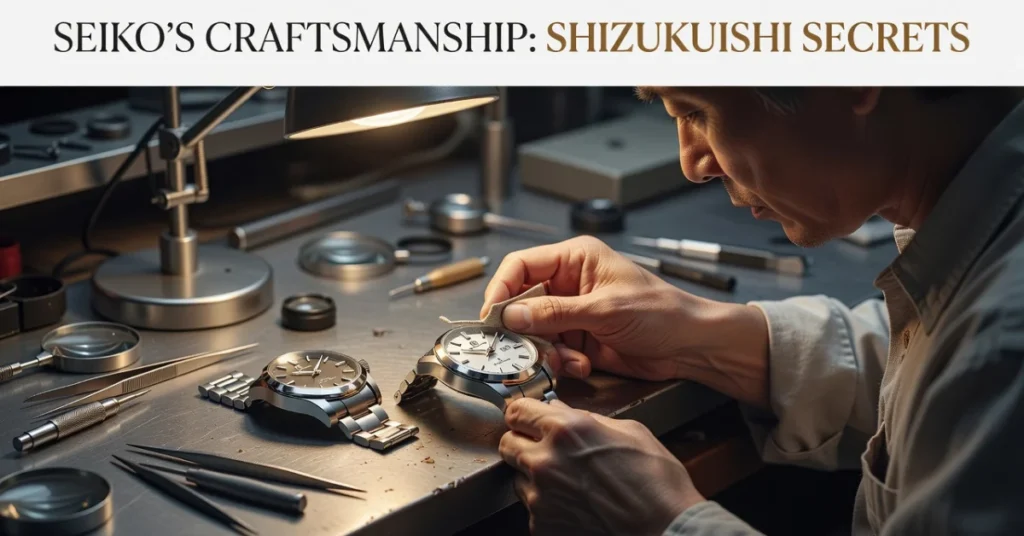
Iwate Prefecture is home to the newer Grand Seiko Studio Shizukuishi, opened in 2020, along with long-running facilities operated by Morioka Seiko Instruments. This is where the celebrated 9S mechanical calibers come together, piece by piece, mostly by hand.
Craftsmen here still use Zaratsu polishing, a flat-blade technique that creates the mirror-sharp facets Grand Seiko cases are known for. It’s slow. It’s exacting. And it’s part of why these watches carry a premium.
Where Are Seiko Watches Made Outside Japan?
Here’s where the answer to where are Seiko watches made gets more interesting for everyday shoppers. Not every Seiko needs to come from a Japanese studio to be genuinely well made.
- Malaysia handles a large share of the popular Seiko 5 Sports line and several Prospex divers, using components engineered in Japan but assembled locally.
- China takes on many entry-level quartz models, keeping prices accessible for first-time watch buyers.
- Singapore contributes movement components and supports the broader supply chain.
Someone shopping for a first automatic watch under $300 has almost certainly looked at a Malaysian-assembled Seiko without realizing it. That’s normal, and it’s by design.
Quick Reference: Seiko Production by Country
| Country | Common Watch Lines | Typical Price Tier | Model Code |
|---|---|---|---|
| Japan (Iwate) | Grand Seiko 9S mechanical, Prospex LX, Kodo Tourbillon | Luxury / High-end | J |
| Japan (Nagano) | Spring Drive, quartz movements, Orient movements | Mid to High-end | J |
| Malaysia | Seiko 5 Sports, select Prospex divers | Mid-range | K |
| China | Entry-level quartz models | Budget | K |
| Singapore | Movement components, supply chain support | N/A (components) | N/A |
How to Read the Caseback Code
Watches assembled in the Japanese studios typically carry a model number ending in the letter “J.” Spot that letter, and you’re holding something built domestically from start to finish. Model numbers ending in “K” indicate assembly outside Japan, which isn’t a downgrade so much as a different manufacturing lane built for a different price point.
| Code | Meaning | What to Expect |
|---|---|---|
| J | Assembled in Japan | Hand-finishing, higher price, stronger resale value |
| K | Assembled outside Japan | Machine-assisted assembly, more affordable, same core quality standards |
| Case marked “Made in Japan” | Fully domestic production and assembly | Highest tier of craftsmanship claim |
What the Research Shows
Detailed analysis of Seiko’s production model reveals a company that treats manufacturing location as a deliberate business tool rather than a cost-cutting afterthought. Industry analysts covering Japanese watchmaking consistently point out that vertical integration, meaning Seiko makes its own movements, cases, and dials in-house, is rare even among luxury brands.
Research into the broader mechanical watch category shows that companies maintaining domestic flagship production while offshoring entry-level assembly tend to protect brand prestige more effectively than those who offshore everything. Seiko’s structure fits that pattern closely, and it helps explain why Grand Seiko commands serious collector attention while Seiko 5 remains a budget favorite.
A Simple Comparison Worth Understanding
Think of Seiko less like one factory and more like a restaurant group that runs both a Michelin-starred flagship and a chain of reliable diners. The flagship gets the master chefs and slow-cooked technique. The diners get standardized recipes, faster turnaround, and prices regular people can actually afford. Both serve real food made by the same company, just tuned for different appetites and budgets.
Who Should Actually Care About This?
Collectors chasing resale value should care most. A “J” series Grand Seiko from Shizukuishi will almost always hold value better than a “K” series entry model, because scarcity and hand-finishing genuinely matter to buyers.
Everyday wearers shopping under $400 don’t need to obsess over this. A Malaysian-assembled Seiko 5 goes through the same quality standards as anything else wearing the name, just with more automation in the process.
Gift buyers should check the caseback letter before purchase if the recipient cares about provenance. It takes ten seconds and avoids an awkward conversation later.
The Bottom Line
So, where are Seiko watches made? Mostly in Japan for anything wearing the Grand Seiko name or a premium mechanical caliber, and across Malaysia, China, and Singapore for the more accessible watches millions of people wear every day. Neither answer is the “real” one on its own. Together, they explain how a single Tokyo watch shop from 1881 became a brand that can sit on a collector’s wrist and a student’s wrist with equal pride, well into 2026.
FAQs
Are all Seiko watches made in Japan?
No. Entry-level and mid-range models are frequently assembled in Malaysia, China, or Singapore, while Japan handles the brand’s high-end mechanical lines.
How do I know if my Seiko was made in Japan?
Check the reference number on the caseback or paperwork. A “J” typically signals Japanese assembly, while “K” indicates assembly outside Japan.
Is a Seiko made outside Japan lower quality?
Not necessarily. Quality control standards apply across every facility. The difference usually comes down to hand-finishing time and materials rather than reliability.
Where are Seiko watches made for the Grand Seiko line specifically?
Grand Seiko’s mechanical models come almost exclusively from the Shizukuishi Studio in Iwate Prefecture, with quartz and Spring Drive pieces produced at the Nagano facility.
Is Orient Watch Company related to Seiko?
Yes. Seiko Epson fully acquired Orient, and the Nagano facility now produces movements used in Orient watches as well.


