
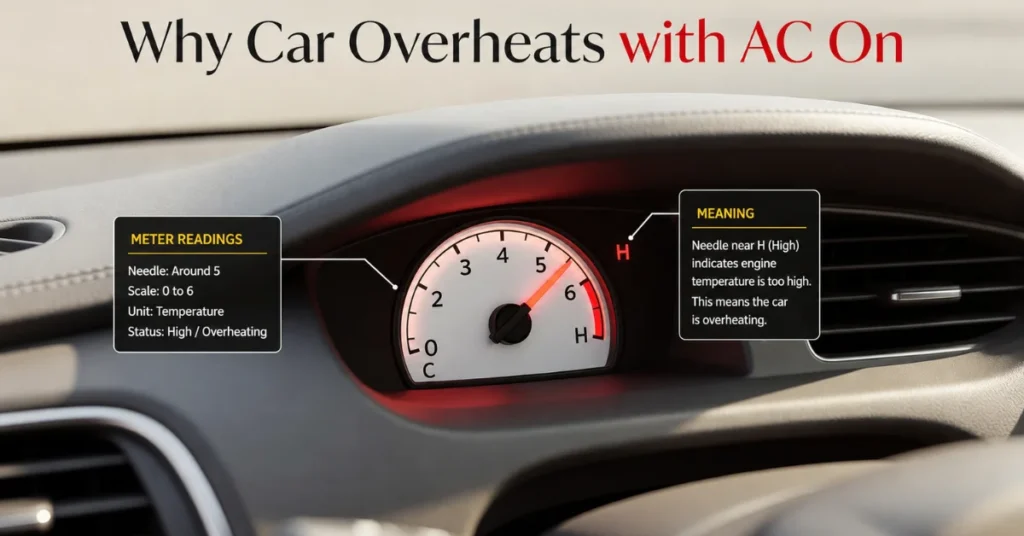
You flip on the air conditioning, and within a few minutes the needle on your temperature gauge starts creeping toward the red zone. Why does my car overheat when the AC is on? It’s a question thousands of drivers type into Google every summer, and the honest answer is that your air conditioning isn’t the real problem. It’s exposing a weak spot somewhere else in your cooling system.
Anyone who has sat in stop-and-go traffic with the AC blasting knows the feeling. The cabin stays cool, but the dashboard gauge tells a different story. That mismatch confuses a lot of people, because the AC is supposed to make things colder, not hotter.
Why Does My Car Overheat When the AC Is On?
Here’s the mechanism, stripped of jargon. Your AC compressor doesn’t run on magic. It runs on power stolen directly from your engine. When you switch the AC on, the compressor clutch engages and starts pulling mechanical energy from the engine’s belt system. That’s extra work the engine wasn’t doing a second ago.
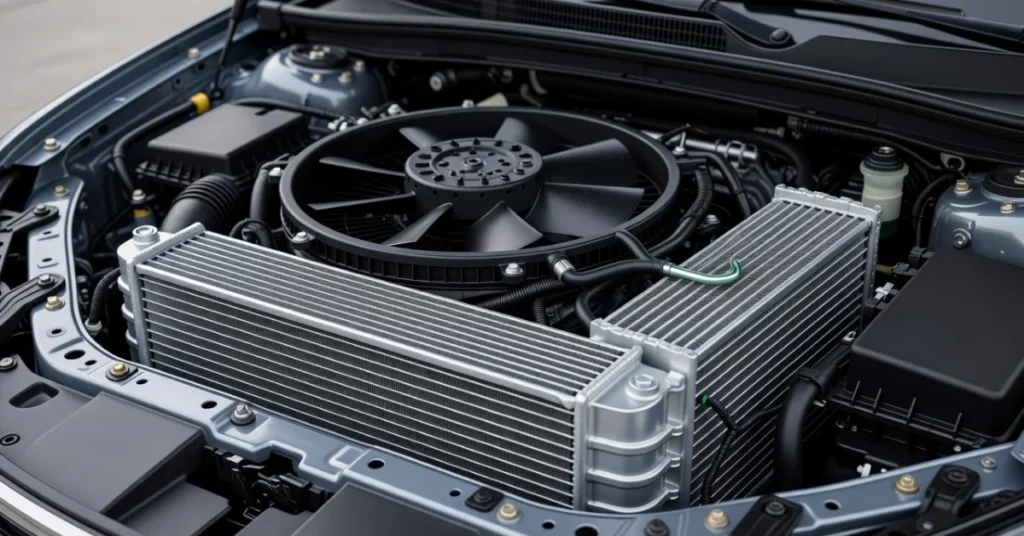
At the same time, the AC condenser sits right in front of (or very close to) your radiator. It’s also blowing hot refrigerant heat into that same airflow path. So you’ve got two things happening together: the engine is working harder, and the radiator has to shed heat from two sources instead of one.
A healthy cooling system shrugs this off without a second thought. The radiator fan spins up, coolant circulates properly, and the temperature gauge barely twitches. But if any single part of that system is already weak, tired, or failing, adding AC load is often the tipping point that pushes the engine from “warm” to “overheating.”
Mechanics see this pattern constantly: a car that runs fine on the highway with the windows down, then starts climbing in temperature the moment the AC kicks on in slow traffic. That’s not a coincidence. It’s the extra load exposing a cooling system that was already running on borrowed time.
The Real Culprits Behind AC-Related Overheating
Several specific components tend to be behind this problem, and understanding why does my car overheat when the AC is on usually just takes a bit of process of elimination.
Low or old coolant. Coolant does the actual job of pulling heat away from the engine block. If the level has dropped from a slow leak, or the mixture has broken down after years of service, it simply can’t absorb heat fast enough once the AC adds its extra load.
A failing radiator fan. This fan is what pulls air through the radiator when you’re not moving fast enough for natural airflow to do the job, like idling at a red light with the AC on. A dead fan motor, a blown fuse, or a bad relay means no airflow, and no airflow means rising temperatures fast.
A clogged or dirty AC condenser. Road grime, bugs, and debris build up on the condenser fins over time. Once they’re clogged, both the AC and the radiator behind them lose airflow, and the whole cooling process slows down.
A weak or failing water pump. The pump is what actually moves coolant through the engine and radiator. A worn impeller or a slipping pump belt reduces circulation, and the added AC load can be enough to reveal the shortfall.
A stretched or glazed serpentine belt. On most vehicles, one belt drives the AC compressor and the water pump together. If that belt is stretched, cracked, or poorly tensioned, engaging the AC compressor can rob the water pump of the grip it needs to spin properly, slowing coolant circulation right when the engine needs it most. A quick check: press down on the middle of the belt with a finger. More than about half an inch of give usually points to a loose or worn belt that needs attention.
An overloaded or seizing AC compressor. When a compressor starts to go bad, it draws considerably more power from the engine than it should, piling extra strain onto an already-taxed system.
A stuck thermostat. If the thermostat won’t open properly, coolant gets trapped and can’t flow to the radiator to cool down, regardless of how good everything else is.
Anyone who has diagnosed this kind of issue at a shop will tell you the same thing: check coolant and fans first, since those two account for a large share of AC-triggered overheating complaints.
Here’s a quick-reference table that answers why does my car overheat when the AC is on, so you can match what you’re seeing on the dashboard to the most likely culprit.
| Cause | Common Symptom | Quick Fix |
|---|---|---|
| Low or old coolant | Gauge climbs gradually, low fluid in reservoir | Top up coolant, inspect for leaks |
| Failing radiator fan | Fan silent or slow with AC on, worse at idle | Check fuse, relay, or fan motor |
| Dirty AC condenser | Weak airflow, worse in dusty or buggy conditions | Clean fins with a gentle hose spray |
| Weak water pump | Gauge spikes suddenly, coolant leak near pump | Have the pump inspected and replaced |
| Stretched serpentine belt | Squealing noise, belt deflects more than ½ inch | Retension or replace the belt |
| Failing AC compressor | Loud clutch engagement, gauge rises fast | Have the compressor tested by an AC technician |
| Stuck thermostat | Gauge swings unpredictably, poor cabin heat too | Replace the thermostat |
Why Does My Car Overheat When the AC Is On at Idle or in Slow Traffic?
This scenario deserves its own explanation, because it’s the single most common version of the complaint. At highway speed, air is naturally rushing through the grille and radiator, which does a lot of the fan’s job for free. Slow down to idle or crawl through traffic, and that natural airflow disappears. The radiator fan has to do all the work alone.
Add the AC compressor’s extra load into that mix, and you’ve created the exact conditions where a marginal cooling system fails. This is why a car can feel completely fine cruising on the interstate yet climb toward “H” the moment you’re stuck at a light with the AC running full blast.
According to industry data referenced by automotive technicians, most gasoline engines are designed to run steadily between 195°F and 220°F. A small rise when the AC engages is considered typical. A rapid, sustained climb past that range, especially paired with idling, is the signal that something specific needs attention, not just general wear.
Is a Slight Temperature Rise With the AC On Normal?
Yes, to a point. It’s completely ordinary for the needle to nudge up slightly when the compressor kicks in, particularly on hot days or during stop-and-go driving. That small fluctuation reflects the extra load, and a properly functioning cooling system absorbs it without drama.
What’s not normal is the needle climbing steadily toward the red zone, warning lights appearing, steam rising from under the hood, or a sweet smell drifting into the cabin, which often points to a coolant leak. Those signs mean it’s time to pull over, not push through traffic hoping it settles down.
Does This Work the Same on Every Vehicle?
Not quite, and this is where a lot of generic advice falls short. Most modern cars and crossovers use an electric radiator fan controlled by a temperature sensor, which is what most of the checks above assume.
Older rear-wheel-drive cars, pickup trucks, and some SUVs use a different setup: a mechanical, belt-driven fan with a viscous clutch that spins faster as it heats up. If you own one of these, a “silent fan” check doesn’t apply the same way. Instead, look for the fan clutch feeling loose or spinning freely with the engine off and cool, which usually signals a worn clutch that can’t pull enough air once the AC adds load.
Turbocharged and towing-rated vehicles also run closer to their thermal limits by design, so an AC-triggered overheat on these often shows up sooner and more sharply than it would on a smaller naturally aspirated engine.
How to Check the Problem Yourself
A few checks don’t require a mechanic’s toolbox and help confirm why does my car overheat when the AC is on before you even call a shop.
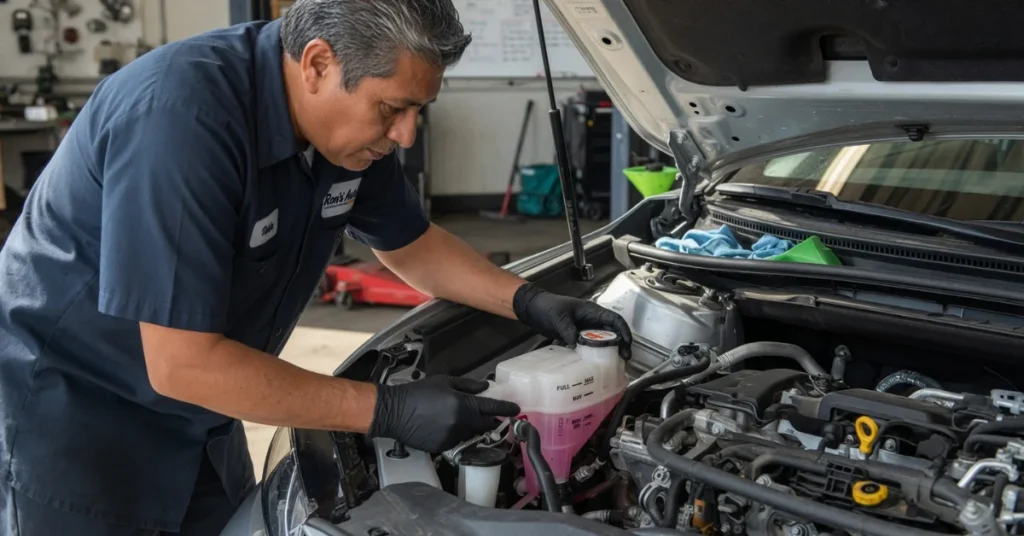
- Pop the hood once the engine is cool and check the coolant reservoir level against the marked lines.
- Look at the radiator and condenser fins from the front of the car for visible dirt, leaves, or bent fins blocking airflow.
- With the engine running and AC on, listen and look for the radiator fan actually spinning.
- Check under the car for puddles or drips, which usually point to a coolant or refrigerant leak.
- Watch the temperature gauge specifically when idling with the AC on versus driving. A big gap between the two is telling.
A sentence fragment worth remembering here: no fan spinning, no cooling. That single visual check rules out or confirms one of the most frequent causes in under a minute.
Fixes and Preventive Maintenance
Once the cause is identified, most fixes are straightforward and don’t require replacing the entire cooling system.
Topping up coolant is cheap, but if the level keeps dropping, there’s a leak somewhere that needs sealing or repairing rather than just refilling. A radiator fan motor or relay replacement typically runs in the low hundreds of dollars at most independent shops. Condenser cleaning can sometimes be done with a gentle hose spray and a fin comb, though bent or corroded condensers may need replacement.
Water pumps and thermostats are more involved jobs, usually requiring professional labor since they involve draining and refilling the entire cooling system. AC compressor issues should go straight to a certified AC technician, since refrigerant handling requires specific equipment and, in most regions, certification.
Routine prevention matters just as much as reactive fixes. Flushing coolant on the manufacturer’s recommended schedule, keeping the radiator and condenser clear of debris, and having the cooling system pressure-tested before summer all reduce the odds of an AC-triggered overheating event catching you on a hot highway.
When to Call a Mechanic Instead of DIY-ing It
Some situations genuinely call for professional hands. If the coolant reservoir is empty and refilling doesn’t hold, if the fan won’t spin under any condition, or if the engine overheats even with the AC off, that points toward something structural rather than a simple top-up. Refrigerant recharging, compressor replacement, and head gasket concerns all fall outside typical driveway repair territory.
Ignoring repeated overheating episodes is where real damage happens: warped cylinder heads, blown gaskets, and in worst cases, a seized engine. None of those repairs come cheap, and all of them are avoidable if the early warning signs get addressed.
Conclusion
So, why does my car overheat when the AC is on? In almost every case, it comes down to the AC compressor adding load to a cooling system that’s already running close to its limit, usually because of low coolant, a struggling fan, a dirty condenser, or a tired water pump. The AC itself isn’t villain here; it’s just the trigger that reveals a weakness that was building quietly for a while. Catching it early, whether through a quick DIY check or a trip to a trusted mechanic, keeps a minor annoyance from turning into an expensive repair bill.
FAQs
Q: Is it safe to keep driving if my car overheats only when the AC is on?
It’s best to turn the AC off immediately and monitor the gauge. If the temperature drops back to normal, get the cooling system checked soon rather than waiting for it to happen again.
Q: Can low refrigerant cause overheating?
Not directly, but a compressor working harder to compensate for low refrigerant can draw more power from the engine, indirectly adding to cooling system strain.
Q: Does turning off the AC actually help if my engine is overheating right now?
Yes. Switching off the AC and, if needed, turning on the heater at full blast temporarily pulls heat away from the engine and toward the cabin, buying time to reach a safe stop.
Q: How much does it cost to fix a car that overheats when the AC is on?
It varies widely. A coolant top-up costs very little, while a new radiator fan, water pump, or condenser can run anywhere from a couple hundred to over a thousand dollars depending on the vehicle.
Q: Will this problem go away on its own?
No. Cooling system issues don’t self-repair, and continuing to drive with intermittent overheating usually makes the underlying problem worse over time.