

Europe doesn’t need an introduction, but it does need a plan. With so many european travel destinations competing for a spot on your itinerary, the real challenge isn’t finding somewhere beautiful. It’s narrowing down which cities and regions actually match how you like to travel.
The continent pulled in roughly 809.6 million international arrivals in 2025, more than half of all trips taken worldwide that year. That’s not a fluke. It’s the result of short flight times between countries, a dense rail network, and a genuinely wide spread of experiences packed into a relatively small landmass. You can eat pintxos in San Sebastián on a Friday and be hiking above a Norwegian fjord by Monday.
This guide breaks down seven european travel destinations worth building a trip around in 2026, along with a quick comparison table, honest cost notes, and two 2026-specific changes most planning guides still miss.
Why European Travel Destinations Still Dominate Global Tourism
Southern and Mediterranean Europe alone accounted for more than 42% of all international arrivals to the continent in 2025, with Western Europe adding another 28%. Together, those two regions pulled in over 70% of everyone who visited Europe last year.
Spain, Italy, and France remain the anchors. Spain crossed roughly 96.8 million international arrivals in 2025, and Italy wasn’t far behind. But the story underneath those big numbers is more interesting than the ranking itself. Central and Eastern Europe grew fastest, with Baltic destinations in particular pulling in more first-time visitors as travelers look for something less crowded and considerably cheaper than Western capitals.
That shift matters for anyone planning a trip. The “big five” (London, Paris, Rome, Barcelona, Amsterdam) still deliver, but they also come with peak-season crowds and rising accommodation prices. Several of the destinations below sit just outside that spotlight.
Lisbon, Portugal: Coastal City Energy Without the Paris Price Tag
Lisbon has spent the last decade climbing every “best city” list, and it’s earned the spot. Hills, tiled facades, and a tram system that doubles as a scenic ride make it walkable in a way few capitals manage.
What sets Lisbon apart is value. A meal that would run €30 in central Paris often costs half that here, and the city’s neighborhoods (Alfama, Chiado, Príncipe Real) each have a distinct personality instead of blending into one another. Anyone who’s spent a week wandering Lisbon’s back streets knows the appeal isn’t one landmark. It’s the rhythm of the place.
Day trips to Sintra’s pastel palaces or the surf towns along the Costa da Caparica extend a Lisbon stay naturally, so budget at least five days if you can.
The Amalfi Coast and Puglia: Italy Beyond the Postcard Route
Rome and Venice get the headlines, but southern Italy offers a different pace entirely. The Amalfi Coast delivers the cliffside towns everyone recognizes from photos, while Puglia, further south, still feels comparatively undiscovered by international crowds.
Anyone who’s driven the Amalfi coastal road knows it demands respect: narrow, cliff-hugging, and busiest from June through August. Puglia trades that intensity for whitewashed trulli houses, olive groves, and beach towns like Polignano a Mare, where restaurants are built directly into the rock face above the water.
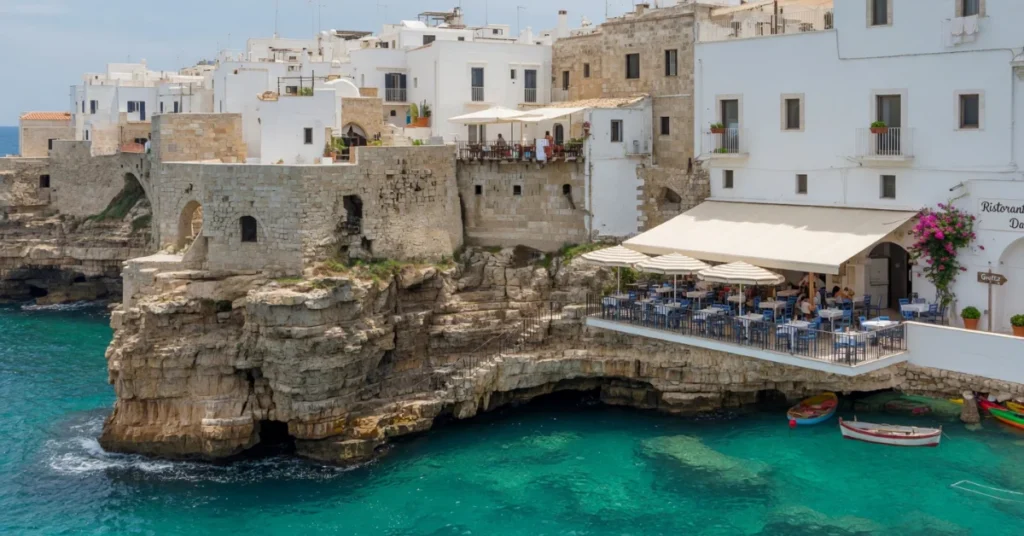
Dining on the cliffs of Puglia's most picturesque coastal townLate spring (May) or early autumn (September, October) hits the sweet spot here: warm sea temperatures, thinner crowds, and prices well below peak summer.
Krakow and the Baltic Cities: Where the Growth Is Happening Now
Central and Eastern Europe posted an 8% jump in visitor numbers in a recent year-over-year comparison, with Baltic destinations leading that growth. Krakow, Tallinn, and Vilnius are pulling travelers who want medieval old towns, strong coffee culture, and prices that make a week’s trip feel affordable rather than aspirational.
Krakow’s main square is one of the largest surviving medieval plazas in Europe, and the city balances that history with a genuinely active food and nightlife scene in the Kazimierz district. Tallinn’s old town is compact enough to see properly in two days but atmospheric enough that most visitors wish they’d booked three.
Austria’s Alpine Towns: The Winter Alternative Everyone Overlooks

Austria welcomed close to 100 million tourists in 2025, and a meaningful share of that traffic heads straight for the mountains. Switzerland tends to dominate alpine conversations, but Austria’s resort towns (Innsbruck, Salzburg’s surrounding valleys, Kitzbühel) offer comparable scenery for noticeably less money.
Anyone who’s skied both sides of the border tends to agree: Austria’s lift ticket prices and lodging costs run consistently lower than Switzerland’s, without sacrificing the postcard views. Summer visitors get an entirely different experience, with hiking trails and lake towns like Hallstatt drawing crowds for their reflection-perfect scenery rather than snow.
Croatia’s Dalmatian Coast: Islands Without the Greek Island Prices
Croatia pulled in more than 85 million visitors in 2025, and the Dalmatian Coast is doing most of that heavy lifting. Split, Dubrovnik, and the string of islands between them (Hvar, Korčula, Brač) deliver Adriatic blue water with infrastructure that’s improved dramatically over the past decade.
Dubrovnik’s old town gets crowded, particularly when cruise ships dock, so anyone visiting for the walls and rooftop views should aim for early morning or the shoulder months of May and September. Sailing between the islands, even on a modest multi-day charter, remains one of the more affordable ways to see several destinations without repacking a suitcase every two days.
What the Research Shows
Looking closely at how travel patterns have shifted, a few things stand out. EU accommodation nights hit a record 3.08 billion in 2025, a 2.2% increase from the prior year, which tells you people aren’t just visiting Europe, they’re staying longer once they arrive.
Southern Mediterranean arrivals grew around 2% in early 2025 comparisons, a modest but steady climb, while Central and Eastern Europe’s growth outpaced that significantly. The pattern is consistent: travelers are still drawn to the traditional hotspots, but they’re increasingly willing to trade a famous skyline for a quieter, cheaper alternative that delivers a similar feeling.
That’s the real throughline connecting every entry on this list. None of these european travel destinations are secrets exactly, but each offers a version of the “classic Europe” experience without the sharpest edges of overtourism or peak pricing.
Comparing European Travel Destinations at a Glance
Here’s a quick side-by-side view to help match a destination to your travel style before diving into planning details.
| Destination | Best Season | Budget Level | Best For | Ideal Trip Length |
|---|---|---|---|---|
| Lisbon, Portugal | Apr–Jun, Sep–Oct | Low to mid | First-timers, value seekers | 5 days |
| Amalfi Coast & Puglia, Italy | May, Sep–Oct | High (Amalfi) / Mid (Puglia) | Couples, food lovers | 6–8 days |
| Krakow & Baltic cities | May–Sep | Low | Budget travelers, repeat visitors | 4–6 days |
| Austria’s Alpine towns | Dec–Mar (ski), Jun–Aug (hiking) | Mid | Skiers, lake-town seekers | 5–7 days |
| Croatia’s Dalmatian Coast | May, Jun, Sep | Mid | Families, island-hoppers | 7–10 days |
Two Real Costs Every 2026 Traveler Should Budget For
Two changes are reshaping the cost and process of visiting Europe in 2026, and neither gets enough attention in most trip-planning guides.
ETIAS, the EU’s new pre-travel screening system, is delayed rather than cancelled. It was expected to launch in the last quarter of 2026 with a €20 fee for visa-exempt visitors from countries like the US, Canada, and Australia. As of mid-2026, the official EU page quietly dropped that launch window after the agency building the system concluded a 2026 rollout wasn’t realistic, and a 2027 launch now looks more likely. Nothing needs to be done yet, but it’s worth checking status a few weeks before booking flights for late 2026 or 2027.
City tourist taxes have also jumped noticeably. Venice now charges day-trippers roughly €5 to €10 to enter the historic centre during peak periods, from April through late July, separate from its existing accommodation tax. Barcelona’s nightly surcharge rose to around €12 at five-star hotels as of April 2026, with further increases planned through 2029. Amsterdam’s combined tourist tax and VAT now pushes total accommodation tax close to 33.5%. None of this is a dealbreaker, but it can add anywhere from €50 to €150 per person to a week-long trip depending on the city and hotel category.
Choosing the Right Destination for Your Trip
A few quick filters help narrow things down:
- Budget-conscious travelers should lean toward Krakow, Tallinn, or Puglia over Paris, Amsterdam, or the Amalfi Coast in peak season.
- First-time visitors to Europe generally get the most out of Lisbon or Croatia’s coast, since both combine easy logistics with a strong sense of place.
- Repeat visitors looking for something beyond the standard route should consider the Baltic cities or inland Austria.
- Families tend to do well in Croatia and Portugal, where beach time balances out museum fatigue.
Booking six to nine months ahead for July and August travel isn’t just advice, it’s close to necessary for the Amalfi Coast and Dubrovnik specifically, where accommodation sells out early and city tourist taxes are typically highest during that window.
Conclusion
There’s no single “best” answer when it comes to european travel destinations, and that’s arguably the point. Whether the goal is Lisbon’s tiled hillsides, Puglia’s quiet coastline, or Krakow’s old town squares, 2026 travel data suggests the smartest trips increasingly happen just outside the most photographed spots. Factor in the newer tourist taxes and the still-unsettled ETIAS timeline, pick the pace and price point that fits, and the rest of the planning gets a lot easier.
FAQs
What are the best european travel destinations for a first trip to Europe?
Lisbon and Croatia’s Dalmatian Coast are commonly recommended for first-timers because both are compact, easy to navigate, and combine major sights with a manageable pace.
When is the cheapest time to visit Europe?
Shoulder seasons (April to May and September to October) generally offer lower prices and thinner crowds than the June through August peak.
Are Baltic cities like Krakow and Tallinn worth visiting over Western Europe?
Yes, for travelers prioritizing value and fewer crowds. Both cities offer well-preserved old towns and noticeably lower costs than Paris, London, or Amsterdam.
Do I need ETIAS to visit Europe in 2026?
Not yet. ETIAS was expected to launch in late 2026, but the EU has since removed that date from its official page, with a 2027 launch now considered more likely. Visa-exempt travelers currently need no additional authorization to enter Europe.
Are European city tourist taxes expensive in 2026?
They add up but rarely break a budget. Expect roughly €5 to €15 per night in cities like Barcelona, Venice, and Amsterdam, layered on top of your accommodation cost.
Is it cheaper to ski in Austria or Switzerland?
Austria typically runs less expensive across lift tickets and lodging while offering comparable alpine scenery, making it a common budget-friendly alternative.