
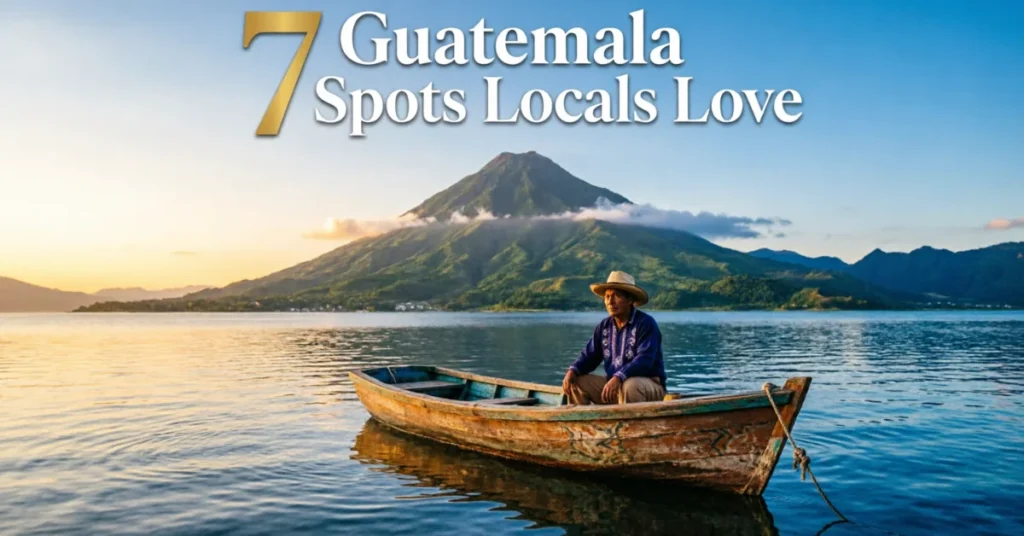
The first time a bus rounds the last curve above Lake Atitlán, most people go quiet. Three volcanoes rise straight out of the water, and the light does something to the surface that photographs never quite capture. That single view explains why so many travelers build an entire trip around Guatemala travel destinations instead of treating the country as a quick stopover between Mexico and Belize.
Guatemala isn’t chasing attention the way some of its neighbors do. It doesn’t need to. Between crumbling Mayan temples, colonial streets, and highland villages where Spanish is still a second language, the country offers a kind of depth that’s hard to fake. And more travelers are noticing. INGUAT, the national tourism institute, reported that Guatemala closed 2025 with 3,361,843 non-resident visitors, an 11% jump from 2024, proof that word is spreading fast.
This guide walks through the destinations that consistently earn a spot on any serious list of Guatemala travel destinations, why each one matters, what a first-time visitor should actually expect on the ground, and a few practical details most guides skip entirely.
Quick Comparison: Guatemala Travel Destinations at a Glance
Before the deep dive, here’s a fast reference for planning purposes. Ideal trip length assumes this stop is combined with others on a standard loop, not visited alone.
| Destination | Best For | Ideal Days | Best Season | Getting There |
|---|---|---|---|---|
| Antigua | First-timers, culture, food | 2-3 days | Nov-Apr (dry) | 45 min from Guatemala City airport |
| Lake Atitlán | Scenery, relaxation, Mayan villages | 3-4 days | Nov-Apr (dry) | 2.5-3.5 hrs shuttle from Antigua |
| Tikal | History, jungle, sunrise hikes | 2 days | Nov-May (drier trails) | Fly or shuttle to Flores, then 1 hr |
| Semuc Champey | Swimming, off-grid nature | 1-2 days | Dec-Apr (clearer pools) | 8-9 hrs by shuttle from Antigua |
| Flores | Base camp, easy pace | 1-2 days | Year-round | Domestic flight or overnight bus |
| El Paredón | Surfing, coastal downtime | 2-3 days | Mar-Oct (best swells) | 3 hrs from Antigua |
| Chichicastenango | Markets, Mayan tradition | Half day | Thu/Sun (market days) | 2.5 hrs from Antigua or Atitlán |
Antigua Guatemala: Where Every Trip Begins
Antigua isn’t just a starting point. It’s the reason a lot of people fall for this country in the first place.
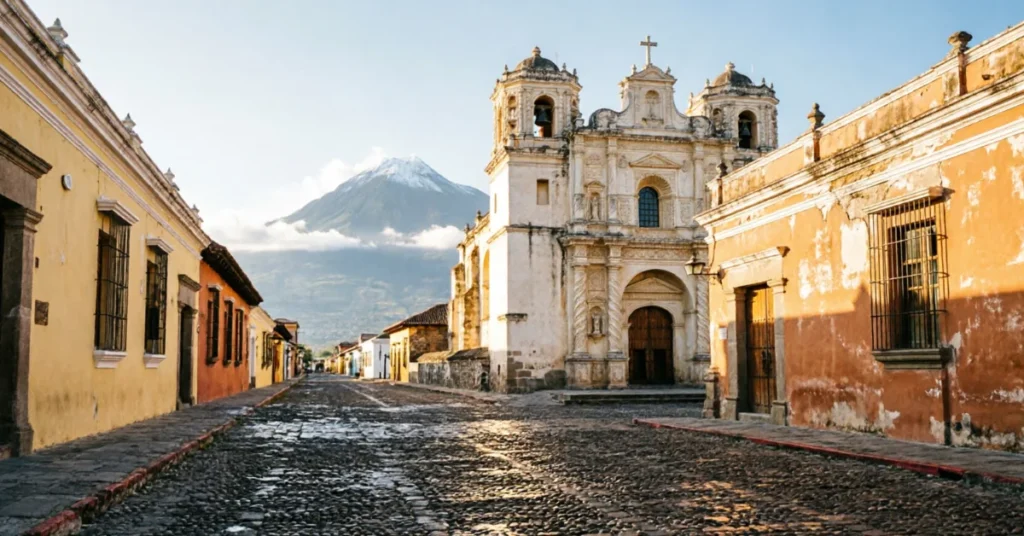
Cobblestone streets run past baroque church ruins and pastel-colored facades, with three volcanoes (Agua, Fuego, and Acatenango) framing nearly every photo. Founded as the colonial capital in the 16th century, Antigua earned UNESCO World Heritage status for its remarkably preserved Spanish colonial architecture, and it still functions as a living, breathing city rather than a museum piece.
Locals here will tell you the best way to experience Antigua isn’t a checklist of ruins. It’s a slow morning at a café with a volcano view, followed by an afternoon wandering the Mercado Central for handwoven textiles and small-batch chocolate. Anyone who has spent even three days in Antigua understands why so many travelers stay longer than planned.
Practical detail worth knowing: Antigua sits about 45 minutes from La Aurora International Airport in Guatemala City, which makes it the natural first and last stop on most itineraries.
Lake Atitlán and Its Highland Villages
If Antigua is the introduction, Lake Atitlán is where the trip gets personal.
Aldous Huxley once called it the most beautiful lake in the world, and while that’s a big claim, standing on its shore makes the comparison feel less like hyperbole. The lake sits in a volcanic caldera at roughly 1,562 meters (5,125 feet) above sea level, ringed by a dozen small towns, each with its own personality.
Panajachel works as a comfortable home base with restaurants, shuttle connections, and lakeside views. San Pedro La Laguna draws a younger, backpacker crowd with Spanish schools and a livelier nightlife scene. San Marcos La Laguna, on the other hand, has built a quieter reputation around yoga retreats and meditation centers. Travelers who have spent time hopping between these villages by boat often say the contrast between them, all within a twenty-minute ride, is what makes the lake worth more than a day trip.
Traditional Mayan culture is still very present here. Weekly markets in nearby towns like Sololá draw vendors in traditional dress selling textiles woven using techniques passed down for generations.
Tikal National Park: Guatemala’s Ancient Heart
No conversation about Guatemala travel destinations gets far without Tikal.
Hidden inside the dense jungle of the Petén region, Tikal was one of the most powerful cities of the ancient Maya world, home to as many as 100,000 people at its peak. UNESCO designated Tikal National Park a World Heritage Site in 1979, recognizing both its architectural significance and the surrounding forest that still shelters howler monkeys, toucans, and even the occasional jaguar.
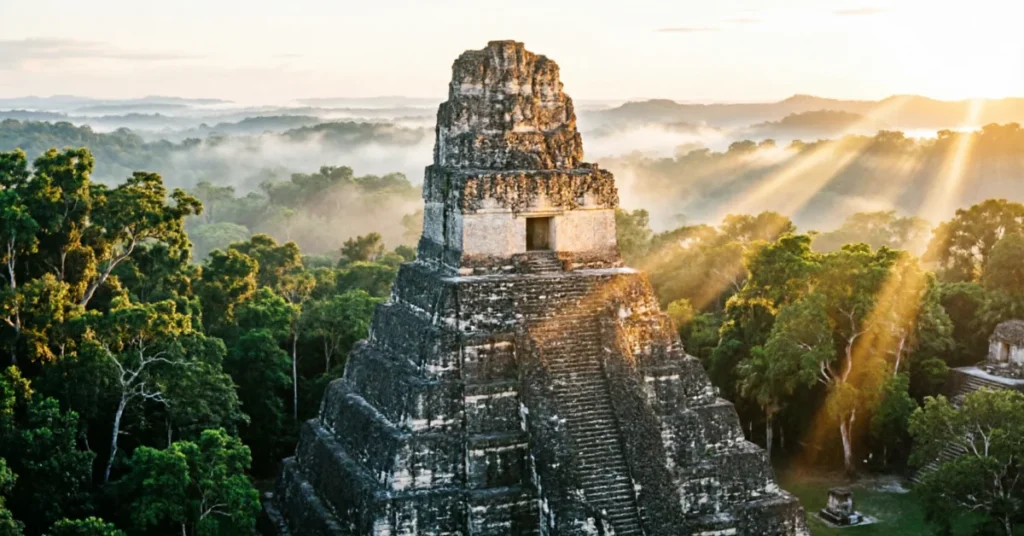
Climbing Temple IV before sunrise, while mist still clings to the canopy below, is the kind of experience that sticks with people long after the trip ends. Those who’ve made the climb often describe the same thing: total silence, then the sudden call of howler monkeys echoing across the treetops as the sun clears the horizon.
For travelers willing to go further off the beaten path, the ruins of El Mirador lie deeper in the jungle and require a multi-day trek to reach. Some who’ve made that journey argue it rivals Tikal itself, minus the crowds.
Semuc Champey: The Turquoise Pools of Alta Verapaz
Hidden in the mountains of Alta Verapaz, Semuc Champey features a natural limestone bridge stretching roughly 300 meters, with a series of stepped, turquoise pools formed on top of it. Below the bridge, the Cahabón River rushes through in a churn of white water, invisible from the pools above.
Getting there takes effort. Most travelers base themselves in the nearby town of Lanquín and take a rough, unpaved road by pickup truck. That effort is part of why Semuc Champey still feels unspoiled compared to more accessible sites.
Once you arrive, options open up quickly: swim in the crystal pools, explore the K’anba caves by candlelight, or go tubing down the river itself. Anyone who has made the trip out here knows the isolation is exactly the point.
Flores: The Island Gateway to the Jungle
Flores sits on a small island in Lake Petén Itzá, connected to the mainland by a short causeway, and it functions as the natural base for anyone exploring Tikal or the surrounding Petén jungle.
The town itself has a relaxed, colonial charm that rewards a slower pace. Rent a kayak, circle the island’s shoreline, and watch the colorful buildings catch the late afternoon light. Many travelers plan to stay one night before heading to Tikal and end up staying three.
Flores also connects to lesser-visited ruins like Yaxhá and Uaxactún, both far quieter alternatives for travelers who’ve already checked Tikal off the list and want more without the crowds.
El Paredón and Guatemala’s Pacific Coast
Not every stop on a Guatemala trip needs a volcano or a ruin. El Paredón, a small fishing-village-turned-surf-town on the Pacific coast, has become the spot where backpackers wind down after weeks of highland travel.
Black volcanic sand beaches, a consistent beach break for surfers of any level, and a slower rhythm of life define this stretch of coast. It lacks the infrastructure of bigger beach destinations, and that’s exactly its appeal. Those who’ve spent a few sunset sessions in the water here tend to extend their stay by days, not hours.
Chichicastenango and the Highland Markets
Twice a week, the town of Chichicastenango transforms into one of the largest and most vivid indigenous markets in Central America. Vendors from surrounding K’iche’ Maya communities fill the streets with textiles, ceramics, spices, and flowers, and the pace of the place makes it clear this market exists for locals first, tourists second.
The Church of Santo Tomás, at the top of the market’s main stairway, blends Catholic ritual with older Mayan traditions in a way that’s rare to witness so openly. Practitioners of Mayan spiritual customs still burn incense on its steps before entering, a detail that tells you more about the country’s layered identity than any museum display could.
What the Research Shows
Industry data backs up what anyone tracking Central American tourism has been noticing for a while. According to figures from the Guatemalan Tourism Institute, domestic tourism also stayed strong through 2025, with an estimated 27 million trips recorded inside the country alongside the 3.36 million international arrivals. Foreign-exchange earnings from inbound tourism reached roughly US$1.39 billion for the year.
That growth lines up with a broader pattern across the region. International tourist arrivals worldwide grew by around 5% in 2025, while the Americas as a region grew closer to 3%, according to UN Tourism figures cited in the same reporting. Guatemala’s 11% jump outpaced both benchmarks by a wide margin, which suggests the country’s mix of affordability, culture, and natural scenery is resonating with a growing share of travelers heading to Central America.
Three Things Most Guides Leave Out
Here’s where a lot of Guatemala travel destinations content stops short. A handful of practical details rarely make it into the usual roundups, and each one changes how you plan.
New flight routes are opening the country up. JetBlue launched a daily flight between Fort Lauderdale and Guatemala City in April 2025, adding to its existing New York (JFK) route. Air Canada started direct Montreal-to-Guatemala City service in October 2025. Both routes mean shorter, more direct access from North America than most travelers assume, which matters when weighing Guatemala against destinations with heavier flight competition.
The CA-4 agreement quietly saves backpackers time and money. Guatemala, El Salvador, Honduras, and Nicaragua share a regional visa arrangement called the CA-4. Most nationalities receive a single 90-day entry that covers movement across all four countries by land, not 90 days per country. Anyone extending a Guatemala trip into El Salvador or Nicaragua doesn’t need a fresh visa or a new entry stamp at each border, though UK passport holders now need a separate visa for Honduras specifically. It’s a detail worth checking against your own nationality before you rely on it.
Altitude catches more travelers off guard than expected. Antigua sits around 1,530 meters (5,020 feet) above sea level, and Lake Atitlán sits even higher at roughly 1,562 meters. Both are mild and comfortable most days, but travelers arriving straight from sea level sometimes notice mild headaches, fatigue, or shortness of breath in the first day or two. It’s rarely serious at this altitude, though staying hydrated and pacing the first day’s activities helps.
Guatemala for Families and First-Time Nervous Travelers
Most content built around Guatemala travel destinations assumes a backpacker audience, but families and first-time visitors to Central America have different needs, and Guatemala accommodates both better than its reputation suggests.
Antigua and Lake Atitlán work well for families thanks to established hotel infrastructure, English-speaking tour operators, and activities that don’t demand physical extremes, like chocolate-making workshops or gentle boat rides between lake villages. For travelers nervous about navigating independently, licensed agencies based in Antigua run guided day trips and multi-day circuits that handle transport, guides, and entry logistics, which removes most of the friction that worries first-timers.
Tikal and Semuc Champey ask more of visitors physically, given jungle heat, uneven terrain, and long travel days, so families with young children often save those two for a later trip once older kids can manage a longer hike comfortably.
Guatemala Travel Destinations: Quick Facts Table
| Category | Details |
|---|---|
| Currency | Guatemalan Quetzal (GTQ) |
| Primary Language | Spanish (plus 20+ Mayan languages in highland regions) |
| Main International Airport | La Aurora International Airport (GUA), Guatemala City |
| Time Zone | UTC-6 (Central Time, no daylight saving) |
| Visa Arrangement | CA-4 agreement with El Salvador, Honduras, Nicaragua (nationality-dependent) |
| Average Daily Backpacker Budget | $30-$80 USD |
| Best Overall Season | November through April (dry season) |
| 2025 International Visitors | 3,361,843 (INGUAT) |
Planning Around Guatemala Travel Destinations: A Few Practical Notes
Most first-time visitors build a route that starts in Antigua, moves through Lake Atitlán, continues to Semuc Champey, then finishes in Flores and Tikal before flying home. That loop typically takes seven to fourteen days and covers the country’s major highlights without excessive backtracking.
Daily costs vary widely depending on style, but a reasonable budget for backpackers runs somewhere between $30 and $80 a day, covering hostels, local food, and shuttle transport. Tourist areas are generally considered safe when visitors avoid night travel and stick to established transport operators, a precaution that applies to most of Central America rather than being unique to Guatemala.
Weather also plays into timing. The dry season, roughly November through April, tends to draw the most visitors, especially around the highlands and Tikal, where jungle trails can get genuinely muddy during the wet months.
Conclusion
Guatemala rewards travelers who go beyond a single highlight. The best Guatemala travel destinations aren’t scattered randomly across the map. They build on each other, moving from colonial charm in Antigua to volcanic drama at Lake Atitlán, ancient history at Tikal, and quiet coastline at El Paredón. Anyone planning a Central America trip in 2026 will find that few countries pack this much variety, along with newly expanded flight access and a shared regional visa system, into a space you can cross in under two weeks.
FAQs
What is the best time of year to visit Guatemala travel destinations?
The dry season, from November through April, offers the most reliable weather for hiking, ruins, and lake activities, though the wet season brings lush green scenery for travelers who don’t mind occasional afternoon rain.
How many days should a first Guatemala trip take?
Most travelers need seven to fourteen days to comfortably cover Antigua, Lake Atitlán, Semuc Champey, and Tikal without rushing between stops.
Is Guatemala safe for tourists?
Tourist areas are generally considered safe when visitors avoid isolated night travel and use established transport operators, similar to precautions taken across most of Central America.
Do I need a separate visa if I’m also visiting El Salvador or Honduras?
Guatemala shares the CA-4 border agreement with El Salvador, Honduras, and Nicaragua, so most nationalities travel across all four on a single entry stamp, though rules vary by passport and it’s worth confirming before the trip.
Which Guatemala destination is best for someone with limited time?
Antigua paired with a day trip to Lake Atitlán covers colonial history and natural scenery within a short window, making it the strongest option for a two- or three-day visit.