
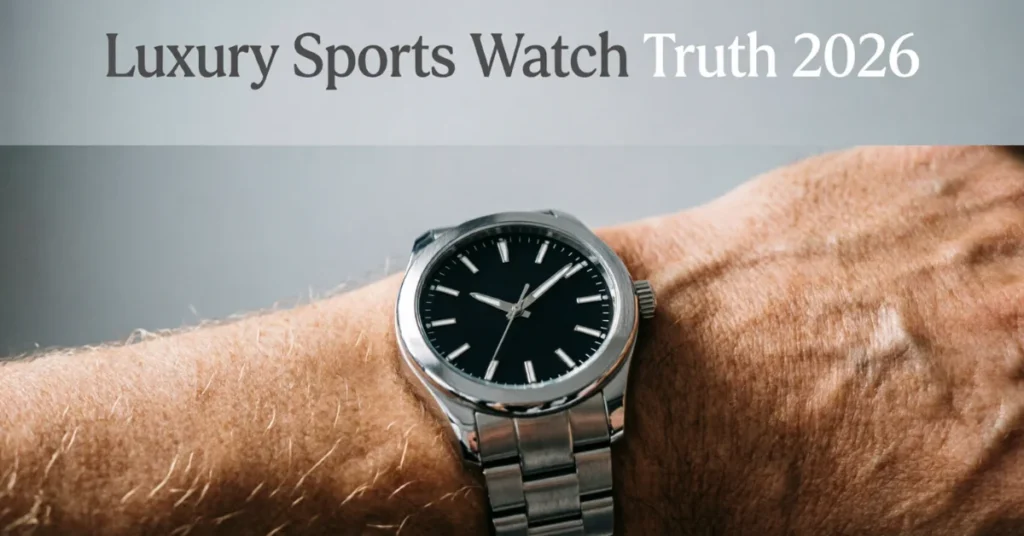
A steel bracelet that costs more than a small car. A waiting list longer than most mortgages. That’s the strange world of the luxury sports watch, and in 2026 it’s stranger than ever.
Prices climbed for years. Then the market cooled. Now it’s finding its footing again, and buyers are asking sharper questions before they hand over a deposit. So what actually separates a genuinely great luxury sports watch from an overpriced piece of steel with a famous name on the dial? Let’s get into it.
What Exactly Is a Luxury Sports Watch?
The term gets thrown around loosely, so it helps to pin it down. A luxury sports watch is a mechanical timepiece built for daily wear and rugged use, typically featuring a steel or titanium case, water resistance, and an integrated bracelet, but finished to the standard of fine jewelry rather than a tool.
That last part is the whole point. A dive computer keeps time too. It doesn’t have hand-polished bevels or an in-house movement assembled by a single watchmaker.
The category traces back to a specific moment in horological history. The Audemars Piguet Royal Oak debuted at the 1972 Basel watch fair priced at £2,850, and being made from steel, it actually cost more than a Rolex Submariner or a gold Patek Philippe dress watch at the time. That pricing decision, steel costing more than gold, is what invented the whole idea of the luxury sports watch as we know it.
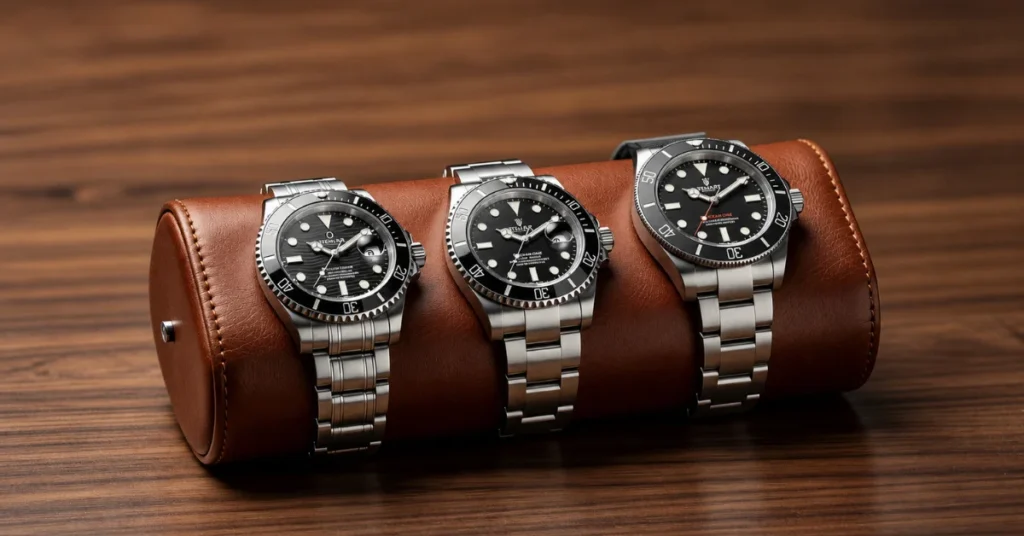
Since then, brands like Rolex, Patek Philippe, Omega, and Tudor have each built their own version of the formula. Anyone who has handled one of these pieces in person knows the difference is felt in the wrist, not just read on a spec sheet.
Why the Category Commands Such High Prices
Three things push the price of a luxury sports watch higher: material, movement, and mythology.
Material. Fine brushing and polishing on a steel case takes far longer than a quick stamp-and-buff job. Ceramic bezels, sapphire crystals, and ultra-thin titanium builds all add cost that a casual buyer rarely sees but a watchmaker’s eye catches instantly.
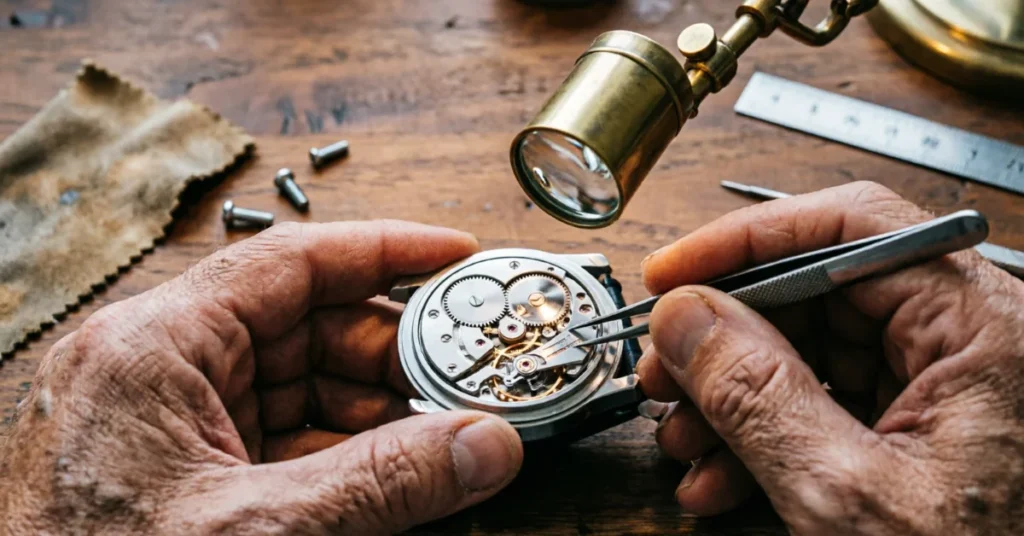
Movement. In-house automatic calibers, chronometer certification, and multi-day power reserves are the mechanical heart of the piece. This is engineering, not decoration, and it’s the part that actually justifies a five-figure price on paper.
Mythology. Some references sell out before they ever hit the counter. The broader luxury watch market keeps growing as collectors, investors, and enthusiasts seek timepieces that combine craftsmanship, heritage, and strong demand, and that demand is what pushes certain pieces from “expensive” into “nearly impossible to buy.”
Scarcity isn’t always artificial, either. Many of these brands genuinely cannot produce enough pieces to meet demand without compromising the finishing standards that set the category apart in the first place.
The Current State of the Luxury Sports Watch Market in 2026
Numbers help cut through the hype. Industry analysis puts the global luxury watch market at roughly $49.8 billion for 2026, with steel sports references still doing the heaviest lifting in terms of trading volume.
That figure matters because it shows the category hasn’t shrunk, even after the speculative frenzy of 2021 and 2022 cooled off. The 2026 luxury watch market has stabilised after that reset, with secondary pricing on the biggest names finding firmer ground than many feared a couple of years ago.
What’s changed is buyer behavior. Fewer people are flipping watches for a quick profit. More are buying with the intention of actually wearing the piece for a decade or longer. Industry analysts note that this move toward patience, rather than speculation, is changing how brands allocate their most sought-after references.
Younger buyers are reshaping demand too. Data from retail sources shows that roughly one in three luxury watches sold today is a Rolex, a sign of just how dominant a handful of names remain even as newer collectors enter the market with different tastes and priorities.
What the Research Shows About Value Retention
Not every expensive watch holds its value, and this is where a lot of first-time buyers get burned. Detailed analysis of the resale market shows that steel sports models from long-running Swiss houses consistently outperform gold dress watches and fashion-brand pieces on the secondary market.
A Swiss academic study covering January 2019 through September 2024 found that luxury watches experienced less price volatility over that period than real estate, equities, or bonds, based on index tracking across those asset classes. That’s a meaningful data point for anyone weighing a purchase as more than a fashion decision.
Here’s the deal, though: past performance in any collectible market is not a guarantee of future results, and prices can and do fall. A watch bought purely to flip for profit is a gamble. A watch bought to wear, with resale value as a secondary bonus, tends to make its owner far happier five years down the line.
Discontinued references are a special case. Steady growth in the market has broadened collector attention well beyond the traditional “big three” brands, with pieces like Vacheron Constantin’s Overseas increasingly viewed as a serious sport-luxury option in its own right. That kind of diversification is a healthy sign for the category as a whole, rather than a warning sign.
Choosing the Right Luxury Sports Watch for You
This is where personal taste has to override the spreadsheet. A few practical questions narrow the field fast:
- What’s your wrist size? A 41mm case that looks perfect on one person can swallow a smaller wrist whole.
- Steel or precious metal? Steel wears every day without a second thought. Gold demands more care and a different kind of occasion.
- New or pre-owned? A certified pre-owned piece from a reputable dealer often gives buyers more watch for the money, and skips the waitlist entirely.
- Automatic or quartz? Mechanical movements are the heart of the category, but a well-made quartz sports watch has its own honest appeal for daily beaters.
Anyone who has shopped for one of these watches in person knows the fit test matters more than any spec sheet. Try the piece on. Walk around the shop. See how the bracelet sits when your wrist bends.
Luxury Sports Watch Price Tiers at a Glance
Budget is usually the first real filter. Here’s how the category breaks down by price band in 2026:
| Tier | Price Range | Example Brands | Typical Wait |
|---|---|---|---|
| Entry | $3,000–$8,000 | Tudor, Longines, Certina | Little to none |
| Mid | $8,000–$20,000 | Omega, Breitling, TAG Heuer | Weeks to a few months |
| Prestige | $20,000–$50,000 | Rolex sports models, IWC | Months, often via waitlist |
| Ultra-High | $50,000+ | Patek Philippe, Audemars Piguet | A year or more, allocation-based |
This isn’t a strict science, since a rare vintage Tudor can outprice a modern Omega. But it’s a fair starting map for anyone shopping their first piece.
The Hidden Sizing Trend Reshaping 2026 Buying Decisions
Something worth knowing before you shop: case sizes are shrinking. After more than a decade of oversized 42mm-plus cases dominating the category, brands are now pushing smaller proportions, with some pieces dropping into the 26mm to 38mm range.
Cartier, Piaget, and Chopard have all leaned into this shift, and the appeal isn’t just aesthetic. Smaller cases wear closer to the wrist, suit a wider range of body types, and often cost less than their oversized counterparts. Anyone shopping for a luxury sports watch in 2026 should try both a large and a compact case before committing, since personal taste on this has genuinely moved in the last two years.
How Waitlists and Allocation Actually Work
This is the part most buyers never get explained clearly. The hardest-to-get luxury sports watches, think steel Rolex sports models or the Royal Oak, aren’t sold first-come-first-served. Boutiques allocate them based on purchase history, relationship with a sales associate, and sometimes loyalty to the brand over years.
Walking in cold and asking for a Daytona rarely works. Buyers who build a relationship with a single boutique, purchase a few accessible pieces first, and stay in regular contact tend to move up the list faster than anyone chasing a single reference from day one. It’s a slow game, and brands design it that way on purpose to reward genuine collectors over flippers.
Common Mistakes First-Time Buyers Make
A few patterns show up again and again among new collectors:
- Buying purely for resale potential instead of genuine enjoyment.
- Skipping authentication when buying pre-owned, which opens the door to counterfeits. A real check goes beyond a quick glance: match the serial number to the papers, weigh the piece (fakes often run lighter), listen to the movement for an uneven or overly loud tick, and confirm the lume and printing are crisp rather than smudged.
- Ignoring service costs, since a mechanical movement needs maintenance every five to seven years.
- Chasing hype references instead of a design that actually suits their lifestyle.
- Underestimating insurance needs once a collection grows past one or two pieces.
Those who have gone through the buying process more than once tend to say the same thing: buy what genuinely appeals to you first, and let value retention be a bonus rather than the whole point.
Caring for a Luxury Sports Watch
A mechanical watch is a small machine, and it needs upkeep like any other. Regular servicing, typically every five to seven years, keeps the movement accurate and protects the resale value down the line.
Water resistance ratings aren’t permanent either. Gaskets age and seals wear down, so a watch rated for 300 meters of depth a decade ago may not hold that rating today without fresh servicing. Anyone planning to actually swim or dive with a luxury sports watch should have it pressure-tested first, not just trust the number stamped on the case back.
Storage matters too. A watch winder keeps automatic movements running when they’re not being worn daily, though it isn’t strictly necessary for most owners with only one or two pieces in rotation.
Final Thoughts
The luxury sports watch category has survived hype cycles, market corrections, and changing generational tastes without losing its core appeal. What makes a piece worth buying in 2026 hasn’t changed all that much: honest craftsmanship, a design you’ll still love in ten years, and a price you can justify without needing the resale market to bail you out.
Buy the watch that makes you glance at your wrist for the wrong reasons. Everything else is just details.
FAQs
Is a luxury sports watch a good investment?
Some references hold or grow in value, particularly steel sports models from long-running Swiss houses, but no watch should be bought purely as a financial instrument. Treat any appreciation as a bonus on top of genuine enjoyment.
What’s the difference between a luxury sports watch and a dress watch?
A luxury sports watch is built for daily wear, water resistance, and durability, with a sportier case and bracelet. A dress watch is thinner, more formal, and typically worn with tailored clothing rather than everyday outfits.
How much should a first-time buyer spend on a luxury sports watch?
There’s no fixed rule, but many first-time buyers start in the $5,000 to $10,000 range, which covers well-regarded pieces from brands like Tudor, Omega, and Longines without stretching into waitlist territory.
Do luxury sports watches need regular servicing?
Yes. Most manufacturers recommend a full service every five to seven years to keep the movement accurate and maintain water resistance ratings.
Is it safe to buy a luxury sports watch pre-owned?
It can be, provided the piece comes from an authorized dealer or a reputable platform that authenticates every watch before sale. Always ask for papers, service history, and box where possible.