
Nine days in Andalusia taught me something a guidebook never could: Spain doesn’t reveal itself in one pass. Ask ten travelers about Spain best travel destinations and you’ll get ten different answers, and every single one of them will be right.
That’s the thing about this country. It refuses to be one place. Madrid moves at the speed of a European capital. Two hours south, a whitewashed pueblo in the hills hasn’t changed its pace in a century. And that’s before you’ve even touched the coast.
This guide skips the padded “top 50” format. Instead, it breaks Spain best travel destinations down by what actually makes each one worth your limited vacation days: the food, the architecture, the crowds you’ll want to dodge, and the moments locals will tell you not to miss.
Spain at a Glance: Which Region Fits Your Trip
| Region | Best For | Ideal Trip Length | Budget Level |
|---|---|---|---|
| Madrid | Museums, nightlife, day trips to Toledo/Segovia | 3-4 nights | High |
| Barcelona | Architecture, beach-and-city combo | 3-4 nights | High |
| Andalusia (Seville, Córdoba, Granada) | History, Moorish architecture, slower pace | 4-5 nights | Moderate |
| Basque Country (San Sebastián, Bilbao) | Food, design, coastal calm | 2-3 nights | High |
| Valencia | Families, green space, futuristic architecture | 2-3 nights | Moderate |
| Balearic Islands | Beaches, nightlife, island-hopping | 3-5 nights | Moderate to High |
This table is a starting point, not a rulebook. Anyone chasing a single theme, food, history, or beach time, can lean harder into one region and trim the rest.
Madrid: Spain Best Travel Destinations Start Here
Madrid doesn’t hand you its best side right away. You have to stay past dinner.
The Prado and the Reina Sofía cover the art. Everyone knows that part. What surprises first-time visitors is how the city changes after 10 p.m., when La Latina’s tapas bars fill up and nobody seems to be in a hurry to go home.
Madrid was recently named Europe’s top destination for 2026 in a major annual travel-industry ranking, which pointed to the city’s mix of heritage architecture, green space, and a food scene that keeps evolving without losing its roots. Locals will tell you the Mercado de San Miguel is for tourists. Head to Malasaña or Chueca instead, where the vermouth bars fill with neighborhood regulars rather than visitors clutching maps.
There’s a practical reason Madrid anchors so many itineraries, too. High-speed rail puts Toledo, Segovia, and Ávila within an hour, which means a traveler based here for four or five nights can day-trip through central Spain without ever repacking a bag.
Barcelona: Gaudí’s Unfinished Masterpiece Turns a Corner
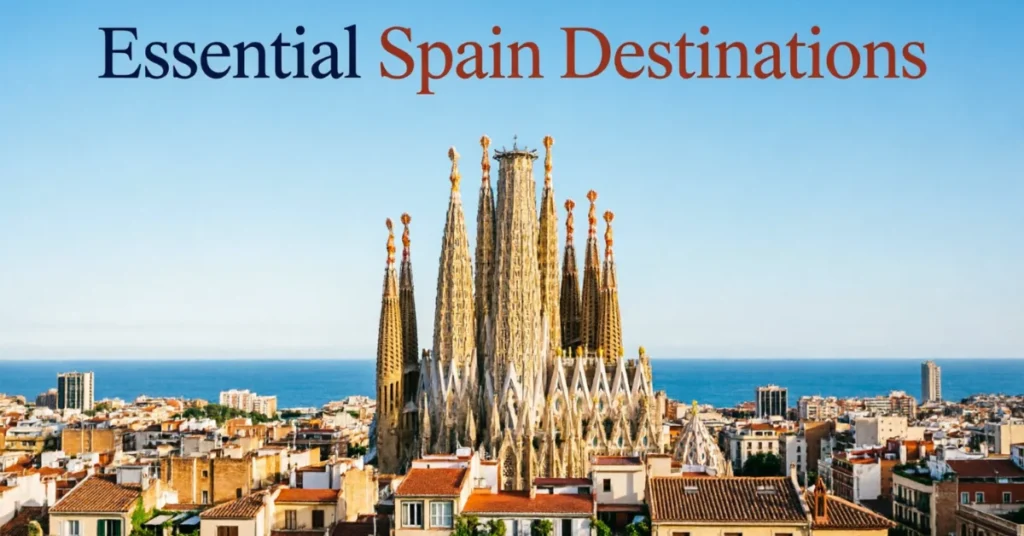
Barcelona in 2026 carries extra weight. The Gaudí Centennial marks a hundred years since the architect’s death, and the Sagrada Família is finally approaching completion on its central towers, a milestone that’s been rumored for two decades and is now, genuinely, close.
Anyone who has walked La Rambla during peak summer knows Barcelona can feel overrun. The fix locals actually use: visit Park Güell and the Gothic Quarter before 9 a.m., then retreat to the beach neighborhoods like Barceloneta once the tour buses arrive. The Modernist route through Passeig de Gràcia (Casa Batlló, Casa Milà) pairs naturally with an afternoon in El Born, where the tapas are better and the prices haven’t caught up to the neighborhood’s popularity yet.
Barcelona is also where Spain’s coastal and cultural identities blur together most naturally. You get world-class architecture and a genuine beach city in the same afternoon, which few European capitals of comparable size can claim.
Seville, Córdoba, and Granada: Andalusia’s Moorish Triangle
If Madrid and Barcelona are Spain’s headline acts, Andalusia is where the country’s history actually lives.
Seville’s Alcázar and its cathedral, the largest Gothic cathedral in the world, sit a short walk from Barrio Santa Cruz, where orange trees line alleys too narrow for cars. Locals here will tell you to time your visit for spring, when the Feria de Abril turns the entire city into a flamenco-soaked celebration, though April and October generally offer the country’s most comfortable travel weather.
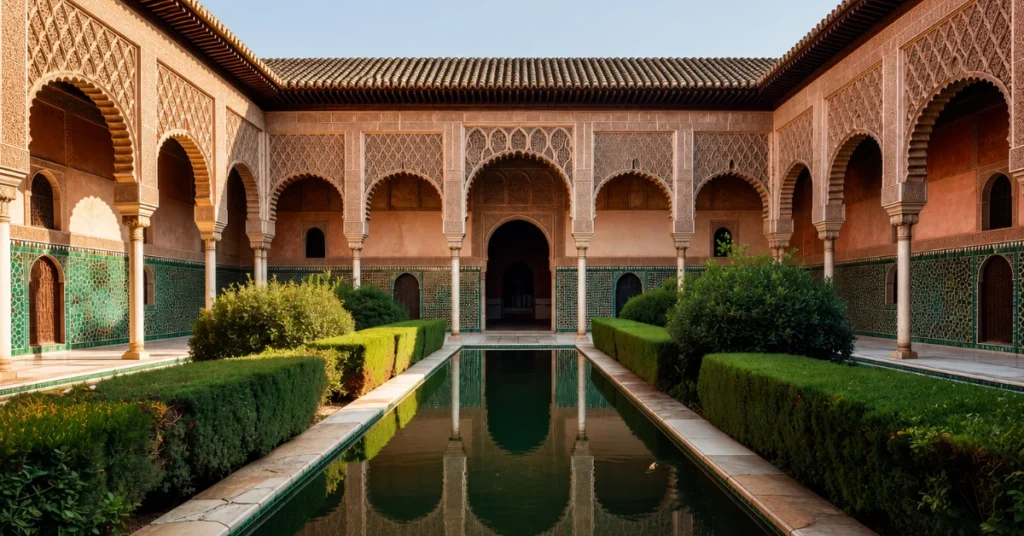
Córdoba’s Mezquita, a mosque-turned-cathedral with its forest of red-and-white striped arches, still stops first-time visitors mid-step. Granada, an hour further, holds the Alhambra. And yes, you need to book that ticket weeks ahead, because it sells out with predictable regularity during high season.
Anyone building an Andalusian leg of their trip should budget at least four days across these three cities. Rushing the triangle means missing the layered history, Roman, Moorish, Christian, that makes this region distinct from anywhere else on the itinerary.
The Basque Country: Where Food Comes First
San Sebastián doesn’t get the same billing as Madrid or Barcelona in most conversations about Spain best travel destinations, but ask anyone who has eaten pintxos along Calle 31 de Agosto and they’ll push back on that ranking immediately.
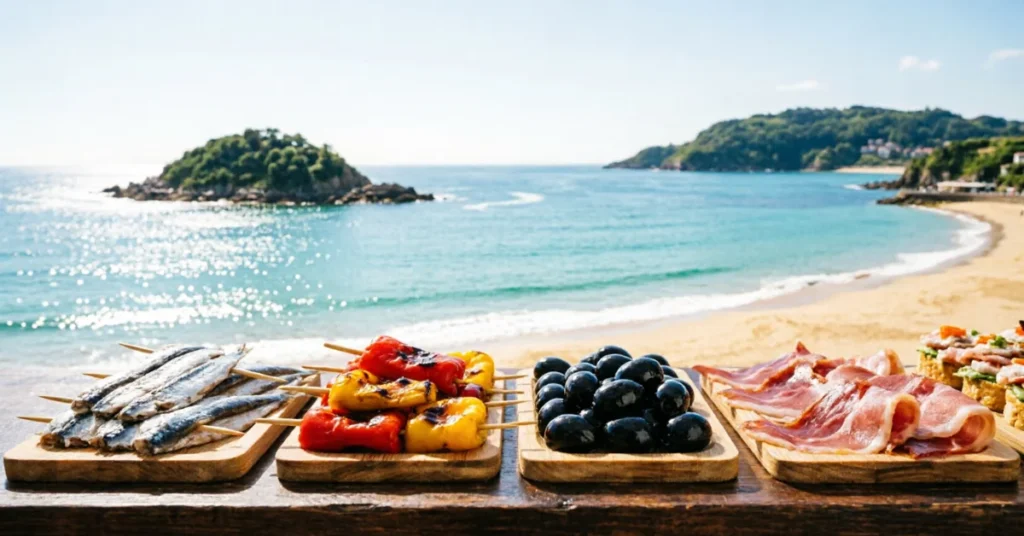
This is Spain’s culinary capital by most informed measures: a small coastal city holding an outsized concentration of Michelin-starred restaurants alongside unpretentious pintxos bars where a euro or two buys a plate that rivals a tasting menu elsewhere. La Concha beach curves through the middle of it all, giving San Sebastián a rare combination: serious food culture and a genuine beach vacation in one stop.
Bilbao, forty minutes away, offers the contrast. The Guggenheim Museum’s titanium curves transformed a former industrial port into a design pilgrimage site, and the Casco Viejo old town still serves the pintxos crawl experience without San Sebastián’s premium prices.
Valencia and the Balearic Islands: Spain’s Coastal Range
Valencia has quietly become a 2026 favorite among travelers who want green space and futuristic architecture without Barcelona’s crowds. The City of Arts and Sciences complex looks like nothing else in Spain, and the surrounding Turia Gardens, a former riverbed converted into a nine-kilometer park, give the city a walkable, livable feel that’s harder to find in the bigger capitals.
Then there’s the Balearic archipelago: Mallorca, Ibiza, Menorca, Formentera. Each island has carved out its own identity. Mallorca balances resort towns with a genuinely dramatic mountain range, the Serra de Tramuntana. Ibiza’s nightlife reputation is real, but the island’s quieter northern coves get overlooked by anyone who only knows it from the club scene. Menorca, smaller and calmer, has become the pick for travelers who want turquoise coves without the crowds.
What’s New for 2026: An Eclipse and a New Entry Rule
Two developments make 2026 an unusually specific year to plan around, and most guides to Spain best travel destinations leave both out.
On August 12, 2026, a total solar eclipse crosses northern Spain, the first total eclipse visible from the mainland since 1905. The path of totality runs through Bilbao, Santander, Valladolid, Burgos, Zaragoza, and Valencia, where the sky will go dark for roughly a minute right around sunset. Madrid and Barcelona sit just outside that path. Both cities will see a 99.9% partial eclipse, which sounds close but skips the corona, the sudden drop in temperature, and the moment of full darkness that only totality delivers. Anyone building a late-summer trip around the eclipse should base themselves in one of the totality cities, not the two biggest ones.
The second change affects entry paperwork rather than sightseeing. ETIAS, a new pre-travel authorization for visa-exempt visitors including travelers from the US, UK, Canada, and Australia, is expected to launch in the last quarter of 2026. It isn’t a visa. It’s a short online form, similar to the US ESTA, required before boarding a flight to Spain or the rest of the Schengen Area. The EU has stressed that no action is needed yet and will announce the exact start date months in advance, but travelers booking a trip for late 2026 or into 2027 should keep an eye on the rollout before finalizing plans.
What the Research Shows
Detailed analysis of recent travel-industry coverage points to a clear pattern: Spain isn’t just holding its tourism appeal into 2026, it’s compounding it. Multiple 2026 destination rankings, including a major European travel-industry poll, placed Spanish cities among the continent’s most sought-after picks, with Madrid taking the top overall spot this year.
Examining regional coverage closely also reveals a shift away from single-city trips. Travel writers increasingly recommend splitting itineraries across at least two regions, a coastal or island stretch paired with an inland cultural base, rather than concentrating an entire trip in one city. That pattern lines up with what repeat visitors already know: Spain best travel destinations rarely means picking just one place.
How to Plan a Trip Around Spain Best Travel Destinations
A typical breakdown for a two-week Spain itinerary looks like this: three or four nights in Madrid or Barcelona as your cultural anchor, three nights in Andalusia for the historical depth, two or three nights in the Basque Country for the food, and the remaining days on the coast or in the Balearics to slow down.
Spain’s high-speed AVE rail network makes this realistic without renting a car for the whole trip. Madrid to Seville runs under three hours. Madrid to Barcelona is roughly the same. Booking these routes a few weeks ahead, rather than the day before, typically saves a noticeable amount on fares.
Travelers on a shorter trip, five to seven days, are usually better served picking one region deeply rather than skimming three cities. A rushed one-night stop in a city like Toledo or Ronda tends to leave visitors with photos but no real sense of the place.
Who Should Prioritize Which Region
Families with young kids generally do best anchoring in Valencia or the Costa del Sol, where beach time and shorter travel days matter more than packing in museums. Solo travelers and couples chasing nightlife and architecture tend to gravitate toward Barcelona and Ibiza. Anyone drawn to history and slower travel, the kind of trip built around long lunches and old churches, usually ends up happiest in Andalusia or the Basque Country.
Budget also shapes the decision. Madrid and Barcelona carry big-city prices for hotels and dining. Andalusian towns and inland Basque Country stretch a travel budget considerably further, while still delivering the food and architecture people come to Spain for in the first place.
Conclusion
Spain doesn’t reward a single formula, and that’s precisely why the question of Spain best travel destinations keeps generating such different answers from different travelers. Madrid gives you the late-night energy and museum depth. Barcelona hands you Gaudí’s unfinished century-long project. Andalusia holds the country’s layered history in the Alhambra and the Mezquita, and the Basque coast quietly runs the best food scene in the country. Pick two or three regions, give each one enough days to breathe, and 2026 is shaping up to be a genuinely good year to do it.
FAQs
What are the best months to visit Spain?
April, May, September, and October generally offer the most comfortable weather: warm enough for the coast, mild enough for walking cities like Madrid and Seville without the peak-summer heat.
How many days do you need to see Spain’s best destinations?
Two weeks allows a realistic multi-region trip. A week is enough for one region done properly: Andalusia, the Basque Coast, or a Barcelona-plus-Balearics combination.
Is it better to rent a car or use trains in Spain?
The AVE high-speed rail network covers major cities efficiently and beats driving for Madrid-Barcelona-Seville routes. A car becomes more useful for exploring smaller Andalusian pueblos or the Basque coastline.
Which Spanish city has the best food scene?
San Sebastián consistently ranks among the top choices, with its pintxos bars and concentration of Michelin-starred restaurants in a compact coastal setting.
Where’s the best place to see the August 2026 total solar eclipse in Spain?
Bilbao, Santander, Valladolid, Burgos, Zaragoza, and Valencia all sit inside the path of totality on August 12, 2026. Madrid and Barcelona will only see a partial eclipse, so travelers chasing full totality should base themselves in one of those six cities instead.