
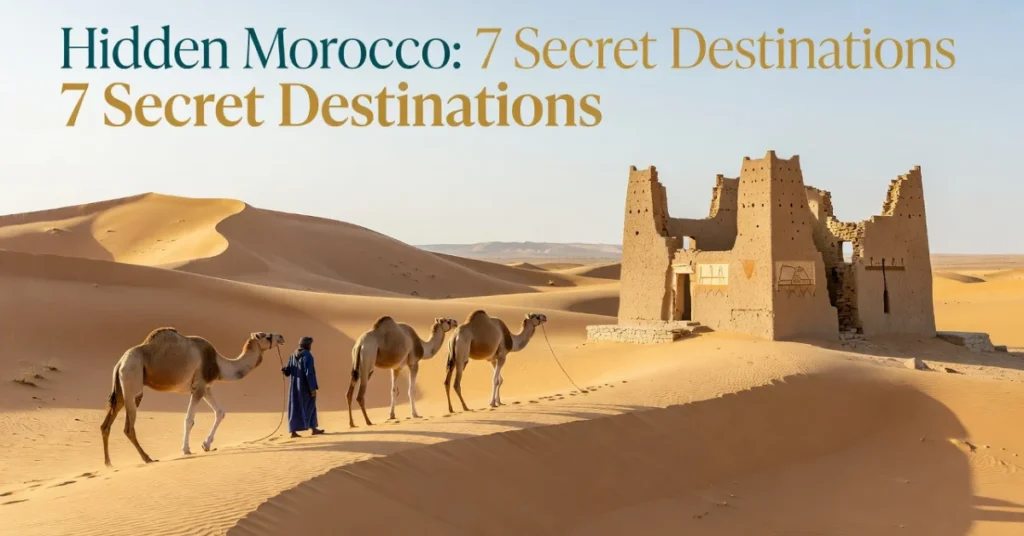
Most people planning a trip to North Africa start with the same three names: Marrakech, Fez, the Sahara. Fair enough — they earn the hype. But the full list of Morocco travel destinations worth your time is longer, stranger, and a lot more rewarding than the postcard version suggests. Morocco was named one of the top ten must-see destinations for 2026 by Travel and Tour World, and Fez in particular is drawing renewed attention thanks to restoration work breathing life back into its medieval medina.
This guide walks through the country’s essential stops, plus the practical details — entry rules, transport, budget, safety — that most destination lists skip entirely.
Morocco Travel Destinations at a Glance
| Destination | Best For | Ideal Stay | How to Get There | Budget Level |
|---|---|---|---|---|
| Marrakech | First-time visitors, souks, nightlife | 3–4 days | Flight into RAK, or Al Boraq/Al Atlas train | Moderate |
| Fez | History, culture, artisan crafts | 2–3 days | Train from Casablanca (~4h) or Marrakech (~7h) | Moderate |
| Chefchaouen | Photography, slow travel | 2 days | Bus from Tangier (~2h) or Fez (~4h) | Budget |
| Sahara Desert (Merzouga) | Desert camps, stargazing | 2–3 days | Overland tour from Marrakech (~10h drive) | Moderate to high |
| Essaouira | Coast, seafood, surfing | 2 days | Bus/Supratours from Marrakech (~3h) | Budget |
| Dades & Todra Gorges | Hiking, road trips, climbing | 1–2 days | Private car or shared grand taxi, en route to desert | Budget to moderate |
| Volubilis & Meknes | Roman ruins, imperial history | 1 day | Day trip from Fez or Meknes | Budget |
Marrakech: Where Everyone Starts, For Good Reason
Djemaa el-Fna square is the beating heart of Marrakech, and by early evening it turns into a genuine spectacle — snake charmers, storytellers, orange juice stalls, and smoke rising off dozens of food carts. The medina wraps around it in a tangle of alleys packed with leather goods, spices, and lantern shops.
Just outside the old walls sits Jardin Majorelle, the cobalt-blue botanical garden once owned by Yves Saint Laurent. It’s small, it’s touristy, and it’s still worth the entry fee for the color palette alone. Anyone who has spent an afternoon wandering Marrakech’s souks knows the trick is to get lost on purpose — the dead ends are usually where the good workshops are.
Fez: Morocco’s Cultural Capital Gets a Second Wind
Fez holds the world’s oldest continuously operating university, and its medina, Fes el-Bali, is one of the largest car-free urban zones on the planet. Restoration projects underway across the old city are part of why Fez keeps showing up on 2026 travel lists — it’s a city actively reinvesting in its own history rather than just preserving it behind glass.
The tanneries are the famous photo op, with their honeycomb of dye pits, but the real texture of Fez shows up in its medersas (Quranic schools), where carved cedar and zellige tilework cover nearly every surface.
Chefchaouen: The Blue City in the Rif Mountains
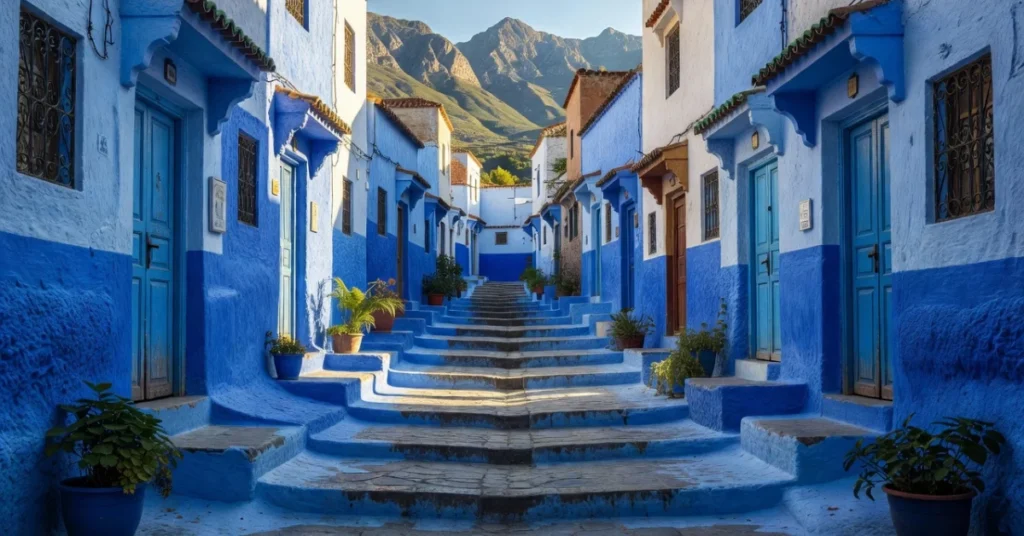
Chefchaouen earns its nickname honestly. Nearly every wall, staircase, and doorway in the old town is painted some shade of blue, and the effect shifts depending on the light — pale and chalky at midday, almost electric right before sunset. It’s smaller and slower-paced than the imperial cities, which makes it a good stop if the pace of Marrakech or Fez starts to wear thin.
The Sahara Desert: Merzouga and Erg Chebbi
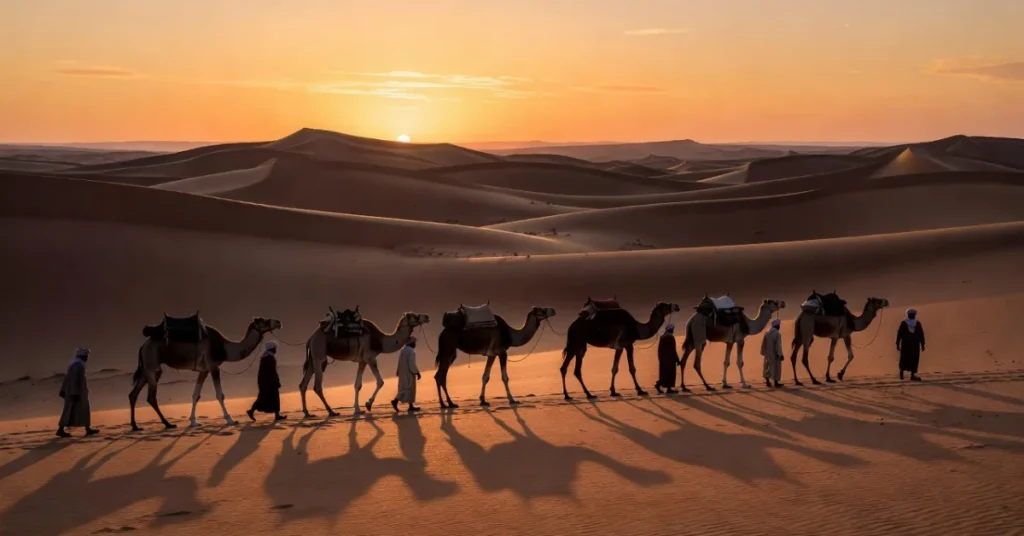
No list of Morocco travel destinations is complete without the dunes. Merzouga sits on the edge of Erg Chebbi, where camel treks lead out to overnight desert camps under skies with almost zero light pollution. It’s roughly a ten-hour drive from Marrakech, and travelers who’ve done both a rushed two-night version and a longer one tend to agree: an extra day in the desert changes the trip more than any other single addition to the itinerary.
Essaouira: The Coast Without the Crowds
While Marrakech gets the tour buses, Essaouira gets the wind, the seafood, and a much calmer version of Morocco’s coastline. This fortified port city has a whitewashed medina, working fishing boats, and a laid-back surf scene thanks to steady Atlantic breezes. It’s an easy day trip from Marrakech but genuinely deserves an overnight stay.
Dades and Todra Gorges: Morocco’s Answer to Canyon Country
Between Marrakech and the desert, the road cuts through the Dades and Todra Gorges — dramatic red-rock canyons carved by rivers running down from the Atlas Mountains. Rock climbers show up for the sheer walls of Todra; everyone else shows up for the scenery on the drive itself, which is part of why most desert-bound itineraries route through here rather than around it.
Volubilis and Meknes: Morocco’s Roman and Imperial Past
Volubilis holds the best-preserved Roman ruins in North Africa, with mosaic floors still visible in the open air. Pair it with nearby Meknes, one of Morocco’s four imperial cities, and you get a quieter, less-crowded alternative to Fez that still delivers serious historical weight.
Entry Requirements: What You Actually Need to Know
This is the part most destination guides skip, and it changes how far in advance you need to plan. Travelers from the US, UK, EU/Schengen countries, Canada, and Australia can enter Morocco visa-free for stays of up to 90 days — no advance application, just a passport valid for at least six months beyond your travel dates. You’ll fill out a basic arrival card on the plane or at the border, and that’s it for most Western travelers.
Not every nationality qualifies for visa-free entry, so it’s worth checking your specific passport against Morocco’s current entry list before booking flights, since rules can differ by country and occasionally shift.
Getting Around: Trains, Buses, and the Routes With No Rail at All
Morocco’s rail network, run by ONCF, connects the main northern and central cities well. The Al Boraq high-speed train covers Tangier to Casablanca in a little over two hours, and conventional Al Atlas trains link Casablanca to Marrakech (roughly 2h40) and Fez (around 4 hours from Casablanca).
Here’s the gap most guides don’t mention: several of the country’s best-loved destinations have no train service at all. Chefchaouen, Essaouira, the Dades and Todra Gorges, and the Sahara desert camps all require a bus, shared grand taxi, private driver, or organized tour to reach. Supratours buses (an ONCF subsidiary) run from Marrakech to Essaouira in about three hours for roughly 100 dirhams, and a similar bus link connects Tangier to Chefchaouen in around two hours. Anyone building an itinerary around trains alone will find themselves stuck once they leave the main north-south corridor.
Packing Notes for Two Very Different Climates
Morocco’s regions swing hard between climates, and packing for one destination rarely covers another. The Sahara drops sharply in temperature after sunset even in warmer months, so a proper layer for desert nights matters more than most people expect. The Atlas Mountains and Chefchaouen, by contrast, call for sturdier footwear and a rain layer outside the summer months, since mountain weather shifts fast. Coastal Essaouira stays windy year-round, which catches first-time visitors off guard if they’ve packed only for desert heat.
A Note on Solo and Female Travel
Morocco is a common solo and female-travel destination, and most visitors move through the main cities without incident. Standard precautions apply, the same way they would in any busy tourist city: dressing modestly in more conservative areas, being firm but polite when declining unsolicited guide offers in the medinas, and booking accommodation and transport through reputable operators rather than street arrangements. Those who travel through Morocco solo consistently mention that the medinas feel more intense on arrival than after a day or two of getting oriented.
What the Research Shows
Detailed analysis of Morocco’s current tourism landscape shows a shift away from single-city visits toward multi-region itineraries that mix imperial cities, coastline, and desert in one trip. Industry coverage heading into 2026 points to Fez specifically as a rising destination, driven by active restoration of its historic core rather than a new attraction opening. Long-form traveler accounts of extended Morocco trips consistently mention the same pattern: people who plan for a week end up wishing they’d built in more time, because the country’s regions feel more distinct from each other than first-time visitors expect.
Planning Notes for Different Kinds of Travelers
- First-time visitors: Stick to a loop connecting Marrakech, the Atlas Mountains, and the Sahara — it hits the highlights without excessive backtracking.
- Repeat visitors: Chefchaouen, Essaouira, and the northern cities like Tangier and Tetouan offer a different pace and fewer crowds.
- Families: Riad-style accommodation in Marrakech or Fez, both of which have calmer courtyard settings than a standard hotel.
- Budget travelers: Shared buses (CTM or Supratours) and second-class train travel between major cities keep costs down without sacrificing much comfort.
- Rail-only travelers: Build your route around Tangier, Casablanca, Rabat, Marrakech, and Fez — anything beyond that spine needs a bus or driver.
Final Word on Morocco Travel Destinations
Morocco rewards travelers who go beyond the three-city checklist. The full range of Morocco travel destinations — imperial cities, blue-washed mountain towns, Atlantic coastline, canyon roads, and the Sahara itself — gives the country a variety that’s hard to match in a single trip. Whether the plan is a tight week or a slow month, building in time for at least one place outside the usual circuit, and planning transport around the gaps in the rail network, tends to be what travelers remember most.
FAQs
What is the best time of year to visit Morocco?
Spring (March–May) and fall (September–November) offer the most comfortable temperatures across the country’s varied regions, from coastal cities to the desert.
How many days do you need to see Morocco’s main destinations?
Ten to fourteen days allows a reasonable loop covering Marrakech, the Atlas Mountains, the Sahara, and either Fez or the coast. A week works for a more focused trip.
Do US, UK, and EU citizens need a visa for Morocco?
No. Citizens of the US, UK, EU/Schengen countries, Canada, and Australia can enter visa-free for up to 90 days with a passport valid at least six months beyond their travel dates.
Can you reach every major destination by train?
No. Morocco’s train network covers the north-south spine well (Tangier, Casablanca, Rabat, Marrakech, Fez), but Chefchaouen, Essaouira, the gorges, and the Sahara all require a bus, taxi, or driver.
Which Moroccan city is best for first-time visitors?
Marrakech is the most common starting point thanks to its international airport, wide range of accommodation, and easy access to day trips into the Atlas Mountains.