
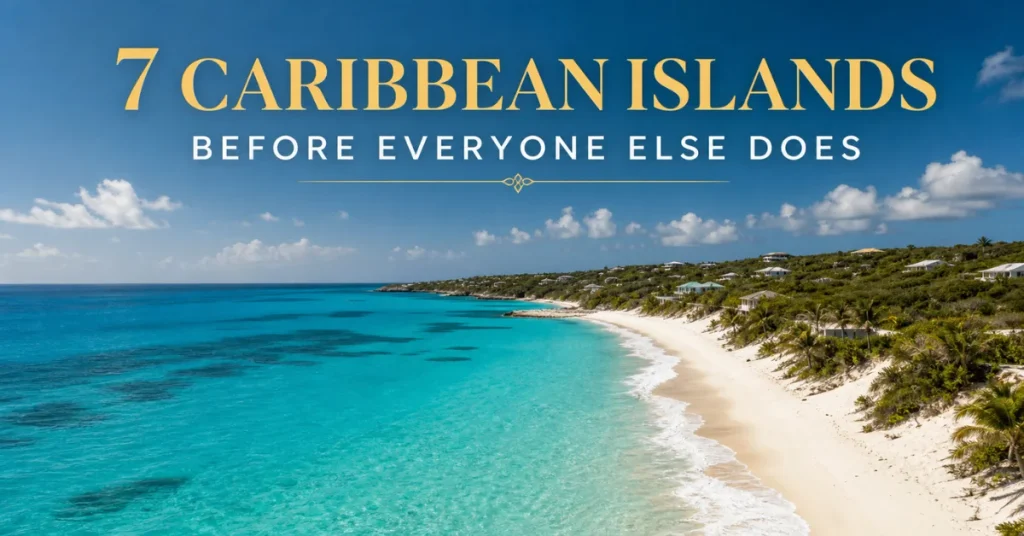
Stand on Shoal Bay at seven in the morning, before the beach chairs go out, and you’ll understand why so many travelers spend the whole year narrowing down their list of caribbean islands to visit. The water sits somewhere between glass and turquoise, the sand hasn’t been raked yet, and there’s a good chance you’ll have three hundred meters of coastline entirely to yourself. That kind of morning is exactly why the region keeps pulling in record numbers of visitors, even as the list of options gets longer and harder to sort through every year.
Picking the right island isn’t really about finding “the best” one. It’s about matching a specific island’s personality to what you actually want out of the trip. A honeymooner chasing quiet coves needs a completely different island than a family of five looking for an all-inclusive resort with a kids’ club. This guide breaks both groups down, along with everyone in between.
The Best Caribbean Islands to Visit Right Now
A handful of islands are pulling ahead of the pack heading into 2026, and it’s worth knowing why before you book anything.
Anguilla gets underrated by first-time researchers because it looks flat and unremarkable on a map. On the ground, it’s a different story entirely. Shoal Bay East, Meads Bay, and Rendezvous Bay deliver some of the calmest water and whitest sand in the entire region, and because the island keeps visitor numbers deliberately low through limited flight capacity, the crowds never really show up. Locals here will tell you the food scene, built around beach shacks serving grilled lobster and rum punch, rivals anything on a bigger island with ten times the tourism budget.
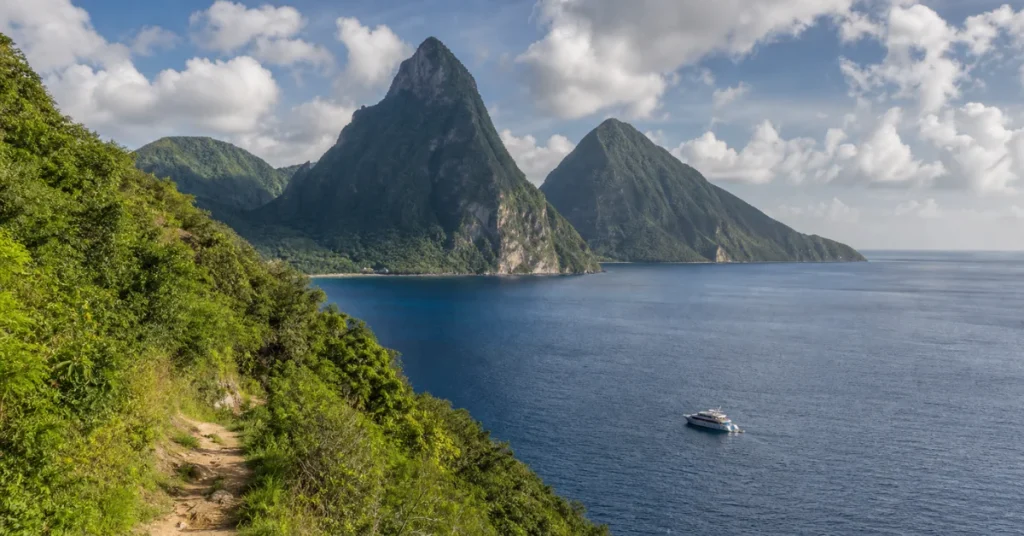
Saint Lucia earns its spot for one simple reason: variety. The Pitons, two volcanic peaks rising straight out of the sea, are the postcard image everyone recognizes. But hike Gros Piton and you’ll find rainforest trails, a drive-in volcano at Soufrière, and mineral mud baths that most visitors never plan for until they’re already there. One look at the Pitons from a boat and it becomes clear why this island keeps landing on nearly every serious shortlist of caribbean islands to visit.
Jamaica has been rebuilding parts of its south coast after storm damage, but the north coast corridor between Montego Bay and Ocho Rios never slowed down. Round Hill and the villa communities above Ocho Rios represent some of the oldest, most architecturally distinctive rental properties anywhere in the region, and resorts in Negril and Ocho Rios are running at full capacity again.
Turks and Caicos recently topped a widely followed reader-voted ranking of the world’s best islands, beating out competitors across the globe, not just the Caribbean. Grace Bay’s sandbar-soft beach and calm, shallow water explain the appeal in about four seconds flat.
Curaçao and Barbados round out the group for travelers who want dependable weather outside the main storm corridor. Curaçao brings electric-blue water and colorful Dutch colonial architecture in Willemstad. Barbados crossed one million annual visitors for the first time in its history this past year, a milestone its tourism sector is still talking about.
What the 2025 Arrival Numbers Reveal
Regional tourism data released in early 2026 shows the Caribbean welcomed an estimated 35 million international stay-over visitors in 2025, a 2.5% increase over the previous year and roughly 900,000 more travelers than 2024. Cruise arrivals hit a separate record of 35.5 million visits, up more than 16% from pre-pandemic 2019 levels. Every single month of 2025 outperformed its 2019 equivalent, which tells you the recovery period is fully over. This isn’t a region climbing back to where it used to be. It’s a region setting new records.
The pattern professionals in the tourism sector keep pointing to: growth isn’t even across the map. Guyana, Dominica, and Curaçao posted strong gains last year, while some higher-cost destinations saw softer numbers as travelers hunted for value. That matters if you’re picking a destination based on price. The islands getting the most buzz aren’t always the ones offering the best deal.
One trend worth flagging separately: South American visitor numbers to the Caribbean jumped nearly 24% in 2025, reaching 2.4 million arrivals, largely on the back of new flight routes and targeted marketing pushes. For years, Caribbean tourism coverage has treated this as a US and European story almost exclusively. That’s no longer the full picture.
Price also splits sharply by island tier. Ultra-luxury markets like St. Barts and Anguilla command daily rates well above the regional average, while destinations like the Dominican Republic and Jamaica stay far more accessible for the same week-long trip. Anyone budgeting a Caribbean vacation should treat “Caribbean” less as one price category and more as a spectrum running from backpacker-friendly to genuinely exclusive.
Caribbean Island Comparison at a Glance
Here’s a quick side-by-side for narrowing things down fast:
| Island | Best For | Hurricane Risk | Price Tier | Overall Vibe |
|---|---|---|---|---|
| Anguilla | Honeymoons, quiet beaches | Moderate (in belt) | High-end | Understated luxury |
| Saint Lucia | Adventure, scenery, couples | Moderate (in belt) | Mid to high | Dramatic and varied |
| Jamaica | Villas, nightlife, culture | Moderate (in belt) | Budget to mid | Lively and social |
| Turks and Caicos | Families, first-timers | Moderate (in belt) | High-end | Polished and easy |
| Curaçao | Diving, dependable weather | Low (outside belt) | Mid-range | Colorful, laid-back |
| Barbados | Food, culture, safe summer travel | Low (outside belt) | Mid to high | Warm and welcoming |
| Dominica | Hiking, rainforest, solitude | Moderate (in belt) | Budget-friendly | Wild and untouched |
| Bequia | Total escape, no resorts | Moderate (in belt) | Budget-friendly | Sleepy and authentic |
When to Time a Trip to the Caribbean
Hurricane season runs officially from June 1 through November 30, with the highest risk window sitting between mid-August and mid-October. December through April delivers the most reliable sunshine and the lowest rainfall, which is exactly why it’s also the most expensive and crowded stretch of the calendar.
Here’s the smarter play for anyone flexible on dates:
- May, June, and November offer a genuine shoulder-season sweet spot: good weather, lower prices, and hurricane risk that’s still fairly low.
- The southern Caribbean, meaning Aruba, Bonaire, Curaçao, Barbados, and Trinidad and Tobago, sits largely outside the traditional hurricane belt, so summer travel there carries far less risk than a trip to Jamaica or the Bahamas during the same window.
- Storm forecasts for 2026 currently point toward a quieter-than-average season, driven by developing ocean conditions in the Pacific, though that’s never a guarantee worth betting a non-refundable trip on.
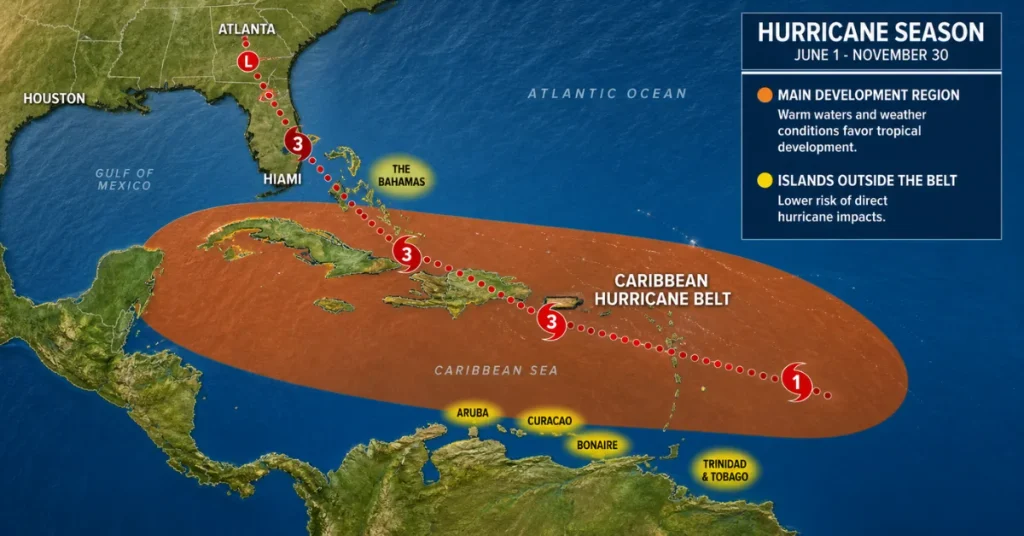
Anyone who has managed a Caribbean trip through peak hurricane season knows travel insurance isn’t optional at that point. It’s the difference between a rebooked flight and a canceled vacation with no refund.
2026 Festival Calendar Worth Planning Around
Timing a trip around a festival can turn a good vacation into a genuinely memorable one, and most travelers researching caribbean islands to visit never think to check the calendar first.
- February onward: Carnival season kicks off early in Trinidad and Tobago and Dominica, with colorful parades and street parties running for weeks.
- April 8 to 14, 2026: Jamaica Carnival brings costumed street parades and soca music to Kingston.
- July 29 to August 4, 2026: Barbados hosts Crop Over, one of the region’s biggest and longest-running summer festivals.
- August 5 to 12, 2026: Grenada follows immediately after with Spicemas.
Booking a room during any of these windows means reserving months ahead. Prices climb fast, and the best guesthouses fill first.
Caribbean Islands to Visit If You Want to Skip the Crowds
Not every trip needs Grace Bay or the Pitons. Some of the most rewarding caribbean islands to visit sit well off the main tourist circuit, and they reward travelers who don’t need a swim-up bar to have a good time.
Bequia, part of Saint Vincent and the Grenadines, is the kind of island where the harbor still smells like fresh-caught fish at dawn and there isn’t a single resort chain in sight. Dominica skips the beaches almost entirely in favor of waterfalls, boiling lakes, and hiking through some of the last untouched rainforest in the region. Both islands posted noticeably strong visitor growth over the past year, a sign that more travelers are actively searching for exactly this kind of quiet, undeveloped alternative.
Who Each Island Actually Suits
Not every island fits every traveler, and pretending otherwise wastes everyone’s money. Beyond the comparison table above, a few quick notes:
- Families with young kids tend to do best on Turks and Caicos or the Bahamas, both built around calm, shallow water and established resort infrastructure.
- Honeymooners usually gravitate toward Saint Lucia or Anguilla, for the scenery and the privacy.
- Adventure travelers should look at Dominica or Saint Lucia’s interior, for hiking, volcanoes, and rainforest.
- Budget-conscious travelers generally find better value in the Dominican Republic or Jamaica, where flight and resort prices stay lower than the ultra-luxury islands.
- Travelers avoiding hurricane risk in summer are safest heading to Aruba, Bonaire, Curaçao, or Barbados.
Picking from this list isn’t so different from choosing a wine for dinner. The “best” bottle depends entirely on what’s actually being served, not on which label has the fanciest name.
Where the Trip Can Go Wrong
Even a well-planned trip runs into friction. Airlift remains limited to some smaller islands, meaning connecting flights and higher fares. Peak season crowding on the most famous beaches can undercut the exact experience travelers are chasing. And storm season risk, while manageable with insurance and flexible planning, is real enough that it shouldn’t get ignored just because a flight deal looks good in July.
None of that cancels out the appeal. It just means the research stage matters as much as the booking stage.
Final Take
Choosing among the best caribbean islands to visit really comes down to three questions: what kind of experience do you want, how much crowd tolerance do you have, and when can you actually travel. Anguilla and Bequia reward the traveler chasing quiet. Turks and Caicos and the Bahamas reward the traveler who wants polish and predictability. Saint Lucia and Dominica reward anyone who wants more than a beach chair out of the trip. Whichever direction you go, timing the visit around the shoulder months, checking the festival calendar, and staying flexible around storm season will do more for your trip than almost any other single decision.
FAQs
What are the safest Caribbean islands during hurricane season?
Aruba, Bonaire, Curaçao, Barbados, and Trinidad and Tobago sit largely outside the main hurricane belt, making them lower-risk options for summer and early fall travel.
Which Caribbean island is best for a first-time visitor?
Turks and Caicos and Saint Lucia both work well for first-timers thanks to established infrastructure, direct flights from major hubs, and a wide range of accommodation styles.
Is it cheaper to visit the Caribbean during hurricane season?
Yes, generally. Flight and hotel prices drop noticeably between June and November, though travelers should factor in the added cost of travel insurance.
How many days do you need to properly visit a Caribbean island?
Five to seven days works well for most islands, giving enough time for beach days plus at least one or two excursions like hiking, snorkeling, or a boat trip.
Are Caribbean islands busier than they were before the pandemic?
Yes. Every month of 2025 outperformed its 2019 equivalent, and total visitor numbers have hit record highs for the region.