
I once got off a train at a station in Umbria because the town on the hill above it looked prettier than the one I’d actually booked. That kind of detour is exactly why so many travelers now search for the best small towns to visit in Italy instead of just booking another night in Florence. The country’s big three cities are wonderful, but the real texture of Italian life often shows up somewhere with a population under five thousand, a single espresso bar, and no tour buses in sight.
This isn’t a list built from a desk in another country. It’s built from towns that have actually earned their reputation, region by region, with the kind of detail a rushed itinerary usually skips.
What Counts as One of the Best Small Towns to Visit in Italy
Not every pretty village makes the cut, and that’s the point. Italy has a formal association called I Borghi più belli d’Italia, founded in 2001 under the country’s national association of municipalities. To join, a town generally needs to stay under a population cap, keep its historic architectural character intact, and pass a review process before it can use the certification. More than 350 villages currently hold that status.
That certification matters for travelers because it filters out places that look charming in a single photo but offer little once you’re standing in the piazza. A town on the list has usually kept its stonework, its street plan, and its slower pace on purpose, not by accident of being overlooked.
Anyone who has chased these certifications across a few regions knows the pattern: smaller usually means more intact, not less interesting.
Nine Towns Worth the Detour
Here are nine strong answers to the question of the best small towns to visit in Italy right now, picked for what they give visitors beyond a good photo.
Dozza, Emilia-Romagna. A hilltop town near Bologna where local artists have painted building facades into an open-air gallery. Wander the walls, then sit down for the region’s wine, and the whole place feels more like a working studio than a museum piece.
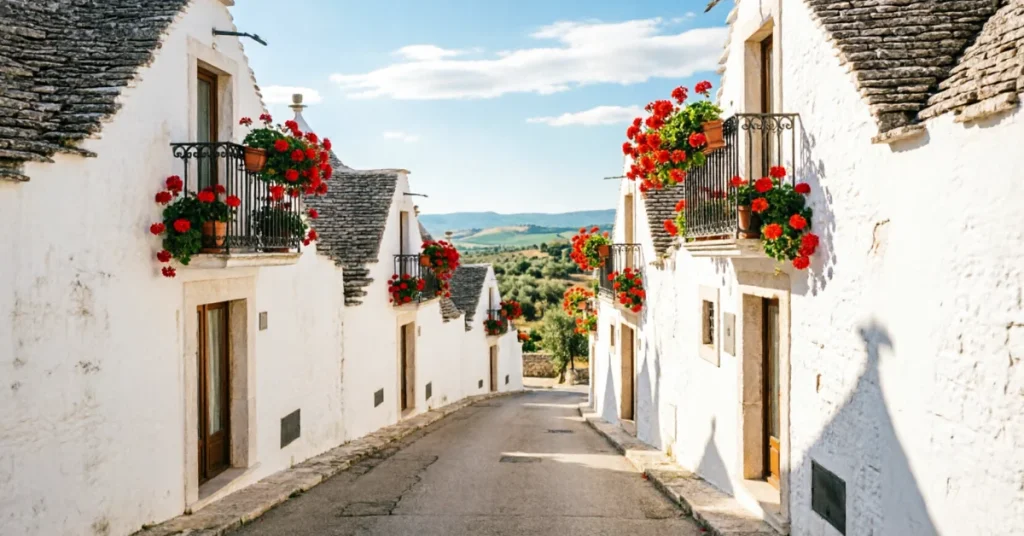
Locorotondo, Puglia. Its name literally means “round place,” describing the circular layout of the historic center. Whitewashed houses and flower-covered balconies overlook the Itria Valley, and it draws far less foot traffic than nearby Alberobello despite being just as striking.
Castelmezzano, Basilicata. This is southern Italy at its most dramatic, tucked into cliffs that most visitors never see. The “Volo dell’Angelo” zip line connects it to neighboring Pietrapertosa, and locals here will tell you the view mid-flight beats any photograph.
Erice, Sicily. Perched high above Trapani behind medieval stone walls, Erice stays noticeably cooler than the coast below in summer. Narrow cobbled lanes lead to a Norman castle and pastry shops that have been making the same almond sweets for generations.
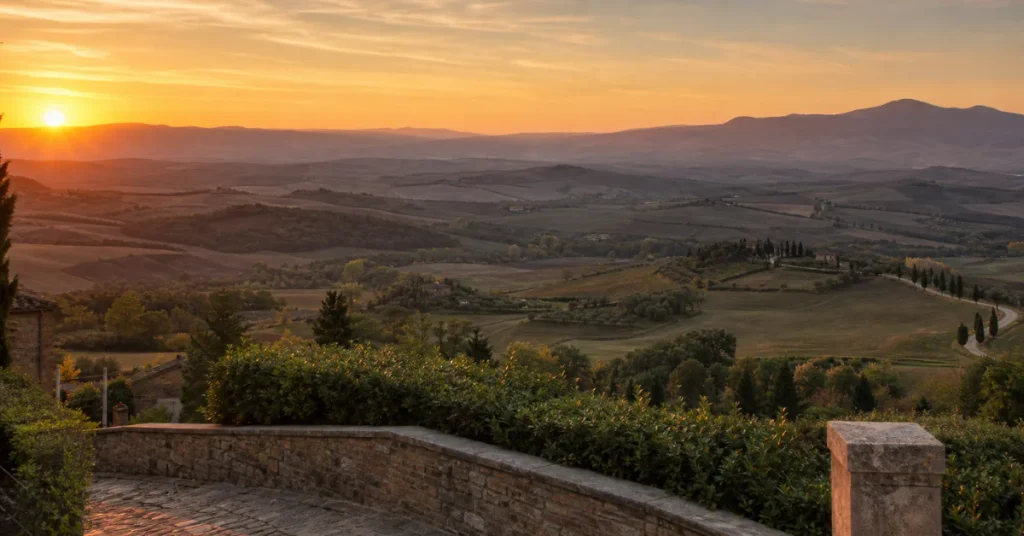
Pienza, Tuscany. Pope Pius II redesigned this town in the fifteenth century as a Renaissance ideal, and it still reads that way today. Walk the Via dell’Amore at sunset for a view of the Val d’Orcia that looks staged, then track down the local Pecorino, which is the reason half the visitors show up in the first place.
Pitigliano, Tuscany. Carved directly into a cliff of volcanic rock, Pitigliano carries a deep Jewish history, including a synagogue and kosher cellars cut straight into the stone. It’s one of the few towns on this list where the architecture and the history are genuinely inseparable.
Spello, Umbria. Locals compete every June to decorate their stone balconies with geraniums for the Infiorate festival, when entire streets are carpeted in flower petals. Visit outside the festival and it’s still one of the most photogenic towns in the country.
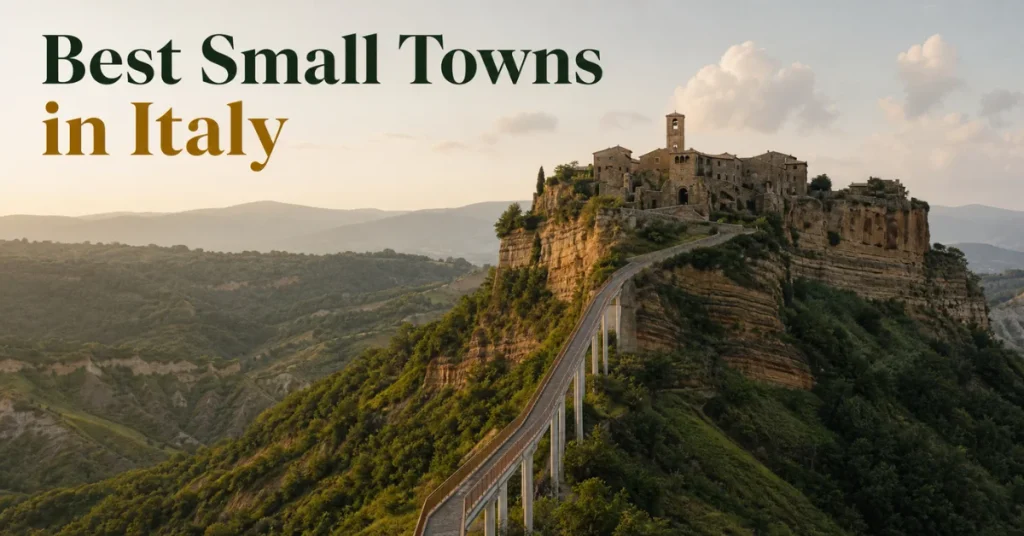
Civita di Bagnoregio, Lazio. Reachable only by a long pedestrian bridge, this town sits on a crumbling plateau of volcanic tuff that’s slowly eroding away. A small entry fee funds the engineering work keeping it standing, and one look at the bridge makes it obvious why locals nicknamed it “the dying town.”
Portofino, Liguria. The most photographed harbor in the country, ringed by pastel buildings and quiet coastal paths. It gets busier than the others on this list, but arrive early and the marina still belongs to fishermen for an hour or two before the crowds show up.
Quick Comparison: Nine Towns at a Glance
| Town | Region | Best For | Ideal Season | Car Needed? |
|---|---|---|---|---|
| Dozza | Emilia-Romagna | Street art and local wine | Spring to summer | Optional |
| Locorotondo | Puglia | Whitewashed lanes and valley views | Spring to autumn | Helpful |
| Castelmezzano | Basilicata | Cliffside drama and zip-lining | Late spring to early autumn | Yes |
| Erice | Sicily | Medieval walls and sea views | Spring | Optional |
| Pienza | Tuscany | Renaissance architecture and Pecorino | Spring to autumn | Yes |
| Pitigliano | Tuscany | Jewish heritage and cliffside carving | Spring to autumn | Yes |
| Spello | Umbria | Flower festival and photogenic streets | June, for the festival | Optional |
| Civita di Bagnoregio | Lazio | The crumbling plateau and footbridge | Spring to autumn | Optional |
| Portofino | Liguria | Harbor views and coastal walks | Spring to early summer | Optional |
What’s New on the List for 2026
The certification list isn’t frozen in time, and that matters for anyone planning ahead. In December 2025, the association reviewed twenty-one candidate villages and admitted seven: five as full members and two under a newer “guest village” category, reserved for historic districts inside larger towns that would otherwise exceed the population cap. That round brought the total network to 382 certified locations.
Admission isn’t automatic. Each candidate is measured against a detailed 72-point checklist covering building preservation, how well the townscape sits within its landscape, sustainable development, hospitality quality, and how seriously the community protects its own traditions. One of the new 2026 entries, a historic district in Piedmont’s Biella, made the list as a guest village precisely because its wider municipality is too large to qualify on its own, while its old quarter still meets every other requirement.
The practical upside for travelers is worth knowing. Villages that earn certification tend to see tourist numbers climb by roughly eight percent a year on average in the years that follow, without losing the character that got them certified in the first place. That’s the trade-off worth watching heading into 2027: more attention on these towns, but usually still well short of anything resembling a crowd.
Why Small Towns Are Outpacing the Big Three Right Now
What the Research Shows
Recent tourism research covering 2026 points to well over 21 million visitors heading toward Italy’s smaller municipalities this year, a sharp jump tied to travelers actively searching for alternatives to Rome, Florence, and Venice. That research tracked the most-searched small towns in every region, all with populations under ten thousand, and the pattern was consistent: interest in slower, quieter destinations has grown steadily since 2023.
Anyone who has managed a summer trip through Tuscany knows why. Prices in small towns run noticeably lower than in the major cities, restaurant tables don’t require a reservation made weeks ahead, and a single afternoon can cover the whole historic center without feeling rushed. That’s not a marketing claim. It’s what actually happens once the crowds thin out.
There’s also a cultural upside that doesn’t show up in booking data. Festivals, food traditions, and dialects survive more visibly in places that haven’t bent to tourism. Spello’s flower festival or Pitigliano’s Jewish heritage sites exist because the towns kept their own rhythm instead of remaking themselves for visitors.
That pattern holds whether you’re weighing the best small towns to visit in Italy for a long weekend or a two-week loop through several regions.
How to Plan a Trip Around the Best Small Towns to Visit in Italy
Getting this right takes a bit more planning than booking a hotel in Rome, but it isn’t complicated once you see how the pieces fit together.
Pick a base region, not a single town. Most of these places are best visited as a cluster. Tuscany alone lets you cover Pienza and Pitigliano in the same loop, while a Puglia trip can string together Locorotondo with several nearby borghi in a single day.
Rent a car if you can. Trains reach many hill towns, but the last stretch often means a bus or taxi up a steep incline. A car removes that friction entirely and lets you catch the smaller places between the famous ones.
Travelers without a car aren’t left out. Regional buses connect most certified borghi to the nearest train station, and several tour operators now run small-group day trips specifically built around these towns, which solves the last-mile problem for anyone who’d rather not drive on narrow mountain roads.
Time it for shoulder season. Late spring and early autumn hit the sweet spot: warm enough to enjoy the views, cool enough to walk uphill without regret, and well short of the July crowds that hit even quieter destinations.
Families should budget slower days. Cobblestones and hill climbs aren’t stroller-friendly, so plan shorter stops with a home base that has flat ground nearby, and treat each town as a half-day outing rather than a full itinerary.
Book accommodation inside the walls when you can. Staying within the historic center, rather than in a modern hotel outside it, changes the whole experience. Mornings before the day-trippers arrive are often the best part of visiting any of these towns.
What to Expect in 2026 and Beyond
This move toward smaller destinations isn’t a passing trend. Local governments across several regions have started funding restoration projects specifically to keep certified borghi inhabited, since population decline has been a real threat in places like Civita di Bagnoregio for decades. Tourism revenue, used carefully, is becoming part of how these towns stay standing at all.
That’s worth keeping in mind while planning a trip. Visiting responsibly, spending in local shops rather than only at chain hotels, and spreading a trip across several towns instead of overwhelming one, helps keep this kind of travel sustainable for the people who actually live there.
Conclusion
Choosing among the best small towns to visit in Italy comes down to what kind of quiet you’re after: painted walls in Emilia-Romagna, cliffside drama in Basilicata, or a crumbling plateau in Lazio that might not look the same in another generation. Whichever region pulls you in, the reward is the same one I found stepping off that train in Umbria: a town that never asked to be famous, and is better for it.
FAQs
What is the best time of year to visit small towns in Italy?
Late April through June and September through October offer the most comfortable weather and noticeably smaller crowds than peak summer.
Do I need a car to visit these towns?
It helps, especially for hilltop towns with limited train access, but regional buses and organized day trips make most of these destinations reachable without driving.
How many small towns can I realistically see in one trip?
Three to five towns across five to seven days is a comfortable pace that avoids constant packing and unpacking.
What’s a good starting list of the best small towns to visit in Italy for first-timers?
Pienza, Spello, and Locorotondo are gentle introductions since all three are compact, walkable, and reachable without a long detour off the main routes.
Are small Italian towns expensive to visit?
Generally no. Accommodation, food, and local experiences typically cost less than in Rome, Florence, or Venice, especially outside peak summer months.
Is Civita di Bagnoregio worth the entry fee?
Most visitors say yes. The fee funds the engineering work keeping the town’s crumbling plateau intact, and the view from the pedestrian bridge alone justifies the stop.