
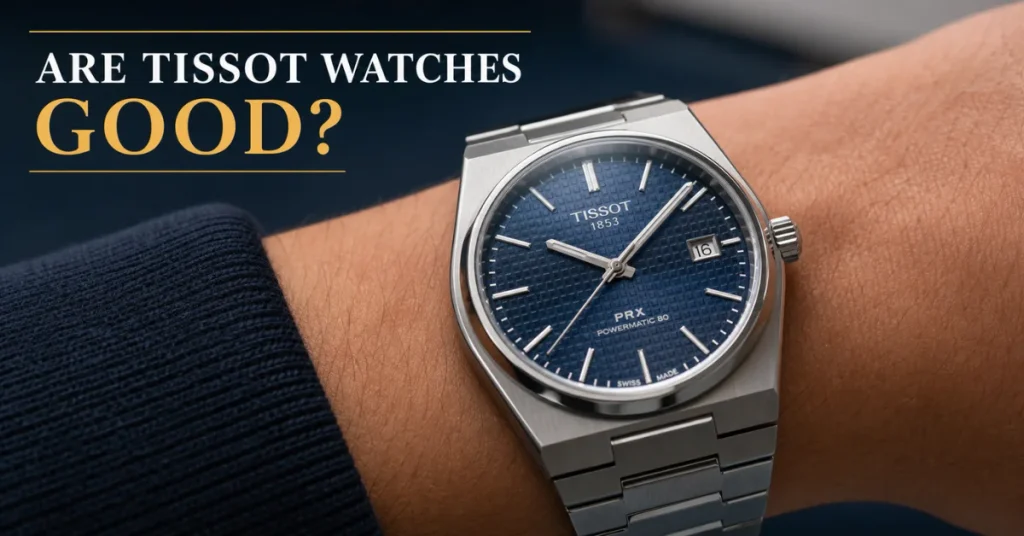
So you’re standing in a jewelry counter, or scrolling a listing at 1 a.m., and the question won’t leave you alone: are Tissot watches good, or is this just a Swiss-sounding name with a marked-up price tag? It’s a fair thing to wonder. Tissot sits in a strange middle zone of the watch world, priced above fashion brands but nowhere near Rolex territory, and that in-between spot makes people suspicious.
Here’s the short version before we get into the weeds. Yes, Tissot makes genuinely good watches for what they cost, and the brand has earned that reputation over more than 170 years. But “good” depends entirely on what you’re comparing it against, and on which collection you’re actually looking at.
So, Are Tissot Watches Good? The Short Answer
If you’re comparing Tissot to a $50 quartz fashion watch, it wins easily. Real Swiss components, in-house design work, and movements built by ETA SA, a subsidiary of the Swatch Group and the largest manufacturer of Swiss watch movements, sit inside most Tissot pieces.
If you’re comparing it to a Rolex or Omega, that’s a different conversation entirely. Tissot isn’t trying to be a luxury flagship. It’s positioned as accessible Swiss horology, and it does that job well.
Anyone who has shopped for a first “real” watch knows this exact dilemma. You want something that feels legitimate without needing a second mortgage.
Where Tissot Watches Actually Come From
Tissot was founded in 1853 in Le Locle, Switzerland, by the father-son team of Charles-Félicien Tissot and Charles-Émile Tissot. That’s not a marketing footnote. It’s over a century and a half of continuous watchmaking, through world wars, quartz crises, and every industry shakeup in between.
The brand joined the Swatch Group in 1983, which changed how it operates but not where it sits in the market. Under that ownership umbrella, Tissot shares engineering resources with far pricier siblings, which is part of why people keep asking whether Tissot watches are good value rather than just good-looking.
One detail worth knowing: the Swatch Group also owns Omega, Longines, Rado, Breguet, and several other Swiss names. Tissot doesn’t inherit Omega’s price tag, but it does inherit a lot of the same manufacturing discipline.
What’s Inside: Movements, Power Reserve, and Build Quality
This is where the “are Tissot watches good” question actually gets answered. Most mechanical and automatic Tissot models run on ETA-supplied movements, the same family found across a huge slice of the Swiss watch industry. That’s not a downgrade. It’s a proven, serviceable engine that watchmakers worldwide can repair for decades.
Here’s the part a lot of comparison articles skip entirely. Tissot’s own Powermatic 80 caliber, built on the ETA 2824-2 base, stretches the standard power reserve from roughly 42 hours up to approximately 80 hours, running at 21,600 vibrations per hour with 25 jewels. In plain terms, you can take the watch off Friday evening and it’ll still be keeping time Monday morning without a single wind.
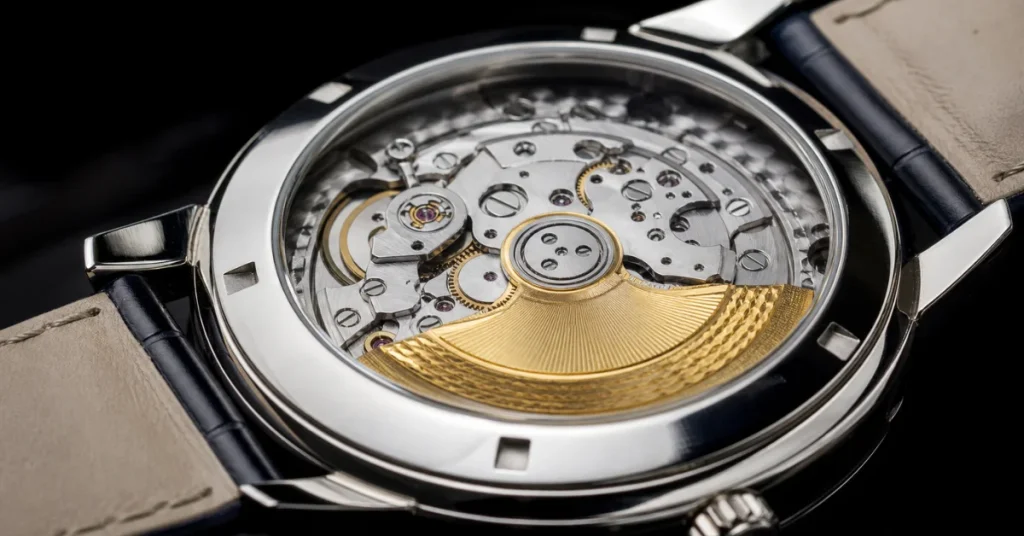
Sapphire crystal appears on most mid-tier and higher models, resisting scratches far better than mineral glass. And Tissot backs most of its lineup with a two-year international warranty, which matters if something ever needs repair.
Tissot also has a track record in precision. In 2011, the Le Locle model took first prize in the International Timing Competition, scoring 764 out of 1,000 for accuracy, well ahead of the runner-up. That’s not a fluke. It reflects quality control the brand doesn’t shout about nearly enough.
Tissot Collections Compared
Not every Tissot is built the same way, and this is where a lot of buyers get confused. Here’s a side-by-side look at four popular lines:
| Collection | Typical Price Range | Movement | Power Reserve | Water Resistance |
|---|---|---|---|---|
| PRX Powermatic 80 | $650–$900 | Powermatic 80 (ETA-based) | Up to 80 hours | 100m |
| Le Locle Powermatic 80 | $460–$700 | Powermatic 80, ETA 2824-2 base | Up to 80 hours | 30–50m |
| Gentleman Powermatic 80 | $575–$850 | Powermatic 80.811 | Up to 80 hours | 100m |
| Seastar 1000 | $400–$600 | ETA quartz or automatic | 38–80 hours (varies) | 300m |
Notice the water resistance column especially. A Le Locle dress piece is built for the office, not the ocean, while the Seastar line is genuinely dive-capable. Buying based on collection name alone, without checking these numbers, is where most disappointment comes from.
Are Tissot Watches Good for Everyday Wear?
For daily use, this is where the brand shines. Straps and bracelets are comfortable for long stretches. The clasps don’t feel flimsy. And because parts are shared across the Swatch Group’s supply chain, servicing a Tissot years down the line is rarely a headache.
Anyone who has worn a Tissot through a work week, a gym session, and a night out will tell you it doesn’t feel out of place in any of those settings. That kind of versatility matters more than a spec sheet ever will.
Prices back this up too. Vintage and current Tissot pieces on the resale market have sold in a range roughly between $199 and $3,995 over the past year, averaging around $1,061, which shows a brand that holds reasonable value without demanding luxury-level buy-in.
Tissot vs. the Competition
Here’s the deal: comparisons only mean something when you’re honest about the tier. Against Fossil, Citizen quartz lines, or Michael Kors, Tissot wins on mechanical credibility and Swiss-made status. Against Hamilton, its closest Swatch Group sibling in price, the two trade blows depending on the collection.
Against Seiko’s mechanical lineup, it’s closer. Seiko often wins on in-house movement innovation at lower prices, while Tissot wins on brand recognition and that “Swiss Made” stamp people still care about when reselling or gifting.
Against Rolex or Omega, there’s no real contest, and that’s fine. Different budget, different purpose. Nobody buying a Tissot Le Locle is cross-shopping a Submariner.
The Trade-offs Nobody Mentions
No honest answer to “are Tissot watches good” skips the downsides. Using shared ETA movements means Tissot doesn’t carry the exclusivity of an in-house caliber, and collectors chasing horological prestige will feel that. Resale value, while decent, won’t appreciate the way a discontinued Rolex sports model might.
Some lower-tier quartz models also use plainer finishing than the automatic collections, so shopping within the range matters. A T-Classic automatic and an entry quartz piece aren’t built to the same standard, even under one brand name.
There’s also a buying-channel issue worth flagging. A lot of the best pricing on Tissot shows up through resellers rather than boutique stores, and warranty terms can differ depending on whether the seller is an authorized dealer. Anyone who has bought through a grey-market listing knows it’s worth confirming warranty coverage before checkout, not after.
What the Research Shows
Detailed analysis of owner feedback and secondary-market pricing points to a consistent pattern: satisfaction climbs sharply once buyers understand what tier of watch they’re actually purchasing. Complaints tend to cluster around unrealistic expectations, not actual defects.
Examining resale listings closely also reveals steady, predictable pricing rather than wild swings, which suggests the brand’s reputation has stayed stable rather than inflated. That consistency is itself a quiet answer to whether Tissot watches are good long-term purchases.
Who Should Actually Buy One
Tissot makes the most sense for a specific kind of buyer, and it helps to be blunt about who that is.
- First-time mechanical watch buyers wanting real Swiss engineering without luxury pricing.
- Gift shoppers who want something that reads as thoughtful, not disposable.
- Everyday wearers who need durability over showpiece status.
- Swimmers or casual divers who specifically pick the Seastar line for its 300m rating.
- Collectors building a varied case without spending luxury-tier money on every piece.
If your goal is pure investment appreciation, this probably isn’t your brand. If your goal is a watch that works, lasts, and looks sharp doing it, it very likely is.
Conclusion: Are Tissot Watches Good in 2026?
Pulling it all together, are Tissot watches good? For the price bracket they occupy, yes, consistently. You’re getting genuine Swiss manufacturing, dependable ETA-based movements with power reserves stretching up to 80 hours, solid materials, a two-year warranty, and a company with 173 years of watchmaking behind it. It won’t out-prestige a luxury flagship, and it was never built to.
What it does deliver is a dependable, well-made timepiece that fits real life, whether that’s an office desk, a pool, or a dinner reservation. And in a market full of overpriced fashion quartz on one end and unreachable luxury on the other, that middle ground is exactly why so many people keep landing on Tissot.

FAQs
Are Tissot watches good for the price?
Yes. For the mid-range price point, Tissot delivers Swiss-made components and ETA movements that outperform most fashion brands in the same bracket.
Do Tissot watches hold their value?
Reasonably well. Resale prices tend to stay steady rather than spike, reflecting stable long-term demand rather than hype-driven pricing.
Is Tissot considered a luxury brand?
It’s generally described as entry-level luxury or accessible Swiss horology, positioned below Omega and Rolex but above mainstream fashion watches.
How long does the Powermatic 80 power reserve actually last?
Up to 80 hours on a full wind, meaning the watch can sit unworn for roughly three days and still keep accurate time when picked back up.
Is Tissot’s warranty the same everywhere it’s sold?
Not always. Authorized dealers typically honor the full two-year international warranty, while some third-party resellers offer separate coverage, so it’s worth confirming before you buy.