

Nobody plans a trip that ends with a sunburned toddler screaming in a rental car. Yet it happens every summer, which is exactly why picking the best beach vacations for families takes more thought than typing a destination into a search bar and booking the first hotel that pops up.
The good news? 2026 is turning out to be one of the strongest years yet for family travel. Parents aren’t just booking beach trips because it’s tradition. They’re doing it because the data, the resorts, and honestly, the kids themselves are asking for it.
Why 2026 Is Reshaping the Best Beach Vacations for Families
Something shifted after the pandemic years, and it hasn’t slowed down. Family travel intent has climbed to levels not seen in a decade. According to the Family Travel Association’s annual survey, 92% of parents plan to travel with their kids this year, the highest figure recorded since before the pandemic.
That number matters because it changes how resorts, airlines, and destinations behave. When almost every parent is planning a trip, hotels stop treating kids’ clubs as an afterthought and start treating them as the main selling point.
Beach destinations, in particular, are riding this wave. One national travel survey found that beach and lake spots were selected by a full third of family travelers last year, more than theme parks or all-inclusive resorts combined. Sand and shallow water just work for more age groups at once, from toddlers to grandparents.
There’s also a planning shift worth noting. Roughly 87% of parent travelers now let their kids help pick the destination, according to Priceline’s 2026 travel trends research. Kids aren’t along for the ride anymore. They’re co-pilots. And that’s changing which beaches actually top the lists.
What Actually Makes a Beach “Family-Friendly”
Not every beach earns that label just because it has sand. Anyone who has managed a trip with young kids knows the difference between a beach that works and one that turns into a stressful afternoon.
A handful of factors separate the two:
- Gentle, shallow water with minimal current, so younger kids can wade safely
- Lifeguard coverage during peak hours, especially on ocean beaches
- Walkable amenities like restrooms, food, and shade within a short distance
- Kid-specific programming, from tide pool tours to supervised clubs
- Flexible lodging with kitchenettes or connecting rooms for larger families

Families who’ve done this before will tell you the water conditions matter more than the scenery. A postcard-perfect beach with strong rip currents isn’t a family beach. It’s a liability with good lighting. This is the checklist smart parents use before shortlisting the best beach vacations for families, no matter the destination.
Quick Comparison: Top Picks at a Glance
Here’s how the leading options stack up side by side, before we get into the detail on each one.
| Destination | Best For | Ideal Age Group | Budget Level | Standout Feature |
|---|---|---|---|---|
| Outer Banks, NC | Multigenerational trips | All ages | Mid-range | #1 ranked family beach, 2026 |
| Destin, FL | Calm water + kids’ programs | Toddlers–teens | Mid-range | Free surf and marine biology classes |
| Sanibel Island, FL | Quiet, nature-focused | Toddlers–teens | Budget-friendly | Flat bike trails, wildlife refuge |
| San Diego, CA | Beach + city attractions | All ages | Mid–high | Snorkeling plus zoo and museums |
| Cancun / Maui | All-inclusive, hassle-free | All ages | Splurge | Bundled meals, kids’ clubs, pools |
| Algarve, Portugal | Budget international option | Toddlers–teens | Budget-friendly | Blue Flag beaches, lower resort costs |
Real Destinations Families Are Booking Right Now
Here’s where things get specific. Instead of a generic list, these are places currently earning recognition for exactly this kind of travel in 2026.
East Coast: Outer Banks, North Carolina
The Outer Banks just claimed the number one spot in U.S. News & World Report’s Best Family Beaches in the USA rankings for 2026, based on factors like safe waters, kid-friendly attractions, and multigenerational appeal. This string of barrier islands stretches roughly 200 miles along the North Carolina coast, mixing wide beaches with lighthouses, wild horses, and shallow sounds that are far calmer than the open Atlantic.
Families who visit often split time between the ocean side for waves and the sound side for calmer swimming with younger kids. It’s one of the rare spots that genuinely works for a three-generation trip.
Gulf Coast: Destin and Sanibel Island, Florida
Destin’s emerald water and sugar-white sand make it a longtime favorite, and its Little Adventures program offers free sessions in surfing, fishing, and marine biology built specifically for kids. Sanibel Island, a quieter alternative near Fort Myers, draws families toward shelling, flat bike trails, and wildlife refuges instead of nightlife.
West Coast: San Diego, California
San Diego blends beach time with actual attractions. La Jolla Cove works for snorkeling and sea lion spotting, Mission Beach has a boardwalk arcade for restless teens, and Balboa Park gives parents a shaded, air-conditioned break when everyone’s had enough sun.
International Budget Pick: The Algarve, Portugal
Most lists skip this one entirely, which is odd given how well it fits the brief. The Algarve’s Blue Flag beaches, like Praia do Ancão, sit near calmer, shallower water than most Caribbean alternatives, and lodging costs typically run lower than comparable Florida Gulf Coast resorts during peak summer. Families get lifeguard supervision, nearby seafood dining, and sand dune trails without the price tag of a long-haul tropical resort.
What the Research Shows About Family Beach Travel
Looking closely at where the money and interest are actually going tells a clearer story than any single “best of” list.
Family travel now makes up a striking share of the entire tourism economy. Industry estimates place the family travel market at roughly $1.68 trillion, with continued growth projected through the decade. That’s not a niche. That’s one of the largest engines in global tourism.
What’s driving it isn’t mystery. Multigenerational trips are surging, with nearly half of families reporting a vacation involving three or more generations in the past year. Grandparents want in, parents want convenience, and beaches happen to be one of the few environments flexible enough to satisfy a five-year-old and a seventy-year-old on the same afternoon.
Planning Around Hurricane Season, Accessibility, and Infants
This is the part most guides skip, and it’s exactly where a trip can go wrong if nobody checks it in advance.
Hurricane season overlap. Every East Coast and Gulf Coast pick on this list, including the Outer Banks, Destin, Sanibel, and Gulf Shores, sits inside the Atlantic hurricane season, which officially runs June 1 through November 30. Peak activity tends to cluster in August and September. Booking travel insurance and checking storm forecasts a week out isn’t paranoia, it’s basic planning for anyone heading to these coastlines during those months.
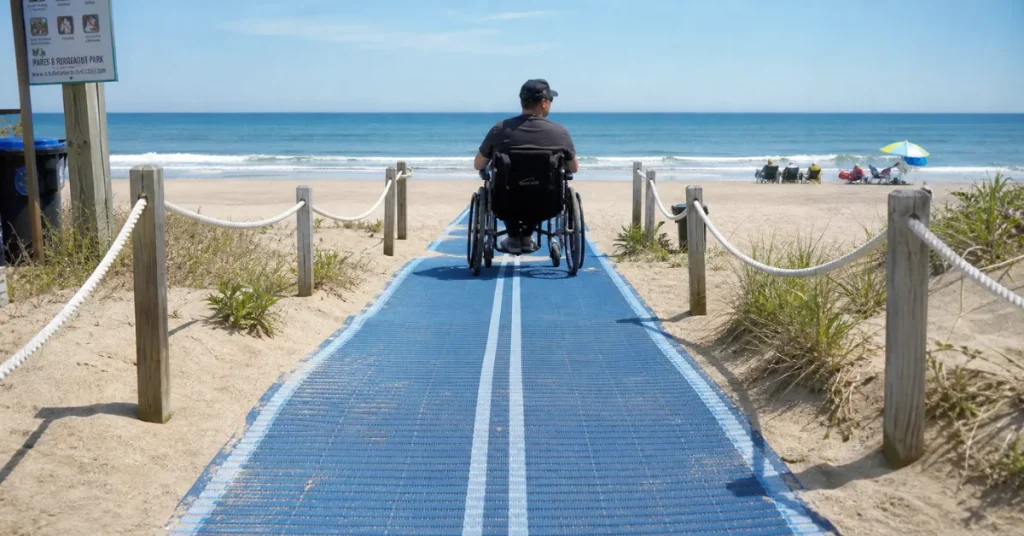
Accessibility for grandparents. Since multigenerational trips are climbing, mobility matters more than most articles mention. Destin’s Fire Control District runs a free Beach Wheelchair Program at three access points from Memorial Day through Labor Day, with lifeguards on hand to help maneuver chairs onto the sand. The Outer Banks Visitors Bureau lists beach wheelchair loan locations across nearly every town, from Kitty Hawk to Cape Hatteras, most of them free through local fire departments. Sanibel’s police department arranges beach wheelchairs on request as well. None of this requires advance planning beyond a phone call, but it does require knowing it exists before you arrive.
Traveling with infants. Babies change the math entirely. Nap schedules, not attractions, should dictate the daily plan. Boardwalk-style destinations like Destin’s Harbor or the Outer Banks’ Nags Head area work well because strollers roll easily on paved paths, unlike loose sand that swallows wheels. Shorter beach windows, ideally two hours before a scheduled nap, tend to work better than one long stretch that ends in an overtired, overheated infant.
Budget-Friendly vs. Splurge-Worthy Best Beach Vacations for Families
Cost shapes this decision more than people admit out loud. Here’s how the two ends of the spectrum actually compare.
Budget-conscious picks tend to favor Gulf Shores, Alabama, Sanibel Island, and the Algarve in Portugal, where accommodations with kitchenettes cut down on restaurant spending and the shoreline itself doesn’t carry a luxury price tag. Families managing a tighter budget often prioritize midweek travel and off-peak weeks, since rates on the exact same rental can swing by hundreds of dollars.
Splurge-worthy picks lean toward Maui or all-inclusive resorts in Cancun, where the price covers kids’ clubs, multiple pools, and meals bundled together. Parents who’ve booked both types generally say the splurge trips feel more relaxing simply because fewer decisions need to be made once you arrive.
Neither approach is objectively better. It depends on whether your family values variety and cultural exploration or wants a single, contained resort experience where everything’s handled.
Common Mistakes That Ruin a Family Beach Trip
Even well-planned trips go sideways for predictable reasons. A few show up again and again.
Packing too much into one day is the biggest one. Beach heat wears kids out faster than parents expect, and cramming in an aquarium visit right after four hours of sun usually ends in a meltdown, not a memory. Skipping sunscreen reapplication is another. SPF 30 or higher needs reapplying every two hours, not just once at 9 a.m.
Booking without checking water conditions is a subtler mistake. A beach that looks stunning in photos might have strong currents that make it unsuitable for younger swimmers. Always check before locking in a location, not after arriving. And for East Coast or Gulf Coast trips booked between June and November, skipping a glance at the hurricane outlook is a mistake that can cost an entire week, not just a day.
The Outlook Beyond 2026
Family beach travel isn’t cooling off anytime soon. Resorts are investing further into kid-focused programming, multigenerational suites, and shorter, more frequent trips instead of one long annual vacation. Shorter trips, in particular, are expected to play a bigger role going forward, giving families more flexibility without requiring two full weeks off work.
The pattern is clear enough. As long as beaches keep offering something for every age at once, they’ll keep topping the list of the best beach vacations for families, year after year.

FAQs
When’s the best time to book a family beach vacation?
Booking three to six months ahead usually locks in better rates, especially for peak summer weeks. Off-season trips in late spring or early fall often mean lower prices, smaller crowds, and lower hurricane risk on East Coast and Gulf Coast destinations. That timing consistently produces the best beach vacations for families without paying peak-season prices.
What’s the safest type of beach for toddlers?
Look for beaches with shallow, gently sloping entry points and minimal wave action, like sound-side beaches or protected coves. Lifeguard presence adds an extra layer of safety.
Do all-inclusive resorts work better for families than standalone hotels?
It depends on the family. All-inclusive resorts simplify meals and activities, which some parents find less stressful. Standalone hotels near town centers offer more variety but require more planning.
How much should a family budget for a week-long beach trip?
Costs vary widely by destination, but domestic Gulf Coast or East Coast trips tend to run more affordably than Hawaii or international beach resorts, especially with kitchenette-equipped lodging or budget international options like the Algarve.
Are multigenerational beach trips harder to plan?
They take more coordination but often work well on beach destinations specifically, since the activity range from swimming to lounging suits both young kids and grandparents in the same setting. Checking beach wheelchair availability ahead of time makes this far easier for grandparents with limited mobility.