Here’s the question every budget planner types sooner or later: which are the cheapest countries to travel this year? There isn’t one clean answer. A $12 dorm bed means little if the flight costs $900 and the visa adds $80.
So this guide does what most rankings skip. It prices the whole trip, not only the daily spend. You’ll get realistic 2026 ranges and the hidden costs that wreck budgets. Plus a simple formula for comparing the cheapest countries to travel side by side.
Which Are the Cheapest Countries to Travel Right Now?
Short answer: South Asia, Southeast Asia, parts of Latin America and the Balkans. The cheapest countries to travel in mid-2026 cluster in those regions. Budget guides keep landing on the same names. Backpacker-style days there commonly run between $20 and $40 on the ground, though guides disagree on exact figures.
Here’s how the map breaks down. Ranges are commonly quoted on-the-ground costs, and flights are extra.
| Region | Example countries | Commonly quoted daily range | Watch out for |
|---|---|---|---|
| South Asia | India, Nepal | $20 to $35 | Trek permits, airport taxis |
| Southeast Asia | Vietnam, Cambodia, Laos, Indonesia | $25 to $40 | Border fees, island prices |
| Latin America | Bolivia, Guatemala | $20 to $40 | Altitude, long transfers |
| Balkans and Caucasus | Albania, Georgia, Bulgaria, Romania | $30 to $55 | Peak-summer coast prices |
| North Africa | Morocco, Egypt | $25 to $60 | Entry fees at big sites |
A few details explain the pattern. Tea-house beds on popular Himalayan routes are often quoted at under $10 a night. Street food in Vietnam or Cambodia runs a couple of dollars a meal. Bolivia is widely called South America’s cheapest country. And Mexico gets cheap fast once you leave the resort strips.
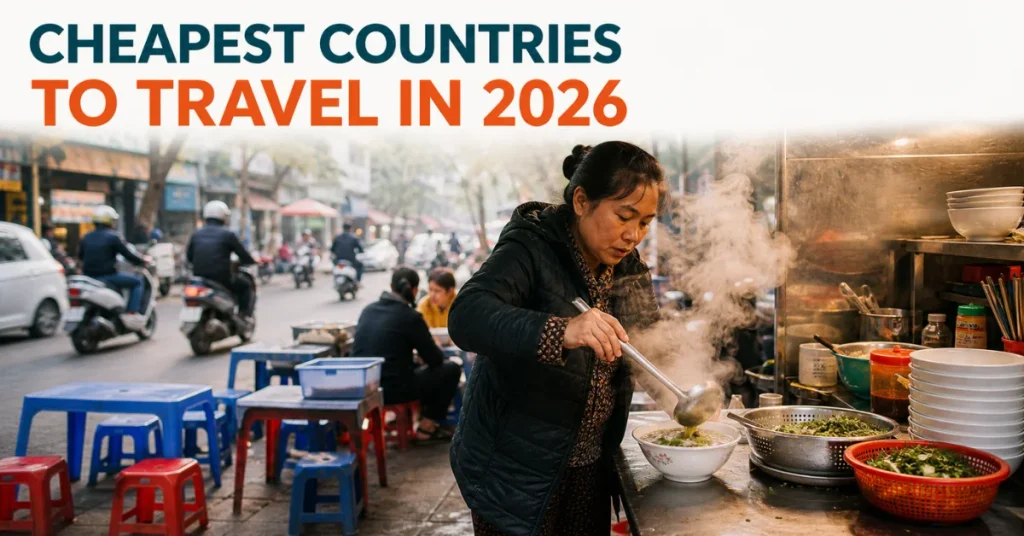
Stand at a Hanoi corner stall at 7 a.m. and the deal becomes obvious. A bowl of pho, a plastic stool, a bill that barely registers. That’s the everyday math behind this list.
What the Research Shows About the Cheapest Countries to Travel
Lay 2026 budget guides side by side and three patterns stand out for the cheapest countries to travel.
First, the winners depend on the method. A 2025 ranking by average daily spend put Laos, Kazakhstan and Rwanda on top. Nothing on it topped roughly £30 a day. Backpacker-focused guides favor India, Nepal and Bolivia instead. Same question, different answers.
Second, the cost mix is lopsided. One mid-2026 revision of a large budget guide noted that flights and accommodation are climbing fastest. Food, local transport and daily activities still cost little. So your ticket and your bed now matter more than your lunch.
Third, currencies can hand you a discount. The yen’s weakness against the dollar has made Japan unusually affordable for visitors paying in dollars this year. Argentina works the other way: exchange rates can make it a bargain one season and pricey the next.
Treat every figure here as an estimate. Prices vary by city, season and travel style.
Cheap to Get To vs Cheap to Stay: The Gap Most Lists Skip
Most rankings measure one thing: the daily rate once you’ve landed. Flight-search rankings measure another. They rarely agree.
| Angle | What it measures | Names that show up | The catch |
|---|---|---|---|
| Cheap to get to | Lowest flight prices | Phuket, Manila, Denpasar, Phu Quoc, Kuching, Taipei | Depends on your departure city |
| Cheap to stay | Lowest daily costs on the ground | India, Nepal, Bolivia, Laos, Cambodia, Guatemala | Flights may eat the savings |
| Cheap at both | The overlap | Vietnam, Indonesia, the Philippines, Thailand | Best pick for a first big trip |
The flight column comes from a January 2026 flight-search ranking. The daily-cost column comes from the guides above.
Here’s what surprises most people: the overlap countries among the cheapest countries to travel rarely top either list alone. But a cheap ticket plus a low daily rate beats one cheap number. Run the flight check from your own airport, since results depend on where you start. And if your ticket is pricey, a slightly costlier daily rate can still win the full-trip math below.
The Hidden Costs That Make a Cheap Country Expensive
A country can top every list of the cheapest countries to travel and still drain your wallet. Fixed costs are the culprit. They hit before you’ve eaten a single street-food meal.
| Cost | Where it bites | How to trim it |
|---|---|---|
| Flights | Long-haul routes to South Asia and Latin America | Fly midweek, watch shoulder seasons, price nearby airports |
| Visas and e-visas | Fees depend on your passport | Apply on the official government portal |
| Permits and park fees | Nepal treks, safari countries like Kenya and Tanzania | Book direct and compare guided with independent options |
| Card and ATM fees | Cash-heavy countries | Carry a no-fee card and withdraw larger sums less often |
| Travel insurance | Adventure and altitude activities may need extra cover | Match the policy to your plans before you buy |
| Phone data | Roaming charges add up quietly | Buy a local SIM or eSIM on arrival |
| Tourist pricing | Big attractions and airport taxis | Use official prepaid taxis and ride-hailing apps |
Kenya and Tanzania show the trap clearly. Meals and rooms cost little, but park fees push the total way up. Nepal works similarly, since trekking permits and guides add up fast.
Bhutan shows the reverse. It’s a Himalayan neighbor, yet most visitors pay a daily sustainable development fee of $100 or more per person. So it doesn’t belong on a budget list.
Health costs count too. The UK government’s foreign travel checklist advises checking which vaccinations you need at least eight weeks before you travel. It also says to buy insurance as soon as you book.
Six Traps in the Cheapest Countries to Travel
Even careful planners fall into these. Each one quietly adds cost to the cheapest countries to travel.
- Cheap country, costly permits. Trekking passes and safari park fees can outweigh months of cheap meals.
- Cheap dorm, distant location. A $6 bed far from everything means daily taxi rides that erase the saving.
- Visa agent sites. Third-party sites can add service fees of tens of dollars on top of the government fee. Vietnam’s official e-visa fee is $25 for single entry and $50 for multiple entries.
- The “pay in dollars” prompt. Card machines and ATMs ask if you’d like to be billed in your home currency. That option usually hides a poor exchange rate.
- Airport exchange desks. Kiosks there can mark up rates by up to 10 percent versus a local bank or ATM.
- Single-country pricing on a multi-country trip. Borders, buses and visas push the real daily cost higher.
How to Price Out the Cheapest Countries to Travel Before You Book
Here’s the deal: don’t compare the cheapest countries to travel by daily rate alone. Use a full-trip formula instead.
- Price a round-trip flight for your exact dates from your home airport.
- Look up the visa or e-visa fee on the official government site.
- Price your first three nights of accommodation.
- List the three to five paid experiences you actually want.
- Add insurance, then multiply the daily rate by your trip length.
- Divide the grand total by your number of days.
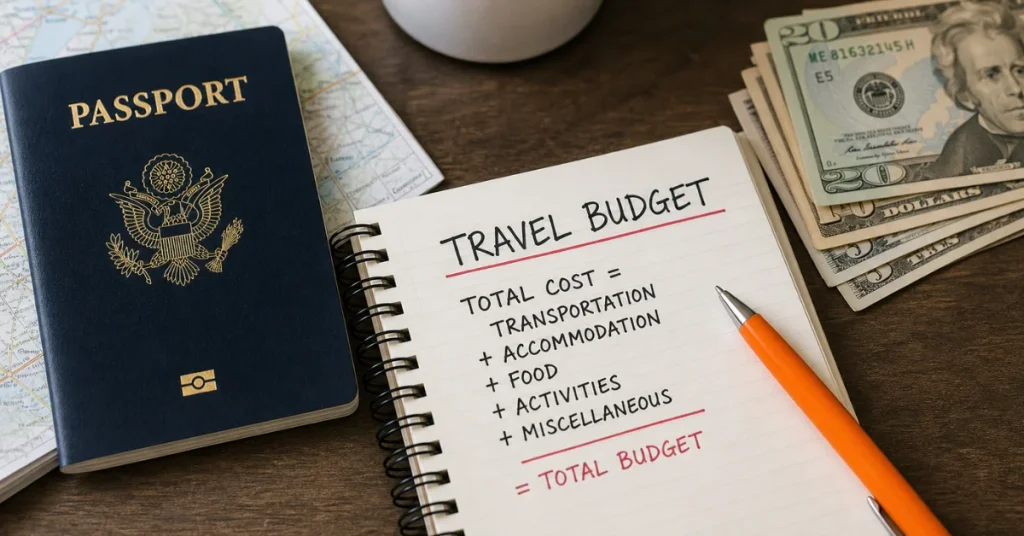
Now run it with placeholder numbers. These are illustrations, not real quotes.
| Line item | Country A | Country B |
|---|---|---|
| Flight | $900 | $500 |
| Visa | $50 | $0 |
| Insurance | $60 | $60 |
| Daily rate x 14 days | $30 x 14 = $420 | $45 x 14 = $630 |
| Activities | $100 | $100 |
| Total | $1,530 | $1,290 |
| Real cost per day | about $109 | about $92 |
The country with the higher daily rate wins. It’s like a budget airline fare. The ticket looks tiny until bags, seats and snacks arrive.
Trip length matters too. A 30-day trip usually costs less per day than a 7-day trip, because one flight gets split across more days.
Two more tricks help. Shoulder season trims prices almost everywhere on this list. And weekly or monthly rates on guesthouses usually beat nightly prices.
Multi-Country Trips: What Overland Routes Really Cost
Many travelers link several of the cheapest countries to travel in one trip. Southeast Asia makes it easy, but the math gets trickier.
| Leg | Mode | Rough cost | Note |
|---|---|---|---|
| Thailand to Vietnam, full journey | Buses via Cambodia or Laos | About $50 to $90 total | Takes several days |
| Hanoi to Bangkok via Luang Prabang and Vientiane | Buses | About $55 to $85 total | Book ahead |
| Phnom Penh to Ho Chi Minh City | Bus | Around $19 | About seven hours with the border |
These figures come from route guides and vary by operator and year. Treat them as a starting point.
One 2026 route guide estimates a month across Thailand, Laos and Vietnam at $1,200 to $1,800, excluding international flights. That works out to $40 to $60 a day. For the cheapest countries to travel in Southeast Asia, that’s higher than the headline rates. Transport and visas join the bill.
Visas need planning. Many tourist visas are single-entry, so each new country means a new fee. Laos and Cambodia visas commonly cost around $30 to $36. Also check that your border crossing is open before you book. Some land crossings have closed at times, including between Cambodia and Thailand. Expect a wait of an hour or two at the border itself.
Cash, Cards and ATM Fees in the Cheapest Countries to Travel
Cash still rules street food, homestays, tuk-tuks and border posts. So the cheapest countries to travel usually mean frequent ATM stops. And every withdrawal can carry stacked fees.
| Fee | What’s commonly quoted | How to dodge it |
|---|---|---|
| Home bank ATM fee | Often $2 to $5 per withdrawal | Use a card that refunds ATM fees |
| Foreign transaction fee | Often 1 to 3 percent | Choose a card with none |
| Local ATM surcharge | Often several dollars | Use bank-branch ATMs, not free-standing ones near attractions |
| Currency conversion prompt | Poor exchange-rate markup | Always choose the local currency |
Stacked together, one example shows about $13 in fees on a $100 withdrawal. That’s why fewer, larger withdrawals make sense. Take out $400 once instead of $100 four times.
Carry a backup card in a different bag. Bring small notes in mixed denominations for border visa fees and tuk-tuks. And skip airport exchange desks. Withdraw local currency at a bank ATM once you’re through arrivals.
Altitude and Health Costs Nobody Puts in the Budget
Two of the cheapest countries to travel, Bolivia and Nepal, sit high. La Paz alone is above 3,600 metres. That brings a cost most guides ignore: time.
Altitude sickness can appear above roughly 2,500 metres, mainly when you go up fast. Symptoms often start within 6 to 24 hours and feel like a bad hangover. Headache, tiredness, nausea and lost appetite are common. Severe forms are medical emergencies.
Prevention is mostly patience. Go up slowly and add rest days at intermediate heights. Drink plenty of water and go easy on alcohol at first. The NHS-backed altitude sickness guidance explains this in detail.
So budget two things. First, one or two extra nights for acclimatizing, since rushing costs more than resting. Second, insurance that actually covers your maximum altitude, because some policies cap it. Ask a doctor or travel clinic about vaccines and any medication well before departure.
Where the Money Actually Goes Once You Land
Beds take the biggest bite. Food is the easy win. In the cheapest countries to travel, a local meal often costs less than a coffee back home. So eating where residents eat saves more than any hostel hack.
Transport comes next. Buses and trains beat domestic flights on price in nearly every region above. Overnight routes even save a night of lodging. Activities come last, and that’s where you should splurge.
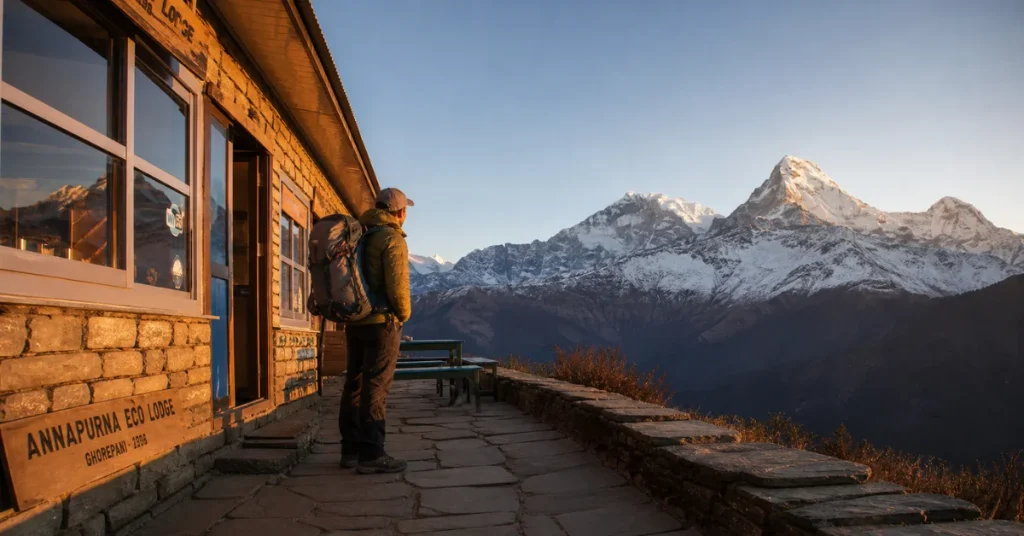
Pick one memorable paid experience, like a Himalayan trek, a Mekong boat trip or a salt flat tour in Bolivia. Then keep everything else simple. That way the trip feels rich, not restricted.
Best Picks Among the Cheapest Countries to Travel by Traveler Type
First-timers. Vietnam and Mexico have well-worn tourist routes and simple transport. You’ll find your feet quickly.
Solo travelers. Social hostels make Cambodia, Guatemala and Nicaragua easy places to meet people. In Nicaragua’s backpacker hubs, dorm beds are commonly quoted at $6 to $10.
Families. Mexico, Vietnam and Albania have private rooms at fair prices and beach days built in.
Remote workers. Many budget countries run remote-work visa programs. Check income rules on official sites first, then negotiate monthly rentals.
Off-the-radar travelers. Kyrgyzstan is often called Central Asia’s bargain, with mountain homestays that cost little. Georgia and Armenia pair wine, food and old monasteries with modest prices.
Trekkers. Nepal, Kyrgyzstan and Bolivia pair cheap homestays with serious mountain scenery.
Your passport matters, too. Access varies a lot: a 2026 index listing shows Nepali passport holders with visa-free or on-arrival entry to 35 countries. Laotian holders get 45. Check the entry rules for your own passport before you fall for any fare to the cheapest countries to travel.
Cheap Shouldn’t Mean Careless
The cheapest countries to travel still need a safety check. Low prices don’t mean low risk. Before booking, read your government’s official travel advice for the destination. Travelling against that advice can invalidate your insurance.
Stick to well-trodden routes when you’re new to a region. Choose central neighborhoods, use official transport and read recent reviews. In India, for example, government-approved prepaid taxis at airports help you skip the usual arrival haggling.
The Bottom Line on the Cheapest Countries to Travel
The cheapest countries to travel in 2026 still cluster in South Asia, Southeast Asia, Latin America and the Balkans. But the smartest pick isn’t the lowest daily rate. It’s the lowest total cost for your dates, your passport and your interests.
Price the flight, the visa and the permits first. Then choose the place where the rest of your money goes furthest. Do that, and a small budget buys a very big trip.
This article is for informational purposes only. Always consult a qualified professional about health and travel insurance.
FAQs
What is the cheapest country to travel in 2026?
No single country tops every list of the cheapest countries to travel. Laos, India, Nepal, Bolivia, Cambodia and Vietnam appear most often. On-the-ground costs there commonly fall between roughly $20 and $40 a day.
How much do I need per day in the cheapest countries to travel?
Backpacker days commonly run $20 to $40. A comfortable mid-range day often lands higher, roughly $50 to $100, depending on the city. Flights cost extra. Multi-country trips usually cost more per day.
What are the cheapest countries in Europe?
Albania, Bulgaria, Romania, North Macedonia and Poland lead most lists. Georgia and Armenia are budget-friendly neighbors at the continent’s edge. Western Europe’s coastlines cost far more.
Are the cheapest countries to travel safe?
Price and safety don’t move together. Many popular budget destinations are well-traveled, but conditions vary by region. Check official government advice before you book.
When’s the cheapest time to visit?
Shoulder season, the weeks just before or after peak crowds. Flights, rooms and tours often drop in price. For most of the cheapest countries to travel, check local monsoon and festival dates first.