
The first time you wade into a cove on the Costa Brava and watch the water shift from glass-clear to deep turquoise within a few steps, you get why people keep coming back to this sea. That’s really what a search for the best beaches in the Mediterranean comes down to: water you can see your feet through, rock formations that look sculpted on purpose, and a pace of life that slows the moment you drop your bag in the sand.
This isn’t a listicle scraped together from stock photos. It’s a working guide built around what’s actually changed for 2026, from new booking rules in Italy to fresh Blue Flag rankings, plus the practical details competitors tend to skip: water temperature by month, safety notes, and exact entry fees where they now exist.
What Makes the Best Beaches in the Mediterranean Different
Ask a diver, a sailor, and a parent with toddlers what they want from a beach, and you’ll get three different answers. That’s the odd thing about the Mediterranean coastline. It stretches roughly 46,000 kilometers across 22 countries, so there’s genuinely a stretch of sand or rock for nearly every kind of traveler.
What ties them together is the sea itself. Low tidal range, warm summer surface temperatures, and limestone or volcanic geology give Mediterranean beaches a clarity that’s hard to find in tidal oceans elsewhere. Locals along the Adriatic and Aegean coasts will tell you the water tells you everything: cloudy after a storm, glassy by the second calm day.
Anyone who has spent a season hopping between Spanish coves and Greek islands knows the difference isn’t subtle. Spain tends toward wide, golden-sand bays with strong infrastructure. Greece leans rocky, dramatic, and often reachable only by boat or a hot uphill walk. Italy sits somewhere in between, mixing cliffside glamour with working fishing villages.
Spain’s Coast: From Costa Brava to Murcia’s Quiet Coves
Spain gets crowded headlines for Ibiza and the Costa del Sol, but the real finds sit further off the main resort strip. Cala Cortina, just a few kilometers from the old port city of Cartagena in Murcia, pairs Roman ruins with a genuinely relaxed swimming spot that hasn’t been swallowed by high-rise development.
Further north, Costa Brava’s Cala de Sant Francesc gives you craggy cliffs, dense Mediterranean greenery, and a seaside botanical garden minutes away. It’s technically a town beach, but the wild feel holds up. You can reach it by regional train from Barcelona in about an hour.
Mallorca’s Cala Mesquida also earned a spot among Europe’s top-rated beaches heading into 2026, prized for dune-backed sand and water that stays shallow far from shore, a relief for anyone traveling with young kids.
Italy, Corsica, and the Cliffside Classics
Italy rarely disappoints, and 2026 rankings put Bogliasco Beach and Sardinia’s La Pelosa among the standout picks in Tripadvisor’s most recent global awards. Corsica, technically French but Mediterranean through and through, picked up recognition in that same list for beaches that stay wilder than most of the mainland Riviera.
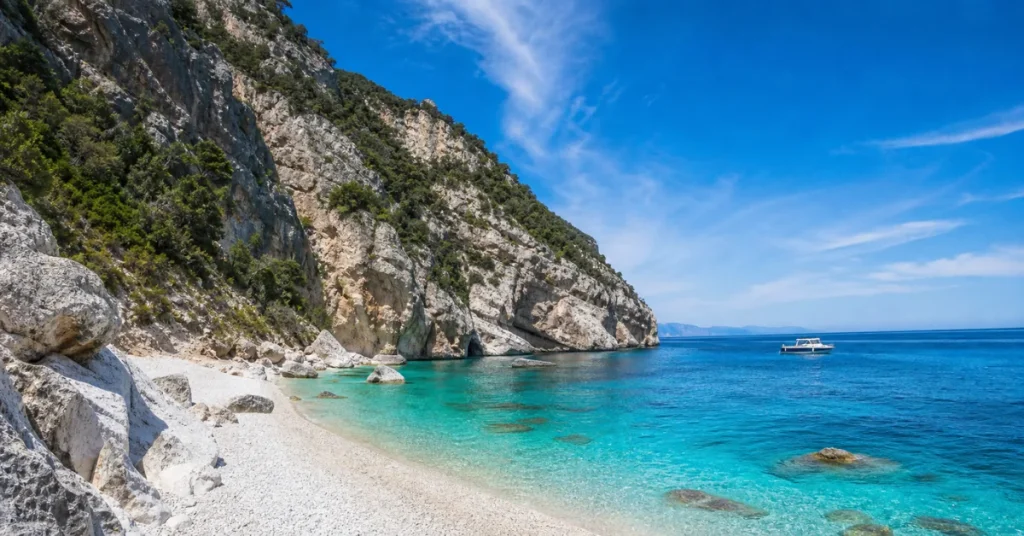
Sardinia’s Cala Mariolu deserves its own mention. Reachable mainly by boat or a demanding hike, it rewards the effort with white pebbles and water so clear it looks retouched, even in person. Anyone who’s made that trek will tell you it beats any beach you can drive straight up to.
Greece’s Pink Sands and Protected Shores
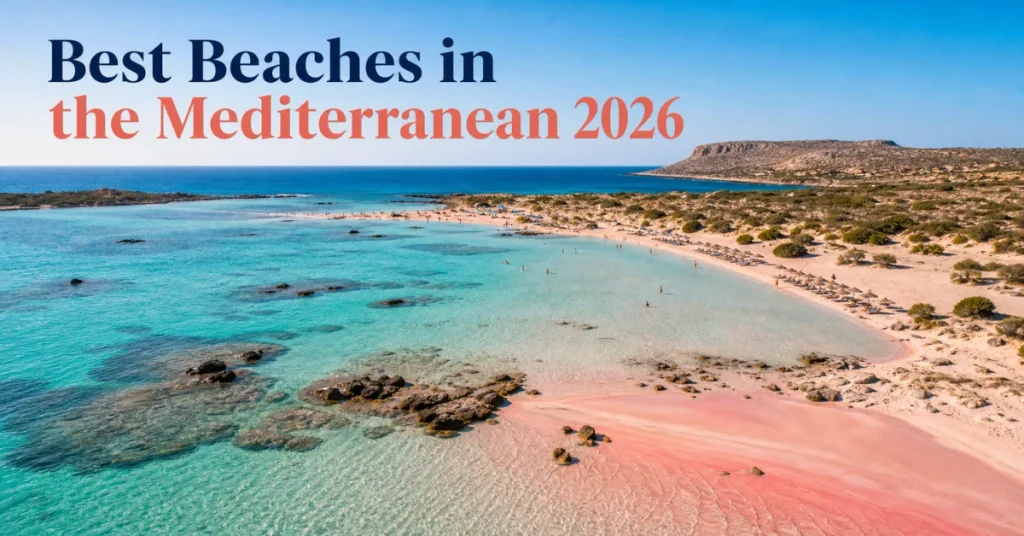
Greece dominates conversations about the best beaches in the Mediterranean, and 2026 is no exception. Voutoumi on Antipaxos and Fteri on Kefalonia both landed in the top three of European Best Destinations’ latest ranking, while Elafonissi in southwestern Crete claimed fourth, and separately picked up Tripadvisor’s top global beach title for its pink-tinted sand, created by millions of crushed shells washing ashore over centuries.
Corfu also placed two beaches in the top ten: Rovinia and Paleokastritsa. Both reward an early arrival, since midday brings tour buses and rental boats in numbers that can crowd the coves fast.
Beyond the Big Three: Croatia, Malta, and Turkey
Croatia’s Pasjača Beach, tucked beneath dramatic cliffs near Dubrovnik, has become one of the more talked-about additions to 2026 travel guides for its remote setting and clear water. Getting there usually means a set of steep stairs cut into rock, which naturally thins the crowd.
Malta packs history and coastline into a small archipelago, blending Mediterranean greenery with limestone cliffs and hidden bays. Turkey’s Kaputas Beach, wedged between towering rock walls near Kalkan, cracked the top ten of Europe’s best beaches for 2026, proof that this conversation stretches well past the usual Greek-Italian-Spanish trio.
Quick Comparison: Where Each Beach Actually Fits
| Beach | Country | Best For | Access | Crowd Level |
|---|---|---|---|---|
| Elafonissi | Greece (Crete) | Pink sand, families | Car, bus, boat | High, arrive early |
| Cala Mesquida | Spain (Mallorca) | Kids, shallow water | Car | Moderate |
| Cala Mariolu | Italy (Sardinia) | Divers, remote scenery | Boat or hike only | Low |
| La Pelosa | Italy (Sardinia) | Turquoise lagoon look | Car, capped entry | High, reservation needed |
| Voutoumi | Greece (Antipaxos) | Untouched cove feel | Ferry, then boat | Low to moderate |
| Pasjača | Croatia | Dramatic cliffs, photos | Steep stairway | Low |
| Kaputas | Turkey | Rock-walled cove | Car, stairway | Moderate |
| Cala de Sant Francesc | Spain (Costa Brava) | Day trip from Barcelona | Train, short walk | Moderate |
Blue Flag Rankings: Which Countries Actually Lead in 2026
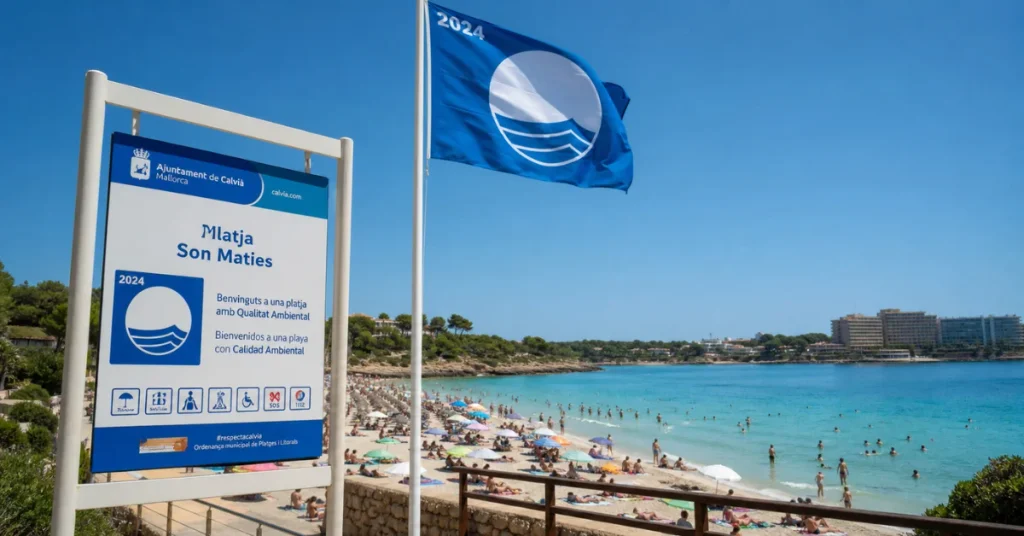
The Blue Flag is the closest thing this region has to a quality scoreboard, and the 2026 results confirm what regulars already suspected: this remains largely a Mediterranean and Iberian story.
| Country | Blue Flag Beaches (2026) | Notable Regions |
|---|---|---|
| Spain | 677 beaches (794 total awards) | Valencia (151), Andalusia (143) |
| Greece | 624 beaches (657 total awards) | Crete (154), Halkidiki (93) |
| Italy | 525 beaches | Growth of 38 beaches over 2025 |
Turkey, France, and Portugal typically round out the next three spots worldwide, though their exact 2026 counts vary depending on when in the season each list was published. Spain has now held the global top spot for roughly three decades running, which says something about how consistently its coastal authorities maintain water quality and safety standards.
What the Research Shows About Mediterranean Beach Tourism
Detailed analysis of coastal tourism data shows the Mediterranean pulling in close to 360 million international visitors in 2024 alone, a figure tied to roughly a fifth of all international arrivals worldwide landing on this one sea’s coastline. That scale explains both the appeal and the strain: three countries, Spain, France, and Italy, absorb around two-thirds of all Mediterranean arrivals, concentrating pressure on a relatively small stretch of coast.
Research into seasonal tourism patterns also points to something less obvious. The problem isn’t the yearly total so much as the bunching: the same beaches, the same eight weeks, year after year. That’s part of why Greece’s protected-beach expansion and Italy’s new 2026 reservation systems exist. They’re not trying to shrink tourism. They’re trying to spread it out before the damage becomes permanent.
How to Choose the Best Beaches in the Mediterranean for Your Trip
Picking from hundreds of contenders gets easier once you know what you’re actually optimizing for.
- Traveling with kids? Look for shallow, gently sloping bays like Cala Mesquida or Elafonissi’s lagoon side rather than cliffside coves reached by ladders or long hikes.
- Want fewer crowds? Aim for beaches reachable only by boat or a real walk. Cala Mariolu and Pasjača both filter out the day-trip crowd naturally.
- Traveling off-season? May and September give you warm water minus the July-August density, and many Blue Flag beaches keep lifeguard coverage into early autumn.
- Need accessibility? Blue Flag-certified beaches must provide access for visitors with disabilities, along with first-aid staff and equipment, so checking a beach’s certification status before booking is worth the two minutes it takes.
- Traveling on a tighter budget? Public beaches in Murcia and Corfu tend to charge nothing for entry, unlike some private-concession beaches in parts of Italy and the French Riviera.
Non-European visitors flying in from further afield should also factor in that many of the smaller island beaches, like Antipaxos or Kefalonia’s Fteri, require a ferry connection on top of the flight, so building in a buffer day isn’t optional so much as advisable.
Water Temperature by Month: When to Actually Swim
Sea-surface monitoring across the Mediterranean puts winter readings around 10 to 21°C and summer readings between 18 and 30°C, depending heavily on region. Here’s roughly what that looks like month by month across the main swimming season.
| Month | Typical Water Temperature | Swim Comfort |
|---|---|---|
| May | 18 to 21°C | Cool, wetsuit optional for some |
| June | 21 to 24°C | Comfortable |
| July | 24 to 27°C | Warm, peak crowds |
| August | 25 to 28°C | Warmest, busiest |
| September | 22 to 26°C | Comfortable, thinner crowds |
| October | 19 to 24°C | Cooling, best for shoulder-season trips |
Southern spots like Crete and southeastern Spain run a degree or two warmer than the Côte d’Azur or northern Adriatic at the same time of year, so if a warm dip matters more than a quiet beach, aim south.
Safety Notes Most Guides Skip
A few practical warnings worth knowing before you pack the sunscreen:
- Rip currents do occur, mainly on more exposed, open-water beaches rather than sheltered coves. Flagged beaches with lifeguards, like most Blue Flag sites, post daily conditions.
- Jellyfish show up seasonally, more often in warmer months and in enclosed bays with less water movement. Locals in affected areas usually know which weeks to avoid.
- Sun exposure is stronger than it feels near open water, since reflection off sand and sea adds to direct exposure. Reapply sunscreen more often than you would inland.
- Sea urchins cluster around rocky beaches like Cala Mariolu and parts of Corsica, so water shoes help on anything that isn’t pure sand.
Overtourism, Blue Flags, and What’s Actually Changing in 2026
Beyond the certification system, the more disruptive shift for 2026 is happening in Italy, where several of Sardinia’s most photographed beaches now run on hard daily caps and paid entry:
- La Pelosa caps daily visitors at 1,500, with entry priced at €3.50 per person for anyone aged 12 and up. Roughly a third of tickets release two days ahead at 9 a.m.
- Cala Goloritzé, a UNESCO-protected cove, charges €7 per adult with a 250-person cap, and its booking window opens only 72 hours before the visit date.
- Cala dei Gabbiani now runs 90-minute timed slots priced between €2 and €7.
- Punta Molentis charges €10 for arrivals by land and €5 by sea.
- Some beaches, including La Pelosa, now require a rigid mat under towels, with on-the-spot fines around €100 for placing towels straight on the sand.
Greece has taken a different approach, expanding its list of protected “untrodden beaches” to 251 sites for 2026, up from 238 the year before. Elafonissi, Balos, and Falassarna, three of Crete’s most photographed beaches, are now on that list, with sunbeds and umbrellas restricted to a fraction of the shoreline and no new permanent structures allowed nearby.
It’s a trade-off worth knowing before you book: slightly less spontaneity, considerably more chance the place still looks like this in another decade.
The Bottom Line
There’s no single ranking that settles the best beaches in the Mediterranean once and for all, and that’s honestly part of the appeal. Whether it’s Elafonissi’s pink shoreline, a boat-only cove in Sardinia, or a low-key Murcian bay near Roman ruins, the sea rewards travelers willing to check current rules before they go. Pack reef-safe sunscreen, book ahead where Italy now requires it, and leave room in the schedule for the place nobody warned you about.
FAQs
What is generally considered the single best beach in the Mediterranean right now?
Elafonissi in southwestern Crete currently holds the top global ranking from Tripadvisor’s 2026 awards, largely thanks to its pink-tinted sand and shallow lagoon.
When is the best time to visit Mediterranean beaches to avoid crowds?
Late May, early June, and September offer water in the low-to-mid 20s°C with noticeably thinner crowds than the July-August peak.
Are Mediterranean beaches good for families with young children?
Many are. Shallow, sheltered bays like Cala Mesquida in Mallorca or Elafonissi’s lagoon side are built for wading rather than open-water swimming.
Do I need to book beaches in advance for 2026?
In parts of Sardinia, yes. Beaches like La Pelosa and Cala Goloritzé now run capped, paid entry systems with fixed booking windows, so checking ahead is worth the five minutes.
Which country has the most Blue Flag beaches in the Mediterranean?
Spain leads with 677 certified beaches in 2026, followed by Greece with 624 and Italy with 525.