
Picking the right islands to visit in the Pacific is less about finding a pretty beach and more about deciding what kind of trip you actually want. Some travelers want a honeymoon lagoon. Others want volcanic hikes, war history, or a place where the culture feels untouched by mass tourism. The Pacific covers roughly a third of the earth’s surface, so the options span thousands of miles and dozens of very different cultures, currencies, and even health considerations.
This guide breaks down the destinations that consistently earn their reputation, plus the practical details most travel guides skip entirely: how to actually get between islands, what it costs, what to pack, and what local customs matter once you land.
Quick Comparison: Best Islands to Visit in the Pacific
| Destination | Best For | Budget Level | Best Season | Flight Access |
|---|---|---|---|---|
| Fiji | First-timers, families | Mid-range | May to October | Easy, direct from Australia/NZ/LA |
| Tahiti & Bora Bora | Honeymoons, luxury | High | May to October | Direct from LA, Auckland, Paris |
| Palau & Micronesia | Diving, WWII history | Mid to high | November to April | Limited, connects via Guam or Manila |
| Easter Island | History, archaeology | Mid-range | December to March | Via Santiago or Tahiti only |
| Vanuatu, Solomons, PNG | Adventure travel | Low to mid | May to October | Limited, plan through local operators |
| Cook Islands | Budget-friendly lagoon | Low to mid | April to November | Via Auckland or LA |
Fiji: The Easiest Entry Point
Fiji tends to be the first stop for anyone researching islands to visit in the Pacific, and there’s a reason for that. It’s well connected by flights from Australia, New Zealand, and the US West Coast, and the resort infrastructure ranges from backpacker-friendly to genuinely luxurious.
What makes Fiji stand out isn’t just the water. It’s the mix of native Melanesian and Indo-Fijian culture, which shows up in the food, the music, and the villages you can visit on guided tours. Anyone who has traveled through the outer islands knows the pace slows down fast once you leave the resort strip near Nadi.
- Best for: first-time Pacific travelers, families, snorkeling
- Watch out for: cyclone season runs November through April
- Don’t skip: a kava ceremony in a local village, not just a resort version of one
Tahiti and Bora Bora: The Postcard Standard
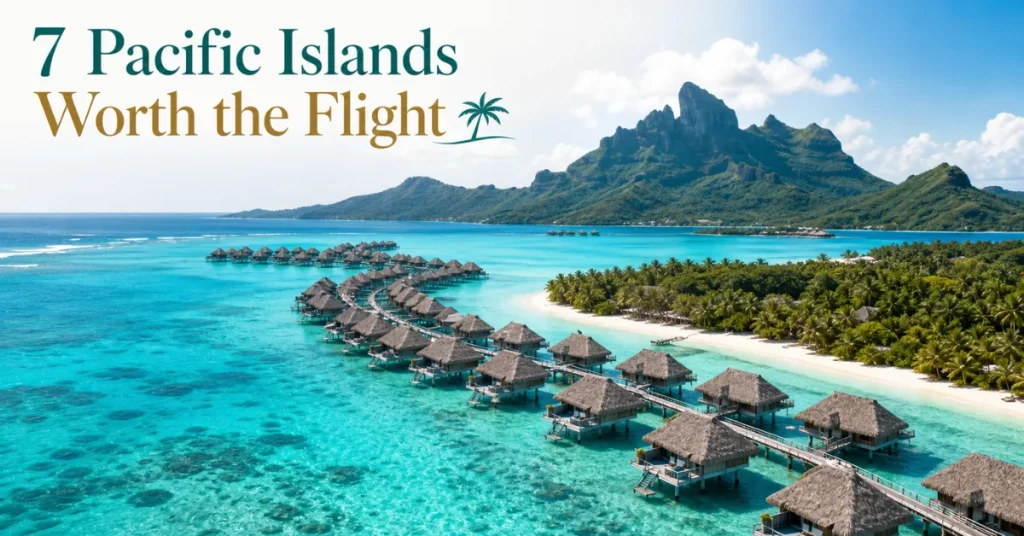
French Polynesia earned its reputation honestly. The overwater bungalow, as a concept, basically started here. Bora Bora’s lagoon really is that shade of turquoise, and Moorea’s jagged volcanic peaks look almost fake against the water.
Locals here will tell you the real Tahiti isn’t the resort strip, it’s Papeete’s markets, the Marquesas’ remote cliffs, and the outer atolls that most tourists never reach. If your budget allows only one splurge trip in this list, this is usually the one people pick.
- Best for: honeymoons, luxury travel, photography
- Watch out for: it’s one of the more expensive regions in the entire Pacific
- Don’t skip: Moorea, which is cheaper and quieter than Bora Bora but just as striking
Palau and the Wider Micronesian Diving Circuit
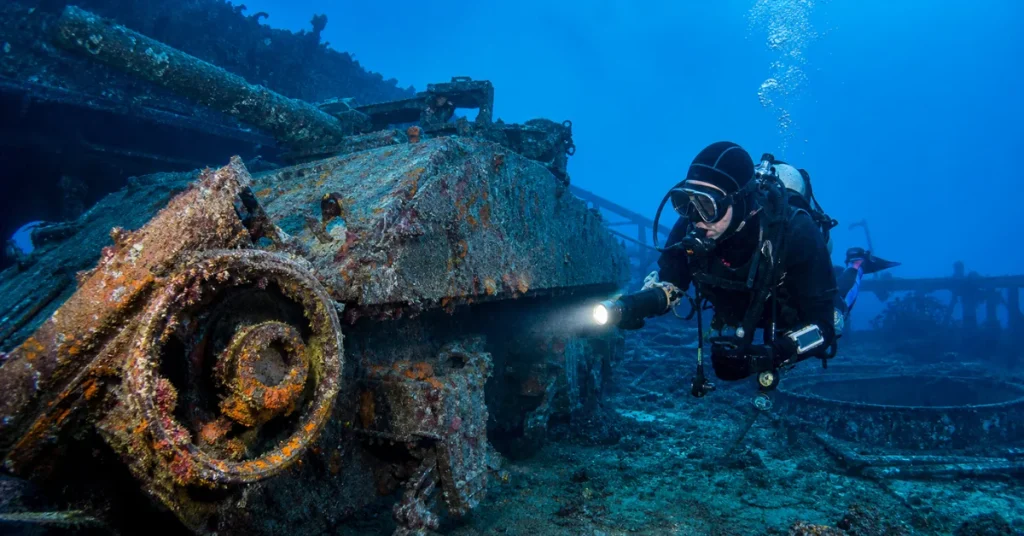
Palau, along with Yap, Kosrae, and Chuuk, gets far less attention than Fiji or Tahiti, and that’s precisely the appeal for divers. Jellyfish Lake, WWII shipwreck dives in Chuuk Lagoon, and some of the clearest visibility in the Pacific make this region a serious draw for anyone who takes diving beyond a casual snorkel.
Anyone who has dived Chuuk knows the wrecks aren’t just a novelty. They’re intact enough that you can still make out gas masks, dishware, and cargo holds from 1944, which turns the dive into a history lesson as much as a swim.
- Best for: scuba divers, WWII history buffs
- Watch out for: flights are less frequent and more expensive than to Fiji or Hawaii
- Don’t skip: Yap’s stone money villages, a tradition still practiced today
Easter Island: Culture Over Beaches
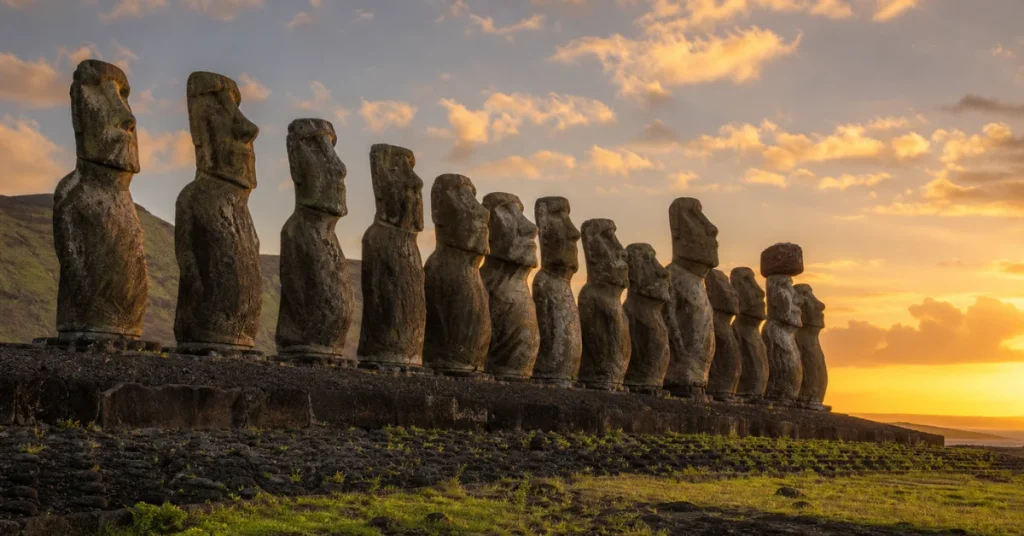
Easter Island, or Rapa Nui, is technically Chilean territory, but geographically and culturally it belongs to the Pacific. This is the destination on the list where the draw has nothing to do with sand. The moai statues, quarried and moved without modern equipment, remain one of archaeology’s more debated puzzles.
The island became a UNESCO World Heritage Site under cultural criteria in 1995, recognized for the monumental sculpture tradition its Polynesian settlers built entirely without outside influence. Standing in front of the statues at Ahu Tongariki, it’s easy to understand why researchers are still arguing over exactly how they were transported.
- Best for: history and archaeology enthusiasts
- Watch out for: it’s remote, most flights connect through Santiago or Tahiti
- Don’t skip: Rano Raraku, the quarry where hundreds of unfinished moai still sit
Solomon Islands, Vanuatu, and Papua New Guinea: For the Truly Adventurous
These three don’t show up on most mainstream travel lists, and that’s exactly why some travelers seek them out. The Solomon Islands carry heavy WWII history, especially around Guadalcanal. Vanuatu has active volcanoes you can hike to the rim of. Papua New Guinea offers cultural diversity that’s almost unmatched anywhere on earth, with hundreds of distinct languages spoken across its provinces.
Professionals who run tours through this region consistently point out that infrastructure here is thinner than in Fiji or Tahiti. That’s part of the trade-off. You get authenticity and far fewer crowds in exchange for more planning and a higher tolerance for the unexpected.
- Best for: adventure travelers, cultural immersion
- Watch out for: limited tourist infrastructure, plan through a local operator
- Don’t skip: Mount Yasur in Vanuatu, one of the most accessible active volcanoes on the planet
Cook Islands and the Marquesas: The Quiet Alternatives
For travelers who love the idea of French Polynesia but not the price tag, the Cook Islands offer a similar look with a fraction of the crowd and cost, which is exactly why they’re becoming one of the more searched islands to visit in the Pacific among budget-conscious travelers. Aitutaki’s lagoon regularly gets compared to Bora Bora, minus the overwater bungalow markup.
The Marquesas, meanwhile, sit at the far edge of French Polynesia and remain some of the most remote inhabited islands on earth. Getting there takes real effort, but travelers who make it describe a landscape of steep green cliffs and black sand beaches that feels closer to Jurassic Park than a typical island brochure.
The Health Question Most Guides Skip
This is where most Pacific travel content falls short. Malaria is a real risk in parts of Melanesia, specifically the Solomon Islands, Vanuatu, and Papua New Guinea, and antimalarial medication is commonly recommended before travel there. Fiji, Tahiti, the Cook Islands, and Palau are considered malaria-free, which is one more reason they’re easier first trips.
Dengue fever also circulates seasonally across several island nations, so mosquito protection matters regardless of which group you visit. Anyone planning a Melanesian itinerary should talk to a travel clinic well before departure, since some vaccinations need weeks to take effect.
Getting Between Islands: The Part Nobody Explains
A common assumption is that hopping between Pacific islands works like hopping between European cities. It doesn’t. Domestic flights within Fiji, French Polynesia, and Micronesia run on limited weekly schedules, and seats sell out fast during peak season.
Ferries exist in some regions, particularly around Fiji’s Yasawa and Mamanuca groups, but service in more remote nations like the Solomons or Vanuatu can be irregular and weather-dependent. Anyone who has planned a multi-island Pacific itinerary knows the smart move is booking inter-island transport before booking accommodation, not after.
- Fiji: Domestic airline and passenger ferry network, generally reliable
- French Polynesia: Regular flights and the Aranui cargo-passenger ship for remote islands
- Micronesia: Infrequent regional flights, often only a few times per week
- Melanesia (Vanuatu, Solomons, PNG): Small aircraft and boats, schedules shift with weather
Village Etiquette and Respecting Local Custom
Presenting yourself somewhere new isn’t just a courtesy in parts of the Pacific, it’s an expected protocol. In Fiji, visiting a village typically involves a sevusevu, a small ceremony where a bundle of kava root is presented to the village chief before guests are formally welcomed.
On Easter Island, the Ma’u Henua indigenous community holds administrative control over Rapa Nui National Park, and visitors are expected to stay on marked paths and avoid touching the moai. In parts of Papua New Guinea and Vanuatu, some land and cultural sites are considered sacred and off-limits without a local guide’s permission. None of this is difficult to follow, but skipping it can come across as disrespectful in communities that take it seriously.
Currency and What Things Actually Cost
Currency varies more across the Pacific than most travelers expect. Fiji uses the Fijian dollar, French Polynesia uses the CFP franc, the Cook Islands use both the New Zealand dollar and their own Cook Islands dollar, and Papua New Guinea uses the kina.
Cost of living follows a rough pattern: Fiji and the Cook Islands sit in the mid-range for accommodation and food, French Polynesia runs noticeably higher, and Melanesian destinations like Vanuatu and the Solomons tend to be cheaper on the ground but more expensive to reach due to limited flight competition.
Connectivity for Remote Workers and Digital Nomads
Internet access is another detail competitor guides rarely mention. Fiji and the Cook Islands have decent 4G coverage in main towns and resorts, making short remote-work stints realistic. French Polynesia’s connectivity has improved significantly on Tahiti and Moorea, though it thins out on outer atolls.
Micronesia and Melanesia are a different story. Coverage in Palau’s main towns is workable, but in Vanuatu, the Solomons, and much of Papua New Guinea, reliable internet outside major towns is not something to count on. Travelers who need to stay online for work should treat those regions as a genuine digital detox instead.
What the Research Shows
There’s no single verified statistic that captures Pacific island tourism as a whole, since the region spans dozens of separate nations with their own tourism boards and reporting standards. What’s consistent across recent travel industry coverage is a shift toward smaller, community-run accommodations and cultural tourism over large resort chains, particularly in Fiji, Vanuatu, and the Cook Islands. Tour operators covering the region report growing demand for trips that combine diving or hiking with village stays, rather than resort-only itineraries. That pattern lines up with what independent travelers increasingly say they want: fewer crowds, more direct contact with local communities, and itineraries that go beyond the beach.
How to Choose Among the Best Islands to Visit in the Pacific This Year
The right pick really comes down to three questions: how much time you have, what your budget looks like, and whether you want a relaxing trip or an active one.
- Short on time or budget? Fiji or the Cook Islands.
- Want the luxury honeymoon look? Tahiti and Bora Bora.
- Serious about diving? Palau or Chuuk Lagoon.
- More interested in history than beaches? Easter Island.
- Chasing something few tourists have seen? Vanuatu, the Solomons, or Papua New Guinea.
- Traveling on a shoestring? Cook Islands or Fiji’s backpacker circuit.
Weather matters too. Cyclone season across most of the South Pacific runs roughly November through April, so most travelers target the dry months between May and October for the most reliable conditions.
Final Thoughts
There isn’t one correct answer when it comes to the best islands to visit in the Pacific, and that’s honestly the fun part of planning this kind of trip. Fiji and Tahiti will always be the safer, more polished choices. Palau, Vanuatu, and the Solomons reward travelers willing to trade convenience for something less filtered, and a bit of homework on health, transport, and local custom goes a long way toward making the trip smoother. Whichever direction you go, the region rewards patience, a flexible itinerary, and a willingness to get off the resort strip at least once.
FAQs
What is the cheapest Pacific island to visit?
Fiji and the Cook Islands tend to offer the most budget-friendly options, with a wider range of accommodation prices than French Polynesia.
When is the best time to visit Pacific islands?
Most of the South Pacific is driest and calmest between May and October, avoiding the November-to-April cyclone season.
Do I need vaccinations before visiting the Pacific islands?
It depends on the destination. Malaria precautions are commonly recommended for Vanuatu, the Solomon Islands, and Papua New Guinea, while Fiji, Tahiti, and the Cook Islands are considered malaria-free. A travel clinic visit a few weeks before departure is the safest way to confirm what’s needed.
Which Pacific island is best for diving?
Palau and Chuuk Lagoon in Micronesia are widely regarded as top choices, particularly for wreck diving and clear-water visibility.
Can I island-hop easily across the Pacific?
Not the way you might in Europe. Domestic flights and ferries run on limited schedules, especially in Melanesia, so inter-island transport should be booked before accommodation.