Anyone who has priced out a Colorado ski weekend lately knows the sticker shock. But the most affordable ski resorts in the US still exist, and they’re not hiding in some far-off corner nobody can reach. Some sit an hour from major airports. Others are the same hills locals have skied for seventy years, just without the marketing budget of a mega-resort. Finding them takes a little digging, and that’s exactly what this guide does.
Skiing has a reputation problem. Walk up to a ticket window at one of the big western destinations and you could pay well over $200 for a single day, gear rental not included. Vail Mountain’s opening-day lift ticket in 1962 cost five dollars. Adjusted for inflation, that ticket would run around forty-four dollars today — the actual walk-up price last season topped $239. That gap has pushed a lot of families toward smaller mountains, non-profit ski areas, and regional gems that never chased the destination-resort crowd in the first place.
What Makes a Ski Resort Actually Affordable in 2026
Affordability isn’t just about the number on the ticket. A resort with a $60 lift pass but a two-hour drive from the nearest hotel isn’t necessarily cheaper than a $90 mountain fifteen minutes from town.
Real affordability comes down to a handful of factors working together: base lift ticket price, distance from a major airport or city, lodging costs nearby, and whether the resort runs a demand-based pricing model that rewards booking ahead.
Smaller, community-run ski areas tend to win on nearly every front. They carry lower overhead than sprawling destination resorts, and many were built by locals for locals decades before season passes turned into thousand-dollar purchases. That history still shapes how they price a lift ticket today.
Non-profit resorts deserve a special mention here too. Places like Bridger Bowl in Montana were founded specifically to keep skiing accessible for the community, and that mission still guides pricing decisions.
The Most Affordable Ski Resorts in the US This Season
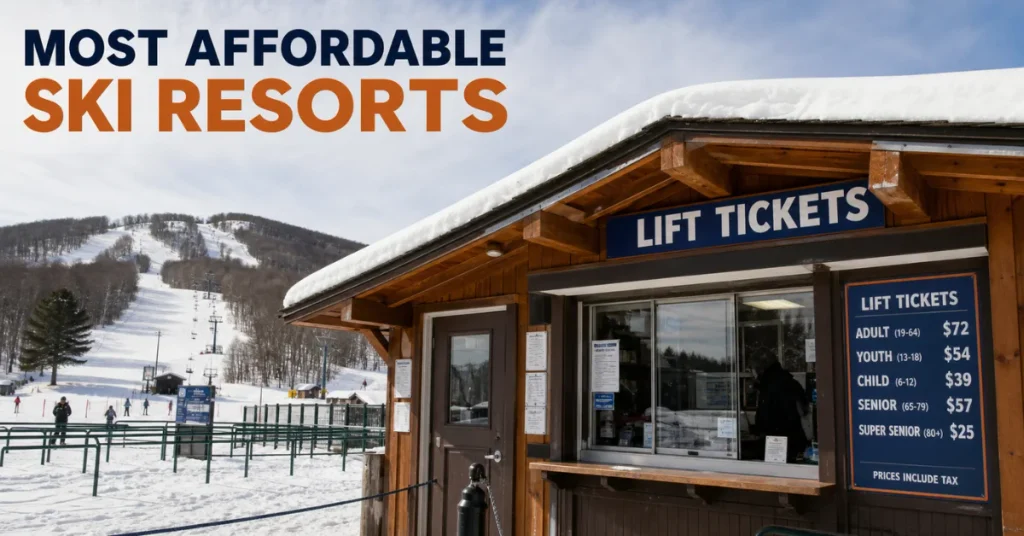
Here’s where the search gets specific. These are real, operating resorts with pricing pulled directly from recent reporting on the 2025-26 season, not vague estimates.
| Resort | State | Adult Lift Ticket | Best For |
|---|---|---|---|
| Eaglecrest | Alaska | $75 full day; family bulk packages from $22 | Alaska residents, adventurous travelers |
| Brian Head | Utah | As low as $32 midweek (demand pricing) | Flexible-schedule skiers who can book ahead |
| Mohawk Mountain | Connecticut | $45 weekday, $81 weekend | Tri-state day-trippers |
| Magic Mountain | Vermont | $65 online | Advanced skiers wanting real terrain |
| Cannon Mountain | New Hampshire | $99 advance, $54 NH residents Wed | Northeast weekend trips |
| Wildcat Mountain | New Hampshire | $125 adult, $100 under-18/65+ | Families near Boston |
| Howelsen Hill | Colorado | Around $39/day | Budget travelers headed to Steamboat |
| Porcupine Mountain | Michigan | $45 full day, $35 afternoon | Midwest skiers, deep-snow lovers |
| Bridger Bowl | Montana | Community-priced, well below regional average | Advanced terrain on a non-profit budget |
Eaglecrest, Alaska
Tucked into the mountains above Juneau, Eaglecrest runs full-day adult lift tickets at $75 for the 2025-26 season. The catch, and it’s a real one, is getting there. Juneau has no road access from the rest of the continental US, so you’re looking at a flight or ferry.
Brian Head, Utah
Brian Head uses demand-based pricing, meaning tickets purchased well in advance can drop dramatically below the walk-up rate. Midweek dates in January have been known to fall to around $32, with prices climbing back toward $90-$100 around holidays. Timing matters here more than at almost any other resort on this list.
Mohawk Mountain, Connecticut
A compact 650-foot vertical drop doesn’t sound like much, but Mohawk delivers 27 trails over 107 acres and keeps pricing refreshingly simple. It’s also an Indy Pass member, which opens the door to discounted access for anyone already carrying that pass.
Magic Mountain, Vermont
Part of the trio of Vermont resorts that includes Stratton and Bromley, Magic Mountain has 1,500 feet of vertical and a genuinely respectable amount of expert terrain — 28% of it, by the resort’s own count. That’s a fraction of what nearby Stratton charges for the same snow conditions.
Cannon Mountain and Wildcat Mountain, New Hampshire
Cannon undercuts most of the Northeast with advance online tickets, and New Hampshire residents can ski Wednesdays for even less with proof of residency. Wildcat, sitting in Pinkham Notch, runs slightly higher but still comes in well under the regional destination-resort average. Both sit within reach of Boston for a day trip or long weekend.
Howelsen Hill, Colorado
Here’s a gap most guides skip entirely: the town of Steamboat Springs has two ski areas, not one. The main resort, Steamboat, charges well over $200 on peak days. A short drive across town, the community-run Howelsen Hill — an Olympic training ground — has kept its daily rate around $39. Same mountain town, dramatically different price tag.
Porcupine Mountain, Michigan
Not a name that comes up often in ski conversations, but Porcupine Mountain in Michigan’s Upper Peninsula gets around 200 inches of snow a year on average and prices a full day at roughly $45, with an afternoon-only option even cheaper. It’s one of the strongest Midwest options that rarely makes national lists.
Bridger Bowl, Montana
Opened in 1955 as a non-profit run for the Bozeman community, Bridger Bowl has never chased destination-resort status, and that’s exactly the point. Terrain access hasn’t been dumbed down to fit a budget price tag, either. The Schlasman’s chair still serves genuinely advanced terrain for skiers who want more than groomers.
What the Research Shows
Recent industry reporting has tracked a real shift in skier behavior. A growing number of families and regular skiers, priced out of destination resorts and their season-pass commitments, have started redirecting trips toward smaller, locally favored mountains instead.
National tracking also shows the average weekend walk-up lift ticket sitting well above $140 across the country, with the total cost of an average ski trip climbing roughly 11% over the past three seasons after adjusting for inflation. That widening gap between destination-resort pricing and community ski-area pricing is exactly why searches for the most affordable ski resorts in the US have climbed alongside it.
Detailed analysis of ticket pricing across the country reveals a consistent pattern: smaller ski areas with fewer lifts and less built-out infrastructure carry meaningfully lower daily rates, often less than half of what major western destinations charge.
How to Stretch Your Ski Budget Even Further
A handful of habits separate skiers who overpay from skiers who don’t.
- Buy online in advance. Nearly every resort on this list charges more at the window than online, sometimes double.
- Ski midweek. Tuesday through Thursday rates are consistently the cheapest across almost every mountain in the country.
- Consider a multi-resort pass like Indy Pass, which runs up to $599 for adults and grants limited access to dozens of independently owned mountains — a fraction of what the big destination passes cost.
- Stay outside the immediate resort footprint. Lodging a town or two over is almost always cheaper than ski-in, ski-out properties.
- Pack your own food. Base-lodge cafeteria prices add up fast over a multi-day trip.
Anyone who has planned a family ski trip on a real budget knows lodging usually costs more than the lift ticket itself.
Who Should Consider These Budget-Friendly Mountains
Families juggling multiple lift tickets stand to save the most, since even a $50 difference per person multiplies fast across a weekend. Several Colorado resorts run free-ticket programs for younger kids through school partnerships, and some college towns — Durango among them — offer free season passes to enrolled first-year students, a segment most affordability guides never mention.
First-time skiers benefit too, since smaller mountains tend to have gentler learning curves and less crowded beginner terrain than the big-name resorts. East Coast skiers without the time or budget for a western trip have some of the strongest options here, with New England and Mid-Atlantic community mountains consistently undercutting the region’s marquee resorts. Mobile-first travelers booking everything from a phone should know that nearly all of these resorts now sell advance tickets through their own apps or websites, which is also where the steepest discounts usually live.
Final Word on the Most Affordable Ski Resorts in the US
Skiing doesn’t have to mean draining a travel budget in a single weekend. The most affordable ski resorts in the US prove that real terrain, real snow, and real mountain culture exist well outside the handful of destination names that dominate ski marketing. Booking ahead, skiing midweek, and looking past the obvious big names will save more money than almost any other single decision a skier can make this season.
FAQs
What is currently the cheapest ski resort in the US?
Pricing shifts by date and demand, but Brian Head in Utah has offered some of the lowest verified midweek rates in the country, with select January dates dropping to around $32.
Are smaller ski resorts good for beginners?
Yes. Smaller mountains generally have less crowded beginner terrain, shorter lift lines, and staff who tend to know the hill personally, which makes for a more relaxed learning environment.
Is it cheaper to buy lift tickets in advance?
Almost always. Advance online pricing at nearly every resort mentioned here runs well below the walk-up window rate, sometimes by 30% or more.
Do multi-resort passes save money for budget skiers?
It depends on how many days you plan to ski. Passes like Indy Pass can pay for themselves after just a few visits to participating independent mountains.
Which region has the most affordable options overall?
New England and the Mountain West both have strong clusters of budget-friendly, community-run resorts, though pricing and terrain quality vary significantly between individual mountains.