

Spain doesn’t need to convince anyone anymore. The country pulled in a record 96.8 million international visitors in 2025, and by early 2026 monthly arrival numbers were still climbing past previous highs. If you’re searching for tourist places to visit in Spain, you’re joining millions of travelers who’ve already decided this country deserves a spot on the calendar, and honestly, once you’ve walked its old quarters at sunset, you’ll understand exactly why.
Standing in the Plaza Mayor in Madrid at dusk, watching the lights flicker on around the arcades, it becomes clear this isn’t just another European capital. Spain layers Roman ruins, Moorish palaces, Gothic cathedrals, and Gaudí’s wild imagination into one country, and no two regions feel remotely alike.
Why So Many Travelers Search for Tourist Places to Visit in Spain
Spain sits third in the world for tourism earnings, trailing only the United Kingdom and France, and tourism now makes up roughly 12.6% of the country’s entire economy. That’s not a small statistic. It means the infrastructure for visitors, trains, museums, guided tours, regional food scenes, has had decades to mature into something genuinely world-class.
International visitors spent close to €135 billion in Spain in 2025 alone, and that spending grew faster than the number of arrivals. People aren’t just passing through anymore. They’re staying longer, venturing beyond the coast, and booking trips outside the crowded July and August window. That shift matters if you’re planning your own visit, because it means shoulder-season travel to Spain has quietly become one of the smartest moves a traveler can make.
Barcelona: Where Gaudí Still Runs the Show
Anyone who has stood beneath the Sagrada Família’s unfinished towers knows photographs don’t do it justice. Construction started in 1882 and still hasn’t finished, and that ongoing, living quality is part of what makes it magnetic rather than just another monument.
Locals here will tell you to skip the tourist restaurants lining Las Ramblas and instead wander into the Gràcia neighborhood, where small tapas bars serve food meant for residents, not photo ops. Park Güell, the Gothic Quarter, and the beachfront at Barceloneta round out a city that manages to feel both historic and completely alive.
Madrid: The Capital That Rewards Slow Travelers
Madrid doesn’t hit you immediately the way Barcelona does. It takes an evening stroll through Retiro Park or a quiet afternoon inside the Prado Museum before it clicks. The Prado alone holds one of the world’s most important art collections, and pairing it with the nearby Reina Sofía, home to Picasso’s Guernica, gives you a genuine crash course in Spanish art history in a single day.
The moment you taste a proper Madrid-style bocadillo de calamares from a stand near Plaza Mayor, you start to understand why locals defend this city’s food culture so fiercely, even against Barcelona’s louder reputation.
Andalusia: Where Moorish History Still Breathes
If there’s one region that consistently tops every list of tourist places to visit in Spain, it’s Andalusia. The Alhambra in Granada, a Nasrid palace complex dating back to the 13th century, was named a UNESCO World Heritage Site in 1984, and tickets sell out fast because the daily entry numbers are deliberately capped to protect the site.
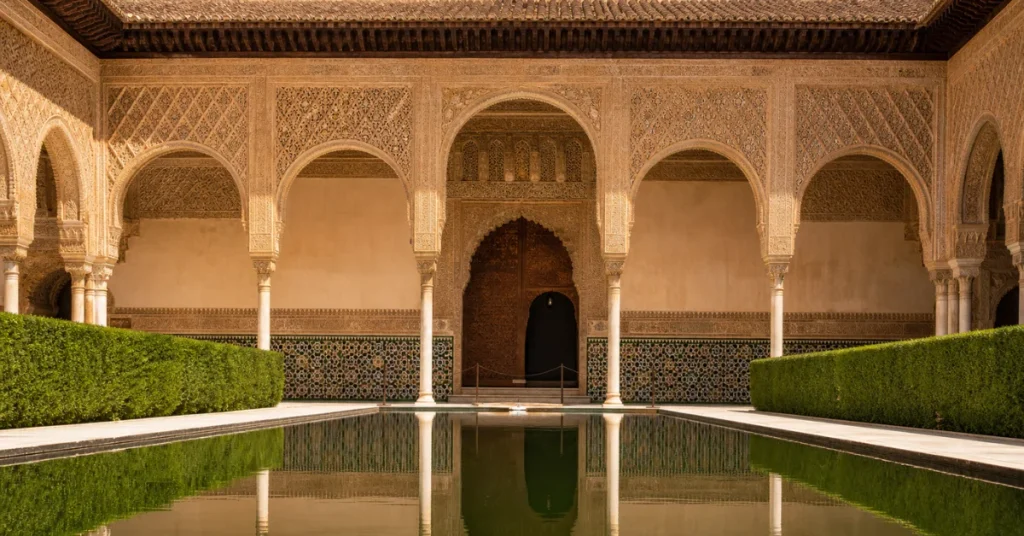
Seville brings its own version of this history through the Real Alcázar and the massive Seville Cathedral, while Córdoba’s Mezquita, a mosque-turned-cathedral with hundreds of red-and-white striped arches, leaves most first-time visitors speechless. Anyone who has managed a multi-city Andalusian itinerary knows the pace needs to slow down here. This isn’t a region to rush.
Tourist Places to Visit in Spain: Quick Comparison Table
Planning a route gets easier once you can see the regions side by side. Here’s a quick-reference breakdown of the tourist places to visit in Spain, organized by what each region does best.
| Region | Best For | Ideal Duration | Best Time to Visit |
|---|---|---|---|
| Barcelona | Architecture, nightlife | 3–4 days | April–June, Sept–Oct |
| Madrid | Art, food culture | 3 days | March–May |
| Andalusia (Granada, Seville, Córdoba) | History, Moorish heritage | 5–7 days | March–May, Oct–Nov |
| Balearic Islands | Beaches, hiking | 4–5 days | May–June, September |
| Canary Islands | Volcanic landscapes, winter sun | 5 days | October–April |
The Balearic and Canary Islands: Beyond the Beach Cliché
The Balearic Islands, especially Mallorca and Ibiza, pull huge numbers every summer, and for good reason. But the real draw for repeat visitors isn’t the nightlife. It’s the hiking trails through the Tramuntana mountains and the quiet coves that never make it into influencer reels.
The Canary Islands, meanwhile, have become one of the fastest-growing destinations within Spain itself, drawing over a million visitors in a single recent month according to national travel data. Volcanic landscapes on Lanzarote and Tenerife give travelers a completely different version of Spain, one with black sand beaches and lunar-looking terrain that feels closer to another planet than the Mediterranean.
New Entry Rule Coming: What ETIAS Means for Your Trip to Spain
Here’s something most travel guides still skip. Starting in the last quarter of 2026, visitors from the US, UK, Canada, Australia, and dozens of other visa-exempt countries will need to apply for ETIAS, a new pre-travel authorization, before entering Spain and the rest of the Schengen Area.
The good news is it won’t hit all at once. A voluntary transition period runs first, and ETIAS only becomes strictly mandatory from January 1, 2027. The application costs €20, takes about ten minutes online, and stays valid for three years across multiple trips. Travelers planning a Spain trip in late 2026 should apply during this early window rather than waiting, since processing can occasionally stretch beyond the usual few days if extra checks are needed.
This isn’t a visa. It’s closer to the US ESTA system, and it doesn’t change who’s allowed in, just how you register before you arrive.
Getting Around: Spain’s High-Speed Rail Network
Spain runs one of Europe’s most extensive high-speed rail networks, and it genuinely changes how you should plan an itinerary. The Renfe AVE connects Madrid to Barcelona in about two and a half hours, often faster door-to-door than flying once airport time gets factored in.

Seville, Córdoba, and Málaga all sit within a few hours of Madrid by train too, which is why so many seasoned travelers skip domestic flights entirely and build their whole route around rail. Booking tickets two to three weeks ahead usually secures noticeably cheaper fares than buying on the day.
What the Research Shows
Detailed analysis of recent travel patterns reveals something worth noting for anyone planning a trip: Catalonia remained the most visited region in the country through 2025, followed closely by the Canary Islands and the Balearics. The United Kingdom continues as Spain’s single largest source market, with steady growth also coming from the United States and Latin America.
Research into booking behavior shows travelers increasingly stretching trips beyond the classic coastal strip, choosing four-to-seven night stays over quick day trips. That pattern lines up with what regional tourism offices have been pushing for years: spreading visitors across more cities and more months, rather than concentrating everyone in Barcelona and Madrid every August.
Festivals Worth Timing Your Trip Around
Locals plan their whole year around certain dates, and visitors who time their trips the same way get a completely different experience of the country. Valencia’s Fallas festival in March fills the streets with towering sculptures that eventually go up in flames. Seville’s Feria de Abril turns the city into a week of flamenco dresses, horse parades, and late-night dancing.
Pamplona’s Running of the Bulls in July draws global attention, though it’s not for everyone given the real safety risks involved. La Tomatina, the tomato-throwing festival in Buñol near Valencia, has become a bucket-list event for younger travelers looking for something a little chaotic.
Practical Tips for Different Kinds of Travelers
Not every trip to Spain looks the same, and the tourist places to visit in Spain that suit a backpacker won’t necessarily suit a family with young kids or a retiree traveling solo.
- First-time visitors usually do best with a Madrid-Barcelona-Andalusia loop over 10 to 14 days.
- Families should prioritize Valencia’s City of Arts and Sciences and San Sebastián’s beaches, both of which feel far less overwhelming than Barcelona in peak season.
- Budget travelers can lean on Spain’s extensive regional train network and the country’s hostel scene, which remains cheaper than most of Western Europe.
- Older travelers or those with mobility concerns should book Alhambra tickets with accessible routing in advance, since parts of the complex include uneven cobblestone paths.
- Solo travelers tend to gravitate toward Granada and San Sebastián, both known for walkable centers and lower nightly costs than Barcelona.
Common Challenges Worth Planning Around
Overtourism has become a real conversation in cities like Barcelona and on islands like Mallorca, where local frustration over housing prices and crowding has led to new restrictions on short-term rentals. Anyone who has traveled during peak summer weeks knows the Alhambra, the Sagrada Família, and the Alcázar in Seville all require advance booking now, sometimes weeks ahead.
Language can be another minor hurdle outside major cities, though English is widely spoken in tourist-heavy areas. Packing comfortable shoes matters more than people expect, given how much of Spain’s charm is genuinely best experienced on foot.
The Outlook for 2026 and Beyond
Government forecasts suggest Spain could approach or even pass 100 million annual visitors in 2026, and tourism activity is projected to generate around €227 billion this year. Officials have been clear that the goal isn’t unlimited growth. It’s shifting toward what they call quality over quantity, meaning better-distributed tourism across regions and seasons rather than just bigger numbers every summer.
For travelers, that shift is good news. It means less pressure to visit only in July and August, and more encouragement to explore beyond the five or six cities that dominate every generic list.
Final Thoughts
Whatever list of tourist places to visit in Spain you end up building for your own trip, the country rewards travelers who slow down and wander off the obvious route. Between Gaudí’s unfinished cathedral, the Alhambra’s carved arches, and quiet island coves that never make the postcards, Spain gives back exactly what you put into planning it properly.
FAQs
What are the top tourist places to visit in Spain for first-time travelers?
Most first-timers build a route around Madrid, Barcelona, and at least one Andalusian city like Seville or Granada, since this combination covers the country’s art, architecture, and Moorish history in one trip.
Is Spain expensive to visit in 2026?
Spain remains more affordable than France or Italy for most categories, though prices in Barcelona and the Balearic Islands have risen noticeably due to demand.
When is the best time to visit Spain to avoid crowds?
Shoulder seasons, April to June and September to October, offer milder weather and noticeably smaller crowds than the peak July-August period.
Do I need ETIAS to visit Spain in 2026?
If you’re from the US, UK, Canada, Australia, or another visa-exempt country, you’ll need to apply once ETIAS launches in late 2026, though it won’t be strictly mandatory until January 2027.
Are there good tourist places to visit in Spain outside the major cities?
Absolutely. Regions like Asturias, the Canary Islands, and smaller Andalusian towns such as Ronda offer the same historic depth with far fewer crowds.