

Portugal isn’t a country you rush. Stand on a Lisbon miradouro at sunset, tram bells clanging somewhere below, and you’ll understand why so many travelers arrive for a weekend and quietly rebook their flight home. Figuring out the best places to visit in Portugal comes down to one simple truth: this small country packs hillside capitals, wine valleys, fairytale palaces, and two very different island groups into a space you could drive across in a single day.
That density is exactly what makes planning tricky. Do you chase beaches or castles? Cities or vineyards? You don’t have to choose just one. A well-built Portugal itinerary can hit several of these worlds without feeling rushed, as long as you know which regions deserve your time and which ones you can skip on a first trip.
The Best Places to Visit in Portugal for First-Time Travelers
Lisbon isn’t just the capital. It’s built across seven hills above the Tagus River, and its Alfama district still climbs those steep lanes past hand-painted azulejo tiles the way it has for centuries. Locals here will tell you the city rewards walkers, not planners. Half the charm comes from getting lost near São Jorge Castle and stumbling into a fado bar you never would’ve found on a map.
The Belém Tower and Jerónimos Monastery cover the history. Tram 28 covers the logistics, hauling visitors up hills that would otherwise wreck a first afternoon. And a pastel de nata from a bakery near Belém isn’t optional; it’s basically a checkpoint.
Less than an hour away, Sintra feels like a fairy tale because it genuinely was built to be one. The town earned UNESCO recognition back in 1995 as Europe’s first officially listed Cultural Landscape. The moment you see Pena Palace rising out of the fog in its yellow-and-red paint, it becomes clear why 19th-century royals picked this cool, forested hilltop as their summer retreat.
Anyone who has actually visited knows the trick: go early, or stay overnight. Tour buses from Lisbon crowd the palaces between late morning and mid-afternoon, and Quinta da Regaleira’s underground wells and Moorish Castle ruins are worth seeing without a line snaking behind you.
Porto and the Douro Valley Reward Slower Travel
Porto sits along the Douro River, its Ribeira district rising in tiers of color connected by six bridges. This is one of the best places to visit in Portugal if wine matters to your trip, since the cellars across the river in Vila Nova de Gaia have been aging port for centuries. A short cruise upriver into the Alto Douro Wine Region shows you where that wine actually comes from: terraced hillsides carved by hand into slate slopes, a landscape farmers have shaped for roughly two thousand years.
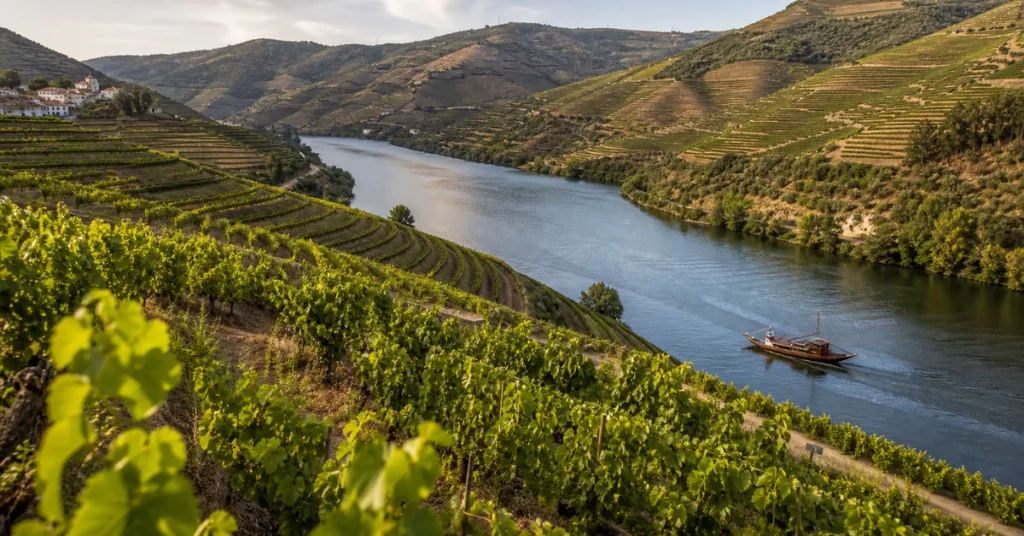
Anyone who has managed a Portugal itinerary knows the Douro deserves at least two full days, not a rushed day trip. The terraces photograph beautifully, sure, but the real value is slowing down enough to taste wine at a working quinta rather than a tourist-facing tasting room.
The Algarve Handles the Beach Half of the Trip
South of Lisbon, the Algarve delivers golden cliffs, sea caves, and beach towns like Lagos and Albufeira. This region earns its place among the best places to visit in Portugal purely on scenery. The Ponta da Piedade rock formations near Lagos rank among the most photographed coastlines in southern Europe. Families lean toward the calmer beaches near Vilamoura, while hikers head for the quieter western coast around Sagres, where Atlantic winds keep the crowds thinner.
Madeira and the Azores: Portugal’s Island Escapes
Two islands often get lumped together in Portugal guides, and they shouldn’t be. Madeira sits far off the mainland coast, a subtropical island with year-round spring weather, dramatic hiking trails along old irrigation channels called levadas, and botanical gardens that bloom in every season. It’s an easy flight from Lisbon and popular with travelers who’ve already done the mainland classics.
The Azores are a different story entirely, and one that’s easy to miss if you’re only reading older Portugal guides. This is a cluster of nine volcanic islands roughly two and a half hours by air from Lisbon, and it’s where a lot of the country’s newest travel buzz is landing. São Miguel, the largest island, holds crater lakes like Sete Cidades and the geothermal springs at Furnas, where locals still slow-cook stews underground using volcanic heat. Pico island carries its own UNESCO-listed vineyard landscape, grown in black volcanic soil. Whale watching runs nearly year-round across the archipelago.
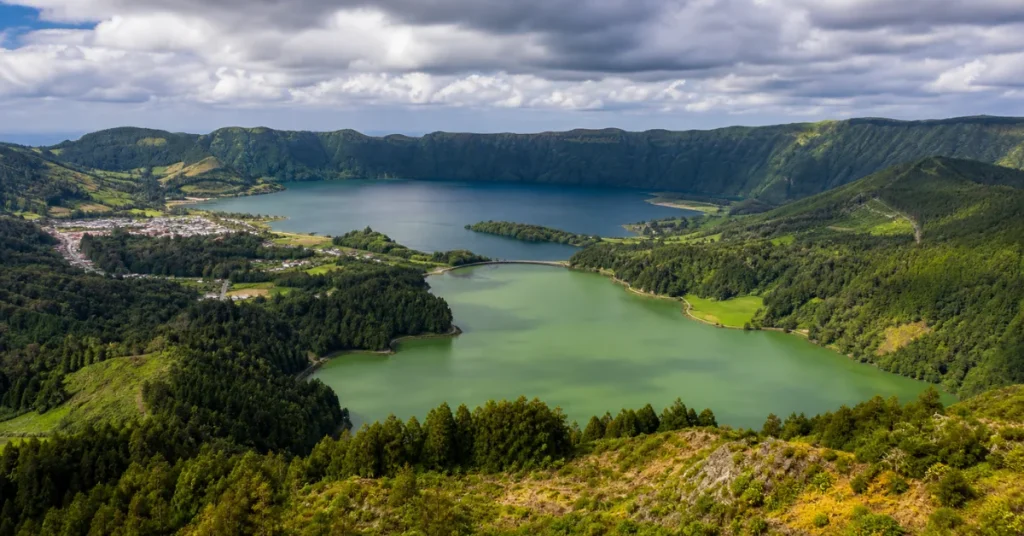
Those following this trend closely notice a consistent theme: the Azores tend to run noticeably cheaper than Madeira or the mainland’s coastal resorts, and the crowds simply haven’t caught up yet. Pack layers regardless of season; weather here shifts fast, and hiking trails around crater lakes can turn foggy within the hour.
Alentejo and Coimbra for Slow, Uncrowded Travel
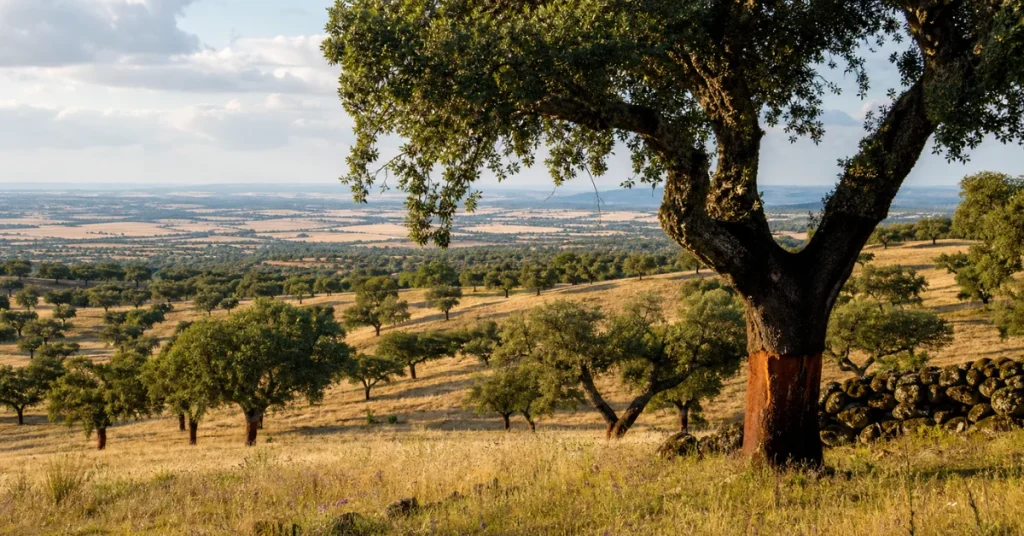
Inland, the Alentejo region moves at an entirely different pace. Évora’s Roman temple and eerie Chapel of Bones sit inside a walled medieval town, surrounded by cork forests and quiet vineyards. Fewer tour groups make it out here, which is precisely the appeal for travelers tired of shoulder-to-shoulder sightseeing.
Coimbra, home to one of Europe’s oldest universities, adds a different kind of history entirely, with a baroque library that still smells of old leather and candle wax. Neither city gets the attention Lisbon and Porto pull in, and both reward visitors who make the detour.
Region by Region: The Best Places to Visit in Portugal at a Glance
| Region | Best For | Days Needed | Best Season | Signature Highlight |
|---|---|---|---|---|
| Lisbon | First-time visitors, food, history | 3-4 | Apr-Jun, Sep-Oct | Alfama district and Tram 28 |
| Sintra | Palaces, day trip or overnight | 1-2 | Year-round, early mornings | Pena Palace |
| Porto & Douro Valley | Wine lovers, slower travel | 2-3 | May-Oct | Alto Douro terraces |
| Algarve | Beaches, families | 3-5 | May-Sep | Ponta da Piedade cliffs |
| Madeira | Hiking, mild climate | 3-4 | Year-round | Levada trails |
| Azores | Nature, budget-conscious travelers | 4-5 | Jun-Sep | Sete Cidades crater lake |
| Alentejo | Quiet culture, cork country | 2-3 | Mar-May, Sep-Nov | Évora’s historic center |
Who Should Prioritize Which Region
Not every traveler needs the same itinerary. Matching regions to your actual interests saves time and money.
- First-timers with limited days: Lisbon and Sintra cover history, architecture, and food in a compact loop.
- Wine and slow-travel fans: Porto plus a Douro Valley overnight delivers depth over breadth.
- Beach-focused families: The Algarve’s resort towns handle logistics well, with direct flights into Faro.
- Nature and budget travelers: The Azores offer crater lakes, whale watching, and lower prices than Madeira.
- Repeat visitors chasing something new: Alentejo and Coimbra sit well outside the usual Lisbon-Porto corridor.
Practical Info: Money, Language, and Entry Requirements
Portugal uses the euro, and card payments are accepted almost everywhere, even at small cafes in rural villages. English is common in Lisbon, Porto, and the Algarve’s tourist zones, but it thins out fast once you’re in the Alentejo countryside or the smaller Azorean islands, so a handful of Portuguese phrases go a long way.
As a Schengen Area country, many nationalities can enter for short tourist stays without a visa, though requirements vary by passport, so it’s worth checking current rules before booking. Portugal is also a genuinely safe country to travel through, with petty theft in crowded tourist areas being the main practical concern rather than anything more serious.
Practical Challenges Worth Planning Around
Nothing here is a dealbreaker, but a few realities catch first-time visitors off guard. Lisbon’s hills are genuinely steep, and cobblestone streets aren’t kind to wheeled luggage or unstable footwear. Sintra’s palaces now require timed-entry bookings, so showing up without a reservation often means long waits or missed access entirely.
Peak summer months bring heat and crowds to the Algarve and Lisbon alike, pushing many travelers toward May, June, September, and October instead. Public transport between regions is solid on major routes but thins out fast once you head into rural Alentejo, the Douro’s smaller villages, or between Azorean islands, so renting a car (or booking inter-island flights early) often makes more sense than relying on trains alone.
What the Research Shows
Detailed analysis of Portugal’s tourism patterns backs up what regional guides increasingly recommend. National tourism data from 2025 showed lodging establishments hosting roughly 32.5 million visitors, a three percent rise over the previous year, alongside a record 82.1 million overnight stays. What’s notable is where that growth actually happened: officials pointed to increased travel into the Alentejo, northern districts, and Setúbal Peninsula, regions that sat well outside the traditional Lisbon-Porto-Algarve triangle.
That shift matters for anyone weighing the best places to visit in Portugal in 2026. Lesser-known regions aren’t just quieter alternatives anymore; they’re where a meaningful share of new visitor demand is actually landing. Industry analysts note that this geographic spread also reflects growing interest in slower, less crowded travel styles across Europe generally, not just within Portugal.
The Outlook for 2026 and Beyond
Portugal’s tourism board has continued investing in regional connectivity, with airport capacity increases aimed at easing pressure on Lisbon’s main hub. Combined with rising domestic travel (overnight visits by Portuguese residents climbed over five percent in 2025), the country’s appeal looks set to keep broadening rather than concentrating further around its two biggest cities.
For travelers still deciding where to go, that’s genuinely good news. The best places to visit in Portugal aren’t limited to postcard shots of Lisbon trams and Sintra turrets anymore. Cork forests in the Alentejo, crater lakes in the Azores, and levada trails in Madeira are increasingly part of the conversation, and each offers a different, quieter version of the country worth building a trip around.
FAQs
How many days do you need to see the best places to visit in Portugal?
Ten to twelve days covers Lisbon, Sintra, Porto, and the Algarve at a comfortable pace, with two to three days per region including travel time. Add the Azores or Madeira and plan for closer to two weeks.
What’s the best time of year to visit Portugal?
Late spring (May-June) and early fall (September-October) bring mild weather without peak summer crowds or heat, and these months work well for both the mainland and the islands.
Is Portugal expensive compared to other Western European destinations?
Generally not. Portugal remains one of the more affordable countries in Western Europe for accommodation, food, and wine, and the Azores in particular run cheaper than Madeira or the coastal Algarve.
Do you need a car to see Portugal properly?
For Lisbon, Porto, and Sintra, public transport works fine. For the Douro Valley, Alentejo, rural Algarve, or getting around Madeira and the Azores, a rental car makes exploration far easier.
Which region is best for first-time visitors?
Most first-timers start with Lisbon and Sintra, then add either Porto, the Algarve, or the Azores depending on whether wine country, beaches, or nature matter more.