

I spent three weeks bouncing between La Paz and the Salar de Uyuni on a budget that would barely cover four nights in a mid-range European hotel, and I still came home with cash left over. That’s the honest starting point for anyone researching the cheapest countries to visit in South America: the continent has some of the best value-for-money travel left on the planet, but “cheap” looks different depending on which border you cross.
What Makes These the Cheapest Countries to Visit in South America
Bolivia, Paraguay, Peru, Ecuador, and Colombia consistently top the list when travelers compare daily spend across the continent. Backpackers moving through these five countries can expect to spend somewhere between $25 and $40 a day, covering hostel beds, local meals, and short-haul transport. That’s a real number pulled from current 2026 travel data, not a rough guess.
Bolivia sits right at the bottom of that range and, for many long-term backpackers, remains the single cheapest country to visit in South America. Hostel dorms start around $8 a night in La Paz. A filling almuerzo, the set-menu lunch found on nearly every corner, runs $2 to $4. Long-distance buses connecting major cities cost $15 to $30 for routes that would cost triple that in Chile or Brazil.
Bolivia: The Benchmark for Budget Travel
Anyone who has actually ridden a night bus across the Bolivian altiplano knows the trade-off isn’t really about comfort, it’s about altitude. La Paz sits above 3,600 meters, and Potosí climbs even higher, so the first two days often come with a headache and shortness of breath before your body adjusts. Locals here will tell you coca leaf tea helps, and most travelers find it does.
Once you’ve acclimatized, the payoff is enormous. A three-day tour across the Salar de Uyuni salt flats, the largest in the world and a genuine bucket-list landscape, typically starts around $130 including meals and a guide. The Death Road bike descent from La Paz runs from roughly $90. Cable car rides across the city cost under fifty cents. Few destinations anywhere pack this much scenery per dollar spent.
The catch: English is far less common here than in Peru or Colombia, and infrastructure outside the main tourist corridors can be patchy. Anyone who has traveled independently through rural Bolivia knows a little conversational Spanish goes a long way toward smoother days.
Bolivia also got noticeably easier to reach in late 2025. Since December 1, 2025, US citizens no longer need a tourist visa to enter Bolivia, and the old $160 reciprocity fee that travelers paid for nearly two decades has been dropped entirely. You’ll still need to complete a short, free online pre-registration called SIGEMIG before arrival, but the paperwork and cost that used to make Bolivia feel like a bigger commitment than its neighbors are gone.
Paraguay: The Quiet Alternative Nobody Talks About
Paraguay barely registers on most gap-year itineraries, and that’s precisely why it belongs on any honest list of the cheapest countries to visit in South America. Far fewer tourists means prices haven’t been pushed up by demand the way they have in Cusco or Cartagena.
What you get instead is colonial architecture in Asunción, Jesuit mission ruins that predate most European settlements in the region, and access to the Pantanal wetlands without the crowds. Hostel beds run comparable to Bolivia’s, and set lunches are similarly cheap. The trade-off is thinner traveler infrastructure. There are fewer English-speaking tour operators, and fewer other backpackers to swap notes with along the way.
Peru and Ecuador: Low Cost Without Sacrificing the Highlights
If this is your first trip to the continent, Peru and Ecuador make the transition easier while still keeping daily costs low. Both offer major, world-famous sights alongside genuinely affordable everyday living.
Ecuador uses the US dollar as its official currency, which simplifies budgeting for American travelers even if it does push prices slightly higher than neighboring countries that still use local currency. No visa is required for US citizens staying up to 90 days. One look at a Quito street market and it becomes clear how far a modest daily budget still goes, though the Galápagos Islands are the exception. Organized tours there start around $1,000 for a week, so anyone planning a Galápagos add-on should budget separately from the mainland portion of the trip.
Peru’s costs sit close to Ecuador’s, and the country’s rail and bus network makes it straightforward to string together Lima, Cusco, and Machu Picchu without blowing through savings. Set-menu lunches, shared taxis, and hostel dorms keep daily spend manageable even during peak trekking season.
Colombia: Coastal Value and Growing Popularity
Colombia has quietly become one of the most talked-about entries among the cheapest countries to visit in South America, particularly for travelers chasing Caribbean beaches on a shoestring. Towns like Santa Marta and Palomino on the northern coast offer hammock hostels, fresh seafood, and warm water without the price tag attached to similar beach destinations elsewhere in Latin America.
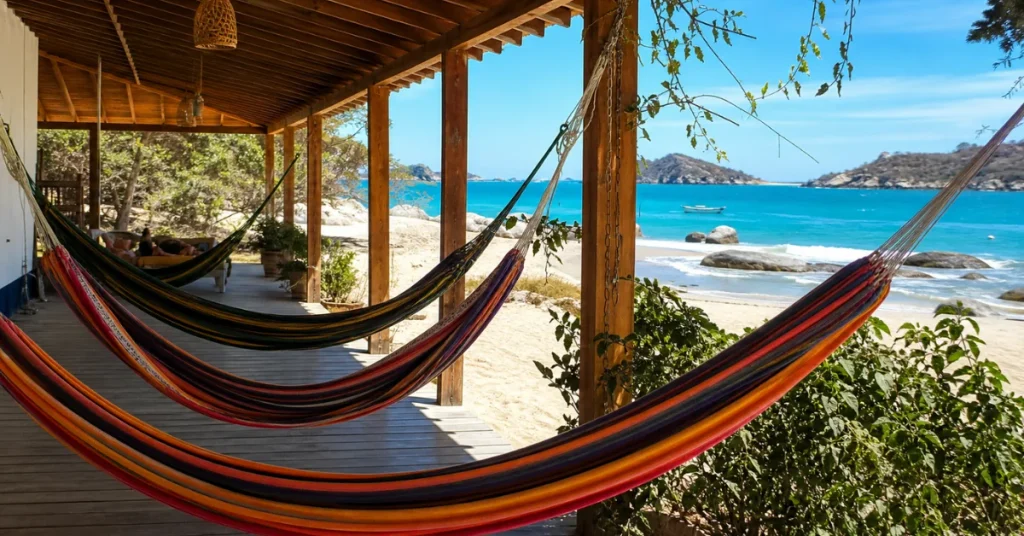
US citizens don’t need a visa for stays up to 90 days, and the paperwork involved is limited to a free online entry form completed shortly before travel. Spanish is essential outside the main tourist zones, since English isn’t widely spoken once you leave Bogotá or Medellín’s more international neighborhoods. Anyone who has managed a multi-week Colombia itinerary knows the country’s geography shifts fast, from cool Andean cities to humid coastline, so packing for range matters more here than almost anywhere else on the continent.
Argentina: The Paradox Worth Understanding
Argentina doesn’t usually make a shortlist of budget destinations on paper, and by regional standards it runs pricier than Bolivia or Paraguay. Yet the country’s currency situation creates a genuine paradox. Travelers who understand the informal “blue dollar” exchange rate and pay in cash US dollars can stretch their money significantly further than the official rate suggests.
Buenos Aires’ European-style boulevards, Patagonia’s glaciers, Mendoza’s vineyards, and the thunder of Iguazú Falls all remain within reach of a traveler willing to plan currency exchange carefully. The trade-off is Argentina’s sheer size. Long distances between destinations mean budgeting extra for domestic flights or overnight buses, and those costs add up fast if your itinerary tries to cover too much ground.
What the Research Shows
Independent cost-tracking data from 2026 places Colombia, Bolivia, Argentina, and Ecuador among the least expensive countries for travel on the continent, with average daily traveler costs ranging roughly from the mid-$50s to the mid-$70s once accommodation, food, and local transport are combined. Chile, Brazil, and Uruguay sit at the opposite end, running noticeably higher across nearly every category.
Continent-wide, current 2026 estimates put backpacker budgets at $30 to $50 a day, mid-range travel at $60 to $100 a day, and comfort-level trips at $130 to $200 a day. A trip built mostly around Bolivia, Ecuador, and Paraguay can cost roughly half of an equivalent itinerary weighted toward Chile or Argentina’s pricier regions. Total budget-travel costs across a multi-week South America trip, excluding international flights, generally land between $1,000 and $2,000.
When to Go for the Lowest Prices
Timing changes the math more than most first-time visitors realize. Book travel during the shoulder seasons of April to May or September to November, and daily costs across Peru and Bolivia’s highlands typically drop 20 to 30 percent compared to peak dry season rates.
Bolivia takes the seasonal swing furthest. The wet season, running December through March, counts as local off-season there, and hotels and tour operators regularly cut prices anywhere from 40 to 95 percent to keep bookings coming in. Rain in La Paz, Sucre, and Potosí usually arrives in short afternoon bursts rather than washing out the whole day, so the discount rarely costs much in actual sightseeing time.
June through August works the opposite way. It’s the driest, most stable stretch across the Andes, which means it’s also when prices peak in Bolivia, Peru, and Ecuador’s highland regions. If your dates are flexible, shifting a trip by even a few weeks can meaningfully change what the cheapest countries to visit in South America actually cost you.
Cost Comparison at a Glance
Here’s how daily costs stack up across the region, based on current 2026 backpacker-level pricing and each country’s entry rules for US passport holders.
| Country | Backpacker Daily Budget | Hostel Dorm Bed | Local Set Meal | Visa for US Citizens |
|---|---|---|---|---|
| Bolivia | $25–$35 | $8–$12 | $2–$4 | Not required (90 days, as of Dec 2025) |
| Paraguay | $25–$35 | $8–$13 | $2–$5 | Not required (90 days, extendable) |
| Peru | $30–$40 | $10–$15 | $3–$5 | Not required (up to 183 days) |
| Ecuador | $30–$40 | $10–$15 | $3–$6 | Not required (90 days) |
| Colombia | $30–$40 | $10–$16 | $3–$6 | Not required (90 days) |
| Argentina | $35–$50* | $12–$18 | $4–$8 | Not required (90 days) |
*Argentina’s range assumes paying in cash US dollars at the informal exchange rate. Paying by card at the official rate pushes real costs meaningfully higher.
These figures reflect budget-traveler averages rather than comfort or family-style trips, and they shift with the season covered above, so treat them as a starting point for planning rather than a fixed number.
Matching the Cheapest Countries to Visit in South America to Your Trip Style
Not every traveler wants the same experience, and these destinations don’t all offer the same kind of trip.
- Chasing mountains and dramatic landscapes: Bolivia and Peru
- Wanting Caribbean beaches without Caribbean prices: Colombia’s northern coast
- Craving a slower, less-touristed pace: Paraguay
- Balancing iconic sights with easy logistics: Ecuador
- Willing to plan currency exchange for major savings: Argentina
Common Cost Traps to Watch For
Even the most budget-friendly destinations carry hidden costs that catch first-time visitors off guard. Bolivia’s Galápagos-style exception is altitude sickness medication and gear, which isn’t cheap if bought locally last-minute. Ecuador’s Galápagos tours can double an otherwise modest trip budget if not planned separately. Argentina’s official exchange rate versus the informal cash rate can cost careless travelers a meaningful percentage of their total budget if they exchange money at banks or ATMs instead of understanding the blue-dollar system first.
Connectivity is another underestimated expense. Data plans purchased locally in each new country add up over a multi-country itinerary, and travelers who don’t plan ahead often overpay at airport kiosks. Comparing local SIM or eSIM pricing before departure is one of the simplest ways to protect a tight budget.
Money Habits That Actually Save You Cash
Anyone who has managed money across several of these countries in one trip knows the small habits matter as much as picking the right destination.
Cash still rules in Bolivia and Paraguay. ATMs exist in cities but thin out fast once you leave them, and many small guesthouses, markets, and long-distance bus counters simply don’t take cards. Carry more cash than feels natural when heading into rural areas, and withdraw larger amounts less often to avoid stacking up your bank’s foreign transaction fees.
Eating like a local is the single biggest daily saving across every country on this list. Look for restaurants that charge by weight, usually signposted “por kilo,” or order the fixed midday menu that most restaurants offer regardless of what’s printed on the regular menu. A market meal or set lunch typically costs a third of what the same dish runs at a restaurant built for tourists, and the food is often better.
In Argentina, the cash-dollar habit deserves its own line. Exchanging money through official banks or airport counters gets you the weaker official rate, while paying directly in cash US dollars, or exchanging through legitimate exchange houses offering the informal rate, stretches a travel budget dramatically further. It’s worth confirming the current rate through a reliable source before you arrive, since it shifts.
Practical Steps for Planning Your Route
Anyone building an itinerary around the cheapest countries to visit in South America benefits from a few concrete steps before booking flights.
First, decide whether altitude is a factor. Bolivia and parts of Peru sit well above 3,000 meters, and giving yourself two to three acclimatization days protects both your budget and your health, since getting sick mid-trip is far costlier than a slow start.
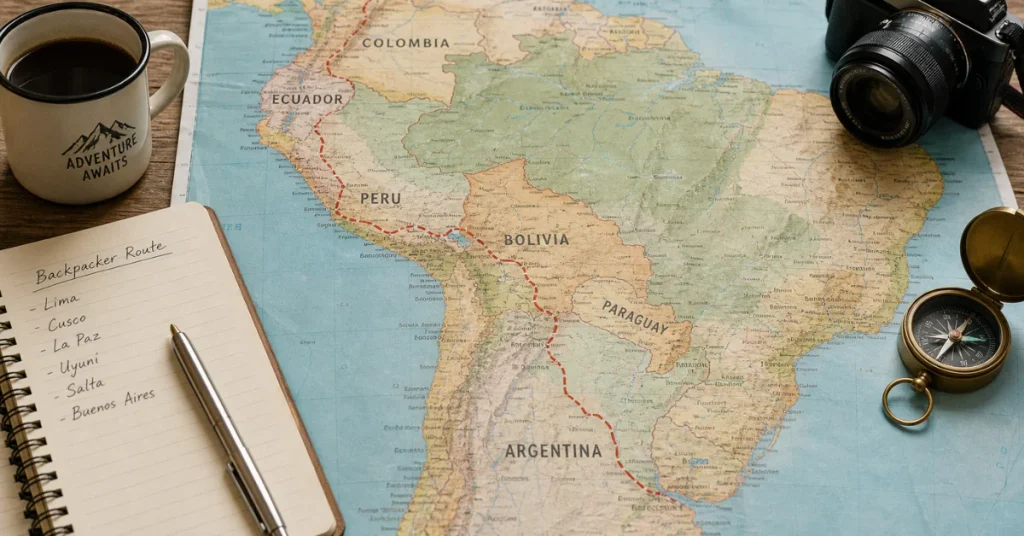
Second, research land border crossings between Bolivia, Peru, Paraguay, and Argentina. Overland travel is dramatically cheaper than regional flights and often more scenic, though journeys can run long. The Puno-to-Copacabana crossing over Lake Titicaca connects Peru and Bolivia for a fraction of a flight’s cost, and the La Quiaca-to-Villazón crossing links northern Argentina to southern Bolivia for travelers heading that direction.
Third, separate any bucket-list add-ons, like the Galápagos Islands or a multi-day Salar de Uyuni tour, from your daily budget calculations. These are worth the splurge for most travelers, but they shouldn’t be baked into your average daily cost or you’ll misjudge how far your money stretches elsewhere.
Finally, travelers on tighter timelines should prioritize fewer countries rather than rushing through all five. Long-distance travel within Argentina and Bolivia alone can eat days that would otherwise go toward actually experiencing a destination.
Who Should Prioritize This Kind of Trip
Gap-year travelers and backpackers get the most obvious value here, but the appeal extends further. Digital nomads increasingly base themselves in Medellín or coastal Ecuador for months at a time, taking advantage of low living costs alongside improving internet infrastructure. Retirees stretching a fixed pension often find Bolivia and Paraguay offer a standard of living that would be unaffordable back home. Couples on an extended sabbatical frequently combine Peru’s cultural sites with Colombia’s beaches for a trip that feels far more expensive than it actually was.
Looking Ahead
As of 2026, interest in budget travel across South America continues climbing, driven partly by currency volatility that favors travelers holding stronger foreign currencies and partly by improving infrastructure in previously under-visited regions like Paraguay. None of that changes the fundamentals, though. The cheapest countries to visit in South America remain cheap because tourism hasn’t fully caught up with what these places offer, and that gap is exactly what makes right now a smart time to go.
Conclusion
Bolivia, Paraguay, Peru, Ecuador, and Colombia continue to anchor any honest ranking of the cheapest countries to visit in South America, while Argentina offers a currency-driven workaround for travelers willing to do their homework. None of these destinations demand you sacrifice experience for affordability. Salt flats, colonial towns, Caribbean beaches, and Andean peaks are all still within reach of a traveler working with a modest daily budget, and that combination is becoming harder to find anywhere else in the world.
FAQs
What is the single cheapest country to visit in South America?
Bolivia consistently ranks as the most affordable, with backpacker daily budgets starting around $25 once accommodation, food, and local transport are combined.
Is Colombia cheaper than Peru?
The two run close, with Colombia’s coastal towns often slightly cheaper than Peru’s major tourist circuits, though both remain solidly budget-friendly compared to Chile or Brazil.
How much should I budget per day for backpacking South America?
Current 2026 estimates put backpacker budgets between $30 and $50 a day continent-wide, with Bolivia and Paraguay sitting at the lower end of that range.
Do I need a visa for the cheapest South American countries?
US citizens typically don’t need a visa for stays up to 90 days in Bolivia, Peru, Ecuador, or Colombia, though requirements vary by nationality and should always be confirmed before booking.
Is Argentina worth visiting on a budget despite its reputation for being pricier?
Yes, travelers who understand Argentina’s informal currency exchange rate and pay in cash can stretch their budget significantly further than official pricing suggests.