
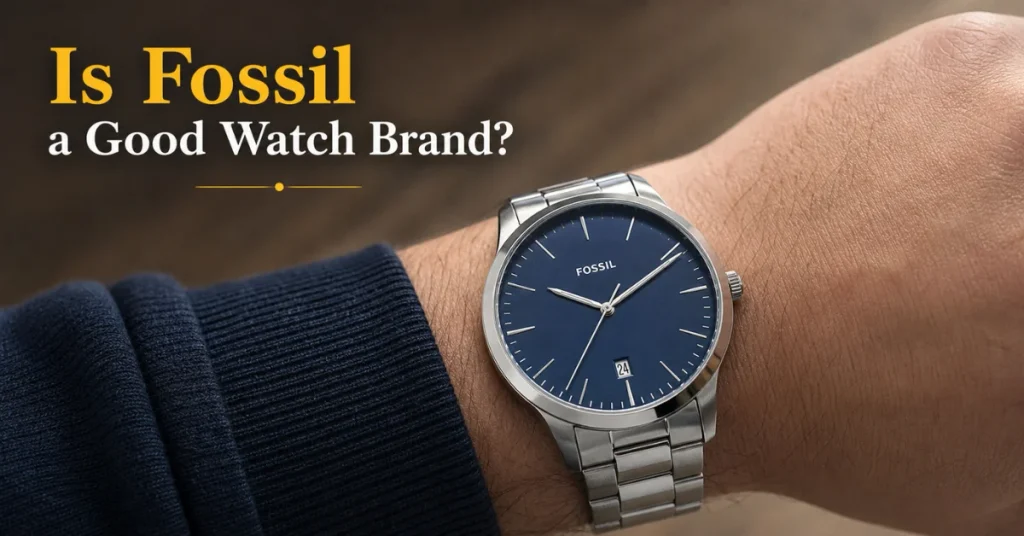
Is Fossil a good watch brand? It’s one of the most searched questions among people shopping for a new wrist watch, and the honest answer depends on what you actually want from a timepiece. Fossil built its name on fashion-forward design and approachable pricing rather than horological precision, and that trade-off shapes almost everything about the ownership experience.
Founded in 1984 in Richardson, Texas, Fossil started small: a handful of retro-styled watches sold in playful tin boxes. That packaging gimmick became a signature, and it helped the company grow into a global name that now owns or licenses Skagen, Michael Kors watches, Diesel, Emporio Armani, and several other labels sold through Fossil Group.
Is Fossil a Good Watch Brand for Style and Value?
Style is where Fossil earns most of its fans. The catalog ranges from thin, minimalist dress watches to chunky chronographs, and the designs update fast enough to keep pace with what’s trending each season. That’s a real advantage for anyone who wants a wardrobe of watches instead of one heirloom piece.
Pricing sits mostly between $75 and $250, which puts Fossil firmly in the accessible middle of the market rather than the entry-luxury tier occupied by brands like Tissot or Longines. Movements are typically Japanese quartz, with a small number of automatic and Swiss-made options in the higher-end lines.
Anyone who has shopped this segment knows the comparison usually lands one of two ways. Buyers who care most about looking sharp on a budget lean toward Fossil. Buyers chasing long-term durability and mechanical craftsmanship tend to drift toward Seiko, Citizen, or Casio instead. Laid side by side, the differences get a lot clearer:
| Brand | Typical Price Range | Movement | Standard Warranty | What the Warranty Covers | Best For |
|---|---|---|---|---|---|
| Fossil | $75–$250 | Japanese quartz, some automatic | 2 years | Movement, hands, dial only | Style variety, budget shoppers |
| Seiko | $100–$350 | In-house quartz and automatic | 3 years | Movement, case, metal band | Long-term reliability |
| Citizen | $150–$400 | Quartz, Eco-Drive solar | 5 years (US) | Movement and case | Set-and-forget ownership |
| Casio | $20–$150 | Quartz, digital | 1 year | Basic manufacturing defects | Rugged daily wear, tech features |
That table alone explains a lot of the online frustration. Fossil’s coverage window is the shortest of the four, and it excludes the very parts, straps, batteries, and case plating, that owners complain about most.
What Owners Actually Report
Customer feedback on Fossil is genuinely mixed, and that split tells its own story. A large share of reviewers describe watches that held up for five, six, even seven years of daily wear with only a battery swap needed along the way. Others describe straps fading within months or movements failing well inside what they assumed was a warranty period, followed by repair quotes that made a replacement feel more sensible than a fix.
The mixed reviews are exactly why people keep asking is Fossil a good watch brand in the first place. That inconsistency isn’t unusual for a mass-market fashion brand producing dozens of collections a year across multiple factories. Quality control varies by model and materials, which is exactly why checking reviews for the specific watch, not just the brand name, matters more than people assume.
Anyone who has managed a household full of hand-me-down watches will recognize the pattern too: the older Fossil pieces from a decade ago often outlast the newer ones bought last year. That’s partly a manufacturing shift and partly a reflection of how fast the fashion-watch category has expanded overall.
What the Fossil Warranty Actually Covers (And What It Doesn’t)
This is the part most reviews skip, and it answers a good chunk of the “why did my watch fail so fast” complaints. Fossil’s official policy runs for two years from the original purchase date, and during that window only three components are protected: the movement, the hands, and the dial.
Everything else sits outside the covered list. Battery, strap, bracelet, case, crystal, and any plating on the case or band are explicitly excluded, even inside the two-year window. Water damage is only covered if the watch was used within its marked water-resistance rating, so a splash on a 30-meter model voids that claim entirely.
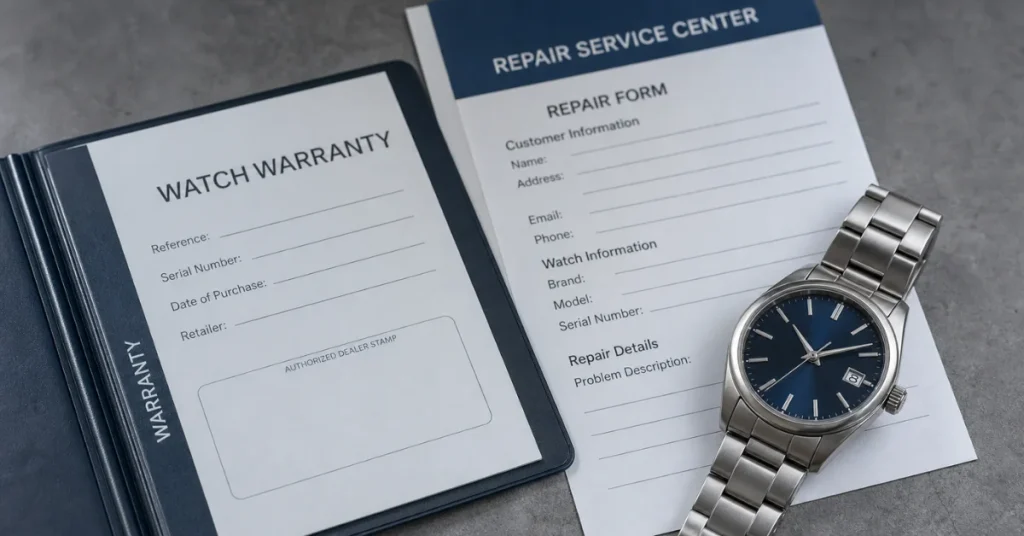
A typical repair for something outside warranty gets routed through Fossil’s service center, and turnaround has historically run four to six weeks. That’s not unusual for the industry, but it does explain why some owners describe repair quotes that made buying a new watch feel like the cheaper option.
One detail worth knowing if brand loyalty matters to you: Skagen, which sits under the same Fossil Group umbrella, has historically carried a longer warranty promise on material defects than the Fossil-branded line itself. Two watches from the same parent company, two different coverage terms, which is a detail almost no buying guide mentions.
What the Research Shows
Independent market research put worldwide watch industry revenue at roughly $135.63 billion in 2026, spanning both analog and digital devices worn on the wrist. Budget-friendly, style-led watches make up a meaningful share of that total, since affordability keeps pulling in students, young professionals, and casual buyers who want a watch for every outfit rather than one lifetime piece.
That broader shift toward accessible, frequently refreshed accessories is precisely the lane Fossil has built its business around, and it explains why the brand keeps expanding its catalog even as premium and luxury segments grow through a different customer base entirely.
The Smartwatch Chapter Is Officially Closed
Anyone researching Fossil in 2026 should know the smartwatch story is finished. Fossil Group confirmed in early 2024 that it was exiting the connected-watch business entirely, redirecting resources back into designing and distributing traditional watches, jewelry, and leather goods under its own and licensed brand names. The last of its Wear OS devices, including models sold under the Citizen and Skagen names, were pulled from shelves through 2024 and 2025.
That matters for buyers because it removes any confusion about whether a “Fossil watch” might mean a smart device. Today, buying Fossil means buying a traditional quartz or occasionally automatic timepiece, full stop. Software support for existing smartwatches continues for a limited window, but no new connected models are coming.
Who Should Actually Buy One
Deciding whether Fossil is a good watch brand for you personally comes down to what you actually value in a watch, and being honest about that upfront saves buyer’s remorse later.
Good fit if you:
- Want a stylish watch under $250
- Change up your look often and don’t mind swapping watches
- Are buying a gift and want recognizable branding
- Don’t need heirloom-grade durability
Better to look elsewhere if you:
- Want a watch that lasts 15+ years without service
- Care deeply about in-house movement engineering
- Plan to resell or pass the watch down
- Prefer minimal styling that won’t look dated in five years
So, Is Fossil a Good Watch Brand in 2026?
Weighing all of it together, is Fossil a good watch brand? For casual, style-conscious buyers who want variety without a steep price tag, yes, it earns its spot on the wrist. For collectors chasing longevity and mechanical prestige, the honest answer leans toward brands built specifically for that purpose instead.
The brand isn’t pretending to be something it’s not. It sells fashion first, function second, and priced accordingly. Judged by that standard, rather than against Swiss horology, Fossil holds up reasonably well, as long as you go in knowing exactly what that two-year warranty will and won’t fix.
FAQs
Does Fossil use real leather straps?
Most leather-strap models use genuine leather, though vegan leather options exist in some newer collections. Product listings specify the material.
How long does a Fossil watch battery last?
Typically one to two years of normal wear before a replacement is needed, similar to most quartz watches on the market. Note that battery replacement isn’t covered under the standard warranty.
Are Fossil watches waterproof?
Water resistance ranges by model, usually between 30 and 100 meters. That covers splashes and handwashing but isn’t rated for swimming or diving on most pieces, and water damage outside that rating voids the warranty.
Is Fossil owned by a bigger company?
Fossil operates under Fossil Group, which also owns Skagen and holds licenses for brands including Michael Kors, Diesel, and Emporio Armani watches.
Does Fossil still make smartwatches?
No. Fossil exited the smartwatch business in 2024, and its remaining Wear OS devices were discontinued from sale by 2025.