
Thailand alone pulled in close to 33 million foreign visitors in 2025, and most of them landed in the same six or seven cities. Bangkok, Phuket, Chiang Mai, Bali, Siem Reap, Hanoi. If you’ve done that circuit once, you already know what off the beaten path Southeast Asia actually means: everything that isn’t on that list.
This isn’t about avoiding people for the sake of it. It’s about the version of the region that still runs on its own schedule, where a boat still shows up when the tide allows it and not when an app says it will.
What Off The Beaten Path Southeast Asia Actually Looks Like in 2026
Ten years ago, “hidden” meant Luang Prabang or the Perhentian Islands. Both are lovely. Both are also fully on the map now, with tour buses and boutique hotels to match.
Off the beaten path Southeast Asia in 2026 has moved further out. Think Sarawak’s rainforest interior instead of Malaysia’s beaches. Think Myanmar’s hill towns instead of its temples alone. Think a coffee-growing plateau in southern Laos instead of the riverside cafes of Vientiane.
The pattern holds across the region: the closer a place sits to an international airport with direct flights, the more it’s already been found. The good stuff tends to start a few hours past that airport, down a road that turns to gravel at some point.
Borneo’s Rainforest Interior, Not Its Beaches
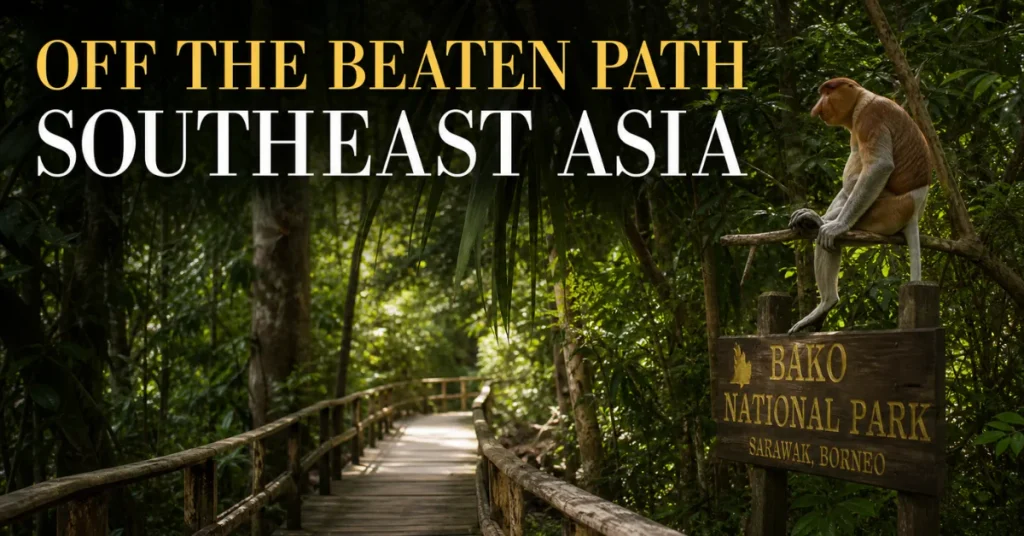
Sarawak gets skipped by travelers chasing Southeast Asia’s beach circuit, and that’s exactly the appeal. Bako National Park sits a short boat ride from Kuching and holds one of the best chances anywhere to see a wild proboscis monkey, alongside bearded pigs and silvered langurs moving through sixteen color-coded jungle trails.
Anyone who has stayed overnight in a longhouse along the Batang Ai river system will tell you the pace changes fast. Meals happen when the rice is ready, not on a clock, and evenings run on stories told by firelight rather than a nightlife strip.
Kuching itself works as a base: cheap, walkable, and close enough to Bako, Semenggoh’s orangutan center, and the Annah Rais longhouse to fill four or five days without repeating a single day.
Laos’ Bolaven Plateau and the Coffee Trail
Laos already sits a notch below Vietnam and Thailand in raw visitor numbers, and the Bolaven Plateau sits a further notch below Luang Prabang within Laos itself.
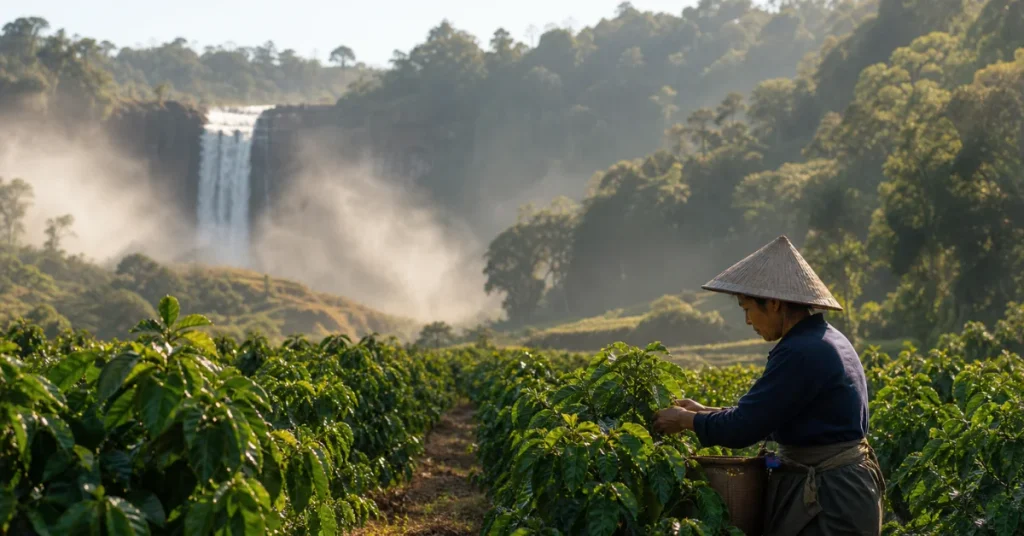
The draw here is cooler air, working coffee farms, and waterfalls that don’t require a queue. Renting a scooter with a driver-guide and stopping wherever a viewpoint looks good is the standard way to see it, and locals running the roadside stalls tend to have grown the beans in the cup you’re holding.
This is a slow place by design. Travelers looking for a packed itinerary should go elsewhere; travelers who want a day with room to breathe will find it here.
Myanmar’s Hill Towns and the Golden Rock
Myanmar’s tourism numbers remain far below its neighbors, which keeps places like Kalaw, Ngapali Beach, and the gravity-defying Golden Rock pilgrimage site well outside the usual Southeast Asia trail.
Kalaw works as a trekking base into Shan hill-tribe villages, with routes that can run two to three days on foot before dropping travelers at Inle Lake. Ngapali handles the beach side of things without the resort density of Phuket or Bali. Golden Rock, meanwhile, draws pilgrims first and tourists a distant second, which changes the entire feel of the site.
Anyone planning this route should check current entry requirements and regional safety guidance before booking, since conditions in parts of Myanmar can turn with little notice.
Thailand Away From Phuket: The Mae Hong Son Loop
Thailand doesn’t need an introduction, but most of its 33 million annual visitors never leave the well-worn stretch between Bangkok and the southern islands.
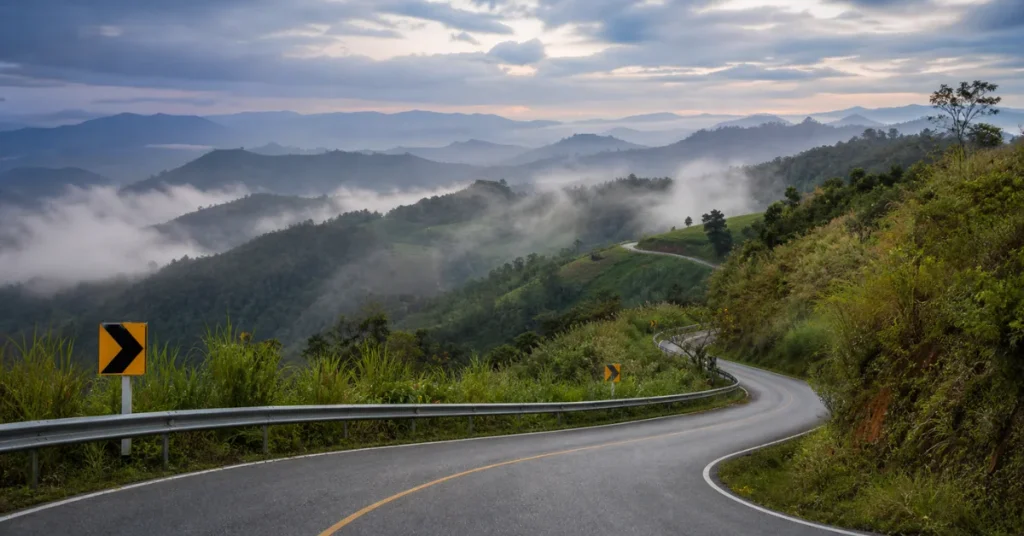
The Mae Hong Son Loop flips that. It’s a roughly 600-kilometer circuit through Thailand’s northwest, starting and ending in Chiang Mai, passing through Pai, the misty valley town of Mae Hong Son, and the Shan and hill-tribe villages along the way. Riders who’ve completed it talk about the 1,864 curves on the road between Chiang Mai and Mae Hong Son the way marathoners talk about mile twenty.
Four days covers the basics by scooter or car. Ten days, done properly, turns it into one of the better road trips anywhere in Asia.
Lombok: Next Door to Bali, a World Apart
Lombok sits close enough to Bali that a fast boat covers the distance in under two hours, yet it still feels like a different decade. Mount Rinjani dominates the interior, southern surf breaks near Kuta stay uncrowded most of the year, and Sasak villages in the north still run on weaving and farming rather than souvenir shops.
Anyone who has watched sunset from Rinjani’s slopes after a two-day trek understands why travelers keep quietly recommending Lombok to friends without posting about it first.
What The Research Shows
International arrivals across the region’s biggest destinations reached roughly 139 million in 2025, yet growth has clustered heavily around a small set of cities and coastlines rather than spreading evenly. Malaysia’s overall visitor numbers climbed by double digits through parts of 2025, while several secondary provinces and rural regions inside the same countries barely registered a change in footfall.
That gap between headline arrival numbers and where those travelers actually go is the clearest evidence that off the beaten path Southeast Asia isn’t shrinking. If anything, the space between the well-known stops and everywhere else has grown wider, since infrastructure and marketing budgets keep concentrating on the same handful of hubs.
Tour operators running trips into Sarawak, the Bolaven Plateau, and northern Myanmar consistently report longer average stays from the travelers who do show up, even though total volume stays modest. People aren’t passing through these places quickly. They’re settling in.
The Real Challenges of Off The Beaten Path Southeast Asia
None of this comes free of friction, and pretending otherwise would do readers a disservice.
- Connectivity drops fast. Mobile data thins out past provincial capitals, and some longhouses and hill villages run on generator power for a few hours a day.
- English gets rarer. A phrasebook or translation app matters more here than in Bangkok or Kuala Lumpur.
- Transport takes planning. Buses to places like Mae Hong Son or the Bolaven Plateau run on limited daily schedules, and boats to Bako only operate at certain tide windows.
- Medical care sits further away. Anyone with ongoing health needs should map the nearest hospital before heading into remote provinces.
Anyone who has traveled these routes before knows the trade-off is the point. The friction is what keeps the crowds thin.
Planning It: Visas, Seasons, and Who This Actually Suits
Timing shifts by country. Northern Vietnam and Thailand’s mountain provinces run best from November through February, when temperatures drop and skies stay clear. Southern Laos and Myanmar’s dry season stretches roughly the same months, while Sarawak’s rainforest stays wet year-round, with slightly heavier rain between November and February.
Visa rules vary widely and change often enough that checking an official government portal before booking flights beats relying on a blog post from two years ago.
Entry rules carry more quirks here than the average Southeast Asia trip, and most guides skip the details that actually trip travelers up. Sarawak runs its own immigration control separate from the rest of Malaysia. Even flying in from Kuala Lumpur, travelers get a distinct entry stamp for Sarawak and need to complete Malaysia’s Digital Arrival Card beforehand, the same as entering a different country. Laos offers a straightforward visa on arrival valid for 30 days, plus an e-visa option, though a new digital immigration form became mandatory in late 2025 and replaced the old paper arrival card. Myanmar’s e-visa costs 50 dollars, allows a single entry only, and only clears travelers through four designated ports of entry, so anyone planning to leave and come back needs two separate e-visas rather than one.
| Destination | Country | Best Months | Getting There | Best Suited For |
|---|---|---|---|---|
| Bako National Park & Kuching | Malaysia | March–October | Fly into Kuching, then boat to the park | Wildlife trekkers, first-timers to Borneo |
| Bolaven Plateau | Laos | November–February | Fly to Pakse, scooter or driver-guide from there | Slow travelers, coffee lovers |
| Kalaw, Ngapali, Golden Rock | Myanmar | November–February | Fly to Yangon or Mandalay, then domestic transfers | Trekkers, pilgrimage-curious travelers |
| Mae Hong Son Loop | Thailand | November–February | Fly to Chiang Mai, rent a scooter or car | Road-trippers, motorbike riders |
| Lombok | Indonesia | April–October | Fast boat or flight from Bali | Surfers, hikers, Bali repeat visitors |
Worth flagging: these five stops sit in four different countries with no direct flights linking most of them, so this isn’t a single itinerary. Most travelers pick one region per trip, whether that’s Borneo, Laos, or northern Thailand, rather than trying to string all five together.
This kind of trip suits a few traveler types more than others. Backpackers with flexible schedules get the most out of it, since bus and boat timetables rarely cooperate with a tight itinerary. Digital nomads should plan around the connectivity gaps above rather than assume reliable Wi-Fi. Families traveling with young kids may find the longer transit times and limited medical access harder to manage than a resort-based trip. Solo travelers, including solo women, generally report feeling safe across Sarawak, Laos, and northern Thailand, though the usual precautions around after-dark transport in unfamiliar towns still apply.
Where This Is Headed in 2026 and Beyond
Flight routes keep inching closer to these regions every year, and that’s usually the first sign a quiet destination is about to get louder. Kuching now has more direct regional connections than it did five years ago. Pai went from backpacker secret to minor tourist hub within a decade.
The realistic outlook: places like the Bolaven Plateau and Myanmar’s hill towns likely have another few years before infrastructure catches up to interest. Sarawak’s interior, given its logistics and conservation status, probably holds its character longer. Either way, the travelers getting there now are seeing something that won’t look quite the same in five years.
Final Thoughts
Off the beaten path Southeast Asia was never really about geography. It’s about the gap between where the flights land and where the region’s actual daily life happens. Borneo’s longhouses, the Bolaven’s coffee farms, Myanmar’s hill towns, and the curves of the Mae Hong Son Loop all sit in that gap right now, in 2026, still mostly untouched by the six-city circuit everyone else is running. Get there before the flight routes catch up.
FAQs
Is off the beaten path Southeast Asia safe for solo travelers?
Generally yes, especially across Sarawak, Laos, and northern Thailand, where locals are used to independent travelers. Standard precautions around night transport and checking current government travel advisories still apply, particularly for parts of Myanmar.
What’s the best time of year to visit these regions?
November through February covers the dry season for northern Thailand, Laos, and Vietnam’s mountains. Sarawak stays wet most of the year, so pack for rain regardless of month.
Do I need a guide for places like Bako National Park or the Bolaven Plateau?
Not strictly, though a local guide adds real value in both spots — wildlife spotting in Bako and coffee-farm access on the Bolaven Plateau go smoother with someone who knows the trails and the farmers.
How much time should I budget for a trip like this?
Two to three weeks lets you cover one region properly, such as Sarawak plus a Bolaven Plateau extension, without rushing between long bus or boat transfers.
Is this type of trip budget-friendly compared to Bali or Phuket?
Often cheaper on accommodation and food, since fewer international chains have moved in, though transport can eat more of the budget due to limited routes and longer travel times between stops.