
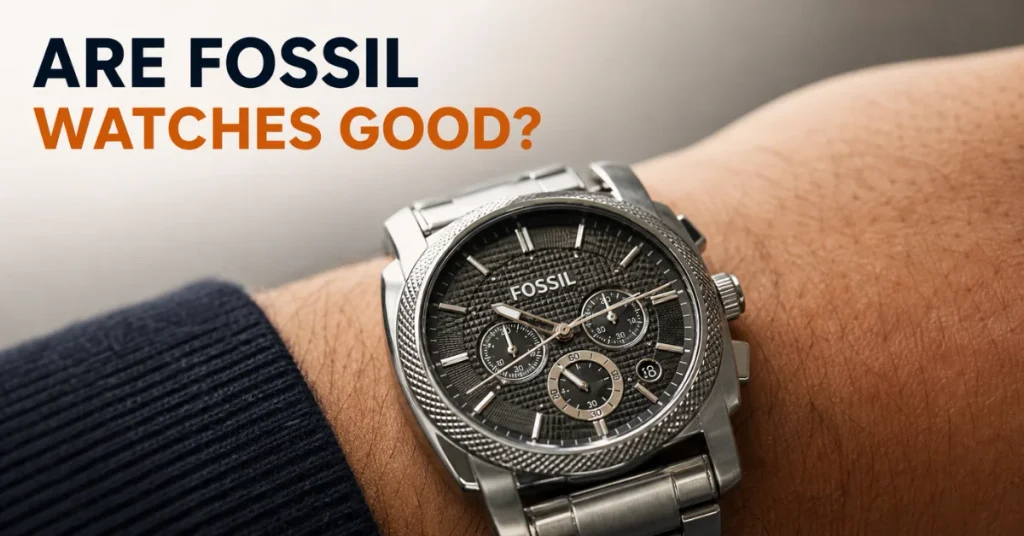
If you’ve typed “are Fossil watches good” into a search bar, you’re probably standing in a mall kiosk or scrolling a product page, wondering if the watch on your wrist for the next few years is actually worth the money. Short answer: yes, for what they are. Fossil makes fashion-first watches, not horology pieces, and once you frame the question that way, the answer gets a lot clearer.
This isn’t a brand chasing Rolex or Omega. It’s a Texas-born accessories company that built its name on affordable style, and in 2026 that identity is sharper than ever after a rocky few years for the business behind it. Let’s break down what you’re actually buying.
Are Fossil Watches Good for Everyday Wear?
For daily use — office, weekends, casual dinners — Fossil holds up fine. The cases are stainless steel on nearly every model, the crystals are usually mineral glass, and water resistance typically sits between 3 and 5 ATM. That’s enough for hand-washing, rain, and the occasional splash. It’s not enough for swimming laps or diving, so don’t treat a Fossil watch like a dive watch.
Most models run on Japanese quartz movements, often sourced from Miyota or unbranded Hattori (a Seiko-linked supplier). Quartz movements like these are cheap to produce but genuinely reliable. Accuracy tends to land around plus or minus 20 seconds a month, which is more than fine for anyone who isn’t chasing chronometer-grade precision.
So, are Fossil watches good for someone who just wants a dependable daily piece? Yes. Anyone who’s owned one for a couple of years usually reports the same pattern: the watch keeps time without fuss, the battery needs swapping every year or two, and the biggest wear point is the strap rather than the movement. Leather straps crack with heavy use. Plated metal bracelets can show fading or discoloration faster than solid stainless steel ones. That’s a real trade-off worth knowing before you buy.
Sizing runs bigger on men’s collections, with many popular models sitting between 42mm and 50mm across the case. Women’s lines run smaller, with cases commonly around 36mm to 39mm. If you’re buying a gift, check the case width against the recipient’s wrist size rather than assuming a “standard” fit exists.
What’s Actually Inside a Fossil Watch
Fossil sits in an unusual spot in the industry. It doesn’t just build its own watches — it designs and manufactures for a long list of licensed fashion brands too, which is part of why the name shows up on watches that don’t say “Fossil” anywhere on the dial.
The bulk of the lineup uses quartz movements built in Asia. A smaller Heritage line leans into mechanical automatics, some with open-heart or skeleton dials that show the gear train working. Sapphire crystal shows up only on the higher-end pieces; most of the catalog uses mineral glass, which scratches more easily but is cheap and easy to replace.
Fossil also carries a standard two-year limited warranty on most watches, covering manufacturing defects but not general wear like strap fading or battery replacement. Worth reading the fine print before buying, especially for a gift.
One thing that’s changed: Fossil stepped away from building new smartwatches in January 2024, shifting its wear-tech resources toward licensed fashion wearables instead. If you’re specifically hunting for a Wear OS smartwatch, the newest Fossil model still on shelves is aging and won’t be getting a successor. Anyone shopping for a smart wearable in 2026 should look elsewhere; anyone shopping for a traditional analog piece is in the brand’s actual wheelhouse now.
How to Spot an Authentic Fossil Watch Before You Buy
Counterfeits are common enough on third-party marketplaces that this deserves its own space. A genuine Fossil watch carries a laser-etched serial number on the case back that matches Fossil’s own records, and customer service can verify it over the phone or online if you’re unsure.
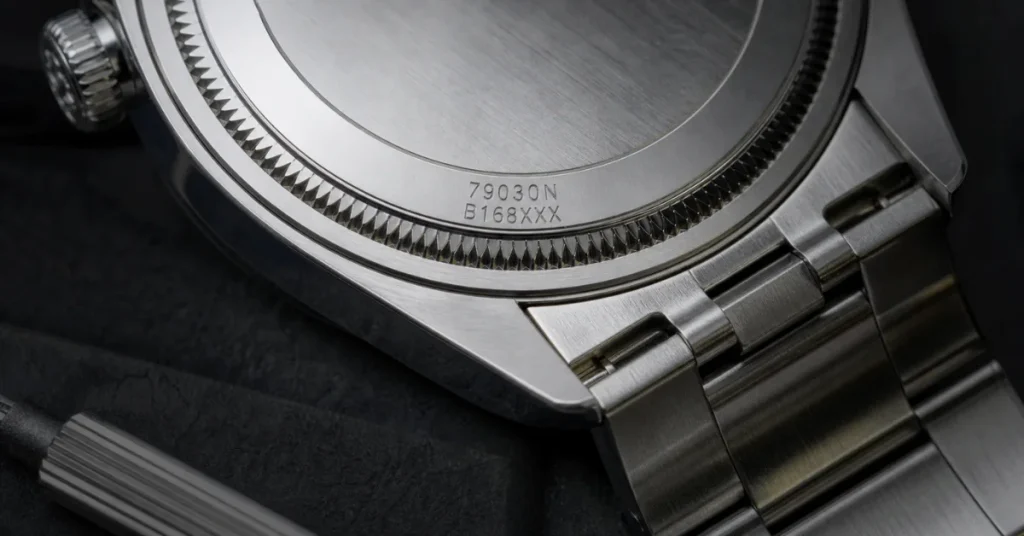
The logo is the fastest visual check. It should sit centered and sharp on the dial and case back, with no blurred lettering, uneven spacing, or misspelling — “Fosil” or “Fossel” printed anywhere is an instant red flag. Packaging matters too. Real units ship in a branded box with a warranty card, instruction booklet, and clean printing throughout, with no spelling errors on the tag or manual.
Weight and feel are quick physical tests. Genuine stainless steel feels solid and cool; counterfeits often feel noticeably light or hollow. A real leather strap wrinkles slightly under finger pressure, while fake leather just compresses and springs back. Buying directly from Fossil’s own site or an authorized retailer sidesteps the whole problem, since counterfeit risk climbs sharply on unverified resale marketplaces and steep “too good to be true” discounts.
What the Research Shows
Fossil’s own financial picture backs up the idea that the brand has been in survival mode and is now stabilizing. In fiscal 2025, Fossil Group reported net sales totaling around $1 billion, and the company expanded its gross margin by 390 basis points to 56.1%, moving from a heavy operating loss the year before to a small adjusted operating profit.
That turnaround came with real consequences for shoppers. Standard & Poor’s noted that Fossil has faced a prolonged period of sales declines and profitability pressures tied to weak consumer demand for its core products, and the company narrowed its focus down to core Fossil-branded watches plus licensed lines like Armani, Diesel, and Michael Kors. In October 2025, as part of a UK restructuring plan, the company also placed its US business into Chapter 15 bankruptcy recognition proceedings.
None of that means the watches themselves got worse. If anything, a company under this kind of financial pressure tends to lean harder into its most profitable, most trusted category, and for Fossil that’s traditional watches rather than experimental tech. Leadership has described the shift as a deliberate “shrink to grow” strategy rather than a decline in product standards.
How Fossil Compares to Other Fashion Watch Brands
Put Fossil next to MVMT, Guess, or Armani Exchange, and the differences are more about styling than build quality. All of them lean on similar Asian-sourced quartz movements and stainless steel cases in a comparable price band.
Compare it to Timex, and Timex generally wins on straightforward durability and price, while Fossil wins on design variety and the sheer number of collaborations and collections. Compare it to something like Citizen, and that brand typically pulls ahead on movement quality and long-term accuracy, usually for a similar or slightly higher price.
| Brand | Typical Price | Movement | Best For | Resale Value |
|---|---|---|---|---|
| Fossil | $75–$300 | Japanese quartz (Miyota/Hattori); some automatics | Style variety, gifting | Low — steep first-year drop |
| Timex | $40–$150 | Quartz | Everyday durability, budget buys | Low, but holds price better relative to cost |
| MVMT | $100–$250 | Quartz | Minimalist design | Low |
| Citizen | $150–$500 | Eco-Drive quartz; some automatic | Long-term accuracy, no battery hassle | Moderate |
Prices reflect typical retail ranges as of 2026 and vary by collection and materials.
One major buying-guide roundup named a Fossil Minimalist model its pick for best affordable men’s watch, grouping it alongside brands like Timex and Bulova as solid, well-finished choices without luxury pricing. That’s a fair summary of where Fossil actually sits: reliable mid-tier fashion accessory, not aspiring luxury.
Who Should Actually Buy a Fossil Watch
Fossil makes the most sense for a specific set of buyers:
- People buying a first “real” watch who don’t want to spend luxury money
- Gift buyers who want something that looks and feels premium in the box
- Style-first shoppers who rotate watches with outfits rather than wearing one piece for decades
- Anyone who wants engraving, a boxed set, or a themed collaboration piece for a special occasion
It makes less sense for collectors chasing resale value — depreciation on most models runs steep within the first year — or for anyone who wants a single heirloom-grade watch built to be repaired and passed down for generations. It also isn’t the right pick anymore for shoppers specifically hunting a smartwatch, given the brand’s exit from that category.
Common Fossil Watch Problems to Know Before You Buy
No brand review is honest without the downsides, and Fossil has a few recurring ones worth flagging.
Strap and bracelet fading shows up often in customer feedback, particularly on plated metal bands exposed to sweat or moisture regularly. Motion or movement failures within the first year, while not the norm, do get reported, and out-of-warranty repairs can run $50 to $65, which eats into the value proposition on a $100 watch. Shipping and repair-center communication has also drawn complaints, especially around engraved or personalized pieces sent in for service.
None of this makes Fossil a bad choice outright. It’s a pattern buyers should factor into the price they’re willing to pay and the expectations they walk in with. A $90 fashion watch simply carries different risk than a $900 one, and judging it by the same standard isn’t fair to either.
So, Are Fossil Watches Good in 2026?
Pulling it all together: are Fossil watches good? For the price point they occupy, yes. You’re getting stainless steel construction, dependable quartz timekeeping, genuine style range, and a recognizable name backing the purchase, all for well under $300 in most cases.
What you’re not getting is horological prestige, guaranteed longevity beyond a few years of daily wear, or strong resale value. Buy a Fossil watch knowing exactly what it is — a well-made fashion accessory, not an investment piece — and it’s very hard to be disappointed. Check the authenticity markers, buy from an authorized seller, and are Fossil watches good enough for the price you’re paying becomes an easy question to answer yourself.
This article is intended for general informational purposes and reflects publicly available information as of 2026.
FAQs
Are Fossil watches good for everyday wear?
Yes. Stainless steel cases, 3–5 ATM water resistance, and dependable Japanese quartz movements make them practical for office, casual, and weekend wear, though not for swimming or diving.
Do Fossil watches hold their value?
Generally not. Depreciation of 50 percent or more within the first year is common for standard models, though limited-edition Heritage pieces hold value slightly better.
What movement do Fossil watches use?
Most models use Japanese quartz movements from suppliers like Miyota or Hattori. A smaller Heritage line offers Japanese automatic mechanical movements.
How can I tell if a Fossil watch is authentic?
Check the laser-etched serial number on the case back, inspect the logo for sharp and even printing, and buy from Fossil’s own site or an authorized retailer rather than an unverified marketplace.
Does Fossil still make smartwatches?
No. Fossil stopped developing new Wear OS smartwatches in January 2024 and shifted focus back to traditional watches and licensed fashion wearables.
How long does a Fossil watch battery last?
Typically one to two years, depending on the model and how often the watch is worn. Most Fossil retail stores handle battery replacements for a fee.