
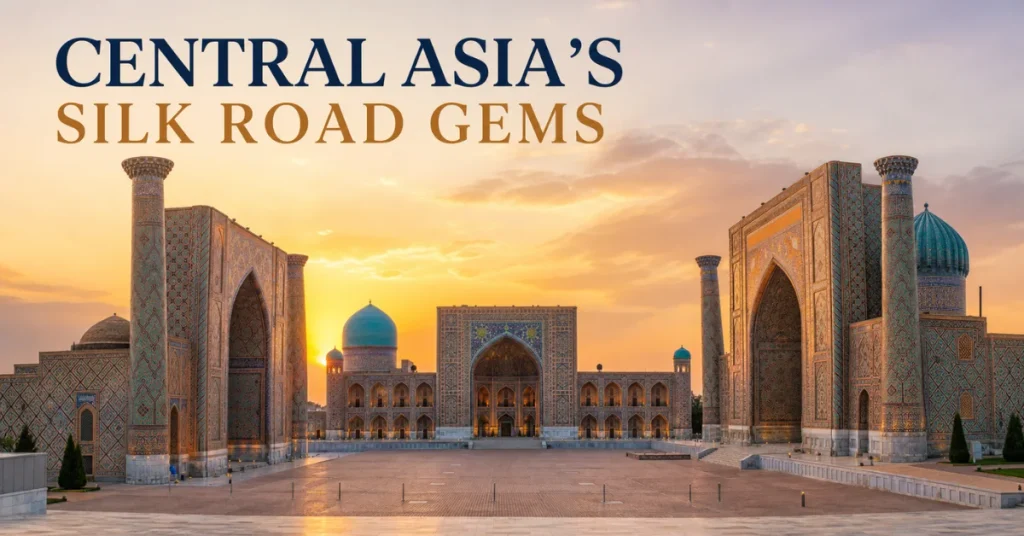
Stand in the Registan at dawn, before the tour buses arrive, and you’ll understand why so many travelers now rank this square among the most striking sights in Asia. That first look at the turquoise domes of Samarkand is usually the moment people start asking where else in the region deserves a spot on their list. If you’re weighing the best places to travel in Central Asia, the honest answer is that the region rewards anyone willing to trade a familiar itinerary for something rougher around the edges and far more memorable.
Central Asia isn’t one country pretending to be a region. It’s five very different nations — Uzbekistan, Kyrgyzstan, Kazakhstan, Tajikistan, and Turkmenistan — each with its own pace, landscape, and reason to visit. Some travelers come for medieval architecture. Others come for horses, yurts, and mountains that don’t show up on postcards yet. Here’s how to figure out which parts of this region actually match how you like to travel.
Central Asia at a Glance
| Country | Best For | Visa (most Western passports) | Best Season | Difficulty Level |
|---|---|---|---|---|
| Uzbekistan | History, architecture | Visa-free, up to 30 days | Apr–Jun, Sep–Oct | Easy |
| Kyrgyzstan | Mountains, yurt stays | Visa-free, up to 60 days | Jun–Sep | Moderate |
| Kazakhstan | Modern base + nature | Visa-free, up to 30 days | May–Sep | Easy |
| Tajikistan | Pamir Highway adventure | E-visa required | Jun–Sep | Hard |
| Turkmenistan | Darvaza Crater, Ashgabat | Letter of invitation + visa | Apr–May, Sep–Oct | Very Hard |
Visa rules do change country by country and year to year, so always confirm current requirements with the relevant embassy before booking flights.
Best Places to Travel in Central Asia: Country by Country
Uzbekistan: Where the Silk Road Still Feels Alive
Uzbekistan gets first billing for a reason. It holds the three cities most people picture when they hear “Silk Road” — Samarkand, Bukhara, and Khiva — and all three are still working cities, not open-air museums.
Samarkand’s Registan, with its three madrasahs framing a single plaza, is the image that sells the whole region. Bukhara moves slower, with a walkable old town where merchants still trade under centuries-old domed bazaars. Khiva is smaller and easier to see in a day, its entire walled inner city preserved as one continuous historic site.
Visa rules here have loosened considerably. Citizens of more than 90 countries can now enter visa-free for up to 30 days, which has made a first Uzbekistan trip far simpler to plan than it was even five years ago. Anyone building a Silk Road route through the region typically spends the bulk of their trip here, and it shows in how well the tourism infrastructure — trains, guesthouses, English-speaking guides — has developed compared to its neighbors.
Kyrgyzstan: The Mountains Everyone’s Starting to Talk About
If Uzbekistan is about architecture, Kyrgyzstan is about elevation. Roughly 90 percent of the country sits above 1,500 meters, and that geography shapes everything travelers do there.
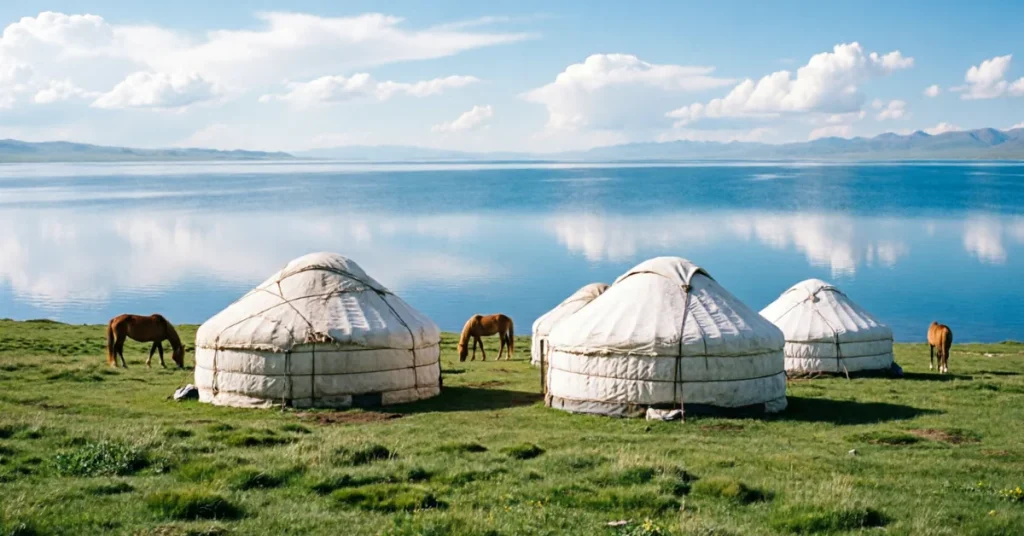
Song Kul, a high-altitude lake ringed by grazing land, is the destination most people picture when they think of a Kyrgyz yurt stay. Families still move their herds up to these pastures every summer, and travelers can sleep in the same yurts, drink the same fermented mare’s milk, and wake up to horses grazing outside the door. Those who have spent a night out there tend to describe it the same way: nothing quite prepares you for how quiet it gets.
Karakol, on the eastern edge of Lake Issyk-Kul, works as a base for trekking into the Tien Shan range, including routes toward the dramatic Ala-Kul lake. Bishkek itself is unglamorous but useful — a Soviet-era capital with cheap food, decent infrastructure, and easy transport connections onward.
Kazakhstan: Big Cities, Bigger Canyons
Kazakhstan is the region’s giant, both in size and in how modern its cities feel. Almaty, framed by the snow-capped Tian Shan foothills, has genuinely good coffee, a functioning metro, and the Charyn Canyon within a few hours’ drive — a landscape often compared to a smaller Grand Canyon, carved into red sandstone.
Astana (Nur-Sultan for a stretch of years, now Astana again) is the futuristic capital, full of architecture that looks like it was designed to be photographed rather than lived in. It’s worth a stop, though most travelers find Almaty the more rewarding base for exploring nature.
Tajikistan: For Travelers Who Want the Road Less Paved
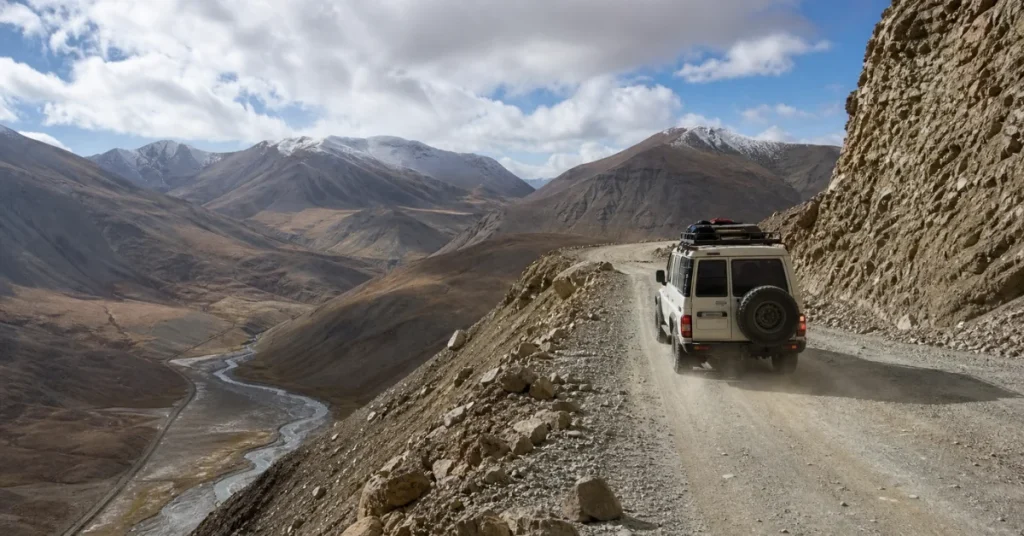
The Pamir Highway is the reason Tajikistan shows up on serious adventure-travel lists. It’s one of the highest and most remote highways in the world, cutting through the Pamir mountains and skirting the Afghan border for long stretches. Anyone who has driven it will tell you the road conditions are rough, the altitude is real, and the payoff — glacial lakes, isolated valleys, homestays with families who’ve lived there for generations — is unlike anything else in the region.
This isn’t a destination for a relaxed first trip abroad. It suits travelers who already have some rough-travel experience and want a route that most tourists skip entirely.
Turkmenistan: The One Everyone’s Curious About
Turkmenistan is the hardest of the five to visit, thanks to a restrictive visa process and limited independent travel, but it’s also the one that generates the most curiosity. The Darvaza Crater, a natural gas field that’s been burning continuously since the 1970s, draws a small but steady stream of travelers willing to deal with the paperwork. Ashgabat, the capital, is famous for its white marble buildings and near-empty streets — a city that feels built for a much larger population than it has.
Most people fold Turkmenistan into a longer regional itinerary rather than visiting it alone, given the effort required just to get a visa approved.
What the Research Shows
Interest in this part of the world has been climbing steadily. Travel operators running Silk Road routes report growing demand tied directly to eased visa rules across Uzbekistan and Kazakhstan, and outlets covering the region have flagged Central Asia as one of the standout picks in their 2026 travel roundups. The pattern shows up consistently across tour operators too: itineraries built around Uzbekistan’s cities paired with a few days in Kyrgyzstan’s mountains have become the default route for first-time visitors, since the two countries complement each other so well — ancient architecture on one end, alpine scenery on the other.
What It Actually Costs Per Day
Budget varies sharply by country. Backpackers moving through Uzbekistan and Kyrgyzstan on guesthouses, shared taxis, and local food typically get by on $25–40 a day. Mid-range travel with private rooms and the occasional driver pushes that to $60–90 a day. Kazakhstan runs noticeably higher, closer to $50–70 even on a tight budget, since Almaty prices sit closer to Eastern European cities than to its neighbors. Tajikistan’s Pamir Highway adds cost through mandatory permits and 4×4 hire, often $80–120 a day once a vehicle and driver are factored in. Turkmenistan is the most expensive per day of the five, largely because independent travel is restricted and most visitors are required to book through a licensed operator.
Staying Connected: SIM Cards and eSIMs
Connectivity is one of the more overlooked details when planning a trip through this region, and it varies more than most guides mention. Kazakhstan has widely available eSIM options and solid 4G coverage in Almaty and Astana. Uzbekistan and Kyrgyzstan both sell tourist SIM cards cheaply at the airport, and coverage holds up reasonably well outside major cities, though it thins out in the mountains. Tajikistan’s connectivity drops off fast once you’re on the Pamir Highway, so download offline maps before setting out. Turkmenistan is the outlier: internet access is heavily restricted and slow even in Ashgabat, and popular apps and VPNs are frequently blocked, so anyone traveling there should plan to be largely offline.
Crossing Borders Overland
A good number of travelers link two or three of these countries by land rather than flying between each one. The Uzbekistan–Kyrgyzstan crossing near Osh is one of the more commonly used routes and generally takes a few hours including the walk across the border zone and a shared taxi on either side. The Uzbekistan–Kazakhstan crossing near Tashkent is well-trodden and straightforward for most passport holders. Crossings into Tajikistan and especially Turkmenistan involve more paperwork and longer waits, so it’s worth building extra time into the schedule rather than treating any land border here as a quick formality.
Altitude Is a Real Factor, Not a Footnote
Two of the region’s signature experiences — Song Kul in Kyrgyzstan and the Pamir Highway in Tajikistan — sit above 3,000 meters, with sections of the Pamir climbing well past 4,000. Altitude sickness is a genuine risk at those heights, not just for serious trekkers but for anyone driving through quickly. Symptoms like headaches, nausea, and shortness of breath can show up even in people who are otherwise fit. Building in a day or two to acclimatize, staying hydrated, and avoiding alcohol during the first days at altitude all make a noticeable difference. Anyone with pre-existing heart or lung conditions should talk to a doctor before committing to these routes.
Traveling During Ramadan
Uzbekistan, Kyrgyzstan, and Tajikistan are majority-Muslim countries, and a trip that overlaps with Ramadan changes the rhythm of daily travel more than most guides let on. Some restaurants stay closed during daylight hours in smaller towns, though tourist-oriented cafes in cities like Samarkand and Bishkek generally stay open. Evenings shift toward iftar gatherings, which can actually be a rewarding time to experience local hospitality firsthand. It’s worth checking the Ramadan dates for the relevant year before booking, since they move earlier by about ten days annually on the Gregorian calendar.
Best Time to Go
Spring (April to June) and early autumn (September to October) are the sweet spots across most of the region. Summer works for Kyrgyzstan’s high pastures but turns brutally hot in the Uzbek desert cities. Winter shuts down most of the mountain routes, including large stretches of the Pamir Highway, so plan around that if trekking is the goal.
A Sample Two-Week Route
For anyone wanting a starting framework rather than building an itinerary from scratch:
- Days 1–5: Tashkent, then Samarkand and Bukhara by train
- Days 6–7: Khiva, then fly or cross overland toward Kyrgyzstan
- Days 8–11: Bishkek, then Song Kul or Karakol for yurt stays and trekking
- Days 12–14: Almaty, with a day trip to Charyn Canyon before flying home
This route hits the best places to travel in Central Asia without the logistical strain of adding Tajikistan or Turkmenistan, both of which are better suited to a dedicated trip.
Practical Notes Before You Book
Cash still rules in smaller towns, so carry US dollars alongside local currency. English is spoken in tourist hubs but thins out fast once you’re off the main routes, so a translation app or a few Russian phrases go a long way. Trains connect Uzbekistan’s main cities efficiently; between countries, expect a mix of flights and long shared-taxi rides.
Final Word: Best Places to Travel in Central Asia
There isn’t a single “best” country here, and that’s really the point. The best places to travel in Central Asia depend entirely on what kind of trip you’re after — Uzbekistan for architecture and history, Kyrgyzstan for mountains and nomadic culture, Kazakhstan for a modern base with wild nature nearby, and Tajikistan or Turkmenistan for travelers chasing something far off the beaten path. Pick two or three that match your pace, and you’ll come home with a trip that looks nothing like anyone else’s.
FAQs
Do I need a visa to travel to Central Asia?
It depends on the country. Uzbekistan and Kazakhstan now offer visa-free entry to citizens of many countries for up to 30 days. Kyrgyzstan is similarly relaxed. Tajikistan requires an e-visa, and Turkmenistan remains the most restrictive, typically requiring a letter of invitation.
Is Central Asia safe for tourists?
Most of the region, including Uzbekistan, Kyrgyzstan, and Kazakhstan, sees relatively low crime against tourists and welcomes independent travelers. Standard precautions apply, and it’s worth checking current government travel advisories before booking, particularly for areas near the Afghan border in Tajikistan.
How many days do I need to see the best places to travel in Central Asia?
Two weeks covers a solid introduction combining Uzbekistan and Kyrgyzstan. Three weeks or more allows room to add Kazakhstan or push into Tajikistan’s Pamir Highway.
What’s the best country in Central Asia for a first trip?
Uzbekistan is generally the easiest entry point, with the most developed tourism infrastructure, relaxed visa rules, and the region’s most famous sights concentrated in one country.
Is the Pamir Highway worth the trip?
For travelers who already have some experience with rough roads and high altitude, yes. It’s demanding, but the isolation and scenery are hard to match anywhere else in the region.