
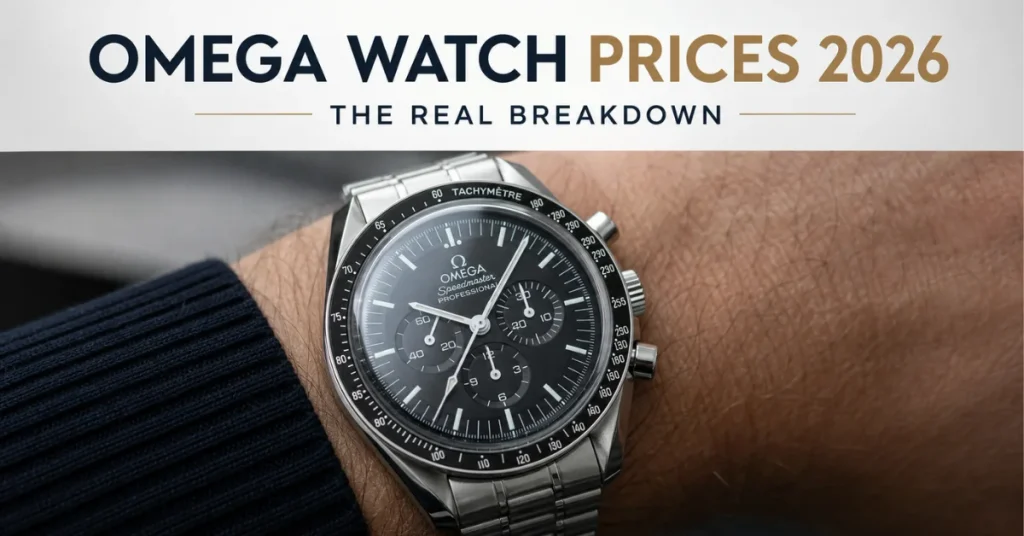
So, how much are Omega watches? A new steel model from the brand typically starts around $3,000 for a quartz Constellation or Aqua Terra and climbs past $10,000 once you get into gold cases, chronographs, or limited runs. The average buyer walks away spending somewhere between $5,000 and $8,000 for a mainstream automatic model in 2026. That’s the short answer. The longer one depends on which collection you’re eyeing, whether you buy new or pre-owned, and how much history you want strapped to your wrist.
Omega isn’t a single price point. It’s a whole spread of collections, from entry-level quartz dress pieces to six-figure haute horlogerie chronographs. Anyone who has actually shopped for one knows the sticker shock can go either way. You can walk out with a real Swiss automatic for less than a decent laptop, or you can spend more than a car on a Speedmaster with a moonwatch pedigree.
How Much Are Omega Watches Across the Main Collections?
Omega’s lineup breaks down into a handful of families, and each one has its own price personality.
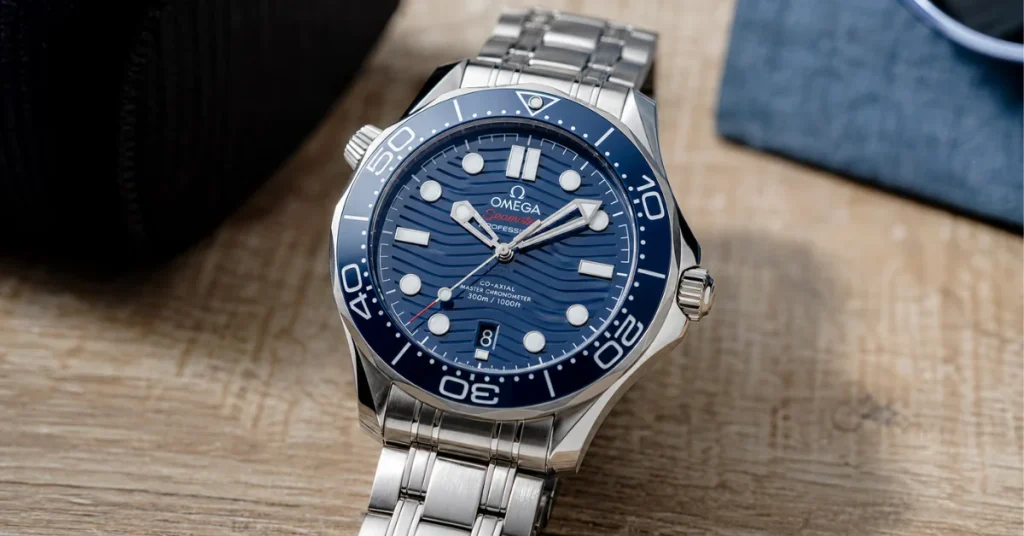
The Seamaster, the brand’s dive and everyday-sport line, is where most new buyers land. Steel Diver 300M references generally run from around $6,300 to $10,500 at retail, while special materials or chronograph versions push well past $19,000. The classic Seamaster 300 with its Broad Arrow hands sits near $6,700 on a leather strap and about $7,100 on a bracelet.
The Speedmaster, best known as the Moonwatch, is the widest-ranging family. The entry-level steel Speedmaster Professional with a hesalite crystal starts near $6,600, and the sapphire-crystal version runs closer to $7,400. From there, prices fan out fast: ceramic Dark Side of the Moon pieces sit in the $12,000 to $16,000 range, and rare gold or platinum references can reach into six figures.
The Constellation dress line is friendlier to a first-time buyer. A steel quartz model starts around $3,000, and the automatic Constellation Gent with Master Chronometer certification begins near $6,400, climbing toward $7,300 with a ceramic bezel and bracelet. Diamond-set or solid-gold versions push past $15,000.
The Aqua Terra, Omega’s everyday sport-dress hybrid, occupies a fairly tight band, generally $6,800 to $7,100 for standard steel cases, though the smallest quartz women’s models can start closer to $3,000.
Omega Price Snapshot by Collection (2026)
| Collection | Entry Price (New) | Typical Mainstream Range | Top-End Range |
|---|---|---|---|
| Constellation | ~$3,000 | $6,400 – $7,300 | $15,000+ |
| Aqua Terra | ~$3,000 (women’s quartz) | $6,800 – $7,100 | $10,000+ |
| Seamaster | ~$3,000 (vintage quartz) | $6,300 – $10,500 | $19,000+ |
| Speedmaster | ~$6,600 | $7,400 – $9,100 | $16,000 to six figures |
| De Ville | ~$3,000 | $5,400 – $8,000 | $20,000+ |
Ranges reflect new retail pricing as of 2026 and will shift with material, complication, and limited-edition status.
What Actually Drives an Omega’s Price
A handful of factors decide where any given reference lands on that spectrum, and knowing them turns a confusing price tag into something you can actually reason through.
Case material is the biggest lever. Steel is the baseline, titanium and bronze add a modest premium, and gold or platinum cases can double or triple the price of an otherwise identical design. Movement matters too: quartz calibers keep prices lower, while Omega’s in-house Co-Axial Master Chronometer automatic movements, tested to resist magnetic fields up to 15,000 gauss, sit at the core of the brand’s mid-to-upper pricing.
Complications add cost in predictable ways. A simple three-hand watch costs less than a chronograph, and a chronograph costs less than a watch with a moon phase or perpetual calendar. Limited editions, tied to anniversaries, film franchises, or space missions, routinely carry the steepest premiums because supply is capped on purpose.
New vs. Pre-Owned: Where the Real Savings Show Up
Anyone who has actually negotiated a watch purchase knows the secondary market changes the math entirely. Pre-owned Omega prices typically run 30 to 40 percent below retail, and the gap widens for older or discontinued references.
On the resale market, a Speedmaster Professional Moonwatch with box and papers commonly trades between $4,500 and $6,500, while the Reduced model can be found for as little as $2,500. Seamaster 300M Divers in similar pre-owned condition tend to sell in the $3,000 to $4,500 range, and the Planet Ocean typically commands $3,500 to $5,500.
A few practical notes for anyone comparing new versus pre-owned:
- Condition and completeness (original box, papers, warranty card) affect resale price more than almost anything else.
- Buying from an authorized dealer guarantees warranty coverage; private and grey-market sellers rarely offer the same protection.
- Vintage references from the 1960s and ’70s can exceed new retail prices if they’re well preserved, since collector demand outweighs age-based depreciation.
- Discontinued limited editions are the references most likely to appreciate rather than depreciate.
What Omega Watches Cost for Women
Most price guides focus almost entirely on men’s references, which leaves out a large share of actual shoppers. Omega’s women’s lineup runs its own price ladder. Entry-level quartz pieces in the De Ville Prestige and Constellation collections start around $2,700 to $3,200, small-cased Aqua Terra models sit near $3,100 to $4,500, and diamond-set or mother-of-pearl dial versions push past $9,000. Automatic movements in women’s cases carry roughly the same premium over quartz that they do in men’s models, generally adding $1,500 to $2,500 to the price of an equivalent design.
Total Cost of Ownership: Warranty and Servicing
The sticker price is only part of what an Omega actually costs to own, and this is where a lot of price guides stop short. New Omega watches carry a five-year international warranty, which covers manufacturing defects but not routine wear or accidental damage. Omega recommends a complete service every five to eight years at an authorized service center, and that overhaul typically runs $600 to $800 for a standard co-axial three-hand or chronograph movement, plus return shipping and insurance if you’re mailing the watch in.
Skipping service isn’t free either. A movement that runs dry for years can turn a $700 service into a much larger parts replacement job down the line. Anyone budgeting for an Omega should treat that five-to-eight-year service as a real, recurring cost, not an optional extra, especially on a watch bought pre-owned where the last service date is unknown.
How to Make Sure You’re Paying a Fair Price
A few checks protect a buyer from overpaying or ending up with a misrepresented watch, whether new or pre-owned.
- Cross-check the reference number (found on the case back or in the warranty card) against Omega’s official site or an authorized dealer before paying a premium price.
- Ask for the original box, warranty card, and any service receipts; a pre-owned watch missing these typically sells for less, and that’s a fair discount to negotiate.
- Buy pre-owned only from dealers who offer authentication and a return window; private marketplace listings carry the highest counterfeit risk.
- Compare the asking price against recent sold listings, not just other asking prices, since asking prices tend to run higher than what watches actually sell for.
What the Research Shows
Detailed analysis of the current watch market backs up what shoppers are noticing at the counter. The secondary and pre-owned watch market has kept expanding through 2025 and into 2026, with dealer and auction data pointing to sustained double-digit growth in transaction value and a rising median sale price across the industry. That growth has made pre-owned buying a mainstream path into the brand rather than a fallback option, and it has kept retail pricing under closer scrutiny from buyers who can now check resale values in seconds.
Industry watchers also note that gold prices and recent U.S. import tariffs have nudged retail costs upward for precious-metal Omega pieces specifically, while steel models have stayed comparatively stable. Anyone shopping in 2026 should expect gold and platinum references to carry a noticeably steeper premium than they did just a couple of years back.
Who Should Buy Which Omega, and Why
Not every buyer needs the same watch, and the price question really splits into a few practical paths.
First-time luxury buyers usually do best starting with a steel Aqua Terra or entry Constellation, both comfortably under $7,500 new. Collectors chasing heritage gravitate toward the Speedmaster Professional, since the manually wound Moonwatch carries genuine space history at a price that hasn’t drifted too far from its steel-Speedmaster baseline. Divers and outdoor-focused buyers tend to land on the Seamaster 300M, which balances 300-meter water resistance with everyday wearability. Buyers who care about resale should lean toward mainstream steel references in popular collections; niche colorways and quartz fashion pieces hold value far less reliably.
So, How Much Are Omega Watches in the End?
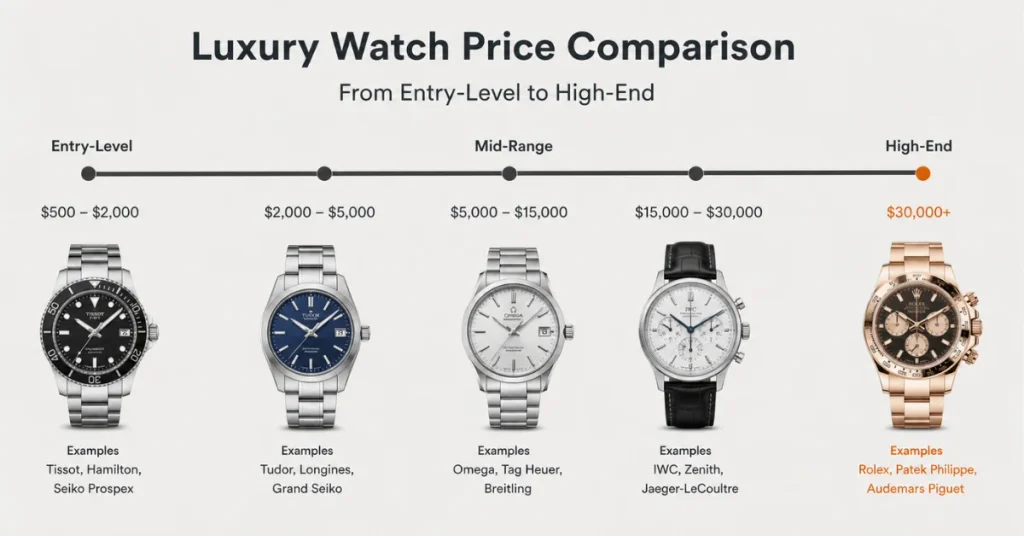
There isn’t one number, and that’s the honest answer to how much are Omega watches. Budget $3,000 to $7,000 for a solid entry point into the brand, expect $7,000 to $15,000 for most mainstream automatic Speedmasters and Seamasters, and know that gold, platinum, and limited editions can run from $20,000 well into six figures. Buying pre-owned typically knocks 30 to 40 percent off retail on comparable pieces, which makes the secondary market worth a serious look for anyone who isn’t fixed on a brand-new box and papers. Whatever your budget, matching the collection to how you’ll actually wear the watch matters more than chasing the lowest number on a price list.
This article is for general informational purposes. Prices vary by retailer, region, and market conditions, and readers should confirm current pricing directly with an authorized Omega dealer before purchasing.
FAQs
What is the cheapest Omega watch you can buy new?
The most accessible new models are small quartz pieces in the Constellation and Aqua Terra lines, generally starting around $3,000.
Are Omega watches a good long-term investment?
Mainstream steel references in popular collections like the Speedmaster and Seamaster have generally held value well on the secondary market, though Omega, like most brands outside the very top tier, isn’t guaranteed to appreciate the way limited Rolex or Patek Philippe pieces sometimes do.
Why is the Speedmaster more expensive than the Seamaster in some cases?
The Speedmaster’s chronograph movement adds complexity and cost compared to a simple three-hand watch, and its NASA and Apollo 11 history supports stronger demand on rarer references.
Is it safe to buy an Omega watch pre-owned?
Yes, provided you buy from a reputable dealer or platform that authenticates watches and confirms original papers; private sales carry more risk and less recourse if something’s wrong.
Do Omega watch prices change with gold prices?
Yes. Gold and platinum Omega models track precious-metal costs closely, so retail prices on those references have moved upward alongside gold prices heading into 2026, while steel models have stayed relatively steady.